
TL;DR
An individual successfully ported the ThinkPad X61’s firmware to Coreboot, utilizing AI tools like Claude Opus 4.6 for reverse engineering. The process involved extracting firmware data, analyzing it, and creating a working coreboot port. Some technical challenges remain, but the development marks a significant step for open firmware on legacy hardware.
A hobbyist has successfully ported the firmware of the Lenovo ThinkPad X61 to Coreboot, utilizing AI-assisted reverse engineering tools. This development is significant for the open firmware community and legacy hardware enthusiasts, as it demonstrates a practical method for reviving older laptops with open-source BIOS alternatives.
The project involved reverse engineering the vendor BIOS of the ThinkPad X61, which uses a Phoenix BIOS with a GM965 northbridge and ICH8 southbridge. The developer employed AI tools like Anthropic’s Claude Opus 4.6 to analyze firmware dumps, extract initialization sequences, and understand the complex code structure. Using a combination of traditional firmware analysis tools and AI, the developer created a working coreboot port that boots on the device.
Key steps included dumping the BIOS using coreboot tools, analyzing and splitting the firmware image, and employing AI to identify and understand the raminit and other critical components. The process was accelerated significantly by AI, reducing what could have been months of work to a matter of days or weeks. The port has been tested successfully, with the system booting into coreboot and functioning normally, although some hardware components still require further integration.
Revolutionizing Firmware on Legacy ThinkPads
This achievement demonstrates that AI-assisted reverse engineering can significantly expedite porting efforts for legacy hardware, making open firmware more accessible for older laptops. It opens possibilities for improved security, customization, and longevity of these devices, which are often abandoned by manufacturers and closed-source BIOS restrictions. For the open-source community, it represents a practical case of how advanced AI tools can enhance hardware hacking and firmware development.

SSD for Lenovo ThinkPad Yoga ThinkPad Edge Helix 256 GB SSD Hard Drive 00UP436
As an affiliate, we earn on qualifying purchases.
As an affiliate, we earn on qualifying purchases.
Legacy Hardware and the Challenge of Firmware Reverse Engineering
The ThinkPad X61, released in 2007, features a Phoenix BIOS and hardware that has historically been difficult to port to open-source firmware like Coreboot, mainly due to the lack of documentation and the complexity of reverse engineering. Previous efforts using tools like SerialICE faced limitations, and no fully functional port existed prior to this development. The use of AI in reverse engineering is a recent innovation, enabling faster analysis of firmware images and extraction of critical initialization code.
This project builds on years of firmware hacking and community efforts to open up older devices, with the latest breakthrough being the integration of large language models to assist in understanding and porting complex firmware components.
“Using AI tools like Claude, I managed to analyze the firmware and create a working coreboot port in a fraction of the time traditional methods would take.”
— The developer behind the project
“This development could set a precedent for reviving other legacy hardware with open firmware, especially where documentation is scarce.”
— Firmware expert familiar with the project

ASRock Motherboard B760M-HDV/M.2 Intel 12th and 13th Generation CPU (LGA1700) Compatible B760 Chipset DDR5 Micro ATX Motherboard
Supports 13th Gen & 12th Gen and next gen Intel
As an affiliate, we earn on qualifying purchases.
As an affiliate, we earn on qualifying purchases.
Remaining Hardware Compatibility and Future Refinements
While the coreboot port successfully boots on the ThinkPad X61, some hardware components, such as Wi-Fi or specialized peripherals, may still require additional work to achieve full functionality. The long-term stability and performance of the port are also under evaluation, and further testing is needed to confirm compatibility across different units.
It is not yet clear how easily this process can be replicated on other similar legacy models or how well the AI-assisted approach generalizes to different firmware architectures.

WWZMDIB CH341A EEPROM BIOS Programmer SPI I2C + SOIC8 SOP8 Clip + SOP8 SOP16 Conversion Plate for 24 25 Series Flash
CH341A Programmer: The main purpose is to backup, erase, programming, calibration and other operations of various software
As an affiliate, we earn on qualifying purchases.
As an affiliate, we earn on qualifying purchases.
Next Steps for Full Hardware Support and Community Adoption
The developer plans to refine the port, improve hardware support, and document the process for community use. Sharing the tools and techniques used could enable other enthusiasts to replicate the success on similar devices. Additionally, ongoing testing will focus on stabilizing the port and expanding support for all hardware features, including Wi-Fi, audio, and input devices.
Further collaboration with the open firmware community and potential integration into mainstream coreboot repositories are likely future milestones.
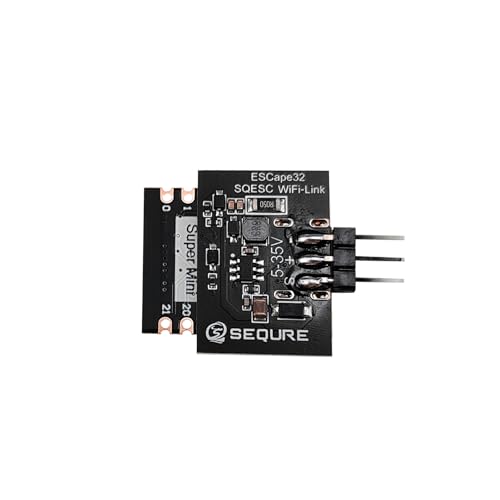
SEQURE WiFi-Link Compatible with ESCape32 ESC Open Source Speed Control Programming Parameter Configuration Firmware Upgrade Tool
SEQURE WiFi linker programmer used for ESCape32 open source ESC.
As an affiliate, we earn on qualifying purchases.
As an affiliate, we earn on qualifying purchases.
Key Questions
Can this port be used as a daily driver?
While the system boots into coreboot and basic hardware functions are working, full hardware support has not yet been confirmed. Additional work may be needed before it can be used reliably as a daily driver.
How did AI assist in this reverse engineering process?
The AI analyzed firmware dumps, identified critical initialization sequences, and helped generate code snippets, significantly reducing manual effort and time required for reverse engineering.
Is this process applicable to other legacy laptops?
Potentially, yes. The success on the ThinkPad X61 demonstrates that AI-assisted reverse engineering can be applied to similar devices, though each model may present unique challenges.
Will this port be publicly available?
The developer intends to share the port and the methodology with the community, enabling others to replicate and improve upon it.
Source: Hacker News