
📊 Full opportunity report: The Switch: You Never Owned the AI You Depend On on ThorstenMeyerAI.com — validation score, market gap, and execution plan.

Get the latest gadgets delivered free — and shop member deals
- Fast, free delivery on millions of items
- Access to Prime Big Deal Days deals on October 6–7
- Prime Video, Amazon Music and more included
TL;DR
Governments and companies can disable AI models instantly through export controls or product deprecation, exposing dependency risks. This highlights the fragility of relying on external APIs for critical AI functions.
On June 12, 2026, the U.S. government issued an export-control directive that forced Anthropic to disable its latest AI models, Fable 5 and Mythos 5, within roughly ninety minutes, citing national security concerns. This event demonstrated that access to AI models can be revoked instantly by government order, revealing a critical vulnerability in reliance on external APIs for AI services.
The directive mandated the immediate suspension of all access to the models for any users worldwide, including Anthropic’s own employees, leaving the company no choice but to shut down the models entirely. This move was executed with little warning and no detailed explanation, highlighting how government controls can act as an emergency switch for AI models deployed via APIs.
Similarly, in February 2026, OpenAI retired GPT-4o and several other models from ChatGPT, with API shutdowns scheduled over two weeks. This was a product decision driven by economics and model lifecycle management, not government intervention. Both incidents underscore a broader pattern: AI models are accessed via APIs that are controlled by external entities, not owned outright by users, making them vulnerable to abrupt disconnection.
The Switch: You Never Owned It
In 2026 a government turned off a frontier model worldwide in ~90 minutes — and a company retired a beloved one with ~2 weeks’ notice. You don’t own the model you build on. You access it. Access can be revoked.
Access is the only chokepoint that flips in an afternoon — and the version that hits you won’t be Washington, it’ll be a deprecation. Open weights you host can’t be deprecated, geofenced, repriced, or revoked. Short of that: route through a provider-agnostic gateway, keep a tested fallback, and treat every model string as a dependency that will be pulled.
Implications of Instant AI Model Disabling
This development matters because it exposes a fundamental dependency risk: users and organizations rely on external API access to AI models, which can be revoked at any moment by governments or providers. Such vulnerabilities threaten the stability and security of AI-dependent systems, especially when critical functions like cyber defense or decision-making rely on these models.
It also raises questions about ownership versus access — despite the widespread adoption of AI, users do not own the models they use but only access them through controlled gateways. This dependency could impact industries, national security, and the future development of AI infrastructure.
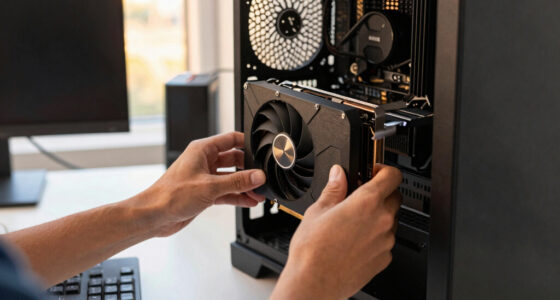
personal AI model ownership device
As an affiliate, we earn on qualifying purchases.
As an affiliate, we earn on qualifying purchases.
AI Access Control and Dependency Risks
Historically, AI models were trained and owned by organizations, but the shift toward API-based deployment has made access the primary point of interaction. Governments have introduced export controls and regional bans, which can instantly disable models in certain markets or for specific users. Companies like OpenAI routinely deprecate older models, pushing users to upgrade or face disruptions. These practices reveal that most AI reliance is on external, controllable access points rather than ownership of the models themselves.
The June 2026 government action is a stark example of how quickly access can be cut, contrasting with the slower, more predictable process of deprecation and reconfiguration that companies regularly undertake. Both scenarios demonstrate that control over access, not the models themselves, is the critical chokepoint in AI deployment.
“Using export controls as an emergency off-switch for AI models is a powerful, but risky tool that can be used unexpectedly, impacting both security and economic stability.”
— a former U.S. AI security adviser
As an affiliate, we earn on qualifying purchases.
Unclear Long-term Impact of Access Disruptions
It remains uncertain how widespread or frequent such instant shutdowns will become, and whether new safeguards or ownership models will emerge to mitigate this dependency risk. The full legal and security implications of government-mandated disconnections are still unfolding, and the industry has not yet standardized responses to these chokepoints.
As an affiliate, we earn on qualifying purchases.
Future Measures to Mitigate Access Vulnerabilities
Moving forward, industry and regulators may explore solutions such as model ownership, decentralized deployment, or contractual safeguards to reduce reliance on single points of control. Companies might also develop more resilient architectures that can operate independently of external APIs during crises or shutdowns. Additionally, ongoing discussions with policymakers could lead to clearer frameworks governing AI access and control.
As an affiliate, we earn on qualifying purchases.
Key Questions
Can AI models be owned outright instead of accessed via APIs?
Yes, but currently most models are deployed via APIs for ease of use and scalability. Ownership would require on-premises deployment or decentralized hosting, which presents technical and economic challenges.
Are government shutdowns of AI models common?
No, this is a recent development. The June 2026 event was a rare, high-profile example of an immediate government-mandated disconnection.
What risks does reliance on external APIs pose?
Reliance on external APIs means models can be turned off, restricted, or reconfigured suddenly, risking operational continuity, security, and strategic advantage.
Could ownership of models prevent such shutdowns?
Ownership could mitigate sudden disconnections, but it involves significant technical, financial, and logistical barriers, especially at scale.
Will regulations change to prevent abrupt shutdowns?
Regulatory responses are still evolving; future policies may seek to establish protections for critical AI infrastructure, but specifics are not yet clear.
Source: ThorstenMeyerAI.com
Fall Picks
fall essentials
As an affiliate, we earn on qualifying purchases.