

🔍 Read the full analysis: Inside Huawei’s AI Strategy: Building A Frontier With Noah’s Ark And Pangu on ThorstenMeyerAI.com
TL;DR
A 2026 analysis characterizes Huawei’s AI ambitions as centered on Noah’s Ark and Pangu ecosystems, aiming for frontier AI status. However, no concrete performance data or milestones have been disclosed.
A 2026 analysis has characterized Huawei as actively pursuing a leadership position in frontier artificial intelligence through its Noah’s Ark research platform and the Pangu ecosystem. While the analysis suggests strategic ambition, there are no publicly available data or technical benchmarks to confirm Huawei’s current capabilities or market standing in this domain. This development matters because it indicates Huawei’s potential move toward competing with established global AI research labs, which could influence the broader AI landscape and market dynamics.
The analysis claims Huawei’s AI strategy revolves around two core components: Noah’s Ark, a research initiative purportedly focused on advanced model development, and Pangu, described as an ecosystem supporting AI deployment and application development. The report implies that these efforts are interconnected, with Noah’s Ark providing research capabilities to bolster Pangu’s ecosystem, potentially enabling Huawei to transition from research to commercial deployment. However, the analysis does not specify the timeline, model versions, or technical benchmarks that would substantiate Huawei’s progress toward frontier AI status.
There are no disclosed figures regarding Huawei’s research personnel, computing infrastructure, or specific model performance metrics. The analysis does not clarify whether Huawei has achieved any breakthroughs or simply aspires to compete at the frontier. The claim of “dominating” AI remains an interpretation, as no third-party evaluations or independent benchmarks are provided to support this assertion. The entire characterization appears to be based on strategic intent rather than demonstrated technical capability.
Implications of Huawei’s Frontier AI Ambitions
If Huawei’s efforts through Noah’s Ark and Pangu are indeed progressing toward frontier AI leadership, this could significantly alter the competitive landscape. It might lead to a more distributed global AI ecosystem, with multiple players developing models, hardware, and applications across different platforms. Such a shift could challenge current market leaders and diversify innovation sources. However, without concrete evidence of technical achievement or deployment milestones, these implications remain speculative. The development underscores Huawei’s strategic ambition, but its real-world impact depends on future disclosures and independent evaluations.
As an affiliate, we earn on qualifying purchases.
Huawei’s AI Development and Industry Positioning
Huawei has historically invested heavily in telecommunications infrastructure and hardware but has increasingly emphasized AI research as part of its broader technological ambitions. The company has announced various AI-related initiatives over recent years, including the development of AI chips and software frameworks. The mention of Noah’s Ark and Pangu in the 2026 analysis suggests a formalized, possibly integrated approach to AI research and ecosystem building. Prior to this, Huawei’s AI efforts have been largely focused on industrial applications, with limited public information about its standing in frontier research comparable to labs like OpenAI or DeepMind.
The landscape of AI research is highly competitive, with major players investing billions into model development, infrastructure, and talent acquisition. Huawei’s strategic framing indicates an intent to position itself as a significant contender, but the absence of detailed disclosures means its current capabilities remain unverified. The analysis’s focus on strategic ambition rather than proven results highlights the early stage of Huawei’s frontier AI pursuit.
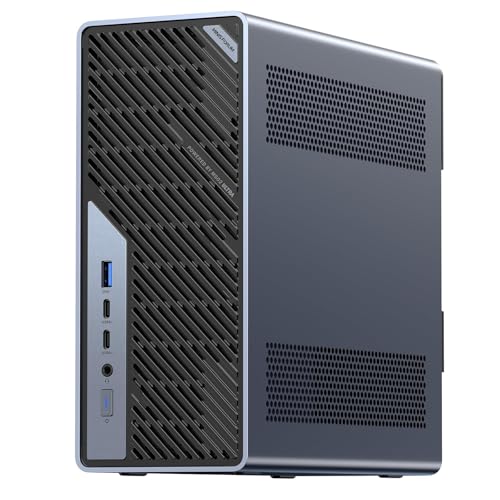
MINISFORUM MS-02 Ultra Workstation Mini PC, Intel Core Ultra 9 285HX (24C/24T, up to 5.5GHz), PCIe 5.0 x16, 32GB RAM 1TB SSD,USB4 v2 80Gbps, Dual 25GbE+10GbE+2.5GbE, Wi-Fi 7, 350W PSU
- Powerful AI Processor: Intel Core Ultra 9 285HX with NPU
- Expandable Memory & Storage: Supports 256GB DDR5 RAM and 24TB PCIe SSDs
- Multiple PCIe & USB Ports: Supports PCIe 5.0, PCIe 4.0, and USB 4.0 v2
As an affiliate, we earn on qualifying purchases.
As an affiliate, we earn on qualifying purchases.
Unverified Claims and Lack of Technical Benchmarks
The primary uncertainty surrounds the actual technical capabilities and progress of Huawei’s Noah’s Ark and Pangu initiatives. The analysis offers no benchmarks, performance metrics, or independent evaluations to verify whether Huawei is approaching or achieving frontier AI status. It is unclear whether Huawei has developed models comparable to industry leaders or if its ecosystem is being adopted at scale. The absence of detailed data leaves the claims largely interpretive and unconfirmed.
As an affiliate, we earn on qualifying purchases.
Monitoring Huawei’s AI Developments and Announcements
Future disclosures from Huawei, including technical papers, benchmarks, or product launches related to Noah’s Ark and Pangu, will be critical to assess the validity of the analysis. Watch for official statements, deployment examples, and independent evaluations that could confirm or refute Huawei’s claims of frontier AI progress. Additionally, industry benchmarks and third-party assessments will help clarify Huawei’s position in the global AI landscape over the coming months and years.
As an affiliate, we earn on qualifying purchases.
Key Questions
What are Noah’s Ark and Pangu?
According to the analysis, Noah’s Ark is a Huawei research platform focused on advanced AI models, while Pangu is described as an ecosystem supporting AI deployment and applications. Specific details about their functions or technical specifications are not publicly available.
Has Huawei announced any new AI products based on these initiatives?
As of now, there have been no official product announcements or technical disclosures related to Noah’s Ark or Pangu. The analysis remains at the strategic interpretation level without concrete product details.
How does Huawei’s AI ambition compare to other global leaders?
Without independent benchmarks or performance data, it is difficult to compare Huawei’s progress directly with established AI labs like OpenAI, DeepMind, or Google Brain. The analysis suggests strategic ambition but does not confirm technical parity or leadership.
When might Huawei provide more concrete evidence of its AI capabilities?
Huawei could release technical papers, model benchmarks, or deployment case studies in the near future. Monitoring official channels and industry evaluations will be key to assessing its actual progress.
Primary source: Huawei Pangu · via ThorstenMeyerAI.com