
TL;DR

Get the latest gadgets delivered free with Prime
- Fast, free delivery on millions of items
- Prime Video, Amazon Music and more included
- Member-only deals all year
Researchers are developing DRAM technology capable of performing calculations within memory modules. This innovation aims to improve processing speed and energy efficiency but remains in experimental stages. Its impact could reshape future computing architectures.
Researchers are advancing processing-in-memory (PIM) technology by enabling DRAM modules to perform calculations directly, a development that could significantly alter current memory and processing architectures. While this innovation is still in experimental phases, early results suggest it has the potential to reduce data movement bottlenecks and improve energy efficiency in computing systems.
The core breakthrough involves integrating computational capabilities into DRAM chips, traditionally designed solely for data storage. Recent academic papers and industry patents indicate progress in embedding simple arithmetic operations—such as addition and multiplication—within DRAM arrays. This approach aims to eliminate the need to transfer data back and forth between memory and processors, a major source of latency and power consumption in modern computers.
Industry analysts and researchers note that this trend is driven by the increasing demand for high-performance computing, artificial intelligence, and data centers, where speed and energy efficiency are critical. Several tech companies and research institutions are actively investigating in-memory computing prototypes, though no commercial products have yet been announced. The technology’s development is still at the experimental stage, with many challenges related to reliability, scalability, and integration remaining.
Potential Impact on Computing Performance and Efficiency
If successfully commercialized, processing-in-memory with DRAM could dramatically reduce data transfer times, leading to faster computation and lower energy consumption. This shift could enable more efficient data centers, improve performance in AI workloads, and reduce the bottleneck caused by the von Neumann architecture, which separates memory and processing units. The technology might also influence future hardware designs, prompting a move toward more integrated memory-processing modules.
However, experts caution that many technical hurdles remain before this approach can be widely adopted. Issues such as error rates, manufacturing complexity, and compatibility with existing systems need to be addressed. Nonetheless, the potential for a paradigm shift in hardware architecture makes this development highly significant for the tech industry.
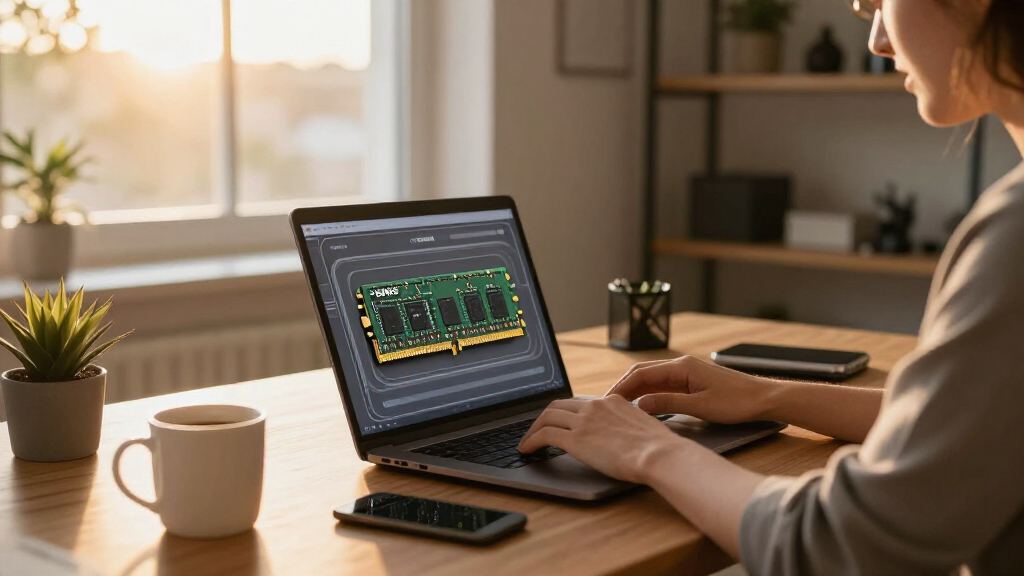
DRAM memory modules with in-memory computing
As an affiliate, we earn on qualifying purchases.
As an affiliate, we earn on qualifying purchases.
Background and Recent Advances in In-Memory Computing
The concept of processing-in-memory is not new but has gained renewed interest in recent years due to limitations in traditional computing architectures. Historically, data movement between memory and processors has been a major performance bottleneck, especially with the rise of data-intensive applications like artificial intelligence and big data analytics.
Recent research efforts have focused on integrating simple computational functions into memory chips, including static RAM (SRAM) and emerging non-volatile memories. The recent focus on DRAM stems from its widespread use and the desire to leverage existing manufacturing processes. Early prototypes have demonstrated the feasibility of performing basic arithmetic operations within DRAM arrays, though these are still far from commercial deployment.
Industry interest has surged, partly driven by the increasing demand for faster, more energy-efficient computing solutions. Several startups and major technology firms have filed patents related to in-memory computing with DRAM, indicating a serious push toward practical applications. Yet, it remains unclear when these innovations will transition from labs to mainstream products.
As an affiliate, we earn on qualifying purchases.
Unresolved Technical and Commercial Challenges
While promising, the development of DRAM capable of performing calculations faces significant hurdles. These include ensuring reliable operation at scale, managing increased chip complexity, and integrating with existing systems. It is not yet clear when or if these prototypes will become commercially available, and industry insiders caution that widespread adoption may still be years away.
high-performance DRAM for AI workloads
As an affiliate, we earn on qualifying purchases.
As an affiliate, we earn on qualifying purchases.
Next Steps in Research and Industry Testing
Researchers and industry players are expected to continue refining prototype designs, focusing on improving reliability, scalability, and energy efficiency. Pilot projects and collaborations between academia and industry will likely accelerate testing of in-memory computing modules. The timeline for commercial deployment remains uncertain, but ongoing developments suggest that practical applications could emerge within the next few years, pending resolution of current technical challenges.
As an affiliate, we earn on qualifying purchases.
Key Questions
What is processing-in-memory technology?
Processing-in-memory (PIM) technology integrates computational capabilities directly into memory chips, allowing calculations to be performed where data is stored, reducing data transfer and increasing efficiency.
Why is DRAM being used for in-memory computing?
DRAM is widely used in current systems and offers a high-density, cost-effective platform. Embedding computation into DRAM could leverage existing manufacturing processes and infrastructure.
What are the main challenges facing this technology?
Key challenges include ensuring reliability, managing increased chip complexity, maintaining compatibility with existing systems, and scaling prototypes for commercial use.
When might we see commercial products using DRAM-based in-memory computing?
It is unclear; industry experts suggest that widespread adoption could take several years, depending on how quickly technical hurdles are overcome and how prototypes perform in real-world testing.
How could this impact everyday computing?
If successful, in-memory computing could lead to faster, more energy-efficient devices, particularly benefiting data centers, AI applications, and high-performance computing tasks.
Source: hn
Fall Picks
fall essentials
As an affiliate, we earn on qualifying purchases.