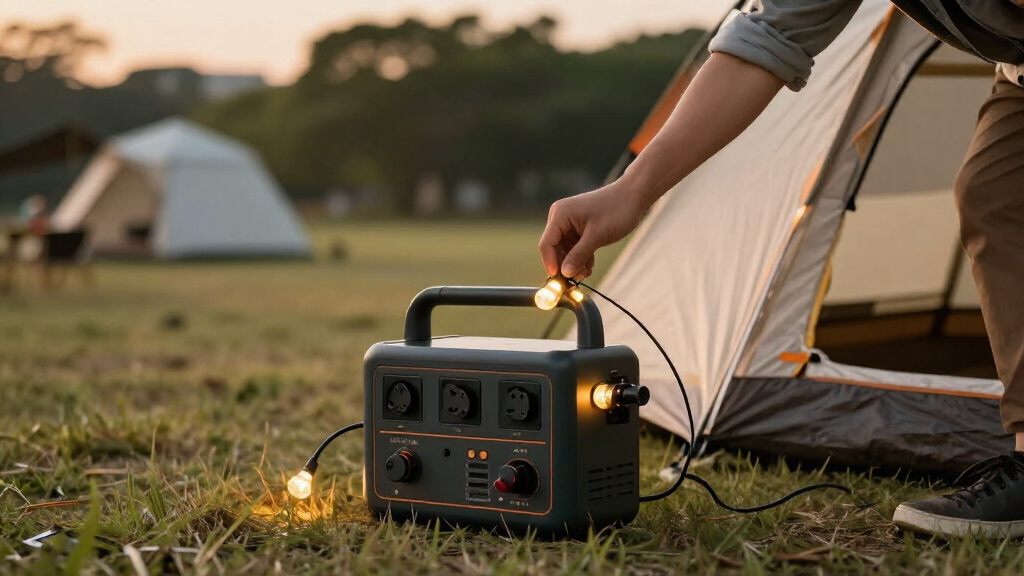
For most buyers, I’d start with the EF ECOFLOW DELTA 3: its 1,024Wh capacity and 1,800W output suit a broad mix of camping and backup needs. The Jackery Explorer 2000 v2 offers more stored energy for longer outages, while the compact BLUETTI Elite 30 V2 makes more sense for light loads and easy transport. The main tradeoff is between capacity and portability: larger stations can power more devices for longer, but they take up more space and are harder to carry. Output, charging options, and the devices you need to run also matter more than headline capacity alone. Read on for the full breakdown and help matching a station to your actual use.

Get the latest gadgets delivered free with Prime
- Fast, free delivery on millions of items
- Prime Video, Amazon Music and more included
- Member-only deals all year
Complete the kit


Key Takeaways
- The 1,024Wh class is the lineup’s most versatile middle ground. The EcoFlow DELTA 3, Jackery Explorer 1000 v2, and DJI Power 1000 V2 pair similar battery capacity with different output and ecosystem priorities.
- More watt-hours do not automatically mean more capability. The Jackery Explorer 2000 v2 stores 2,042Wh and delivers 2,200W, while the Anker SOLIX S2000 has a similar capacity but 1,500W output.
- Small stations serve a different job from outage backups. The Daran’s 89.6Wh and the roughly 300Wh Jackery Explorer 300 and BLUETTI Elite 30 V2 are better aligned with light electronics than extended household use.
- Solar bundles change the buying decision. The Jackery Solar Generator 1000 v2 and Anker SOLIX C1000 Gen 2 bundles include 200W panels, while their station-only counterparts leave panel choice and compatibility to the buyer.
- The largest capacities bring a space-and-weight tradeoff. The 3,584Wh Jackery HomePower 3600 Plus is aimed at substantial backup loads, not a grab-and-go camping kit.
| EF ECOFLOW DELTA 3 Portable Power Station, 1024Wh, 1800W |  | Best Overall | Capacity: 1024Wh | AC output: 1800W | Surge output: 3600W | VIEW LATEST PRICE | See Our Full Breakdown |
| Jackery Solar Generator 1000 v2 with 200W Solar Panel, 1024Wh LiFePO4 Battery |  | Best Solar Bundle | Battery capacity: 1,024Wh | Battery type: LFP (LiFePO4) | AC output: 1,500W | VIEW LATEST PRICE | See Our Full Breakdown |
| Jackery Explorer 2000 v2 Portable Power Station, 2042Wh, 2200W |  | Best for Extended Backup | Battery capacity: 2042Wh | Battery type: LiFePO4 | AC output: 2200W | VIEW LATEST PRICE | See Our Full Breakdown |
| BLUETTI Elite 30 V2 Portable Power Station, 288Wh, 600W |  | Best Compact Pick | Capacity: 288Wh | Continuous output: 600W | Surge output: 1500W | VIEW LATEST PRICE | See Our Full Breakdown |
| BLUETTI Elite 100 Mini Portable Power Station, 1004.8Wh, 700W |  | Best for Long-Cycle Battery Life | Battery capacity: 1004.8Wh | Battery chemistry: LiFePO4 (LFP) | Battery life cycles: 6000+ | VIEW LATEST PRICE | See Our Full Breakdown |
| Jackery Explorer 1000 v2 Portable Power Station, 1024Wh LiFePO4 Battery |  | Best for Long-Term Everyday Backup | Battery capacity: 1,024Wh | Battery type: LFP (LiFePO4) | AC output / surge: 1,500W / 3,000W | VIEW LATEST PRICE | See Our Full Breakdown |
| EF ECOFLOW DELTA 3 Classic Portable Power Station, 1024Wh |  | Best for Higher-Power Loads | Capacity: 1,024Wh | Battery chemistry: LiFePO4 | Output / surge: 1,800W / 3,600W | VIEW LATEST PRICE | See Our Full Breakdown |
| Jackery HomePower 3600 Plus Portable Power Station, 3584Wh, 3600W |  | Best for Expandable Home Backup | Battery capacity: 3,584Wh | AC output: 3,600W | Parallel output: 7,200W | VIEW LATEST PRICE | See Our Full Breakdown |
| LIBRIDS C600 Portable Power Station, 640Wh, 600W |  | Best Compact Station with Multiple AC Outlets | Capacity: 640Wh | Battery type: LiFePO4 | Ports: 8 total, including 4 AC outlets | VIEW LATEST PRICE | See Our Full Breakdown |
| Daran 89.6Wh Portable Power Station with LiFePO4 Battery |  | Best Ultralight Backup for Small Devices | Battery capacity and type: 89.6Wh; LiFePO4 | Maximum / peak output: 100W / 200W | Output ports: 7 total | VIEW LATEST PRICE | See Our Full Breakdown |
| Anker SOLIX C1000 Gen 2 Portable Power Station with 200W Solar Panel |  | Best Solar Bundle | Battery capacity: 1,024Wh | Battery type: LiFePO4 | Output / peak output: 2,000W / 3,000W | VIEW LATEST PRICE | See Our Full Breakdown |
| Anker SOLIX S2000 Portable Power Station, 2,010Wh, 1,500W |  | Best for Longer Backup Runtime | Battery capacity: 2,010Wh | Battery type: LiFePO4 | Continuous output: 1,500W | VIEW LATEST PRICE | See Our Full Breakdown |
| Jackery Explorer 300 Portable Power Station, 292Wh |  | Best Compact Pick | Battery capacity: 292Wh | Battery chemistry: LiFePO4 | Peak surge: 600W | VIEW LATEST PRICE | See Our Full Breakdown |
| DJI Power 1000 V2 Portable Power Station, 1024Wh LFP Battery |  | Best for Quiet, Fast-Recharging Backup | Battery capacity: 1,024Wh | Battery type: LFP | Output wattage: 1,000W | VIEW LATEST PRICE | See Our Full Breakdown |
| Anker SOLIX C1000 Gen 2 Portable Power Station |  | Best Standalone 1kWh Powerhouse | Battery capacity: 1,024Wh | Battery type: LiFePO4 | Running output: 2,000W | VIEW LATEST PRICE | See Our Full Breakdown |
| portable power station | Weight | Battery capacity | Battery type |
|---|---|---|---|
| EF ECOFLOW DELTA 3 Portable Po | 12.5kg | — | — |
| Jackery Solar Generator 1000 v | 23.4 pounds | 1,024Wh | LFP (LiFePO4) |
| Jackery Explorer 2000 v2 Porta | 39.5 lbs | 2042Wh | LiFePO4 |
| BLUETTI Elite 30 V2 Portable P | 9.5 lbs | — | — |
| BLUETTI Elite 100 Mini Portabl | 23.5 lbs | 1004.8Wh | — |
| Jackery Explorer 1000 v2 Porta | 23.4 lbs | 1,024Wh | LFP (LiFePO4) |
| EF ECOFLOW DELTA 3 Classic Por | 26.7 lbs | — | — |
| Jackery HomePower 3600 Plus Po | 77.2 lbs | 3,584Wh | — |
| LIBRIDS C600 Portable Power St | — | — | LiFePO4 |
| Daran 89.6Wh Portable Power St | 2.54 lbs | — | — |
| Anker SOLIX C1000 Gen 2 Portab | 24.9 pounds | 1,024Wh | LiFePO4 |
| Anker SOLIX S2000 Portable Pow | 35.7 pounds | 2,010Wh | LiFePO4 |
| Jackery Explorer 300 Portable | 7.5 pounds | 292Wh | — |
| DJI Power 1000 V2 Portable Pow | 15kg | 1,024Wh | LFP |
| Anker SOLIX C1000 Gen 2 Portab | 11.3kg | 1,024Wh | LiFePO4 |
More Details on Our Top Picks
EF ECOFLOW DELTA 3 Portable Power Station, 1024Wh, 1800W
The DELTA 3 balances capacity, output, and recharge speed better than the smaller BLUETTI Elite 30 V2, while staying much lighter than the 2,042Wh Jackery Explorer 2000 v2. Its 1,024Wh battery and 1,800W AC output suit a mix of camping gear and household essentials, and 13 outlets let several devices draw power at once. The stated 56-minute full recharge is a standout when compatible input conditions are available, but that figure depends on those conditions rather than guaranteeing the same result from any outlet or solar setup. Expansion to 5kWh offers a path to longer backup runtime, though it requires compatible EcoFlow batteries. I’d choose it as the most versatile middle ground, not as the lightest option for frequent carrying.
Pros:- 1,800W AC output supports a broad range of common appliances
- 13 outlets make it practical for powering several devices at once
- LiFePO4 battery is rated for 4,000 cycles to 80% capacity
- Expandable to 5kWh with compatible EcoFlow batteries
Cons:- The 56-minute full-charge claim depends on the stated input conditions
- Expansion requires compatible EcoFlow battery packs
- At 12.5kg, it is less convenient to carry than compact 288Wh options
Best for: Campers and homeowners who want roughly 1kWh of capacity, strong AC output, and the option to add compatible batteries later
Not ideal for: Buyers who need a ready-to-use solar bundle or a very light station for long walks; expansion also means staying within EcoFlow’s compatible battery ecosystem
- Capacity:1024Wh
- AC output:1800W
- Surge output:3600W
- Battery chemistry:LiFePO4 (LFP)
- Battery cycle life:4000 cycles to 80% capacity
- Maximum expandable capacity:5kWh
- Solar input:500W
- Weight:12.5kg
- USB-C output:100W
Our verdict“Choose the DELTA 3 for a versatile 1kWh station with fast stated recharging and expansion potential, provided its weight and brand-specific add-on batteries suit your plans.”
Jackery Solar Generator 1000 v2 with 200W Solar Panel, 1024Wh LiFePO4 Battery
This Jackery bundle pairs a 1,024Wh station with a 200W solar panel, so it offers a clearer out-of-the-box solar path than the EF ECOFLOW DELTA 3, which lists solar input but does not include a panel in the supplied details. Its 1,500W AC output is lower than the DELTA 3’s 1,800W, making the Jackery a better fit for charging devices and running moderate loads than for pushing closer to the upper end of that range. A 10ms UPS switchover can help connected essentials ride through a power interruption, while app control adds operating flexibility. The generator and panel ship separately, and the 50-minute charge claim requires emergency charging to be enabled in the app. I’d favor this package for buyers who value an included solar panel over higher AC output.
Pros:- Includes a 200W solar panel for a ready-made solar charging setup
- 1,024Wh LFP battery paired with 1,500W AC output
- 10ms UPS switchover supports connected devices during outages
- App control and multiple device ports add operating flexibility
Cons:- The generator and solar panel ship separately
- The stated 50-minute charge requires emergency charging in the app
- Two AC ports provide fewer AC connections than the DELTA 3’s 13 total outlets
Best for: Campers and outage-prepared households who want a 1kWh LFP station bundled with a 200W solar panel
Not ideal for: Buyers running appliances that need more than 1,500W AC output or anyone expecting the generator and solar panel to arrive together
- Battery capacity:1,024Wh
- Battery type:LFP (LiFePO4)
- AC output:1,500W
- Surge peak:3,000W
- Included solar panel:200W
- UPS switchover:10ms
- USB-C ports:2
- Weight:23.4 pounds
- AC ports:2 pure sine wave
Our verdict“Pick this Jackery bundle if included solar matters more than the DELTA 3’s higher AC output and larger selection of outlets.”
Jackery Explorer 2000 v2 Portable Power Station, 2042Wh, 2200W
With 2,042Wh of capacity and 2,200W AC output, the Explorer 2000 v2 is the capacity pick here: it can support longer sessions than the 1,024Wh EF ECOFLOW DELTA 3 before needing a recharge. That extra stored energy also brings a clear carrying cost: at 39.5 pounds, it is a less appealing choice for trips that involve frequent lifting or long carries. Three AC ports and a 100W USB-C PD port cover common connections, while quiet charging below 30dB may suit indoor use better than a noisier charging setup. Solar panels are optional, and the listed solar charging time assumes 400W panels. Its 20ms backup switching is slower than the 10ms figures listed for the Jackery Solar Generator 1000 v2 and BLUETTI Elite 30 V2, so I’d prioritize capacity over rapid switching.
Pros:- 2,042Wh capacity provides about twice the stored energy of 1kWh-class options
- 2,200W AC output and three AC ports support multiple household or camping devices
- 100W USB-C PD output suits compatible high-draw electronics
- Quiet charging mode operates below 30dB
Cons:- 39.5-pound weight makes frequent transport harder
- Solar panels are optional rather than included
- 20ms UPS switching is slower than the 10ms options in this lineup
Best for: Households and campers who need more stored energy for longer outages or extended trips and can manage a 39.5-pound unit
Not ideal for: Buyers who prioritize easy carrying, want a solar panel included, or need the faster listed UPS switching of the Jackery Solar Generator 1000 v2
- Battery capacity:2042Wh
- Battery type:LiFePO4
- AC output:2200W
- AC ports:3
- USB-C PD output:100W
- Weight:39.5 lbs
- AC charging time:0–80% in 66 minutes
- Solar charging time:As few as 6 hours with 400W panels
- UPS switching time:20ms
Our verdict“Choose the Explorer 2000 v2 when longer runtime matters more than portability or faster UPS switching.”
BLUETTI Elite 30 V2 Portable Power Station, 288Wh, 600W
The Elite 30 V2 is the small-capacity, easy-to-carry choice in this group: at 9.5 pounds and 288Wh, it is far more manageable for short trips than the 23.5-pound BLUETTI Elite 100 Mini. That portability limits runtime, though; it is better suited to phones, lights, and selected small devices than extended appliance use. Its 600W continuous output is modest, while Power Lifting Mode reaches 1,500W for compatible loads; that mode should not be read as a substitute for 1,500W of continuous output. A ≤10ms UPS switch and 0–80% charging in 45 minutes add useful flexibility for travel and brief outages. I’d pick it over the larger stations when compact size matters more than stored energy.
Pros:- 9.5-pound body is easier to carry than the larger stations in this roundup
- ≤10ms UPS switching helps keep connected devices running through brief interruptions
- Charges to 80% in 45 minutes under the listed charging conditions
- Eight charging modes and adjustable AC input offer charging flexibility
Cons:- 288Wh capacity limits runtime compared with the 1,004.8Wh Elite 100 Mini
- 600W continuous output rules out many higher-draw appliances
- Solar charging requires a compatible panel
Best for: Solo campers, day-trip travelers, and apartment dwellers who need a light station for phones, lights, and other modest loads
Not ideal for: Buyers who need long runtimes, regular appliance backup, or enough capacity to run several high-draw devices
- Capacity:288Wh
- Continuous output:600W
- Surge output:1500W
- Weight:9.5 lbs
- Dimensions:9.8 x 7 x 6.6 in
- Total power outlets:9
- Charging modes:8
- Charging time:0–80% in 45 minutes; 0–100% in 70 minutes
- UPS switch time:≤10ms
Our verdict“Choose the Elite 30 V2 for short trips and modest loads when carrying a lighter station matters more than longer runtime.”
BLUETTI Elite 100 Mini Portable Power Station, 1004.8Wh, 700W
The Elite 100 Mini offers 1,004.8Wh of LFP capacity in a compact vertical body, making it a substantial step up in runtime from the 288Wh BLUETTI Elite 30 V2. Its standout claim is a battery life rating of 6,000+ cycles, higher than the 4,000-cycle ratings listed for the EF ECOFLOW DELTA 3 and Jackery Solar Generator 1000 v2. The tradeoff is output: at 700W AC, it is not a substitute for those models when appliances need stronger continuous power. Three AC outlets, a 140W USB-C output, app control, and up-to-10ms UPS switching make it better suited to everyday electronics and backup for modest loads. At 23.5 pounds, it is portable for its capacity but less convenient for repeated carrying than the Elite 30 V2.
Pros:- LiFePO4 battery is rated for 6,000+ cycles
- 1,004.8Wh capacity offers much longer potential runtime than the Elite 30 V2
- 140W USB-C output supports compatible high-power devices
- Up-to-10ms UPS switching, app control, and LED lighting add practical features
Cons:- 700W AC output limits the appliances it can power
- 23.5-pound weight is substantially heavier than the 9.5-pound Elite 30 V2
- Listed charging time is 1.5 hours to 80%, not a full-charge time
Best for: Frequent users who want around 1kWh of LFP storage, high stated cycle life, and strong USB-C charging for modest loads
Not ideal for: Buyers who need to run appliances above 700W or want a lighter station for frequent travel and carrying
- Battery capacity:1004.8Wh
- Battery chemistry:LiFePO4 (LFP)
- Battery life cycles:6000+
- AC output:700W
- Surge power:1400W
- AC outlets:3
- USB-C output:140W
- UPS switchover time:Up to 10ms
- Weight:23.5 lbs
Our verdict“Pick the Elite 100 Mini if long-cycle battery life and 1kWh capacity matter more than high AC output or a very light carry.”
Jackery Explorer 1000 v2 Portable Power Station, 1024Wh LiFePO4 Battery
The Jackery Explorer 1000 v2 balances a useful 1,024Wh capacity with a 23.4-pound body, making it easier to move than the larger HomePower 3600 Plus while still supplying 1,500W of AC power for many household and camping devices. Its 10ms UPS switchover and app-based charging controls add flexibility for backup use, and the LFP battery is rated to retain over 70% capacity after 4,000 cycles. Compared with the EcoFlow DELTA 3 Classic, it has less output headroom and fewer AC outlets, but it weighs less and offers a quiet overnight mode. The headline 50-minute recharge requires emergency charging to be enabled in the app; default charging takes 1.25 hours. Solar panels are separate, and charging is limited to Jackery panels.
Pros:- 1,024Wh capacity with 1,500W output and 3,000W surge peak
- 10ms UPS switchover and app controls, including a quiet overnight mode
- LFP battery rated to retain over 70% capacity after 4,000 cycles
- At 23.4 pounds, lighter than the 26.7-pound EcoFlow DELTA 3 Classic
Cons:- Only two pure sine wave AC ports are listed
- Solar panel is not included, and solar charging supports Jackery panels only
- The 50-minute charging claim requires emergency charging to be enabled in the app
Best for: Campers and households seeking a mid-capacity LFP station that is relatively manageable to carry and can support basic backup needs.
Not ideal for: Buyers who need to run several high-draw appliances, want broad solar-panel compatibility, or need a solar panel included.
- Battery capacity:1,024Wh
- Battery type:LFP (LiFePO4)
- AC output / surge:1,500W / 3,000W
- Weight:23.4 lbs
- Ports:2 AC, 2 USB-C, 1 USB-A, 1 DC car port
- UPS switchover:10ms
- Charging time:1.25 hours by default; 50 minutes with emergency charging enabled
- Solar compatibility:Jackery solar panels only; panel not included
Our verdict“Choose the Explorer 1000 v2 for portable, long-term backup with app controls, but pick the DELTA 3 Classic if you need more AC output and outlets.”
EF ECOFLOW DELTA 3 Classic Portable Power Station, 1024Wh
The EcoFlow DELTA 3 Classic is the stronger choice among these similarly sized 1,024Wh stations when connected devices need more output: its 1,800W rating and 3,600W surge exceed the Jackery Explorer 1000 v2’s 1,500W and 3,000W. X-Boost can support compatible loads up to 2,600W, while six AC outlets make it easier to connect several devices without an extra power strip. AC charging reaches 80% in 45 minutes, and an under-10ms UPS switch suits electronics that need backup. The tradeoff is weight: at 26.7 pounds, it is heavier than the Jackery. Its smart extra-battery compatibility is also limited; DELTA 2 and DELTA 3 Series smart batteries do not work with this model. Solar charging requires an optional panel.
Pros:- 1,800W AC output and 3,600W surge exceed the Jackery Explorer 1000 v2
- Six AC outlets and 100W USB-C output support multiple connected devices
- AC charging reaches 80% in 45 minutes
- Under-10ms UPS switching and app controls for schedules and backup modes
Cons:- Weighs 26.7 pounds, more than the Jackery Explorer 1000 v2
- Not compatible with DELTA 2 or DELTA 3 Series smart extra batteries
- Solar panel is optional
Best for: Campers or homeowners who want a 1,024Wh station with higher AC output, several outlets, and fast wall charging.
Not ideal for: Buyers prioritizing the lightest 1kWh option or planning to expand with DELTA 2 or DELTA 3 Series smart extra batteries.
- Capacity:1,024Wh
- Battery chemistry:LiFePO4
- Output / surge:1,800W / 3,600W
- X-Boost output:Up to 2,600W for compatible loads
- AC charging:0–80% in 45 minutes
- Weight:26.7 lbs
- Outlets and USB-C:6 AC outlets; 100W USB-C output
- UPS switch time:Under 10ms
Our verdict“Choose the DELTA 3 Classic over the Jackery Explorer 1000 v2 when extra output and AC outlets matter more than saving a few pounds.”
Jackery HomePower 3600 Plus Portable Power Station, 3584Wh, 3600W
For extended outages, the Jackery HomePower 3600 Plus offers a different scale of backup from the 1,024Wh Explorer 1000 v2 and EcoFlow DELTA 3 Classic: its 3,584Wh capacity and 3,600W output can support longer use and higher-power equipment. Capacity can expand to 21kWh per unit, with multiple units supporting up to 43kWh, while AC, solar, gas-generator, and hybrid charging give owners more ways to replenish it. Wheels and a telescopic handle help move the 77.2-pound station, but they do not make it a grab-and-go camping pick. It has only two outlets, so outlet count is modest for a large backup unit. Also, 240V operation requires parallel use; it is not a standalone 240V solution.
Pros:- 3,584Wh capacity and 3,600W output provide far more reserve than the 1,024Wh models
- Expandable to 21kWh per unit or 43kWh with multiple units
- AC, solar, gas-generator, and hybrid charging options
- Wheels and a telescopic handle help with moving its 77.2-pound body
Cons:- At 77.2 pounds, it is much less convenient to carry than the Explorer 1000 v2
- Only two outlets are listed
- 240V operation requires parallel use
Best for: Homeowners planning extended outage coverage who have space to store a wheeled, expandable station and value several recharge methods.
Not ideal for: Campers, apartment dwellers, or anyone who needs a light station with numerous outlets or standalone 240V output.
- Battery capacity:3,584Wh
- AC output:3,600W
- Parallel output:7,200W
- Expandable capacity:Up to 21kWh per unit or 43kWh with multiple units
- Battery type and cycle life:LFP; rated for 6,000 cycles
- Charging options:Hybrid AC+DC, AC, solar, gas generator
- Weight:77.2 lbs
- Outlets and voltage:2 outlets; 120V, or 240V in parallel
Our verdict“Choose the HomePower 3600 Plus for expandable household backup, not for frequent carrying or compact camping power.”
LIBRIDS C600 Portable Power Station, 640Wh, 600W
The LIBRIDS C600 fits between pocket-sized backup units and the 1kWh stations: its 640Wh battery offers more reserve than the Daran 89.6Wh, while its 600W rated output keeps it suited to modest loads rather than power-hungry appliances. Four AC outlets stand out at this size, and the 10ms UPS switching, pure sine wave output, and LCD make it a practical option for small electronics and short outages. At 16.3 pounds, it is far heavier than the Daran, so its compact dimensions should not be mistaken for an ultralight carry. The EcoFlow DELTA 3 Classic is a better fit when higher-wattage devices or longer runtime are priorities; the C600 is the more compact pick for lighter-duty use. Its 600W ceiling is the main limit.
Pros:- 640Wh capacity offers substantially more reserve than the 89.6Wh Daran
- Four AC outlets in a compact body
- LiFePO4 battery rated for over 4,000 cycles while retaining over 80% capacity
- 10ms UPS switching, pure sine wave output, and four charging methods
Cons:- 600W rated output rules out many higher-draw appliances
- At 16.3 pounds, it is heavier than the smaller Daran for portable use
- Solar charging requires a compatible panel and XT60 connection
Best for: Campers and remote workers who need several AC sockets for low- to moderate-power devices in a compact, mid-capacity station.
Not ideal for: Buyers running appliances above 600W or seeking a very light station for long-distance carrying.
- Capacity:640Wh
- Battery type:LiFePO4
- Ports:8 total, including 4 AC outlets
- UPS switching:10ms
- Charging methods:AC, solar (XT60), car, gas generator
- Weight and dimensions:16.3 lbs; 8.1 × 7.1 × 8.3 in
- Battery cycle life:More than 4,000 cycles while retaining over 80% capacity
Our verdict“Choose the C600 when you need more battery reserve and AC sockets than a mini station provides, but not the output of a 1kWh-class model.”
Daran 89.6Wh Portable Power Station with LiFePO4 Battery
The Daran 89.6Wh is the easiest option here to pack and carry: at 2.54 pounds, it is a different kind of portable power station from the 16.3-pound LIBRIDS C600 or the 1kWh models. Its 100W maximum output suits phones, small electronics, and compatible USB-C devices, while seven ports and two AC outlets offer more connection choices than its size suggests. Fanless operation keeps it quiet, and its flashlight includes steady and SOS modes. The tradeoff is limited energy and output: it cannot replace the C600 for longer runtimes or higher loads, and its 89.6Wh capacity is best treated as a small-device reserve rather than home backup. Optional solar charging also means the panel and cable are not included.
Pros:- Weighs just 2.54 pounds and measures 6.5 × 3.3 × 4 inches
- Seven output ports, including two USB-C ports and two AC outlets
- Fanless operation and built-in flashlight with SOS mode
- LiFePO4 battery rated for more than 3,500 cycles
Cons:- 89.6Wh capacity limits runtime compared with the LIBRIDS C600 and 1kWh stations
- 100W maximum output excludes higher-power devices
- Solar panel and cable are not included
Best for: Backpackers, day-trippers, and commuters who want a lightweight reserve for phones and other devices drawing no more than 100W.
Not ideal for: Anyone seeking appliance backup, long runtimes, or enough output to run devices above 100W.
- Battery capacity and type:89.6Wh; LiFePO4
- Maximum / peak output:100W / 200W
- Output ports:7 total
- USB-C ports:2; 45W and 15W
- Weight:2.54 lbs
- Dimensions:6.5 × 3.3 × 4 in
- Charging:AC, USB-C PD, car, optional solar; 0–80% in 1.5 hours
- Battery cycle life:More than 3,500 cycles
Our verdict“Choose the Daran for lightweight phone and small-device backup, but move up to the LIBRIDS C600 for more capacity and appliance flexibility.”
Anker SOLIX C1000 Gen 2 Portable Power Station with 200W Solar Panel
I’d choose this bundle for a buyer who wants a 1kWh-class station and a panel in the same package. The 200W bifacial solar panel gives it an off-grid starting point that the standalone Anker SOLIX C1000 Gen 2 lacks, while the station still delivers 2,000W output and a 3,000W peak for a wider range of appliances than the Jackery Explorer 300. Its under-10-ms UPS switchover and app scheduling also suit home backup use, not just camping. The tradeoff is that the included panel is only a portion of the station’s 600W maximum solar input, so faster solar replenishment would require more compatible panel capacity. The station and panel also ship separately, which may complicate delivery planning.
Pros:- Includes a 200W bifacial solar panel and charging cables.
- 2,000W output and 3,000W peak support more demanding devices than compact stations such as the Jackery Explorer 300.
- Under-10-ms UPS switchover and app-based power scheduling add home-backup flexibility.
- LiFePO4 battery is rated to retain at least 80% capacity after 4,000 cycles.
Cons:- The power station and solar panel ship separately.
- The included 200W panel is below the station’s 600W maximum solar input, so it cannot use the full solar capacity by itself.
- At 24.9 pounds, it is less suited to frequent carrying than smaller portable stations.
Best for: Campers and homeowners who want a roughly 1kWh station with a solar panel included to start building an off-grid charging setup.
Not ideal for: Buyers who need the fastest possible solar recharge from the included panel or want one shipment; the panel is 200W and ships separately from the station.
- Battery capacity:1,024Wh
- Battery type:LiFePO4
- Output / peak output:2,000W / 3,000W
- Ports:9
- Included solar panel:200W bifacial
- Maximum solar input:600W (60V maximum)
- AC recharge time:49 minutes at 1,600W
- Weight:24.9 pounds
- UPS switchover:Under 10 ms
Our verdict“Choose this bundle if you want a capable 1kWh station with a solar panel included, and skip it if you need a single-shipment package or maximum solar input out of the box.”
Anker SOLIX S2000 Portable Power Station, 2,010Wh, 1,500W
The SOLIX S2000 puts capacity ahead of output power: its 2,010Wh battery is nearly twice the storage of the 1,024Wh Anker SOLIX C1000 Gen 2, making it a stronger fit when longer runtime matters more than running high-wattage equipment. Eight outlets, six charging methods and under-10-ms UPS switchover support both home backup and mobile use. Its 1,500W continuous output is the key tradeoff: the C1000 Gen 2’s 2,000W rating gives more headroom for demanding appliances, despite having less stored energy. The S2000’s 35.7-pound weight also makes it less convenient to move often, and it lacks a 12V DC port. Runtime depends on the connected appliance and conditions, so its stated maximum should not be treated as a guarantee.
Pros:- 2,010Wh LiFePO4 battery offers substantially more capacity than the 1,024Wh Anker SOLIX C1000 Gen 2.
- Eight outlets and six charging methods provide flexible device and recharge options.
- Under-10-ms UPS switchover supports backup for connected equipment.
- Battery is rated for 10,000 charge cycles.
Cons:- 1,500W continuous output is lower than the C1000 Gen 2’s 2,000W rating.
- No 12V DC port for compatible car-powered devices.
- At 35.7 pounds, it is a less convenient choice for frequent transport.
Best for: Households or van users who prioritize longer battery runtime for moderate-power devices and want UPS backup in a high-capacity portable unit.
Not ideal for: Buyers who need to run high-wattage appliances above 1,500W, need a 12V DC port, or plan to carry their station frequently.
- Battery capacity:2,010Wh
- Battery type:LiFePO4
- Continuous output:1,500W
- Peak output:3,000W
- Outlets:8
- Maximum solar input:400W
- Charging methods:6
- Weight:35.7 pounds
- UPS switchover:Under 10 ms
Our verdict“Pick the S2000 when longer runtime matters more than high continuous output, but choose the C1000 Gen 2 for more appliance headroom in a lighter station.”
Jackery Explorer 300 Portable Power Station, 292Wh
At 7.5 pounds and 292Wh, the Explorer 300 is the easy-carry choice in this group, better suited to phones, cameras, lights and other modest loads than home backup. Its 100W USB-C PD port and two AC outlets let it serve several device types, while the 600W peak surge gives brief headroom above its 300W rated output. That output limit is the main dividing line: the Anker SOLIX C1000 Gen 2 can handle far more demanding appliances and stores over three times as much energy, but it is much bulkier. Jackery’s LiFePO4 battery is rated for over 4,000 charge cycles, though solar panels are sold separately. I’d skip this model if the plan involves running kitchen appliances or keeping household essentials powered for extended periods.
Pros:- 7.5-pound weight and integrated carry handle make it the easiest station in this batch to transport.
- Six ports include two AC outlets, USB-A, 100W USB-C PD and a car port.
- LiFePO4 battery is rated for over 4,000 charge cycles.
- Compatible with Jackery solar panels for off-grid charging.
Cons:- 292Wh capacity is far below the 1,024Wh Anker SOLIX C1000 Gen 2, limiting runtime.
- 300W rated output rules out many higher-power appliances.
- Solar panel is not included.
Best for: Day hikers, car campers and photographers who need a light station for small electronics, camera gear and low-wattage accessories.
Not ideal for: Buyers seeking household backup, long runtimes, or power for appliances above the station’s 300W rated output.
- Battery capacity:292Wh
- Battery chemistry:LiFePO4
- Peak surge:600W
- Weight:7.5 pounds
- AC outlets:2
- USB-C port:1 × 100W USB-C PD
- Solar charging:About 80% in 2.8 hours with a 100W panel
- Number of ports:6
Our verdict“Choose the Explorer 300 for lightweight charging of small devices on the go, not for appliance use or extended backup.”
DJI Power 1000 V2 Portable Power Station, 1024Wh LFP Battery
The DJI Power 1000 V2 is a good match for buyers who value quiet operation and quick AC recharging in a 1kWh-class station. It reaches 80% charge in 37 minutes and can run as quietly as 26 dB, a useful combination for indoor backup or campsites where fan noise matters. Its dual 140W USB-C ports are especially practical for powering demanding laptops without tying up the four AC outlets. Compared with the Anker SOLIX C1000 Gen 2, DJI lists 2,600W maximum output, but only four power outlets and requires separate compatible adapters for solar and car charging. At 15kg, it is also heavier than the Jackery Explorer 300 by a wide margin, so this is a carryable backup unit rather than a lightweight trail companion.
Pros:- Recharges to 80% in 37 minutes.
- Quiet operation is rated as low as 26 dB.
- Two 140W USB-C ports can power demanding compatible devices.
- 10ms UPS switching supports backup for connected electronics.
Cons:- Solar and car charging require separate compatible adapters.
- Four power outlets provide fewer AC connections than the nine-port Anker SOLIX C1000 Gen 2.
- At 15kg, it is much heavier than compact choices such as the Jackery Explorer 300.
Best for: Home-office users and campers who want a quiet 1kWh station, rapid AC recharge and high-output USB-C charging.
Not ideal for: Buyers who want solar or car charging ready without extra adapters, need many AC outlets, or want a lightweight station for frequent carrying.
- Battery capacity:1,024Wh
- Battery type:LFP
- Output wattage:1,000W
- Maximum output:2,600W
- Power outlets:4
- USB-C ports:2 × 140W
- Recharge time:0–80% in 37 minutes
- Noise level:As low as 26 dB
- Weight:15kg
Our verdict“Choose the DJI if quiet operation, rapid AC charging and powerful USB-C ports matter more than low carry weight or adapter-free solar charging.”
Anker SOLIX C1000 Gen 2 Portable Power Station
This standalone C1000 Gen 2 is the high-output, fast-recharging option for buyers who want a capable 1,024Wh station without paying for a bundled solar panel they may not need. It supplies 2,000W continuously, with a 3,000W peak, and supports up to 600W solar input. The 49-minute AC recharge time and under-10-ms UPS switchover add useful flexibility for both outages and regular use. Compared with the bundled C1000 version in this roundup, the station specs are the same, but this listing does not include the 200W panel. It also offers less stored energy than the Anker SOLIX S2000, which is the better fit for longer runtime, while keeping a more portable 11.3kg listed weight. Solar input still tops out at 600W.
Pros:- 2,000W running output and 3,000W peak output provide more headroom than the 1,500W Anker SOLIX S2000.
- AC recharge takes 49 minutes at 1,600W.
- Supports up to 600W solar input.
- Under-10-ms UPS switchover and a 4,000-cycle capacity-retention rating suit backup use.
Cons:- No solar panel is listed as included, unlike the bundled C1000 Gen 2 version.
- Solar input is capped at 600W and 60V maximum.
- Its 1,024Wh capacity is about half the Anker SOLIX S2000’s 2,010Wh.
Best for: Campers and homeowners who need strong appliance output, rapid charging and UPS backup, and already own solar panels or do not need a bundle.
Not ideal for: Buyers who need a solar panel included or want more than 1,024Wh of stored energy for longer backup periods.
- Battery capacity:1,024Wh
- Battery type:LiFePO4
- Running output:2,000W
- Peak output:3,000W
- Maximum solar input:600W (60V maximum)
- AC recharge time:49 minutes at 1,600W
- UPS switchover:Under 10 ms
- Weight:11.3kg
- Dimensions:15.1 × 8.2 × 9.6 inches
Our verdict“Pick this standalone C1000 for high output and fast recharging without a bundled panel, but choose the S2000 if longer runtime is your priority.”
How We Picked
I compared these portable power stations by the jobs they can realistically handle: stored energy for runtime, inverter output for device compatibility, portability for travel, and charging flexibility for grid or solar use. I also considered whether a product is sold with a solar panel, since a bundle may save setup work but limits the buyer’s choice of panel. Battery chemistry, stated capacity, and output figures help frame each option, but they do not by themselves establish real-world runtime or charging speed.
The ranking gives priority to versatile capacity and usable output for the widest range of buyers, then makes room for smaller, less capable stations that are easier to carry and larger models meant for heavier backup needs. Closely related products are ranked by the practical difference between their configurations, rather than treated as interchangeable: a solar bundle, a lower-output compact model, and a high-capacity unit each suit a distinct buyer. I also weigh compromises, including output limits, bulk, and whether a panel is included, so a product’s position reflects fit rather than a claim that one station is best for every use.
Factors to Consider When Choosing Portable Power Stations
Before choosing, I’d match a station to the devices and the setting—not to a capacity figure in isolation. These portable power stations span pocketable backup for small electronics through large units intended for substantial loads, so the right choice depends on what must keep running and how you’ll transport and recharge it.
Start With the Devices, Not the Battery Size
List the devices you expect to power and check both their wattage and how long they need to run. Watt-hours give a rough sense of stored energy, while the station’s output limit determines whether it can run a particular load at all. A refrigerator, kettle, or other heating appliance can demand far more power than a phone or laptop, so a large battery does not fix an inverter that is undersized. Add a margin for startup surges and energy lost during conversion rather than planning around every advertised watt-hour as usable energy. If your needs are mostly phones, cameras, and small electronics, a compact unit may be easier to live with than a 1,000Wh station. For several devices or longer outages, prioritize both enough capacity and enough output.
Choose Capacity for Runtime You Can Actually Use
Capacity is most useful when translated into hours of operation for your own gear. Estimate the combined load, then remember that actual runtime varies with device behavior, conversion losses, temperature, and battery condition. A station near 1,000Wh is a flexible starting point for many camping and short-backup plans, but it may not cover a household’s needs through a prolonged outage. A 2,000Wh-class model can extend runtime, though it will not necessarily run higher-wattage appliances if its output rating is lower. Avoid paying for capacity that you cannot transport or recharge in your intended setting. The better target is enough stored energy for your critical devices, with a workable plan to refill it.
Treat Portability as a Practical Limit
Portable can mean easy to carry from a car to a campsite, or simply movable around a home; those are very different expectations. Larger batteries can reduce the need to ration power, but their bulk may make them poor choices for frequent trips or stairs. Think about where the station will ride, where it will sit, and whether you can move it without help. A compact 300Wh-class option can be more useful on a short trip than a much larger unit that stays at home. Conversely, choosing a small station for outage backup can lead to frequent recharging and strict limits on what stays connected. Match the size to how often you’ll move it as well as how much power you need.
Compare Solar Bundles With a Complete Charging Plan
A bundled solar panel can simplify a first purchase, but the included panel’s rating does not tell you how quickly the station will recharge in your conditions. Sun angle, shade, weather, season, and the station’s solar input limit all affect charging. Check panel connectors and supported input specifications before pairing a station with a panel you already own or plan to buy. A bundle is convenient when its panel fits your intended use; a station-only model gives you more freedom to choose panel size and configuration. Grid charging may be the more dependable everyday option, with solar serving as a supplement during trips or outages. Plan for cloudy periods rather than assuming a panel will replenish the battery every day.
Check Output Types and Charging Needs Before You Buy
Wattage is only part of compatibility: confirm that the station has the outlet or charging connection each device needs. AC outlets suit many household plugs, while USB ports can reduce the need for adapters for phones and other small electronics. If you plan to power equipment with a motor or compressor, check its startup demand, not just its running wattage. Charging speed also affects how useful a station is between outings or during a rolling outage, so compare stated AC and solar input limits across models. Do not assume two stations with similar capacity recharge equally quickly. A station that can be replenished during the time you have available may be a better fit than one with a larger battery.
Pay More for a Clear Need, Not a Bigger Number
Higher-capacity models make sense when longer runtimes or larger loads justify the added bulk and storage space. A premium step can also be worthwhile if it brings a feature you will use, such as a suitable solar setup or an output level matched to your appliances. On the other hand, a beginner buying mainly for phones and occasional light use may gain little from a large home-backup unit. Compare the full setup, including any panel, cables, and charging method, rather than judging the station alone. Keep room in your plan for aging batteries and changing needs, but do not buy capacity based on unlikely worst-case scenarios. Spend toward the limit that currently blocks your use: runtime, output, portability, or recharging.
Frequently Asked Questions
Is a 1,000Wh portable power station enough for a home outage?
It can cover selected essentials for a limited period, but it is not automatically enough to run a home as usual. A station around 1,000Wh is better suited to prioritizing devices such as phones, lights, a router, or other modest loads than powering several high-draw appliances continuously. Add up the wattage and expected hours for the devices you cannot do without, then allow for conversion losses. Check that the inverter can handle each device’s running and startup demand. If you need longer runtime or want to run larger loads, compare higher-capacity models and plan how you will recharge them.
Should I buy a portable power station with a solar panel bundle?
A bundle makes sense when the included panel fits your intended travel or backup setup and works with the station’s solar input specifications. It can reduce the guesswork of pairing components, but the panel’s rated wattage does not promise that output in real weather or at every time of day. If you already own panels, compare connectors and input limits before choosing a bundle. If you want to build a larger or more flexible array, a station-only option may give you better control over panel selection. Either way, plan for grid charging or another backup method when sunlight is weak.
Can a 600W portable power station run appliances rated above 600W?
In general, a device that draws more than the station’s rated output is outside its stated capability, so it may not run or may cause the station to shut down. Some appliances also draw a brief surge when they start, which can exceed their normal running wattage. Check the station’s continuous and surge ratings alongside the appliance label or manual. Do not rely on a special operating mode or marketing claim without confirming how it affects output and which loads it supports. For devices with high draw, choose a station whose rated output matches their actual requirements.
Is a 2,000Wh station always better than a 1,000Wh station?
No: a larger battery generally stores more energy, but it may be heavier, less convenient to transport, and slower or harder to recharge in a limited window. Output matters too; the Anker SOLIX S2000 and Jackery Explorer 2000 v2 have similar capacity figures but different stated output ratings. If your devices need more power than a station can deliver, extra capacity will not solve that compatibility problem. A 1,000Wh model may be the better choice for car camping or short backup needs when portability matters. Choose the larger class when extended runtime is the priority and you can manage the size and charging plan.
Can I leave a portable power station plugged in as permanent home backup?
That depends on the manufacturer’s instructions, the station’s charging and standby behavior, and how you intend to connect household devices. A portable station is not automatically a whole-home backup system, and plugging it into household wiring without an approved setup can create safety hazards. Follow the manual for storage charge, ventilation, temperature, and long-term connection. For frequent outages, check whether the model supports the backup arrangement you want and whether an electrician or dedicated transfer equipment is needed. If you only need backup for a few plug-in devices, keeping a clear, safe setup may be simpler than trying to power household circuits.
Conclusion
For the broadest mix of camping and short-term backup, I’d choose the EF ECOFLOW DELTA 3 as the best overall pick, thanks to its 1,024Wh capacity and 1,800W output. For best value, I’d compare the Jackery Explorer 1000 v2 with the EcoFlow DELTA 3 Classic and select based on the output and charging setup your devices require; the Explorer 1000 v2 is a straightforward fit for buyers focused on the 1,024Wh class. The best premium choice for extended backup is the Jackery HomePower 3600 Plus, provided its size suits your setup. Beginners who want a simple solar-ready package can start with the Jackery Solar Generator 1000 v2, while buyers with light loads and a tight portability brief should look at the BLUETTI Elite 30 V2 or Jackery Explorer 300. For high capacity with a lower stated output than the Jackery Explorer 2000 v2, consider the Anker SOLIX S2000; for a compact emergency reserve, the Daran 89.6Wh is the most focused option. Choose by load, runtime, and how you’ll recharge—not by capacity alone.