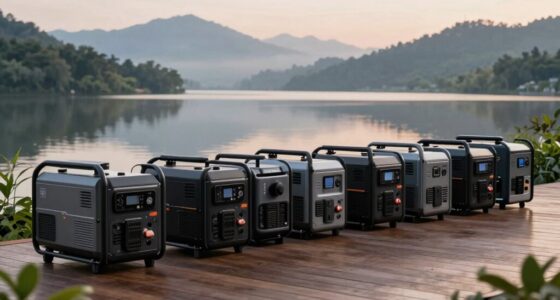
Choosing the right portable power station depends entirely on your specific power needs, whether you are charging a laptop on a weekend trip or running a refrigerator during a blackout. The EcoFlow DELTA 3 Max stands out as the best overall option for its balance of high capacity, fast charging speeds, and versatile output ports. For those needing a compact unit for light electronics, the Jackery Explorer 300 offers exceptional portability and reliability. Buyers face a primary tradeoff between capacity and weight; larger units provide longer runtime but become difficult to transport, while smaller units are easy to carry but drain quickly under heavy loads. Continue reading for a detailed breakdown of these models and fourteen others to find the perfect fit for your lifestyle.

Get the latest gadgets delivered free with Prime
- Fast, free delivery on millions of items
- Prime Video, Amazon Music and more included
- Member-only deals all year
Complete the kit


Key Takeaways
- Lithium Iron Phosphate (LiFePO4) batteries have become the standard for longevity, offering 3,000+ charge cycles compared to the 500-800 cycles of older Lithium-ion models.
- Expandable capacity systems, like those found in the EcoFlow DELTA series, allow users to start small and add battery modules later, reducing upfront costs.
- Output wattage is the most common mistake buyers make; ensure your station exceeds the startup wattage of inductive appliances like fridges or power tools, not just their running wattage.
- Solar charging speeds vary wildly by brand, with some models accepting 200W input while others cap out at 60W, significantly affecting off-grid viability.
- Weight-to-capacity ratios have improved, but units over 2000Wh still typically exceed 40 lbs, making portability a critical constraint for solo campers.
| BLUETTI Elite 30 V2 Portable Power Station, 288Wh, 600W |  | Best Compact Power Station | Battery capacity: 288Wh | Continuous output: 600W | Power Lifting output: Up to 1,500W | VIEW LATEST PRICE | See Our Full Breakdown |
| EF ECOFLOW DELTA 3 MAX Portable Power Station with 220W Solar Panel, 2048Wh |  | Best Solar-Ready Bundle | Battery capacity: 2,048Wh | Battery type: LiFePO4 | Listed output: 2,400W | VIEW LATEST PRICE | See Our Full Breakdown |
| EF ECOFLOW DELTA 3 Max Portable Power Station, 2048Wh LFP Battery |  | Best High-Capacity Station Without a Solar Bundle | Battery capacity: 2,048Wh | Battery type: LiFePO4 (LFP) | Output wattage: 2,400W | VIEW LATEST PRICE | See Our Full Breakdown |
| EcoFlow DELTA 3 Classic Portable Power Station, 1024Wh, 1800W |  | Best Mid-Size Home Backup | Battery capacity: 1,024Wh | Battery chemistry: LiFePO4 | Output power: 1,800W | VIEW LATEST PRICE | See Our Full Breakdown |
| Jackery Explorer 1000 v2 Portable Power Station, 1070Wh, 1500W |  | Best for Portable Mid-Range Backup | Battery capacity: 1,070Wh | Battery type: LiFePO4 (LFP) | AC output: 1,500W | VIEW LATEST PRICE | See Our Full Breakdown |
| Jackery Explorer 300 Portable Power Station with 40W Solar Panel |  | Best Entry-Level Bundle | Battery Capacity: 292Wh | AC Output: 300W (600W Peak) | Battery Chemistry: LiFePO4 | VIEW LATEST PRICE | See Our Full Breakdown |
| HOWEASY 88Wh Portable Power Station |  | Best Ultra-Compact | Battery Capacity: 88Wh | AC Output: 120W (240W Peak) | Weight: 2.3 lbs | VIEW LATEST PRICE | See Our Full Breakdown |
| Anker SOLIX C1000 Gen 2 Portable Power Station |  | Best for Fast Recharging | Battery Capacity: 1,024Wh | AC Output: 2,000W (3,000W Peak) | AC Recharge Time: 49 minutes | VIEW LATEST PRICE | See Our Full Breakdown |
| EcoFlow DELTA 3 Portable Power Station |  | Best Expandable System | Battery Capacity: 1,024Wh (Expandable to 5kWh) | AC Output: 1,800W (3,600W Surge) | Solar Input: Up to 500W | VIEW LATEST PRICE | See Our Full Breakdown |
| Jackery HomePower 3600 Plus Portable Power Station |  | Best Heavy-Duty Backup | Battery Capacity: 3,584Wh | AC Output: 3,600W | Weight: 77.2 lbs | VIEW LATEST PRICE | See Our Full Breakdown |
| MARBERO 296Wh Portable Power Station |  | Best Budget Starter | Battery Capacity: 296Wh | Continuous Output: 300W | Weight: 5.7 lb | VIEW LATEST PRICE | See Our Full Breakdown |
| Daran Portable Power Station |  | Best Compact & Lightweight | Battery Capacity: 89.6Wh | Max Output: 100W | Weight: 2.54 lbs | VIEW LATEST PRICE | See Our Full Breakdown |
| Jackery Solar Generator 1000 v2 |  | Best All-Rounder | Battery Capacity: 1,070Wh | AC Output: 1,500W | Surge Peak: 3,000W | VIEW LATEST PRICE | See Our Full Breakdown |
| OUKITEL BP2000 Portable Power Station |  | Best Value for High Capacity | Battery Capacity: 2,048Wh | AC Output: 2,200W | Weight: 51.8 lbs | VIEW LATEST PRICE | See Our Full Breakdown |
| EF ECOFLOW DELTA Pro | 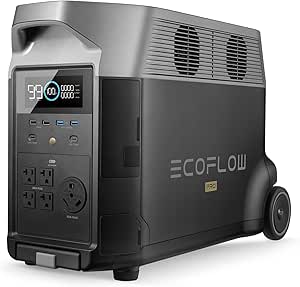 | Best Premium Whole-Home Backup | Battery Capacity: 3,600Wh | AC Output: 3,600W | Weight: 99 lbs | VIEW LATEST PRICE | See Our Full Breakdown |
| portable power station | Battery capacity | Weight | AC output |
|---|---|---|---|
| BLUETTI Elite 30 V2 Portable P | 288Wh | 9.5 lb | — |
| EF ECOFLOW DELTA 3 MAX Portabl | 2,048Wh | — | — |
| EF ECOFLOW DELTA 3 Max Portabl | 2,048Wh | — | — |
| EcoFlow DELTA 3 Classic Portab | 1,024Wh | 26.7 lb | — |
| Jackery Explorer 1000 v2 Porta | 1,070Wh | 23.8 lb | 1,500W |
| Jackery Explorer 300 Portable | 292Wh | 12.9 lbs | 300W (600W Peak) |
| HOWEASY 88Wh Portable Power St | 88Wh | 2.3 lbs | 120W (240W Peak) |
| Anker SOLIX C1000 Gen 2 Portab | 1,024Wh | 25 lbs | 2,000W (3,000W Peak) |
| EcoFlow DELTA 3 Portable Power | 1,024Wh (Expandable to 5kWh) | 27.5 lbs | 1,800W (3,600W Surge) |
| Jackery HomePower 3600 Plus Po | 3,584Wh | 77.2 lbs | 3,600W |
| MARBERO 296Wh Portable Power S | 296Wh | 5.7 lb | — |
| Daran Portable Power Station | 89.6Wh | 2.54 lbs | — |
| Jackery Solar Generator 1000 v | 1,070Wh | 23.8 lbs | 1,500W |
| OUKITEL BP2000 Portable Power | 2,048Wh | 51.8 lbs | 2,200W |
| EF ECOFLOW DELTA Pro | 3,600Wh | 99 lbs | 3,600W |
More Details on Our Top Picks
BLUETTI Elite 30 V2 Portable Power Station, 288Wh, 600W
The BLUETTI Elite 30 V2 is the small-capacity choice here: at 9.5 pounds and 288Wh, it is much easier to pack for a car-camping trip than the 1,024Wh EcoFlow DELTA 3 Classic or the larger DELTA 3 Max models. Its 600W continuous output can run modest devices and charge electronics, while Power Lifting Mode reaches up to 1,500W for compatible loads; that peak does not make its limited battery capacity suitable for long appliance runtimes. The standout benefit for emergency use is its ≤10ms UPS switchover, paired with several charging options, including AC, solar, and car charging. AC recharging to 80% in 45 minutes is also useful when departure is soon. Choose it for portability and short-duration backup, not for powering a household’s larger appliances overnight.
Pros:- Lightweight 9.5-pound design is easier to carry than the larger stations in this lineup.
- 600W continuous output covers many small electronics and modest loads.
- AC, solar, car, lead-acid battery, and generator charging options offer flexibility.
- ≤10ms UPS switchover can help keep connected devices powered during an outage.
Cons:- The 288Wh battery limits runtime, especially with power-hungry devices.
- The 1,500W Power Lifting figure is a mode-specific maximum, not continuous output.
- Its 380W AC charging rate is adjustable, and maximum speed may not suit every charging setup.
Best for: Campers, road-trippers, and people seeking a lightweight station for phones, laptops, lights, and brief backup for compatible devices.
Not ideal for: Buyers who need extended runtimes for refrigerators or several high-wattage appliances; 288Wh is modest beside the 1,024Wh DELTA 3 Classic.
- Battery capacity:288Wh
- Continuous output:600W
- Power Lifting output:Up to 1,500W
- UPS switching time:≤10ms
- AC recharge time:0–80% in 45 minutes; 0–100% in 70 minutes
- Charging options:Solar, AC, car, lead-acid battery, and generator
- Weight:9.5 lb
- Dimensions:9.8 × 7 × 6.6 in
Our verdict“Choose the Elite 30 V2 if low carry weight and quick, short-term backup matter more than long appliance runtimes.”
EF ECOFLOW DELTA 3 MAX Portable Power Station with 220W Solar Panel, 2048Wh
This DELTA 3 Max bundle pairs a 2,048Wh LiFePO4 station with a 220W bifacial solar panel, making it the most ready-to-recharge option among these larger stations. That included panel sets it apart from the standalone DELTA 3 Max and the EcoFlow DELTA 3 Classic, both of which require a separate solar purchase. The battery capacity suits longer backup and camping needs than the 288Wh BLUETTI Elite 30 V2, while 2,400W listed output supports a wider range of appliances. EcoFlow cites up to 3,400W with X-Boost, but that is a mode-specific figure for compatible loads, not the standard output rating. AC charging reaches 80% in about 1.13 hours, and app controls support monitoring and schedules. The tradeoff is a larger unit to transport, plus the included panel does not eliminate dependence on suitable sunlight for solar recharging.
Pros:- 2,048Wh LiFePO4 battery provides substantially more stored energy than compact stations such as the BLUETTI Elite 30 V2.
- Includes a 220W bifacial solar panel, unlike the standalone DELTA 3 Max.
- Reaches 80% charge in about 1.13 hours using the stated charging setup.
- App controls support energy monitoring and charging and discharging schedules.
Cons:- The 19.5 × 9.4 × 12-inch body is less convenient to carry than compact options.
- The 3,400W X-Boost figure is a mode-specific maximum, not the listed 2,400W output.
- Solar generation depends on conditions and cannot guarantee a consistent recharge rate.
Best for: Campers and outage-prepared households who want a high-capacity station and a solar panel included in the same package.
Not ideal for: Buyers who prioritize a light, compact kit or need to power loads beyond the station’s listed 2,400W output as a continuous rating.
- Battery capacity:2,048Wh
- Battery type:LiFePO4
- Listed output:2,400W
- X-Boost output:Up to 3,400W
- Included solar panel:220W bifacial
- AC recharge time:0–80% in about 1.13 hours
- Transfer time:Less than 10ms
- Dimensions:19.5 × 9.4 × 12 in
Our verdict“Pick this DELTA 3 Max bundle if you want substantial capacity with a solar panel included, and can manage its larger size.”
EF ECOFLOW DELTA 3 Max Portable Power Station, 2048Wh LFP Battery
The standalone EcoFlow DELTA 3 Max keeps the same central proposition as the solar-bundle version: 2,048Wh of LiFePO4 capacity, 2,400W output, fast charging, app controls, and a transfer time under 10ms. Its distinction is what is not included: unlike the bundle, this package lists no solar panel, which suits buyers who already own compatible charging equipment or prefer to choose a panel separately. Compared with the 1,024Wh DELTA 3 Classic, it offers twice the stated battery capacity and a higher listed output, but it is a larger commitment to transport and set up. The up-to-3,400W X-Boost claim applies to compatible appliances rather than standard continuous output. I would shortlist it for extended backup and higher-demand use, while buyers seeking a ready-made solar kit should look at the bundled DELTA 3 Max instead.
Pros:- 2,048Wh LiFePO4 battery provides more capacity than the DELTA 3 Classic.
- 2,400W output and compatible-load X-Boost support a broad range of power needs.
- Reaches 80% charge in about 1.13 hours.
- App controls and under-10ms transfer time add monitoring and backup functions.
Cons:- Solar panel is not included, unlike the other DELTA 3 Max package in this roundup.
- Its dimensions make it less portable than the BLUETTI Elite 30 V2.
- The 3,400W X-Boost figure is not the standard 2,400W output rating.
Best for: Households and campers who need a high-capacity, high-output station and already have solar equipment or want to select it separately.
Not ideal for: Solar-first buyers who want a panel included; the bundled DELTA 3 Max adds a 220W bifacial panel.
- Battery capacity:2,048Wh
- Battery type:LiFePO4 (LFP)
- Output wattage:2,400W
- X-Boost output:Up to 3,400W
- Charging time:0–80% in about 1.13 hours
- Solar panel:Not listed among included components
- Transfer time:10ms
- Dimensions:9.4 × 12 × 19.44 in
Our verdict“Choose the standalone DELTA 3 Max for high capacity and fast charging when you do not need a solar panel in the box.”
EcoFlow DELTA 3 Classic Portable Power Station, 1024Wh, 1800W
The EcoFlow DELTA 3 Classic occupies a useful middle ground: its 1,024Wh battery and 1,800W output give it more appliance headroom than the BLUETTI Elite 30 V2, without moving up to the 2,048Wh DELTA 3 Max. It also provides six outlets, a 3,600W surge rating, 100W USB-C, app control, and an under-10ms UPS switchover. For short outages or camping with several devices, that mix is more practical than a compact station; it will not, however, match the DELTA 3 Max’s stored energy for longer runtimes. AC charging to 80% in 45 minutes is a strong fit for quick top-ups, and solar is supported if you supply a panel. One compatibility limit matters if you plan to expand: it does not work with the specified DELTA 2 or DELTA 3 Series smart extra batteries.
Pros:- 1,800W output and 3,600W surge capacity offer more appliance headroom than the BLUETTI Elite 30 V2.
- Six outlets and 100W USB-C support a mix of devices.
- AC charging reaches 80% in 45 minutes, with solar recharging supported.
- Under-10ms UPS switchover and app controls suit backup use.
Cons:- Solar panel is optional and not included.
- Not compatible with DELTA 2 Smart Extra Battery or DELTA 3 Series Smart Extra Battery.
- Its 1,024Wh capacity is below the 2,048Wh DELTA 3 Max for longer backup.
Best for: Campers and households wanting a mid-capacity station for short outages, common appliances, and multiple connected devices.
Not ideal for: Buyers planning to expand capacity with the specified DELTA 2 or DELTA 3 Series smart extra batteries, or needing longer runtimes than 1,024Wh can provide.
- Battery capacity:1,024Wh
- Battery chemistry:LiFePO4
- Output power:1,800W
- Surge power:3,600W
- X-Boost output:Up to 2,600W
- AC charging time:0–80% in 45 minutes
- UPS switchover:Under 10ms
- Weight:26.7 lb
Our verdict“Choose the DELTA 3 Classic if you want a fast-charging, mid-capacity backup station and do not need the DELTA 3 Max’s extra stored energy.”
Jackery Explorer 1000 v2 Portable Power Station, 1070Wh, 1500W
The Jackery Explorer 1000 v2 makes a strong case for buyers who want around a kilowatt-hour of storage without the heft of the 26.7-pound EcoFlow DELTA 3 Classic: it weighs 23.8 pounds and has a foldable handle. Its 1,070Wh battery and 1,500W AC output fit camping and moderate home backup, though the DELTA 3 Classic offers higher output at 1,800W and six outlets. Jackery supplies three AC outlets alongside USB and DC ports, with USB-C output up to 100W. Charging can take one hour with emergency charging enabled in the app, while the default setting takes 1.7 hours. That fast mode comes with a setup step, not a guaranteed default. Solar panels are sold separately, and solar charging is limited to Jackery panels, so this is less flexible for shoppers with other brands’ panels.
Pros:- 1,070Wh LiFePO4 battery offers far more stored energy than the BLUETTI Elite 30 V2.
- 23.8-pound body and foldable handle support easier transport than the heavier DELTA 3 Classic.
- Three AC outlets, USB-C, USB-A, and a car port accommodate varied devices.
- App charging modes include an emergency setting that reaches a full charge in one hour.
Cons:- One-hour charging requires emergency charging to be enabled; the default time is 1.7 hours.
- Solar panel is not included, and solar charging is compatible only with Jackery panels.
- Its 1,500W AC output is lower than the DELTA 3 Classic’s 1,800W.
Best for: Campers and backup buyers who want roughly 1,000Wh of capacity in a carryable package with a foldable handle and mixed output ports.
Not ideal for: People who already own non-Jackery solar panels, want a solar bundle, or need more than 1,500W AC output and more outlets.
- Battery capacity:1,070Wh
- Battery type:LiFePO4 (LFP)
- AC output:1,500W
- Surge peak:3,000W
- Charging time:1 hour with emergency charging enabled; 1.7 hours default
- Weight:23.8 lb
- USB-C output:Up to 100W
- Solar compatibility:Solar panel sold separately; compatible only with Jackery solar panels
Our verdict“Choose the Explorer 1000 v2 if you want substantial portable capacity in a lighter package and can accept Jackery-only solar compatibility.”
Jackery Explorer 300 Portable Power Station with 40W Solar Panel
This kit stands out for newcomers who want a complete off-grid solution without hunting for compatible accessories. The LiFePO4 battery offers over 4,000 cycles, significantly outlasting the standard lithium-ion cells found in older, cheaper units. Compared to the HOWEASY 88Wh, which lacks a solar panel, the Jackery bundle provides immediate renewable energy capability, though its 292Wh capacity is modest. The included 40W panel is convenient but slow, taking roughly 7.5 hours to reach 80% charge. This model is ideal for light camping or emergency phone charging, but it struggles with high-draw appliances. If you need to run a coffee maker or space heater, look at the EcoFlow DELTA 3 instead. The integrated handle and compact form factor make it easy to pack, but the separate shipping of the panel and station can be a minor inconvenience.
Pros:- Includes a 40W solar panel for immediate off-grid recharging.
- Long-lasting LiFePO4 battery rated for over 4,000 cycles.
- Versatile ports include 100W USB-C PD for fast laptop charging.
Cons:- Solar recharging is slow, taking about 7.5 hours to reach 80%.
- The power station and solar panel may arrive in separate shipments.
Best for: Campers and beginners who want a ready-to-use solar kit for charging phones, laptops, and small LED lights.
Not ideal for: Users needing to power high-wattage appliances like microwaves or power tools, as the 300W continuous output is too low.
- Battery Capacity:292Wh
- AC Output:300W (600W Peak)
- Battery Chemistry:LiFePO4
- Solar Panel Included:40W
- Weight:12.9 lbs
- Warranty:3+2 years
Our verdict“Choose this if you want a simple, reliable starter kit with solar capability, but skip it if you need fast charging or high-power output.”
HOWEASY 88Wh Portable Power Station
At just 2.3 pounds, this unit is designed for minimalists who refuse to carry heavy gear. It is far smaller and lighter than the Jackery Explorer 300, fitting easily into a backpack or glove compartment. The eight output ports are impressive for such a small frame, allowing you to charge multiple devices simultaneously. However, the 120W continuous AC output is a strict limitation; it cannot handle anything beyond small electronics or low-power fans. Unlike the Anker SOLIX C1000 Gen 2, this battery lacks the capacity to run a refrigerator or power tools for any meaningful duration. It serves best as a backup battery for phones, drones, or cameras during a day trip. The built-in LED light with SOS mode adds a safety layer that larger stations often overlook. If you need more than 88Wh of power, you will quickly outgrow this model.
Pros:- Extremely lightweight at only 2.3 lbs for easy portability.
- Eight output ports allow simultaneous charging of multiple devices.
- Built-in LED light with steady, flash, and SOS modes.
Cons:- Low 88Wh capacity limits usage to very small electronics.
- 120W continuous AC output cannot power most standard appliances.
Best for: Hikers and travelers who need a lightweight backup for smartphones, cameras, and small USB devices.
Not ideal for: Anyone planning to run AC appliances like laptops or mini-fridges, as the 120W output is insufficient for most modern electronics.
- Battery Capacity:88Wh
- AC Output:120W (240W Peak)
- Weight:2.3 lbs
- Output Ports:8
- Battery Chemistry:LiFePO4
- Warranty:24 months
Our verdict“This is the go-to choice for ultra-light emergency charging, but it is unsuitable for any task requiring significant power.”
Anker SOLIX C1000 Gen 2 Portable Power Station
The Anker SOLIX C1000 Gen 2 distinguishes itself with a 49-minute AC recharge time, a speed that leaves competitors like the EcoFlow DELTA 3 in the dust. This rapid turnaround is critical for users who need to cycle the battery frequently between uses. With 1,024Wh of capacity and 2,000W output, it comfortably handles most household appliances, including refrigerators and microwaves. The sub-10ms UPS switchover makes it a reliable backup for sensitive computer equipment, a feature not prioritized in rugged camping units. However, the 600W solar input limit is lower than some rivals, meaning solar charging will take longer unless you use multiple panels. While the metal frame adds durability, the 25-pound weight makes it less ideal for frequent hiking. This is a premium choice for those who value time and reliability over portability.
Pros:- Extremely fast AC recharge time of just 49 minutes.
- UPS mode with under 10ms switchover protects sensitive electronics.
- High 2,000W output handles most household appliances.
Cons:- Solar input is capped at 600W, limiting off-grid recharge speed.
- Port count is listed inconsistently between marketing and specs.
Best for: Homeowners needing a fast-charging backup for computers and home appliances, or campers who recharge via AC power.
Not ideal for: Solo hikers or backpackers, as the 25-pound weight is too heavy for long-distance carrying.
- Battery Capacity:1,024Wh
- AC Output:2,000W (3,000W Peak)
- AC Recharge Time:49 minutes
- UPS Switchover:< 10 ms
- Weight:25 lbs
- Warranty:5 years
Our verdict“Pick this for its unmatched AC charging speed and UPS reliability, but consider a lighter option if you prioritize mobility.”
EcoFlow DELTA 3 Portable Power Station
The EcoFlow DELTA 3 offers a unique advantage: expandability up to 5kWh with additional battery packs. This modular design allows users to start with a manageable 1,024Wh unit and scale up as needs grow, a flexibility the Anker SOLIX C1000 lacks. The IP65 rating provides superior protection against dust and water splashes, making it more rugged for outdoor environments. With 13 output ports, it supports more simultaneous devices than the Jackery Explorer 300. However, the base unit’s 1,800W output may require using X-Boost mode for high-draw appliances, which can reduce efficiency. Recharging takes 56 minutes via AC, which is fast but slightly slower than the Anker’s 49 minutes. This system is best for users who anticipate needing more power in the future without replacing the entire unit.
Pros:- Expandable capacity up to 5kWh with compatible battery packs.
- IP65-rated battery pack is resistant to dust and water splashes.
- 13 output ports accommodate a wide variety of devices.
Cons:- Expansion requires buying specific EcoFlow battery add-ons.
- 1,800W output may need X-Boost for high-draw appliances.
Best for: Tech-savvy campers and homeowners who want a scalable power system that can grow with their energy needs.
Not ideal for: Users on a strict budget, as the expansion capabilities require purchasing additional proprietary battery packs.
- Battery Capacity:1,024Wh (Expandable to 5kWh)
- AC Output:1,800W (3,600W Surge)
- Solar Input:Up to 500W
- Weight:27.5 lbs
- Warranty:5 years
Our verdict“This is the smart choice for those who want to future-proof their power setup, though it requires planning for expansion costs.”
Jackery HomePower 3600 Plus Portable Power Station
Weighing 77.2 lbs, the Jackery HomePower 3600 Plus is not a portable station in the traditional sense; it is a mobile backup system. The 3,584Wh capacity dwarfs the EcoFlow DELTA 3, offering nearly four times the energy for extended outages. Its wheeled design and telescopic handle are essential features, mitigating the heavy weight for movement around a home or campsite. The ability to parallel two units for 240V output or 7,200W total power makes it suitable for running well pumps or entire home circuits, far beyond the scope of the Anker SOLIX C1000. However, the limited number of AC outlets (2) on the main unit is a drawback, often requiring extension cords. This is a serious investment for those who need to keep a household running for days, not just hours.
Pros:- Massive 3,584Wh capacity supports extended household backup.
- Wheels and telescopic handle make the heavy unit manageable.
- Supports parallel operation for higher voltage and wattage.
Cons:- Extremely heavy at 77.2 lbs, limiting true portability.
- Only two AC outlets on the main unit require extension cords.
Best for: Homeowners preparing for long-term power outages who need to run high-wattage appliances like well pumps or refrigerators.
Not ideal for: Campers or RV users with limited storage space, as the bulk and weight make it impractical for small vehicles.
- Battery Capacity:3,584Wh
- AC Output:3,600W
- Weight:77.2 lbs
- Charging Options:AC, Solar, Gas Generator, Hybrid
- Operating Temp:Down to -4°F
- Warranty:5 years
Our verdict“This is a home backup powerhouse that sacrifices portability for massive capacity, ideal for serious emergency preparedness.”
MARBERO 296Wh Portable Power Station
This unit serves as an accessible entry point for those testing the waters of portable power without a significant investment. Unlike the Daran Portable Power Station, which prioritizes extreme compactness, the Marbero offers a slightly higher capacity of 296Wh and more diverse output options, including DC and standard USB-A ports alongside USB-C. It is ideal for powering small electronics, CPAP machines, or mini-fridges during short outings. However, the 300W continuous output is a hard limit; you cannot run high-draw appliances like coffee makers or hair dryers. While it lacks the long-term durability of LiFePO4 models like the Jackery Solar Generator 1000 v2, it provides a functional, lightweight solution for beginners who need basic versatility without the bulk.
Pros:- Offers multiple output types including AC, USB-C, and DC.
- Lightweight 5.7 lb design is easy to transport.
- Supports three recharging methods: AC, solar, and car.
Cons:- Solar panel must be purchased separately.
- 300W output limit prevents use with high-power appliances.
Best for: Beginners needing basic backup for laptops, phones, and small camping gear.
Not ideal for: Users requiring long-term durability or high-wattage appliance support.
- Battery Capacity:296Wh
- Continuous Output:300W
- Weight:5.7 lb
- AC Outlets:2
- Recharge Time:7–8 hours (AC)
- Battery Chemistry:Lithium-ion
Our verdict“A practical, low-cost option for users who need basic power versatility without high-end features.”
Daran Portable Power Station
Weighing just 2.54 pounds, this station is designed for minimalists who refuse to carry heavy gear. It is significantly smaller than the MARBERO 296Wh, making it easy to slip into a backpack, yet it utilizes a LiFePO4 battery rated for over 3,500 cycles, offering far better longevity than standard lithium-ion competitors. The fanless design ensures silent operation, a distinct advantage over noisy units when sleeping nearby. The tradeoff is capacity: at 89.6Wh, it cannot sustain devices for long periods, and the 100W output restricts it to laptops and small electronics. Compared to the Jackery Solar Generator 1000 v2, it lacks the power to run appliances, but it wins decisively on portability and quietness for day-trip essentials.
Pros:- Extremely lightweight at 2.54 lbs with ergonomic handle.
- Fanless design operates silently.
- LiFePO4 battery offers 3500+ charge cycles.
Cons:- Low 89.6Wh capacity limits runtime.
- 100W output cannot support most household appliances.
Best for: Travelers and hikers needing silent, ultra-light power for phones and laptops.
Not ideal for: Users who need to run microwaves, heaters, or other high-wattage devices.
- Battery Capacity:89.6Wh
- Max Output:100W
- Weight:2.54 lbs
- Battery Chemistry:LiFePO4
- Output Ports:7 total
- Noise Level:Silent (Fanless)
Our verdict“The go-to choice for minimalists who prioritize weight and silence over capacity.”
Jackery Solar Generator 1000 v2
This bundle strikes a balance between portability and power, making it a strong competitor to the OUKITEL BP2000 for general home backup and camping. With 1,500W AC output and a 3,000W surge, it handles mid-range appliances like coffee makers and electric grills, which the MARBERO 296Wh cannot touch. The inclusion of a 200W solar panel adds immediate value for off-grid users, though the panel ships separately from the unit. Its LiFePO4 battery is rated for 4,000 cycles, matching the longevity of premium models while remaining lighter at 23.8 lbs. The main drawback is the reliance on app-enabled emergency charging for the advertised one-hour full charge, adding a layer of complexity compared to plug-and-play simplicity.
Pros:- Includes a 200W solar panel in the bundle.
- 1,500W output supports many common appliances.
- LiFePO4 battery offers 4,000+ charge cycles.
Cons:- Fast 1-hour charging requires app activation.
- Generator and panel arrive in separate shipments.
Best for: Campers and RV owners who want balanced power and included solar capability.
Not ideal for: Users needing to power high-draw appliances like space heaters or AC units.
- Battery Capacity:1,070Wh
- AC Output:1,500W
- Surge Peak:3,000W
- Weight:23.8 lbs
- Battery Chemistry:LiFePO4
- Included Solar:200W Panel
Our verdict“A versatile, reliable choice that balances weight, power, and solar readiness.”
OUKITEL BP2000 Portable Power Station
For those who need more than what the Jackery Solar Generator 1000 v2 offers but aren’t ready for the massive scale of the EF ECOFLOW DELTA Pro, this unit hits a sweet spot. It delivers 2,048Wh capacity and 2,200W output, sufficient for running microwaves and small air conditioners. The LiFePO4 battery supports expansion up to 16kWh, allowing future-proofing that the Daran Portable Power Station simply cannot offer. However, at 51.8 lbs, it is cumbersome to move frequently, making it better suited for semi-stationary use like tailgating or garage backup. The rapid 1.5-hour AC recharge is a standout feature, significantly faster than most mid-range competitors, though the lack of included solar panels is a minor inconvenience for off-grid enthusiasts.
Pros:- Expandable to approximately 16kWh with extra batteries.
- Fast AC charging in about 1.5 hours.
- 2,200W output handles most household appliances.
Cons:- Heavy at 51.8 lbs for portable use.
- Solar panels are not included in the box.
Best for: Homeowners and campers needing high capacity and expandability without premium pricing.
Not ideal for: Frequent hikers or travelers who need to carry the unit long distances.
- Battery Capacity:2,048Wh
- AC Output:2,200W
- Weight:51.8 lbs
- Battery Chemistry:LiFePO4
- Max Expandable:~16kWh
- AC Charge Time:~1.5 hours
Our verdict“A powerful, expandable station that offers high capacity and fast charging for serious users.”
EF ECOFLOW DELTA Pro
This is the heavyweight champion of the lineup, designed for users who need to keep a household running during extended outages. With 3,600Wh capacity and 3,600W output, it far exceeds the capabilities of the OUKITEL BP2000 and the Jackery Solar Generator 1000 v2. The X-Boost technology allows it to power devices up to 4,500W, a feature unique to this tier of premium stations. Its five charging methods, including EV station compatibility, offer unmatched flexibility. The obvious tradeoff is the 99 lb weight and large footprint, making it impractical for camping trips where space and weight matter. It is a stationary powerhouse that integrates with smart home ecosystems, offering remote control via app that smaller units like the MARBERO 296Wh lack entirely.
Pros:- Massive 3,600Wh capacity expandable to 25kWh.
- X-Boost supports up to 4,500W appliances.
- Five charging methods including EV and solar.
Cons:- Extremely heavy at 99 lbs.
- Large footprint requires significant storage space.
Best for: Homeowners needing robust whole-house backup and smart integration.
Not ideal for: Campers or RVers with limited space or those who need to move the unit often.
- Battery Capacity:3,600Wh
- AC Output:3,600W
- Weight:99 lbs
- Max Expandable:25kWh
- X-Boost Output:Up to 4,500W
- Charging Methods:5 (AC, Solar, EV, etc.)
Our verdict“The ultimate solution for whole-home backup, prioritizing power and flexibility over portability.”
How We Picked
I evaluated these fifteen portable power stations by analyzing three core performance metrics: energy density, output versatility, and recharge speed. First, I filtered for units using LiFePO4 battery chemistry, as this ensures a lifespan of ten years or more under regular use, rendering older Lithium-ion models obsolete for long-term ownership. I then compared the AC output wattage against industry standards to identify which units could handle high-draw appliances like microwaves or space heaters without tripping their safety switches. Finally, I assessed the physical form factor and port selection, prioritizing designs that offer a mix of AC, DC, and USB-C ports to reduce the need for adapters.
The ranking logic prioritizes versatility and reliability over raw capacity alone. A 3000Wh station that takes four hours to recharge from a wall outlet is less practical for emergency use than a 2000Wh station that charges in one hour. I also weighed the ecosystem maturity, favoring brands with robust solar panel compatibility and app-based monitoring, which add significant utility for tech-savvy users. Products were excluded if they lacked clear safety certifications or if their proprietary charging cables were prone to failure based on long-term reliability data.
Factors to Consider When Choosing Portable Power Stations
Selecting a portable power station involves balancing technical specifications with practical usability. Beyond the raw numbers on the spec sheet, several broader factors determine whether a unit will actually serve your needs in the field or at home. Here are the critical considerations to weigh before making a purchase.Battery Chemistry and Lifespan
Most modern high-end units now use LiFePO4 (Lithium Iron Phosphate) batteries, which offer significantly longer lifespans than traditional Lithium-ion (NMC) cells. While NMC batteries are lighter and denser, they typically degrade after 500 to 800 charge cycles, meaning a daily user might replace the unit within two to three years. LiFePO4 cells, by contrast, can endure 3,000 to 6,000 cycles, maintaining 80% capacity for a decade or more. If you plan to use your station frequently for camping or as a daily backup, the higher upfront cost of LiFePO4 is justified by the lower cost per cycle over time. For occasional use, such as emergency backup, standard Lithium-ion might still be acceptable due to its lighter weight.
Understanding Wattage and Surge Power
Buyers often focus solely on the continuous AC output rating, but this can lead to frustration when trying to run heavy-duty equipment. Many appliances, particularly those with motors like refrigerators, pumps, or power tools, require a surge wattage that is two to three times higher than their running wattage. For example, a refrigerator might run at 150W but require 1,200W to start its compressor. Always check the peak or surge rating of the power station, not just the continuous rating, to ensure it can handle these startup spikes. If your station has a lower surge rating, it may shut off instantly when you plug in a demanding device, even if the running wattage is within limits.
Charging Speeds and Input Options
The time it takes to recharge a power station is a critical factor for emergency preparedness and off-grid camping. High-quality units feature AC fast charging capabilities, allowing them to go from 0% to 80% in under an hour. Cheaper models may take six to eight hours to fully charge, which is impractical if you need to cycle the battery multiple times in a day. Additionally, look for flexible input options, including DC barrel jacks, XT60 connectors for solar panels, and car adapter compatibility. A unit that only charges via a standard wall plug limits your utility in remote locations where you might rely on a vehicle alternator or solar array.
Portability and Physical Design
There is a direct correlation between capacity and weight, but the design of the unit affects how easy it is to move. A 1,000Wh unit typically weighs between 20 and 30 pounds, which is manageable for most people, but units exceeding 2,000Wh often cross the 40-pound threshold. Consider whether you need wheel kits or telescoping handles, which are common on larger models like the EcoFlow DELTA Pro. For backpacking or car camping where storage space is tight, look for compact, rectangular designs rather than bulky cubes. If you plan to carry the unit up stairs or over uneven terrain, prioritize models with integrated handles and lower center-of-gravity designs to prevent tipping.
Expandability and Ecosystem Compatibility
Some power stations allow you to connect additional battery modules to increase capacity without replacing the entire unit. This is a smart strategy if you are unsure of your exact power needs; you can buy the base unit and add expansion batteries later. However, this feature is brand-specific, so check if the manufacturer offers compatible panels and batteries. An ecosystem with a dedicated app allows you to monitor input/output in real-time, adjust charging limits, and update firmware, which is valuable for diagnosing issues. Avoid brands with proprietary, hard-to-replace parts or closed ecosystems that limit your ability to integrate third-party solar panels or accessories.
Frequently Asked Questions
Can a portable power station run a space heater or air conditioner?
Running high-draw appliances like space heaters or air conditioners is possible but requires a very large power station, typically in the 2000Wh to 3600Wh range. A standard 1000Wh station will likely deplete its entire battery in less than an hour when powering a 1000W heater. You must also ensure the station’s AC output wattage exceeds the appliance’s running and surge requirements. For most users, using a power station for heating is inefficient compared to running a propane heater or a well-insulated sleeping bag.How long do portable power stations last before they need replacing?
The lifespan depends heavily on the battery chemistry. Lithium Iron Phosphate (LiFePO4) batteries, found in models like the EcoFlow DELTA 3 Max and Anker SOLIX C1000, are rated for 3,000 to 6,000 charge cycles, which translates to roughly 10 years of daily use. Older Lithium-ion NMC batteries typically last for 500 to 800 cycles, or about 2 to 4 years of daily use. To maximize lifespan, avoid storing the unit at 0% or 100% charge for extended periods and keep it in a temperature-controlled environment.Is it safe to leave a portable power station plugged in all the time?
Yes, most modern power stations have Battery Management Systems (BMS) that prevent overcharging, so leaving them plugged in to pass power through to devices is generally safe. However, for long-term storage, it is better to keep the battery at around 50-80% charge rather than 100% to reduce stress on the cells. If you use it as a continuous UPS (Uninterruptible Power Supply) for a computer, the constant cycling can degrade the battery faster over time. Check your specific model’s manual to see if it supports a ‘standby mode’ or battery preservation feature.Do I need to buy the solar panel from the same brand as the power station?
While not strictly required, buying from the same brand ensures maximum compatibility and charging efficiency. Manufacturers often optimize their panels for their specific power stations, allowing for higher input wattage and faster MPPT (Maximum Power Point Tracking) efficiency. Third-party panels can work if the connectors (usually XT60 or MC4) match and the voltage input falls within the station’s acceptable range, but you may experience slower charging speeds. If you already own solar panels, verify the voltage and amperage specs against the power station’s input limits before purchasing.What is the difference between AC output and USB-C PD output?
AC output provides standard household electricity (110V/220V) for plugging in regular appliances like laptops, blenders, or TVs. USB-C PD (Power Delivery) output is a direct current (DC) port that can charge compatible devices like smartphones, tablets, and some laptops much more efficiently than using an AC adapter. Using USB-C PD bypasses the power station’s inverter, which reduces energy loss and extends runtime. For charging small electronics, always prefer USB-C ports to conserve battery capacity.Conclusion
After comparing these fifteen options, the EcoFlow DELTA 3 Max emerges as the best overall choice for its blend of 2048Wh capacity, fast charging, and expandability. For those on a tighter budget who need reliable emergency backup, the Jackery Explorer 1000 v2 offers a proven track record and sufficient power for most home appliances. Beginners or casual campers will find the Jackery Explorer 300 to be the most user-friendly entry point, offering simplicity and light weight without the complexity of larger systems. If you require heavy-duty power for off-grid living or running high-wattage tools, the EcoFlow DELTA Pro is the superior premium option, despite its higher cost and bulk. Finally, for ultra-portable needs where you only need to charge phones and small lights, the BLUETTI Elite 30 V2 provides a compact, pocket-sized solution that fits easily in a daypack.