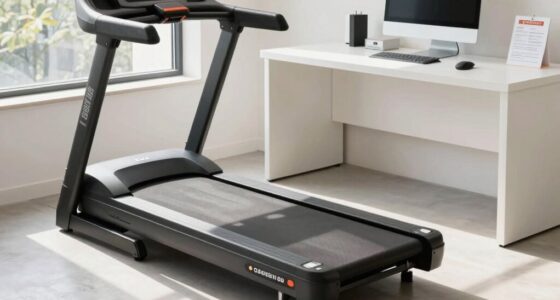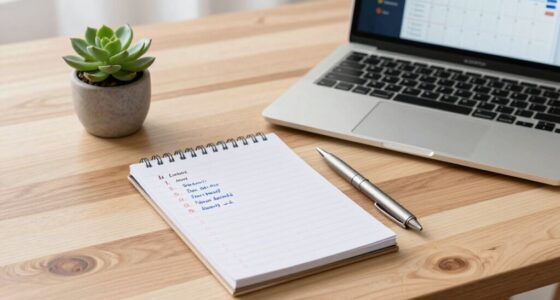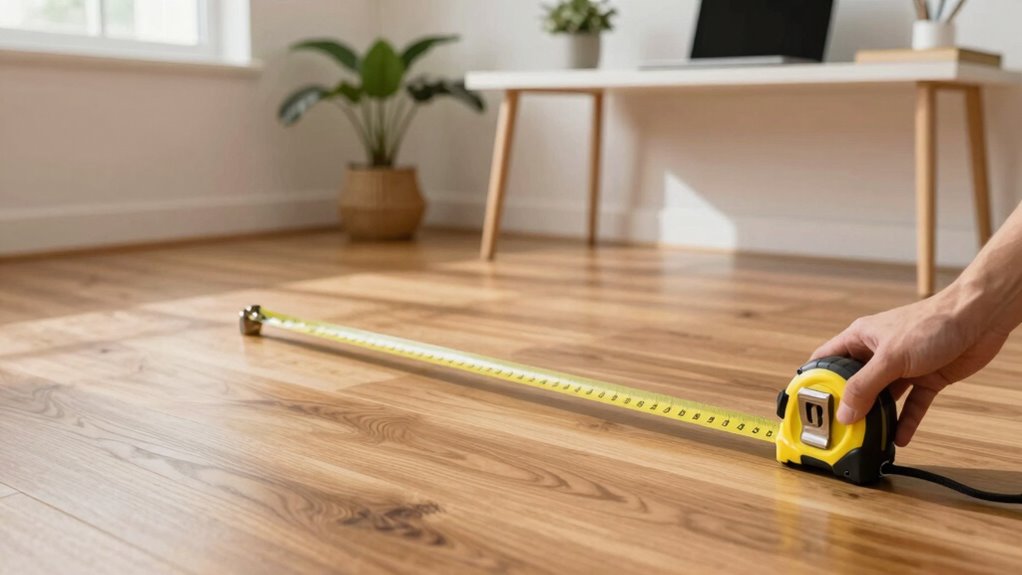

To measure your workspace correctly before buying anything, start by gathering essential tools like a tape measure, ruler, or laser device. Measure the length, width, and height of your room, including ceiling heights and surface irregularities. Don’t forget to check doorways, windows, and built-ins for clearance, and identify any obstructions or uneven surfaces. Double-check all measurements for accuracy and organization to avoid costly mistakes. Keep these tips in mind as you plan your space for a perfect fit.
Key Takeaways
- Use a reliable measuring tool like a tape measure or laser distance measurer for accuracy.
- Measure all room dimensions, including walls, windows, doors, and built-ins, at multiple points for consistency.
- Record measurements systematically with clear labels, units, and notes for easy reference.
- Check for surface irregularities and ensure surfaces are level to guarantee stability and proper furniture fit.
- Verify measurements before purchasing to prevent errors, ensuring furniture and equipment will fit and allow for clearance.

Laser Measure 50M/165ft,RockSeed Digital Laser Distance Meter with 2 Bubble Levels,Portable M/in/Ft Unit Switching Backlit LCD and Measuring Distance/Area/Volume/Pythagorean
★ HIGH ACCURACY & UNIT SWITCHABLE ★ With unique 2 Bubble Levels, providing more precise measurement compared to…
As an affiliate, we earn on qualifying purchases.
As an affiliate, we earn on qualifying purchases.
Why Accurate Workspace Measurements Matter Before Shopping
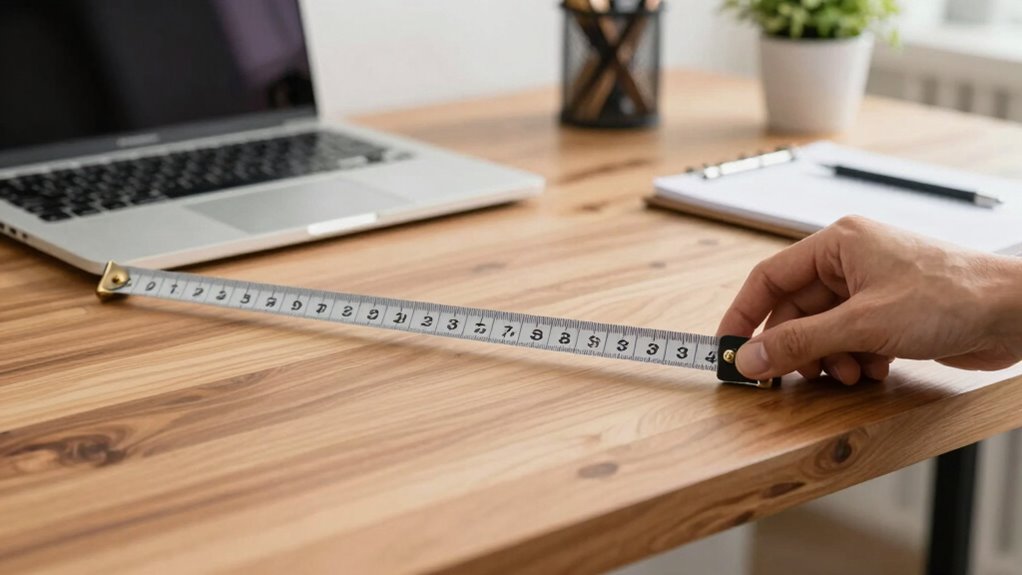
Knowing the exact size of your workspace is essential before you start shopping for new furniture or equipment. Accurate measurements guarantee your space planning is effective, helping you choose items that fit comfortably without overcrowding. It also allows you to prioritize ergonomic considerations, such as proper desk height and chair placement, to promote comfort and reduce strain. When you measure precisely, you avoid costly mistakes like purchasing oversized desks or incompatible accessories. This careful approach saves time and money, assuring your workspace is both functional and inviting. By understanding your space’s dimensions, you set a solid foundation for designing a workspace that enhances productivity and comfort. Additionally, considering natural light and wellness touches can transform your workspace into a cozy, inspiring retreat. Recognizing Accurate measurements as a crucial step ensures your furniture and layout decisions are truly tailored to your environment. Moreover, space optimization techniques can further improve the efficiency and aesthetic of your workspace, making the most of every inch. Conducting a space assessment can also help identify potential obstructions that could impact furniture placement or movement within the space.
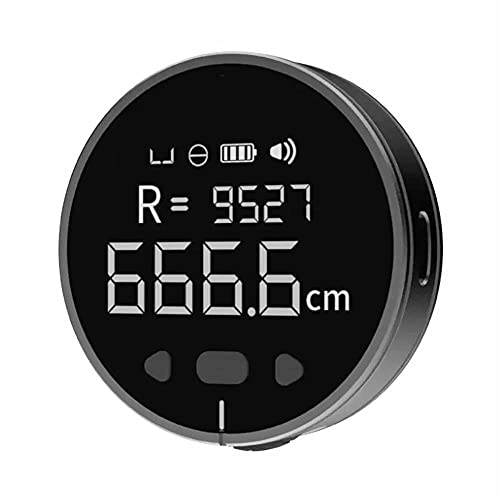
HomeMagician 324 Ft Electronic Digital Tape Measure with LCD Display Digital Ruler Rechargeable Small Smart Rolling Measuring Tool for Flat Curved Diameter Odd Shape Ideal Surprise for You
IMPORTANT!- Please read the instructrion or watch the video first before order and please note that this digital…
As an affiliate, we earn on qualifying purchases.
As an affiliate, we earn on qualifying purchases.
Gather the Right Tools for Measuring Your Space
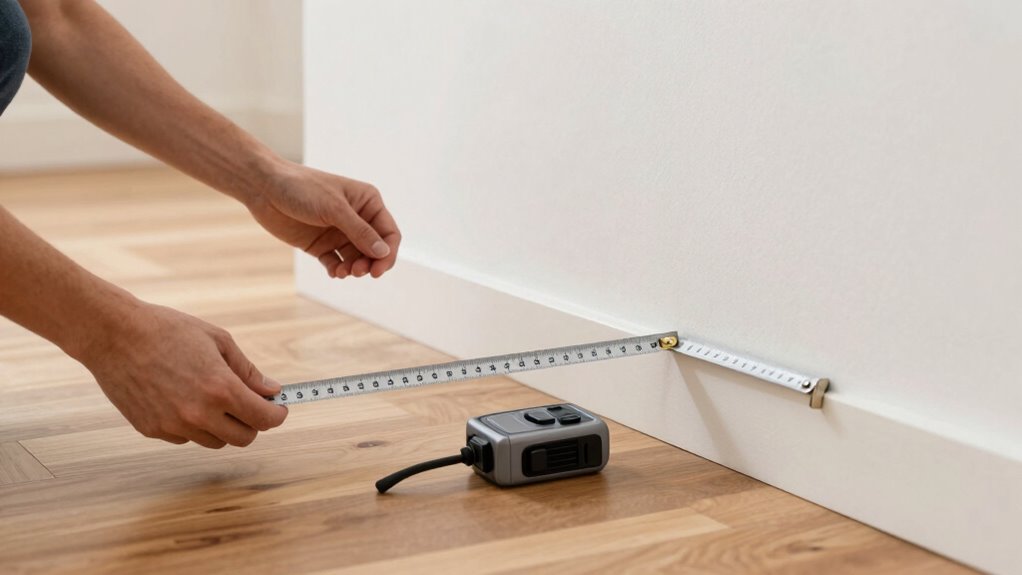
To make certain your measurements are accurate, you need to gather the right tools before you start. Essential measurement tools include a tape measure, a ruler, or a laser distance measurer for precise readings. Select measurement techniques that suit your space, such as measuring in straight lines or using a level for accurate height assessments. Keep a notepad or digital device handy to record your measurements immediately, reducing errors. If you’re measuring irregular shapes, consider tools like a measuring wheel. Using the correct measurement tools and techniques ensures your data is reliable, helping you choose furniture or fixtures that fit perfectly. Taking time to prepare your tools upfront makes the entire process smoother and more accurate, saving you headaches later.
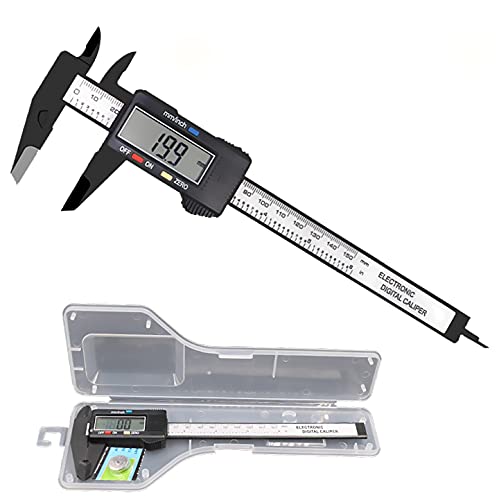
Simhevn Electronic Digital Calipers, inch and Millimeter Conversion,LCD Screen displays 0-6" Caliper Measuring Tool, Automatic Shutdown, Suitable for DIY/Jewelry Measurement (New150mm Black Plastic)
[4 measuring methods and safety]: Digital calipers can be used to measure inner and outer diameters, depths and…
As an affiliate, we earn on qualifying purchases.
As an affiliate, we earn on qualifying purchases.
How to Measure the Length and Width of Your Room
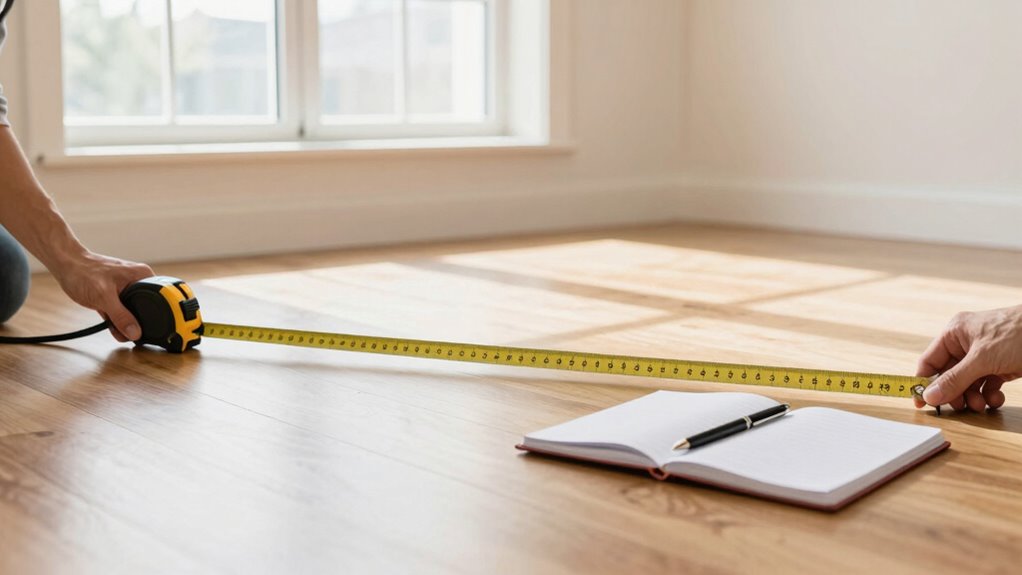
Measuring the length and width of your room is straightforward when you follow these simple steps. First, use a tape measure to find the longest points along each wall. Keep the tape straight and pull it tight for accuracy. Record these measurements carefully. Knowing your room’s dimensions helps you plan furniture arrangement effectively, ensuring everything fits comfortably and looks balanced. Also, consider how room lighting interacts with space; larger rooms may need additional lighting fixtures or strategic placement to avoid dark spots. Take measurements at multiple points if your walls are uneven. Accurate length and width measurements give you a clear sense of your space, making it easier to select furniture that fits perfectly and enhances your workspace’s overall functionality. Additionally, understanding room proportions can help you optimize layout and improve overall comfort. Being aware of spatial relationships within your room can further aid in creating an efficient and aesthetically pleasing environment. To ensure your measurements are precise, it’s helpful to account for any irregular wall shapes that might affect your planning. Using a level can also help verify that your walls are straight, ensuring more accurate measurements.

BAOTURE Digital Measuring Wheel with App, Walking Distance & Area Measuring Tool for Irregular Spaces
Walk & Measure Without Manual Tapes:Baoruler allows you to measure distance, area and perimeter simply by walking the…
As an affiliate, we earn on qualifying purchases.
As an affiliate, we earn on qualifying purchases.
Remember to Measure Ceiling and Surface Heights
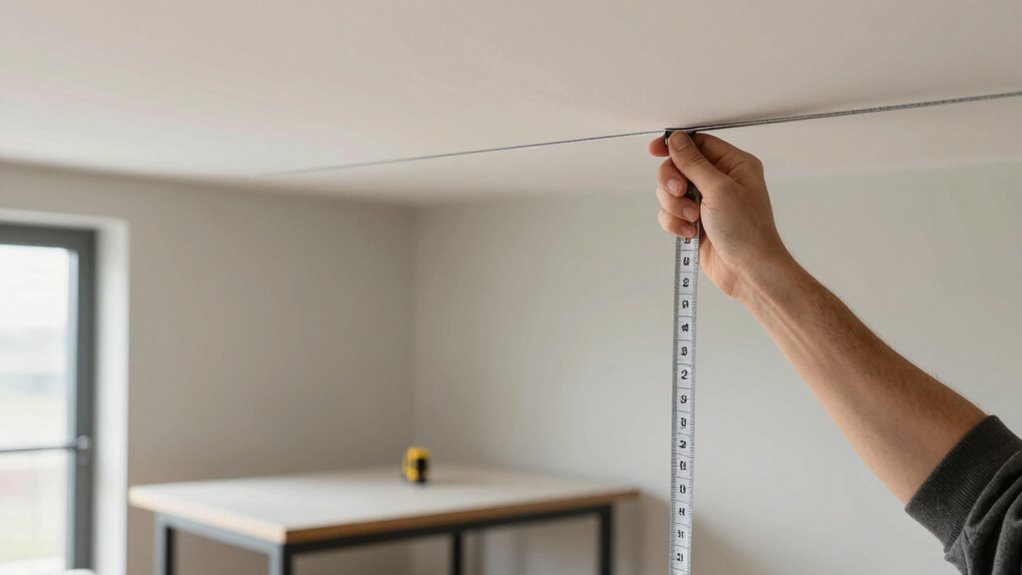
Make sure you measure from the floor to the ceiling to get accurate height information. Check for any variations in surface heights, like raised platforms or uneven flooring. These details help you plan your workspace setup precisely. Additionally, consider door swings and other architectural features that may impact your layout. Incorporating air quality benefits into your planning can also ensure a more comfortable and healthy workspace environment. Remember to account for ventilation factors to improve overall comfort and safety. Being aware of indoor air circulation can further enhance your workspace’s environment. Proper nail care can also contribute to a healthier workspace by reducing potential allergens and maintaining cleanliness.
Measure From Floor To Ceiling
Have you considered how vital accurate measurements from floor to ceiling are when planning your workspace? Knowing the exact floor height helps you select furniture that fits comfortably and guarantees proper placement. Measure from the floor to the ceiling in multiple spots to account for any irregularities. This accurate measurement process is crucial after water damage to prevent mold and further issues. It gives you the ceiling clearance, which is essential for tall furniture, shelving, or equipment. Use a reliable measuring tape, and record the highest and lowest points to get an accurate range. Remember, ceilings can vary slightly across a room, so taking several measurements helps you plan effectively. Being aware of zodiac traits and personalities can also help you create a workspace that aligns with your natural tendencies. Properly measuring from floor to ceiling ensures your workspace will be both functional and comfortable, avoiding surprises once you start setting things up. Additionally, understanding cabling solutions can help you plan for any necessary wiring or equipment placement in advance. Incorporating room irregularities into your measurements ensures a more precise setup and prevents unexpected obstacles.
Check Surface Height Variations
While measuring from floor to ceiling lays a solid foundation, it’s equally important to verify for surface height variations within the room. Uneven flooring or warped surfaces can affect the stability of furniture or equipment you plan to install. To identify these variations, use a straightedge or a level across different areas of the surface. Look for gaps or deviations that might cause instability or misalignment. Pay special attention to spots near doorways, windows, or uneven flooring sections. Addressing surface height variations early ensures accurate measurements and prevents issues down the line. By confirming that the surfaces are level and consistent, you’ll avoid potential discomfort or costly adjustments later. Properly checking for these variations keeps your workspace setup precise and secure.
Check for Obstructions and Irregularities That Could Affect Fit
Before fitting new furniture or equipment, ensuring your workspace is clear of obstructions and irregularities that could interfere with the fit is essential. Start with an obstruction assessment by checking for items like cables, boxes, or uneven floor surfaces that might block placement or movement. Surface irregularities, such as bumps, dents, or warped flooring, can also impact how the furniture sits or functions. Carefully inspect the area from multiple angles, looking for anything that could cause misalignment or instability. Remove or address obstacles and irregularities before taking final measurements. Pay special attention to floor surface integrity to ensure stability and safety. Additionally, consider filter sizing and flow requirements to make sure new equipment will operate efficiently once installed. Be mindful of ventilation and lighting to maintain a safe and comfortable workspace environment. Keep an eye on environmental impact factors, such as ventilation and lighting, to create a safe and comfortable workspace. Ensuring workspace safety during this process helps prevent accidents or damage. This step helps prevent surprises later, ensuring your new setup fits perfectly and functions smoothly. Taking the time now saves you from costly adjustments or discomfort once everything is in place.
Record and Organize Your Measurements for Easy Use
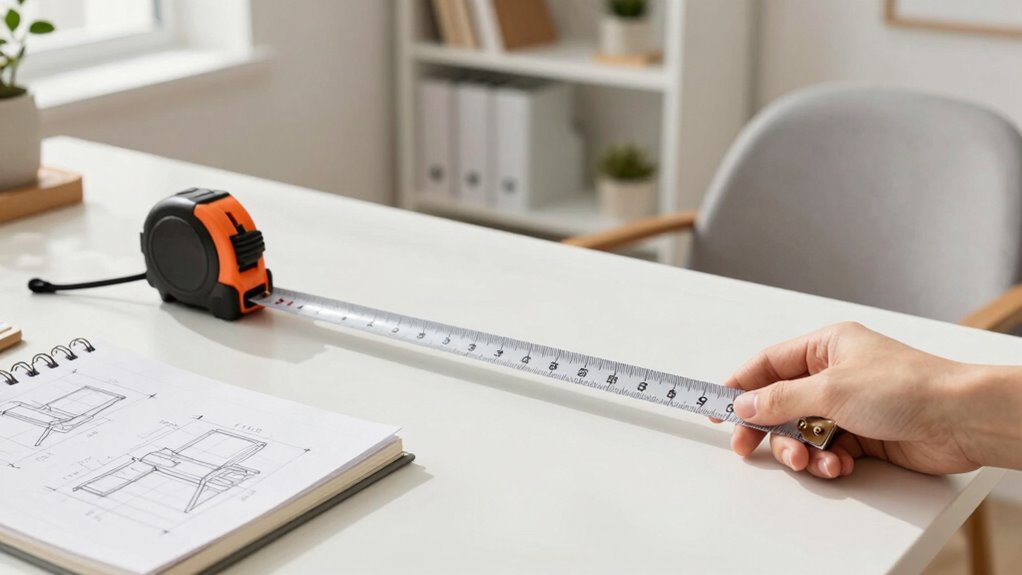
To guarantee your measurements are useful and easy to access later, it’s important to record and organize them systematically. Use clear labels and consistent units, like inches or centimeters, to avoid confusion. Good measuring techniques involve using reliable measurement tools such as tape measures or rulers, and double-checking your figures for accuracy. Keep your data in a dedicated notebook or spreadsheet for quick reference. Here’s an example layout:
| Area | Measurement (L x W x H) | Notes |
|---|---|---|
| Desk | 60″ x 30″ x 30″ | Space for monitor |
| Window | 48″ x 36″ | Near the corner |
| Closet | 24″ x 24″ x 84″ | Max door clearance |
| Wall Space | 96″ x 48″ | For shelves |
Organizing measurements this way streamlines your planning process. Additionally, maintaining measurement accuracy ensures your furniture and fixtures will fit perfectly in your designated space. Incorporating accurate measurement techniques can prevent costly mistakes and improve your overall setup.
Measure Windows, Doors, and Built-Ins for Proper Fit and Access
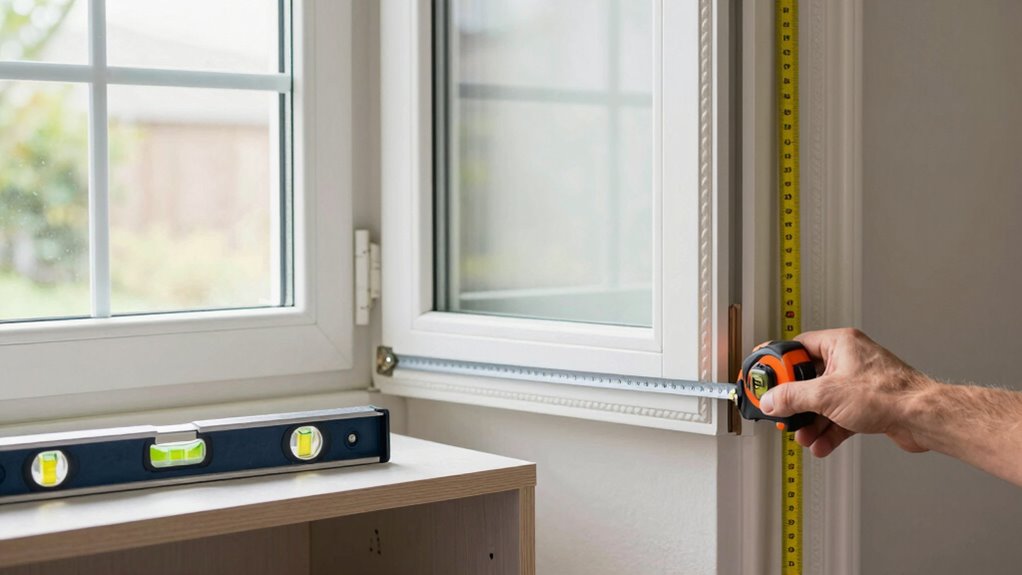
When measuring windows, doors, and built-ins, start by carefully noting the frame dimensions to verify a proper fit. Check the clearances around doors to allow smooth opening and closing, and consider any hardware or molding that might affect installation. Accurate measurements now prevent issues later and make sure everything functions as it should.
Measure Frame Dimensions Carefully
Accurately gauging the dimensions of windows, doors, and built-ins is essential to make certain your furniture fits properly and provides easy access. Measure frame widths, heights, and depths, noting any irregularities or obstructions that could impact furniture placement. Consider how these dimensions influence lighting considerations, ensuring natural light isn’t blocked or unevenly distributed. Proper measurements help you optimize space and functionality.
- Use a reliable tape measure for precise readings
- Record measurements at multiple points to account for irregularities
- Check for clearance space around frames to prevent overcrowding
- Note any trim, molding, or hardware that could affect furniture placement
- Cross-reference measurements with your planned furniture sizes before purchasing
Check Clearances for Doors
Ensuring proper clearance around doors, windows, and built-ins is essential for smooth access and a functional layout. Start by measuring the door clearance, which includes the width and height needed for the door to open fully without obstruction. Make sure to account for hinge space, as this affects how far the door swings open and how much space is available for furniture or fixtures nearby. Check the clearance on both sides of the door to prevent tight fits or interference with walls, cabinets, or other features. For windows and built-ins, measure their dimensions and the space around them to guarantee they won’t be blocked or hindered when opening. Accurate clearance measurements help you avoid surprises during installation and ensure everything fits seamlessly in your workspace.
Account for Hardware and Molding
To guarantee your windows, doors, and built-ins fit properly and remain accessible, you need to account for hardware and molding during your measurements. Hardware compatibility and molding considerations are essential to ensure smooth operation and aesthetic appeal. Measure the thickness of moldings around windows and doors to prevent interference with frames or coverings. Check the placement of handles, locks, and hinges to confirm they won’t obstruct movement or access. Consider the depth of built-ins and whether hardware will protrude or require clearance. Take into account any decorative moldings that could impact the opening space or hardware installation. Finally, verify that molding profiles won’t interfere with door swings or window openings, ensuring seamless integration and functionality.
- Measure molding thickness and profile to avoid interference
- Check hardware placement for unobstructed access
- Confirm hardware compatibility with existing frames
- Account for protruding hardware when planning built-ins
- Ensure moldings won’t hinder door or window operation
How to Use Your Measurements to Choose the Best Furniture
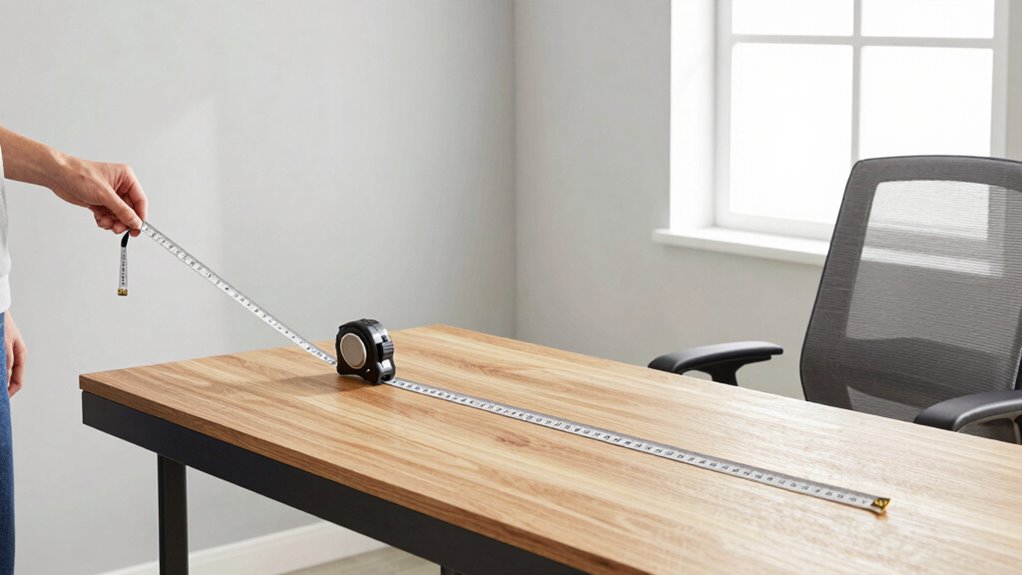
Once you have your workspace measurements, you can confidently select furniture that fits comfortably and functions effectively. Use your measurements to prioritize ergonomic design, ensuring desks and chairs support good posture and reduce strain. Consider the height and depth of tables to match your body dimensions, promoting comfort during long hours. Aesthetic considerations also come into play; choose furniture that complements your space’s style and color scheme without overwhelming the room. Be mindful of clearance areas—leave enough space for movement and accessories. Measure doorways and pathways to ensure your chosen pieces can be brought in easily. By combining your precise measurements with these factors, you’ll select furniture that maximizes both comfort and visual harmony, creating an efficient and inviting workspace.
Common Mistakes to Avoid When Measuring Your Workspace
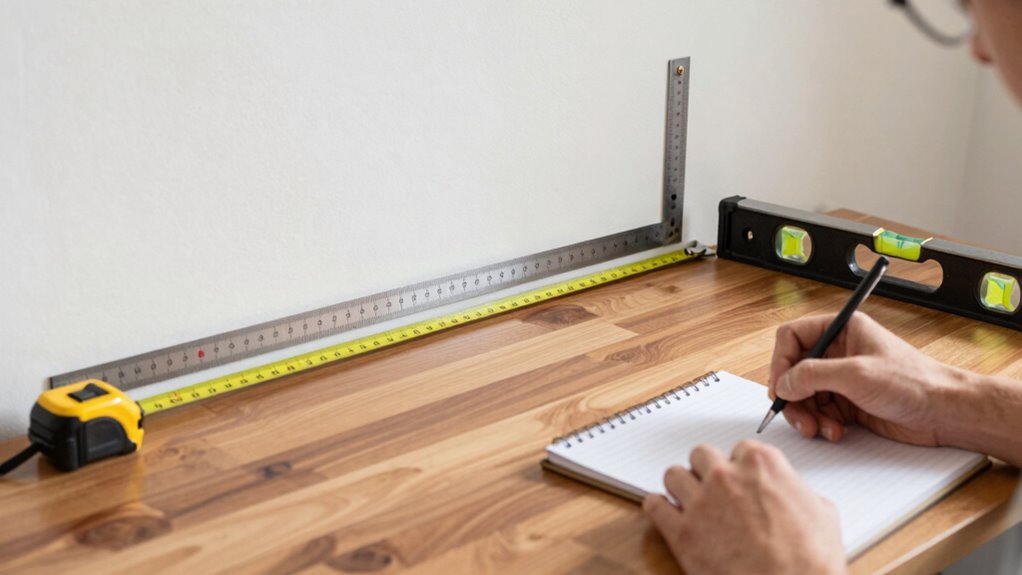
One common mistake people make when measuring their workspace is rushing through the process without double-checking their measurements. This can lead to errors that affect furniture placement and storage solutions later. To avoid this, take your time and verify each measurement multiple times.
- Ignoring wall protrusions or built-in features that impact furniture placement
- Using the wrong measurement tools or not calibrating them properly
- Forgetting to account for clearance space for doors, drawers, or movement
- Overlooking the height and depth of existing furniture or storage units
- Failing to measure multiple points for irregular walls or surfaces
Final Tips: Double-Check Your Measurements Before Buying
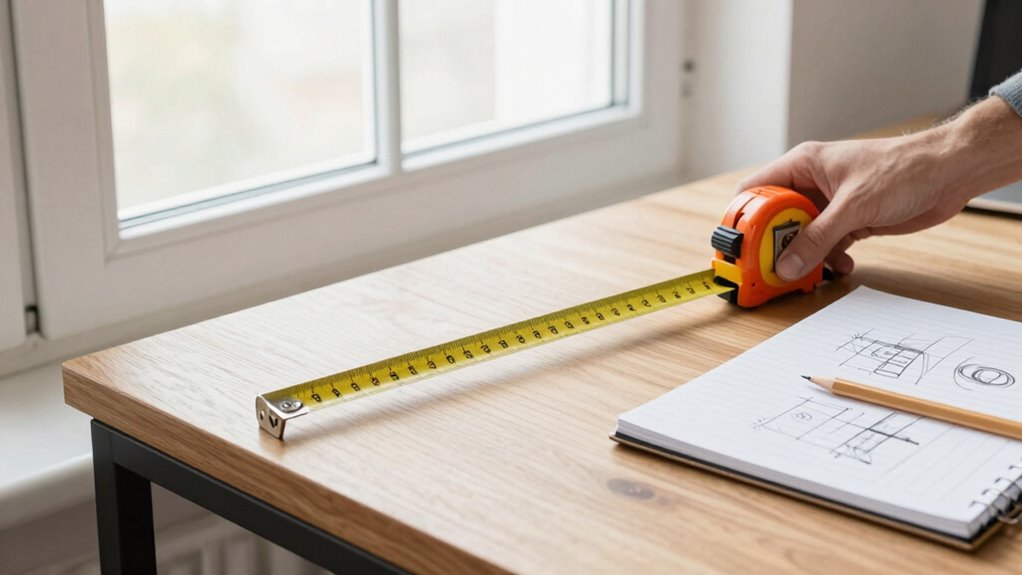
Have you double-checked all your measurements before making a purchase? Ensuring measurement accuracy is vital for effective space planning. Before finalizing, re-measure key dimensions and confirm they match your initial data. Use a checklist to avoid mistakes:
| Step | Action | Tip |
|---|---|---|
| Re-measure | Double-check each measurement | Use a reliable tape measure |
| Compare | Cross-verify with your plans | Visualize space to catch errors |
| Confirm | Make sure measurements suit your needs | Leave some clearance for comfort |
Taking these extra steps guarantees your furniture or equipment fits perfectly, saving you time and money. Double-checking ensures your space planning is accurate, reducing the risk of costly mistakes before you buy.
Frequently Asked Questions
How Often Should I Re-Measure My Workspace Before Purchasing New Furniture?
You should re-measure your workspace every time you plan to buy new furniture or if your workspace layout changes. This guarantees furniture dimensions fit perfectly and your space remains functional. Regularly checking measurements prevents buying items that are too big or small, saving you time and money. Measure before every purchase, especially if you’ve made recent adjustments or your workspace setup has evolved, to maintain an ideal, comfortable environment.
What Are the Best Tools for Measuring Irregularly Shaped Spaces?
Imagine fitting a custom bookshelf into an oddly shaped corner. You’d want precise measurements, so a digital laser is your best tool for irregular spaces—offering accuracy with quick readings. A flexible tape also works well for curved or complex areas, allowing you to measure those tricky angles. Combining these tools guarantees you capture every nook and cranny, helping you buy furniture that fits perfectly without surprises.
How Do I Account for Sloping Floors or Uneven Surfaces?
To account for sloping floors or uneven surfaces, start by measuring the highest and lowest points to identify the slope. Use a level or laser tool for accurate surface correction. Consider floor leveling options, like self-leveling compounds, to create a flat, stable surface. This guarantees your measurements are precise, making it easier to select furniture or equipment that fits perfectly and functions well on the corrected surface.
Should I Include Space for Movement When Measuring My Workspace?
Yes, you should include space for movement in your measurements—because who wants a cramped workspace that makes you feel like a sardine? Consider ergonomic considerations to guarantee comfort and reduce strain, and leave room for storage optimization to keep things tidy. By factoring in movement, you create a functional, inviting area that promotes productivity instead of turning your workspace into a claustrophobic nightmare.
How Can I Ensure Measurements Remain Accurate Over Time?
You can guarantee your measurements stay accurate over time by regularly calibrating your measurement tools and storing them properly. Calibration adjusts your tools to standard references, preventing drift. Store them in a safe, consistent environment to avoid damage or temperature fluctuations. Keep a record of calibration dates and procedures. This proactive approach helps maintain measurement precision, so your workspace dimensions remain reliable for future planning or adjustments.
Conclusion
Before you buy, double-check your measurements like a detective searching for clues—precision is key. I once underestimated a desk’s height and ended up with a chair that felt like sitting on a cloud—uncomfortable and off-balance. Remember, accurate measurements are your blueprint for a perfect fit. Think of your space as a puzzle; every piece needs to fit just right. Take your time, measure carefully, and create a workspace that feels tailor-made for you.