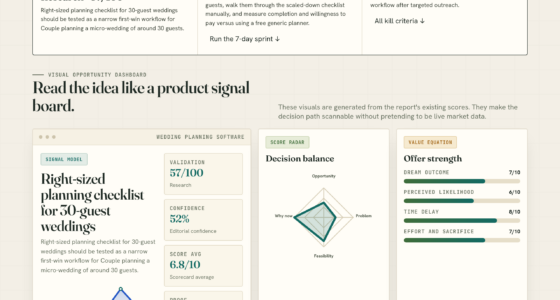

📊 Full opportunity report: Mobilised, Not Spent: What’s Left Of Europe’s €200 Billion AI Offensive on ThorstenMeyerAI.com — validation score, market gap, and execution plan.

Get the latest gadgets delivered free — and shop member deals
- Fast, free delivery on millions of items
- Access to Prime Big Deal Days deals on October 6–7
- Prime Video, Amazon Music and more included
TL;DR
Europe’s €200 billion AI initiative is mostly aspirational, with only a small portion actually allocated. The plan relies heavily on private investment that has yet to materialize, and key projects are delayed or unstarted.
The European Commission has announced a plan to mobilize €200 billion for artificial intelligence through its InvestAI programme, but only a small portion of this sum is actually committed or spent so far. This raises questions about the immediate impact and feasibility of Europe’s AI ambitions, as most of the funds remain hypothetical and delayed.
The €200 billion figure is a headline number; in reality, only about €50 billion is expected to be actual public money, with roughly €20 billion allocated specifically for AI compute infrastructure. Of this, Brussels’ direct contribution is estimated at just a few billion euros, with the rest relying on private investment, which remains largely uncommitted.
The planned investments include four or five large AI ‘gigafactories’ intended to provide European researchers access to advanced compute facilities. However, the formal call for these projects is only expected to open in July 2026, with facilities anticipated to become operational between 2027 and 2028. Currently, only one site in Norway is under construction, and several smaller projects are ongoing.
In contrast, US tech giants like Amazon, Microsoft, and Meta are investing hundreds of billions of dollars annually in AI infrastructure, with Microsoft alone planning a $10 billion data center in Portugal. This scale of investment dwarfs Europe’s planned €20 billion, which is spread across multiple years and projects that are still in planning or early construction phases.
Critics argue that Europe’s AI funding strategy is more aspirational than effective, as the funds do not address fundamental issues such as high energy costs, slow permitting processes, fragmented markets, talent drain, and reliance on US cloud providers. The accompanying legislative efforts aim to improve technological sovereignty but are mostly policy frameworks rather than immediate funding boosts.
Ursula von der Leyen has acknowledged that public funds alone cannot meet Europe’s AI ambitions and emphasized the need for private capital, which remains elusive. The overall pace and scale of Europe’s AI investment continue to lag behind US counterparts, raising concerns about Europe’s competitiveness in the global AI race.
Mobilised, not spent
The EU is selling a €200 billion AI offensive. But the decisive word is “mobilised” — not “spent.” Work through the number and the headline shrinks dramatically before it reaches any effect.
2027–28 data centres expected to run
1 SITE under construction so far (Norway)
Late, slow, and not yet built.
A small, late, partly hypothetical cheque — without touching expensive energy, fragmented capital markets, slow permits, or the talent drain. The EU mistakes a funding pot for a strategy.
Impact of Europe’s Unfulfilled AI Funding Promises
This situation highlights Europe’s reliance on aspirational funding targets rather than concrete commitments, which could hinder its ability to compete with US tech giants. The limited and delayed investments mean that Europe’s AI ecosystem may not see significant growth or innovation in the near term, risking a continued technological lag.
Furthermore, the focus on infrastructure projects like gigafactories, which are still in early stages, does not address core issues such as energy costs, market fragmentation, and talent retention. Without decisive action on these fronts, Europe’s AI ambitions risk remaining unfulfilled despite large headline figures.
As an affiliate, we earn on qualifying purchases.
Background of Europe’s AI Funding Challenges
The European Commission announced the €200 billion InvestAI initiative as a response to the massive AI investments by US companies, which are spending hundreds of billions annually. The headline figure was intended to position Europe as a serious contender in AI development, but experts have long pointed out that the actual commitments are modest and delayed.
Historically, Europe’s AI sector has lagged behind the US and China due to factors like higher energy prices, regulatory hurdles, and fragmented markets. The current funding plans are seen as a continuation of this pattern, with most of the money still in planning stages and not yet translating into operational infrastructure.
Previous efforts to boost AI in Europe have often been criticized for focusing on policy and legal frameworks rather than substantial investment or technological capacity. The new legislative measures aim to improve sovereignty but do not significantly increase immediate funding or infrastructure development.
Meanwhile, US tech giants continue to pour billions into AI infrastructure, creating a significant competitive gap that Europe’s modest investments may not bridge in the near future.
“Taxpayers cannot foot this bill alone — Europe urgently needs private capital.”
— Ursula von der Leyen
As an affiliate, we earn on qualifying purchases.
Unclear Timeline and Private Investment Commitment
It remains uncertain how much private capital will actually be mobilized to match the €150 billion target, as investor interest is limited by market fragmentation and risk aversion. The timeline for project completion and the actual deployment of infrastructure is also still uncertain, with delays likely.
As an affiliate, we earn on qualifying purchases.
Next Steps for Europe’s AI Funding and Infrastructure
The formal call for the gigafactory projects is scheduled for July 2026, with initial facilities expected in 2027–2028. Monitoring the response from member states and private investors will be crucial to assess whether Europe’s AI ambitions can gain real momentum. Additionally, legislative and policy measures will continue to evolve, but their impact on immediate infrastructure development remains to be seen.
As an affiliate, we earn on qualifying purchases.
Key Questions
How much of Europe’s €200 billion AI fund has actually been spent?
Only about €50 billion is expected to be real public money, with a small fraction—around a few billion euros—actually committed to infrastructure projects like AI gigafactories.
Why is there a delay in Europe’s AI infrastructure projects?
The delays are due to late project calls, slow permitting processes, and the need for member state and private sector contributions, which are still being negotiated or organized.
Can Europe’s AI ambitions catch up with US investments?
Currently, Europe’s planned investments are significantly smaller and slower, making it unlikely to match US tech giants’ scale within the next few years.
What are the main obstacles to Europe’s AI development?
High energy costs, fragmented markets, lengthy permitting, talent outflow, and reliance on US cloud providers are key barriers that funding alone cannot resolve.
Source: ThorstenMeyerAI.com
Halloween Picks
halloween
As an affiliate, we earn on qualifying purchases.