
TL;DR

Get the latest gadgets delivered free with Prime
- Fast, free delivery on millions of items
- Prime Video, Amazon Music and more included
- Member-only deals all year
Mount Etna erupted last Friday, creating a vivid trail of bright orange lava that extended at least 300 meters. The eruption occurred at 3,000 meters altitude, confirmed by the Etna Observatory. The event highlights ongoing volcanic activity on Sicily.
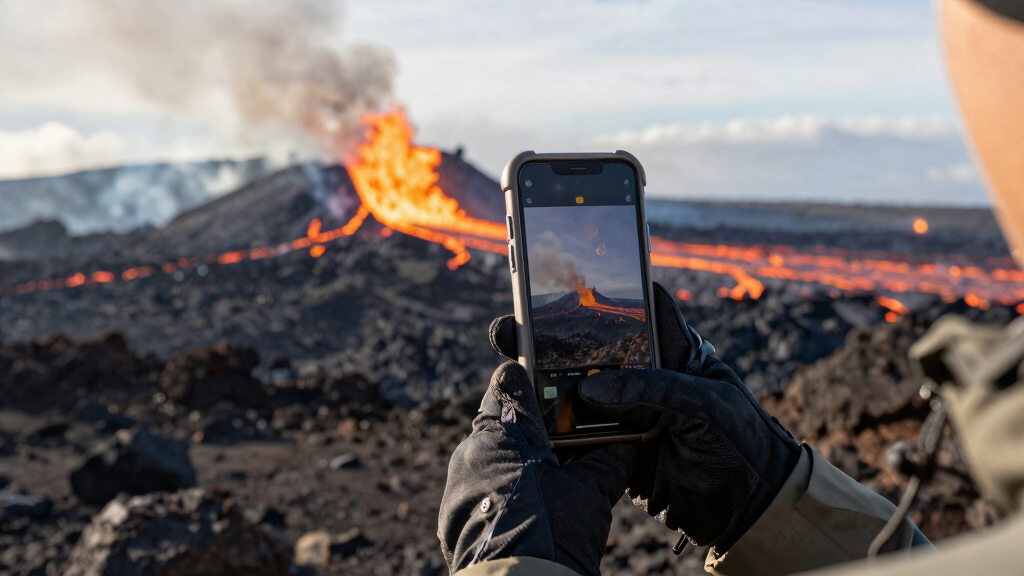
Last Friday, Mount Etna, Europe’s largest active volcano, erupted, producing a striking trail of bright orange lava that extended at least 300 meters down its flank, according to the Etna Observatory of the Italian Institute of Geophysics and Volcanology.
The eruption took place at an altitude of approximately 3,000 meters. Footage captured during the event shows a vivid, glowing streak of lava flowing down the volcano’s side, creating a dramatic visual display. The Italian authorities and scientists confirmed the eruption and the lava’s extent, emphasizing that it was part of ongoing volcanic activity at Mount Etna.
The Etna Observatory indicated that the eruption’s initial rupture was at a high altitude, and the lava flow traveled at least 300 meters from the source. No immediate reports of injuries or damage have been released, but authorities continue to monitor the situation closely.
Implications of the Recent Mount Etna Eruption
This eruption underscores the persistent volcanic activity at Mount Etna, which is one of Europe’s most active volcanoes. The visible lava trail offers valuable data for scientists studying eruption patterns and volcanic behavior. For residents and visitors in Sicily, it serves as a reminder of the ongoing natural hazards associated with the volcano, which has a history of frequent eruptions.
The event may also influence local safety measures and tourism, as authorities assess the risk of further activity. Understanding the scale and nature of this eruption can help improve preparedness for future events.
volcano eruption viewing safety gear
As an affiliate, we earn on qualifying purchases.
As an affiliate, we earn on qualifying purchases.
Recent Activity and Historical Eruptions at Mount Etna
Mount Etna has been erupting regularly for centuries, with notable eruptions recorded throughout history. Its current activity is part of a long-standing pattern of frequent eruptions, many of which produce lava flows similar to the recent event. Last year, Etna experienced multiple eruptions, with some producing ash clouds and lava flows that affected nearby communities.
The volcano’s activity is closely monitored by the Etna Observatory, which provides real-time updates and scientific analysis. The recent eruption follows a period of heightened seismic activity, indicating an ongoing phase of volcanic unrest.
“The lava flow’s extent and brightness are consistent with typical Etna eruptions, but each event provides new insights into the volcano’s behavior.”
— an anonymous researcher
thermal imaging camera for volcanic activity
As an affiliate, we earn on qualifying purchases.
As an affiliate, we earn on qualifying purchases.
Uncertainties About Future Volcanic Activity
It is not yet clear whether this eruption signals an escalation in activity or if it will be followed by further eruptions. Scientists are analyzing seismic and volcanic data to assess the potential for continued eruptions, but definitive forecasts remain unavailable at this stage.
mountaineering hiking gear for volcanic terrain
As an affiliate, we earn on qualifying purchases.
As an affiliate, we earn on qualifying purchases.
Monitoring and Preparedness Moving Forward
Authorities and scientists will continue to monitor Mount Etna’s activity closely, with updates expected as new data emerge. Future eruptions are possible, and local safety measures may be adjusted accordingly. Researchers aim to better understand the volcano’s patterns to improve early warning systems.
As an affiliate, we earn on qualifying purchases.
Key Questions
What caused the recent eruption of Mount Etna?
The eruption was likely triggered by ongoing seismic activity within the volcano, with magma reaching the surface at high altitude, resulting in the observed lava flow.
Is there a risk to nearby communities?
Currently, there are no reports of injuries or damage, but authorities remain vigilant and continue to monitor the situation for any signs of escalation.
How long will the eruption last?
It is unclear how long the current eruption will continue. Scientists are analyzing ongoing activity to make predictions, but no specific timeline has been established.
Can tourists visit Mount Etna now?
Tourist access may be restricted depending on volcanic activity levels and safety advisories. Visitors should check with local authorities and tour operators for updates.
Has Mount Etna erupted this frequently before?
Yes, Mount Etna has a long history of frequent eruptions, often producing lava flows and ash clouds, with activity levels varying over time.
Source: Google Trends
Halloween Picks
halloween
As an affiliate, we earn on qualifying purchases.