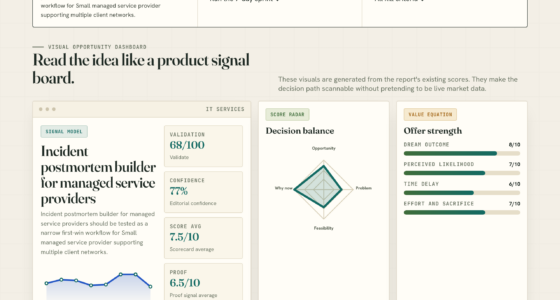
📊 Full opportunity report: What Led ByteDance To Stop Distilling AI Models From Its Competitors? on ThorstenMeyerAI.com — validation score, market gap, and execution plan.

Get the latest gadgets delivered free — and shop member deals
- Fast, free delivery on millions of items
- Access to Prime Big Deal Days deals on October 6–7
- Prime Video, Amazon Music and more included
TL;DR
ByteDance’s founder has ordered the company’s AI team to stop distilling models from competitors. The move may alter how ByteDance develops AI systems, but details remain unclear. The decision could impact future products and industry practices.
ByteDance’s founder has reportedly ordered the company’s AI team to stop distilling models developed by competitors, according to ByteDance Seed. This internal instruction could significantly influence the company’s AI development approach, although specific details about the targeted models, timing, and immediate effects have not been publicly disclosed.
The report indicates that ByteDance’s founder issued a directive to halt the practice of model distillation involving rival models. Model distillation is a technique where a smaller or less complex AI system learns from the outputs of a larger, often more powerful, model to replicate certain behaviors or capabilities. The scope of this instruction—whether it applies to all projects or only specific ones—is unclear, as are the identities of the rival models involved.
There is no confirmed information on whether ByteDance has changed its research procedures, training data sources, or product plans in response. The company has not publicly commented on the directive, and the reasons behind it remain unknown. The decision could reflect strategic, legal, or compliance considerations, but no official explanation has been provided. For more context, see the original analysis on this site.
Implications for ByteDance’s AI Development Strategy
This restriction suggests ByteDance may shift toward relying more on internally generated data, licensed materials, or alternative development methods that avoid using outputs from competitors’ models. Such a change could impact research costs, development speed, and the performance of future AI products. It also signals a broader industry concern over the use of external AI outputs, intellectual property rights, and data provenance, especially as companies seek to avoid legal disputes and regulatory scrutiny.
For consumers and industry watchers, this move could influence the capabilities, release timelines, and operational costs of ByteDance’s AI-driven services, which underpin major platforms with large user bases. The decision underscores ongoing debates about data sourcing, model training ethics, and competitive practices in AI research.
As an affiliate, we earn on qualifying purchases.
Background on Model Distillation and Industry Practices
Model distillation is a well-established technique in machine learning, allowing smaller models to learn from larger, more complex systems. It is often used to improve efficiency, reduce costs, and optimize performance. Many organizations distill their own models or work with authorized external models without issue.
However, disputes can arise when outputs are obtained at scale from third-party providers without clear permissions, especially if the outputs are used to build competing systems. Recent industry discussions highlight concerns over data rights, licensing, and the legality of using external models’ outputs for training or development. ByteDance’s reported restriction appears to target the use of rival models specifically, rather than distillation as a whole.
“The lack of official confirmation leaves open whether this is a temporary measure or a long-term policy change.”
— tech insider
machine learning model distillation tools
As an affiliate, we earn on qualifying purchases.
As an affiliate, we earn on qualifying purchases.
Unconfirmed Details and Potential Motivations
Many key details remain unknown, including which rival models are affected, whether existing projects will be retrained, or if this is a temporary guideline. The reasons behind the directive—whether driven by legal, strategic, or technical concerns—have not been disclosed. It is also unclear whether this restriction applies universally across ByteDance’s AI initiatives or only to certain segments.
AI research data management software
As an affiliate, we earn on qualifying purchases.
As an affiliate, we earn on qualifying purchases.
Monitoring ByteDance’s Future AI Policies and Releases
Further clarity may emerge through ByteDance’s upcoming research publications, official statements, or product updates. The company could specify whether the restriction is temporary or permanent and outline alternative development strategies. Industry observers will watch for signs of changes in ByteDance’s AI capabilities, release schedules, or collaborations, which could signal how the company adapts to this internal directive.
As an affiliate, we earn on qualifying purchases.
Key Questions
What exactly does the directive mean for ByteDance’s AI projects?
The directive reportedly instructs ByteDance to stop distilling rival models, but specific impacts on projects or timelines are not yet clear.
Why would ByteDance restrict the use of competitor models?
The reasons are not officially disclosed, but potential motivations include legal concerns, intellectual property risks, or strategic shifts toward internal data sources.
Does this affect ByteDance’s current AI products?
It is unknown whether existing products will be retrained or modified, as the scope of the directive has not been specified.
Could this move impact industry standards or practices?
Yes, if ByteDance’s restriction leads to broader industry shifts away from external model distillation, it could influence AI research and development norms.
What are the next steps for understanding this development?
Monitoring ByteDance’s official communications, research publications, and product updates will be key to understanding how the directive is implemented and its long-term effects.
Source: ThorstenMeyerAI.com
Fall Picks
fall essentials
As an affiliate, we earn on qualifying purchases.