
TL;DR

Get the latest gadgets delivered free — and shop member deals
- Fast, free delivery on millions of items
- Access to Prime Big Deal Days deals on October 6–7
- Prime Video, Amazon Music and more included
The best outdoor furniture depends on your climate, available space, how often you use it, and whether you can cover or store it. Choose a frame and fabric suited to your conditions, measure the full layout, and check joints, hardware, cushion care, and replacement parts before buying. “All-weather” does not mean maintenance-free: drying cushions and keeping furniture ventilated can help it last.
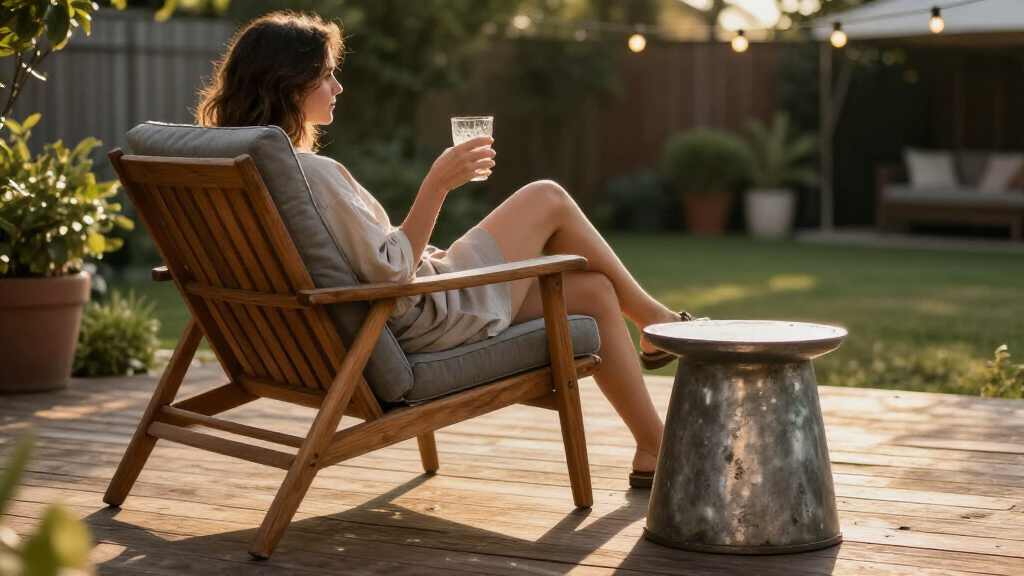
After a summer storm, the patio can look like a small obstacle course: cushions are damp, a lightweight chair has skidded across the deck, and the table is holding a shallow puddle. The best outdoor furniture is the kind that suits the weather and the way you actually use your space.
This guide compares common frame materials, helps you check comfort and fit, and offers practical care advice. You’ll also find examples of replacement sets with different materials and dimensions, including alternatives for shoppers comparing a eucalyptus sofa with other styles.
Choose frame and fabric materials for your actual conditions, including salt air, strong sun, wind, rain, and winter storage.
Measure the patio, pathways, entrances, and delivery route; check seat depth and table height as well as overall width.
Outdoor fabric resists weather better than ordinary indoor fabric, but cushions still need to dry and should not be stored damp.
Inspect joints, hardware, protective finishes, stability, weight limits, and access to replacement parts before buying.
Compare replacement sets using verified current dimensions and assembly details; similar materials do not guarantee similar comfort or fit.
Choose outdoor furniture that fits your weather and routine
The best outdoor furniture balances comfort, weather resistance, upkeep, and fit for your space. Your choice depends on the local climate, how often the furniture will be used, and whether you can cover or store it during harsh weather. A sunny, sheltered balcony has different demands from a windy deck beside the sea.
Why does this matter? Because most disappointment in outdoor furniture comes not from poor quality but from mismatched expectations. A gorgeous teak dining set on an uncovered deck in a rainy climate will demand far more attention than the same set under a covered porch. Conversely, overspending on premium materials for a sheltered space that gets used a dozen times a year may buy durability you never need. The goal is alignment: material strength matched to exposure, and upkeep matched to the time you realistically have.
For example, a couple who eat breakfast outdoors every morning may prefer quick-drying cushions and a table that is easy to wipe clean; for them, daily friction with damp cushions matters more than any premium label. If you host several large gatherings each summer, modular seating that rearranges easily may matter more than compact storage, because flexibility across different group sizes drives how useful the set actually is.
Use these key facts to guide your shortlist:
- Weather exposure: Account for rain, strong sun, salt air, standing water, freezing winters, and wind. Each factor attacks a different part of the set — sun fades fabric, moisture threatens cushions and joints, and wind punishes anything light.
- Daily use: Check seat depth, back support, table height, and how easily you can clean the set. A set that is annoying to maintain gets used less, which quietly wastes whatever you spent on it.
- Space: Measure the furniture and the paths people need to walk around it. Fit affects not just comfort but safety and how willingly guests use the space.
- Care: Decide where cushions and covers will go when they’re wet or out of season. If you have no dry storage, that constraint should steer you toward quick-dry fills and frames that tolerate exposure.
Think of choosing a frame like choosing shoes for a walk: a sturdy pair still feels wrong if it doesn’t suit the terrain. The right set makes everyday use easy, and its care routine should match the time you’re willing to spend — because the “best” furniture you resent maintaining is worse than modest furniture you enjoy using.
Compare frame materials before you fall for a style
The best outdoor furniture frame material depends on your climate, exposure, and maintenance habits. Teak handles moisture and insects naturally, aluminum resists rust and is easy to move, and coated steel or iron adds weight and stability. Resin wicker and high-density polyethylene offer different looks and upkeep needs, so check the frame and material details rather than relying on a broad label.
The deeper point is that every material buys you one advantage at the price of another, and knowing the tradeoff matters more than knowing the label. Weight, for instance, cuts both ways: heavy iron stays put in wind but is hard to rearrange or store, while light aluminum is easy to move but must be secured before storms. Natural resilience often costs money (teak), while affordability often costs maintenance effort (coated steel needs chip repair to prevent rust). Your job is to decide which currency — money, effort, or weight — you’d rather spend.
Imagine a coastal patio where sea air leaves a faint salt film on the railing. Lightweight aluminum can suit that damp setting because it cannot rust, but a piece still needs to be secured when winds pick up; stainless steel may corrode depending on its grade and exposure, which is why “stainless” alone is not a guarantee in salt environments. On a shaded, sheltered terrace, the same concerns may be less pressing, and aesthetics can reasonably lead the decision.
| Material | What it does well | What to check |
|---|---|---|
| Teak | Resists moisture and insects naturally | It often costs more and weathers to silvery gray unless treated |
| Aluminum | Lightweight and rust resistant | It can move in strong winds and heat up in direct sun |
| Stainless steel | Sturdy construction | Corrosion resistance depends on grade and setting; salt air can still be a problem |
| Wrought iron or steel | Heavy and stable | Look for protective coating and repair chips before rust spreads |
| HDPE lumber | Resists moisture, fading, and rot | It can be heavy and more costly than basic plastic |
| Resin wicker | Generally more weather resistant than natural wicker | Durability depends on resin quality and the frame beneath it |
These are tradeoffs, not guarantees. A material’s performance depends on its grade, finish, construction, exposure, and care — a cheaply made “teak” set with thin, loosely joined slats can underperform a well-built aluminum one. That is why the table’s third column matters as much as the second: the maintenance you sign up for is part of the purchase price. If you’re choosing teak, for instance, decide whether you like its gradual silvering or plan to maintain its original tone, because that aesthetic choice determines an ongoing care commitment.
Pick cushions and finishes that suit sun, rain, and salt
Outdoor cushions last longer when their fabric, fill, and drying routine suit the weather. Solution-dyed acrylic and other outdoor fabrics are made to resist fading and moisture better than ordinary indoor fabric, but cushions still need care. “All-weather” does not mean waterproof, maintenance-free, or immune to mildew.
Here is the implication many shoppers miss: the cushion, not the frame, is usually the first thing to fail. Frames are engineered for weather; foam fills and fabric seams are not entirely, because a cushion’s job — being soft and porous — is fundamentally at odds with staying dry. Solution-dyed acrylic resists fading because color runs through the fiber rather than sitting on top, which is why it outlasts printed fabrics in sun. But even the best fabric shell cannot save a fill that stays wet inside, and mildew begins where air cannot reach. That is why drying routine is not an optional extra; it is the mechanism that makes “outdoor” fabric actually last outdoors.
Picture a quick afternoon shower followed by a humid evening. A cushion left face-up in a puddle may stay damp long after the frame dries; a cushion stored wet under a tight cover can trap moisture and create exactly the humid microclimate mildew needs. Give cushions room to air out, and follow the care instructions for covers and fabric — a breathable cover generally serves better than an airtight one precisely because ventilation, not sealing, is what prevents mold.
Sun exposure also changes how a set feels and looks. Dark tabletops and metal arms can become hot enough to be unpleasant to touch, and fabric colors can fade over time. A shaded umbrella or a cushion fabric made for outdoor use may help, but neither eliminates exposure — so factor replacement or re-covering into your long-term cost picture.
Let cushions dry before covering or storing them. A cover can reduce exposure, but trapped moisture can encourage mildew — the cover protects against the weather you can see, not the humidity you can’t.
Near the coast, rinse salt deposits as the maker directs and inspect metal finishes for scratches, because salt accelerates corrosion at every breach in the coating. In places with freezing winters, move cushions into a dry storage area when the season ends — repeated freeze-thaw cycles are harder on fabric and foam than on most frames. The frame may tolerate outdoor conditions better than the soft parts sitting on it, which is why budgeting for the cushions’ care (and eventual replacement) is realistic planning, not pessimism.
Measure your patio so the set leaves room to move
Measure the whole seating area, entrances, and walkways before choosing outdoor furniture. Leave room to pull out chairs and walk around tables; a set that fits on paper can feel cramped once people sit down. Check seat depth, back support, cushion thickness, and table height against how you plan to use each piece.
The reason clearance matters so much is that furniture is not used in a static pose. A dining chair needs roughly two feet of space behind it to pull out and sit down, and a walkway needs clear width beyond that. If you plan only for the footprint, you are planning for a photograph; if you plan for movement, you are planning for life on the patio. This is also why depth and height deserve as much attention as width: a 30-inch-wide chair is useless if its seat is too shallow for lounging or its back offers no support for the way you sit.
For instance, a deep sectional can feel relaxing for an evening outdoors but crowd a narrow balcony where you need a clear path to the door — the tradeoff is comfort density versus circulation. A compact bistro set may work better for coffee and quick meals, while a family that eats outside often may need a larger table and chairs with supportive backs, because discomfort that is tolerable for ten minutes becomes the reason nobody eats outside by August.
For a smoother buying process, work through these steps before you order:
- Measure the usable area. Include door swings, planters, grills, and fixed railings — anything that permanently reduces the true space.
- Mark walking routes. Leave enough clear space for people to get past seated guests, since blocked paths discourage use of half the set.
- Check each piece’s dimensions. Look at depth and height as well as width, and compare seat height to your table so the pairing actually works.
- Measure the delivery route. Check gates, stairs, elevators, and doorways, especially for large sectional parts — a set that cannot reach the patio is a return shipment, not furniture.
- Compare the layout to daily use. Make sure the table, seat, and storage arrangement works for your routines, not just for entertaining.
Use removable tape or cardboard to outline the footprint on the patio. If you can’t open the door or walk through the taped layout comfortably, the furniture probably won’t feel better once it arrives — the tape test costs ten minutes; discovering the problem after delivery costs a return.
Check frames, joints, and replacement parts before buying
Strong joints, sound fasteners, finished welds, and repairable parts help determine how long outdoor furniture serves you. Look for details about frame construction, protective coatings, hardware, weight limits, and whether replacement cushions or components can be ordered. A low initial price says little about value if one broken connector makes the whole set difficult to use.
Why do these details matter so much? Because furniture rarely fails all at once — it fails at its weakest point. Weather attacks joints and fasteners first, since screws, welds, and connection points collect water and stress. A beautiful frame with cheap hardware will wobble within a season, and a wobbly frame is a safety issue, not just an annoyance. Similarly, the availability of replacement parts changes the economics of the purchase: a set you can repair is an asset with a long service life, while a set you cannot repair is effectively disposable once anything breaks. That is the real meaning of “value” here — total years of service, not the sticker price.
Suppose two dining chairs look similar online. One listing describes a coated steel frame and gives a weight limit; the other shows only a styled photograph. The first provides more useful information for judging stability, especially if the chairs will sit on an uneven stone patio, where weak joints flex with every shift of the ground. A missing specification is itself information: it suggests the seller expects the photo to do the persuading.
When buying online, inspect the product dimensions and assembly details closely. Note whether parts arrive in several boxes, whether hardware and instructions are included, and whether the maker provides a demonstration video. Assembly friction matters more than it seems — a set that takes an afternoon of frustrating assembly is more likely to be assembled loosely, and loose assembly accelerates wear. If specifications are missing, treat that as something to clarify before you buy.
For sustainability, look for clear sourcing details, recycled materials, repairable components, and construction intended for long service. A vague claim about being “eco-friendly” tells you less than a specific account of the wood source or recycled content. The logic is simple: the most sustainable furniture is usually the furniture you do not replace, so durability and repairability are environmental features as much as practical ones.
Compare replacement sets by the details that match your needs
Replacement sets serve different needs, so compare material, dimensions, seat depth, assembly, and included pieces side by side. The Signature Design by Ashley Clare View sofa is described in the supplied product details as an eucalyptus-frame, one-piece sofa with a 35-inch seat depth and dimensions of 81 by 35 by 37 inches. If you are considering a similar replacement, use those specifics as a starting point and verify current listing details before deciding.
Why compare at this level of detail? Because the specs that look like fine print are the ones that determine daily satisfaction. Seat depth is a good example: 35 inches is deep enough for lounging with legs curled up, while 22.5 inches favors upright dining posture. Neither is better — they simply serve different bodies and habits, and a mismatch here is the most common reason a well-reviewed set still disappoints. Frame material similarly shapes your future obligations: a eucalyptus frame implies periodic oiling or acceptance of weathering, while an aluminum frame shifts the burden from maintenance to storm-securing. The comparison below is therefore less about ranking and more about matching each set’s tradeoffs to your own.
The alternatives below have different materials and levels of detail in their listed specifications. They are not identical substitutes: for example, the UDPATIO set lists a 22.5-inch seat depth, while the other alternatives do not specify seat depth in the provided details — and a missing measurement is worth a question to the seller, since it may mean the detail was never engineered for comfort in the first place.
| Set | Listed material | Useful listed details | What to check |
|---|---|---|---|
| Clare View one-piece sofa | Eucalyptus wood frame | 35-inch seat depth; 81" W × 35" D × 37" H; assembly required | Confirm current specifications and whether the dimensions suit your space |
| UDPATIO aluminum 5-piece set | Aluminum with faux woodgrain finish | 22.5-inch seat depth; described as easy 3-step assembly | Check each piece’s dimensions and whether the shallower seat suits you |
| Rattaner 6-piece sectional | All-weather wicker with powder-coated steel frame | Glass table, non-slip cushions, waterproof cover; assembly required, with two boxes, instructions, hardware, and demo video listed | Confirm sectional dimensions and cushion care instructions |
| Aoxun 7-piece set | UV-resistant resin wicker with rust-resistant steel frame | Assembly required; instructions listed | Check dimensions, seat depth, and what the set includes |
| Signature Design by Ashley 3-piece patio set | Polyester, resin wicker, aluminum frame, stainless steel hardware | 112" W × 86" D × 27.25" H | Assembly information and individual piece dimensions are not specified in the supplied details |
Specifications can change between listings, and a shared material does not mean two sets feel alike — “wicker” covers everything from brittle budget resin to woven HDPE that survives a decade, and the difference lives in details listings often omit. Verify the maker’s current measurements, included pieces, assembly requirements, and care advice before placing an order. That small check can save you from a set that fits the photo but not the patio, and from the return shipping, reassembly, and waiting that follow.
Build a simple care routine for longer-lasting furniture
Regular light care helps outdoor furniture handle weather and wear. Follow the manufacturer’s instructions for cleaning and storage, remove standing water when you can, and let cushions dry before covering them. A few minutes after a storm can prevent a damp set from staying clammy for days.
The reason small, frequent care beats occasional deep cleaning is that outdoor damage is cumulative. A single puddle is harmless; standing water repeated weekly works into seams, hardware, and wood grain until coatings fail and joints loosen. The routine below is therefore organized around moments of vulnerability — after rain, during sun, before storms, and at season’s end — because intervening at those moments interrupts damage at its start rather than repairing it after the fact.
Take a spring check as an example: brush off pollen, inspect metal coating for chips, tighten loose hardware, and look for frayed wicker or split wood. Touch up damaged protective finishes as directed by the maker, especially on steel or iron where exposed metal can rust. This matters because a chip is a two-minute fix now and a structural problem in a year — rust spreads under paint where you cannot see it, and loose hardware enlarges its own holes each time the frame flexes.
- After rain: Wipe puddles from flat surfaces and stand cushions on edge to dry, so air can reach both sides.
- During strong sun: Use shade when practical and rotate cushions if their care label permits, spreading fading evenly instead of concentrating it.
- Before storms: Secure lightweight pieces or move them somewhere sheltered — prevention costs minutes, replacement costs a season.
- For winter: Store cushions dry and ventilated; use covers that do not trap moisture, since a sealed cover over damp cushions incubates the mildew you were trying to prevent.
- For secondhand pieces: Inspect joints, fasteners, fabric seams, finish damage, and signs of mold before bringing them home, because prior neglect is invisible in photos and expensive to undo.
How often the furniture needs attention depends on exposure. A covered porch may need only occasional cleaning, while a windy, sunny deck beside the sea may call for more frequent checks, since salt, UV, and wind each attack continuously rather than occasionally. Match the routine to the conditions you see, not just the product label — the label describes averages, and your patio is not an average.
Spend for the features you will use, not the label
Outdoor furniture offers better value when its comfort, lifespan, and repair options justify its cost and upkeep. The most expensive set is not automatically the best choice, and the least expensive one may need replacement sooner. Compare frame quality, cushion care, stability, storage needs, and the availability of spare parts.
The key to thinking about price is that the sticker is only the first payment. Every set charges a second, ongoing price in cleaning, covering, storing, and eventual repairs — and that second price varies enormously by material and your conditions. An expensive set whose cushions need indoor storage you don’t have is a daily tax on your routine; a modest set you can maintain easily may deliver more usable years. This is why cost-per-use, not cost-per-piece, is the honest metric: divide the total price plus upkeep effort by the evenings you will actually spend outside.
Say you use a small balcony for coffee most mornings. A compact, easy-care set may serve you better than a large sectional with cushions you have nowhere to store, because the sectional’s comfort advantage is wasted if its damp cushions keep you indoors. If you host family dinners every weekend, a larger table and repairable chairs may earn their space through frequent use, since heavy use amortizes both the cost and the maintenance burden.
There is no universal spending threshold that fits every patio. The best value depends on how frequently you use the set, how exposed it is, and how long you want it to last. Consider the total routine: cleaning, covering, storing, and replacing parts all take effort as well as money, and effort you will not actually perform is a cost paid in shortened lifespan instead.
If you’re drawn to a trend such as mixed materials, modular seating, recycled plastics, or heated seating, ask whether it solves a real problem for you. A feature you use every week earns its place; one that complicates storage or care may quietly cost you more in upkeep than it ever returns in enjoyment. Trends are not wrong to buy — they are only wrong to buy for reasons that fade, like novelty, rather than reasons that persist, like a problem the feature actually solves.
Use these takeaways to make your shortlist
A useful shortlist starts with the conditions your furniture will face and the way you plan to use it. Match the frame and fabric to your climate, confirm that every piece fits the layout, and check how you will dry or store cushions. These checks make comparisons more meaningful than appearance alone, because they filter for the things that determine whether a set still pleases you in its second summer, not just on delivery day.
Before you choose, keep these points in view:
- Match materials to exposure: Consider rain, sun, salt, freezing weather, and wind — each factor degrades a different part of the set, so the material that thrives in one climate may struggle in yours.
- Measure the full layout: Include walkways, doorways, and space to pull out chairs, since furniture is used in motion, not in photographs.
- Check cushions separately: Outdoor fabric handles weather better than indoor fabric, but still needs drying and care — the cushion usually fails before the frame, so plan for it.
- Inspect construction: Review joints, coatings, fasteners, stability, and replacement-part options; furniture fails at its weakest point, and repairability extends service life more than any single premium feature.
- Verify listing details: Confirm current dimensions, assembly steps, included pieces, and care instructions; similar materials do not guarantee similar comfort, and missing specs are worth questioning before you pay.
For example, if a set lists a waterproof cover, find out whether the cushions still need to dry before you cover them. One product detail rarely answers the whole care question — and it is the unasked follow-up, not the headline spec, that usually determines how the set performs over the years.
Frequently Asked Questions
What outdoor furniture materials last longest?
There is no single longest-lasting material in every setting: grade, finish, construction, exposure, and care all matter. Teak resists moisture and insects naturally, while high-density polyethylene resists moisture, fading, and rot. Check how each option performs in your climate and whether you can repair or replace parts.
Does aluminum outdoor furniture rust or blow away?
Aluminum is rust resistant and lightweight, which can make it useful in wet settings. That same low weight can let it move in strong winds, so secure or store pieces when gusts are expected. It can also heat up in direct sunlight.
Are outdoor cushions waterproof, and can they stay outside?
Outdoor fabrics are designed to resist fading and moisture better than ordinary indoor fabrics, but that does not make every cushion waterproof. Moisture can remain inside or beneath a cushion and encourage mildew. Follow its care instructions, allow it to dry, and store it in a dry, ventilated place when needed.
How should I cover outdoor furniture for winter?
Clean and dry furniture and cushions first, then follow the manufacturer’s storage guidance. Covers can reduce exposure, but a tight cover over damp cushions may trap moisture. Store cushions in a dry, ventilated area when possible, and secure lightweight furniture where winter winds are common.
What should I check when buying outdoor furniture online?
Compare full dimensions, seat depth, materials, assembly requirements, weight limits, and care instructions. Check whether the listing explains frame finishes, hardware, included pieces, and access to replacement parts. Measure doorways and the route from delivery point to patio so larger pieces can reach their destination.
Conclusion
Before you buy, measure your space and choose a material that matches your weather and care routine. Check the construction and cushion instructions, too. A patio set should make it easier to step outside, not give you another chore waiting in the rain.
Fall Picks
fall essentials
As an affiliate, we earn on qualifying purchases.