
📊 Full opportunity report: How Families Can Use AI Calls To Stay Connected on IdeaNavigator AI — validation score, market gap, and execution plan.

Get the latest gadgets delivered free with Prime
- Fast, free delivery on millions of items
- Prime Video, Amazon Music and more included
- Member-only deals all year
TL;DR
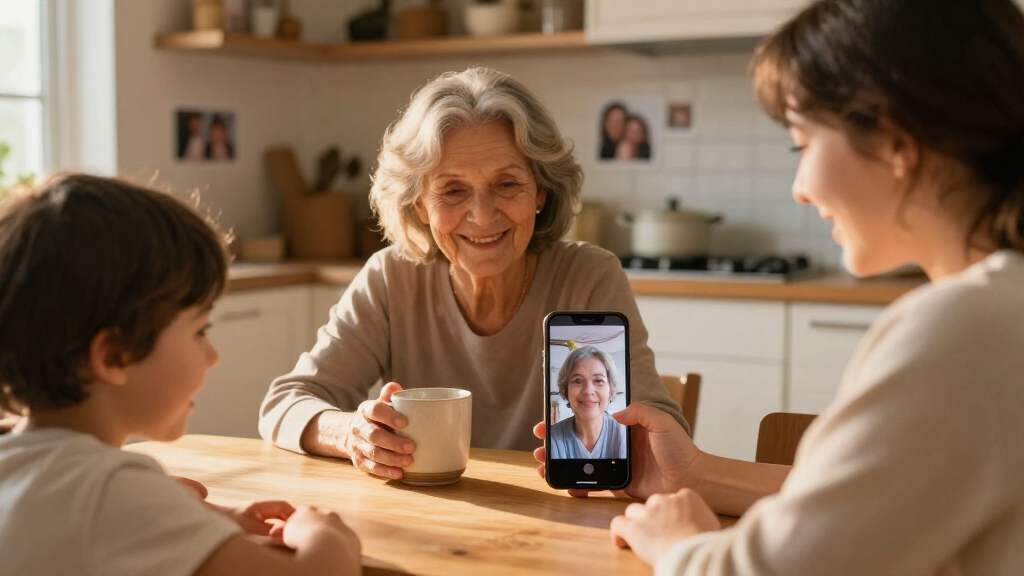
IdeaNavigator AI has proposed testing scheduled AI phone calls as a daily check-in for seniors living alone, with text alerts to an adult child when a call is missed or raises concern. The proposal is an early-stage pilot concept, not evidence that the approach improves safety or a report of a service already in use.
IdeaNavigator AI has proposed a three-week test of scheduled phone calls in which an AI voice asks seniors living alone a few basic wellness questions and sends an adult child a text if the call is missed or concerning. The proposal is aimed at families separated by distance, but it describes a workflow to validate—not a proven service or demonstrated safety benefit.
The suggested setup is a daily call to a senior’s landline or mobile phone. During a short conversation, the AI would ask a few questions about how the person is doing. The system would then send the adult child a simple “all-clear” message or flag a missed call or response that warrants attention. The proposal does not specify the questions, how answers would be assessed, or what level of concern would trigger an alert.
IdeaNavigator AI frames the intended customer as an adult child whose independent parent lives in another city. It suggests charging that customer a monthly subscription for each parent. To test the idea, it recommends setting up calls for 15 senior-and-adult-child pairs over three weeks, then measuring whether seniors answer and whether families consider the alerts worth paying for.
The proposal’s premise is that families may not be able to call every day, leaving a period in which a fall or difficult day could go unnoticed. It also argues that natural-sounding voice AI could make short calls feasible at scale. Those are rationale and product assumptions in the proposal; no pilot findings, user responses, pricing, or evidence of effectiveness are provided.
Testing a Daily Family Check-In
A routine call could offer families a regular signal about whether an older relative has answered and responded, while keeping the senior on a familiar phone line rather than requiring a smartphone app. For relatives who live far away, a missed-call alert may prompt a follow-up that otherwise might not happen until later. The proposal therefore addresses a practical gap between occasional family calls and in-person support.
But an automated check-in is not the same as emergency monitoring. A call that is answered cannot, by itself, establish that someone is safe, and a missed call does not establish that a person has fallen or needs help. The concept’s value would depend on whether the alerts are reliable, whether seniors are comfortable speaking with an AI, and whether families can respond when a concern is flagged. Those questions matter before families treat an “all-clear” as reassurance or rely on the service for safety.
The proposed pilot focuses on two early measures: answer rates and willingness to pay. Those can help establish whether the routine is usable and appealing, but they would not show whether it prevents harm or shortens response times. A small, three-week test would also offer limited evidence about long-term use, accessibility, and how the system handles unusual or ambiguous answers.
Products Worth Considering

Apple iPad Air (4th Generation, 10.9-inch, Wi-Fi, 256GB) – Space Gray

Logitech MX Master 4 for Mac, Ergonomic Bluetooth Mouse with Haptic Feedback, Ultra-Fast Scrolling, USB-C Charging, for MacOS, iPadOS, Windo

Amazon Kindle Scribe Colorsoft 64GB (1st Generation)
As an affiliate, we earn on qualifying purchases.
From Product Idea to Pilot
IdeaNavigator AI presents this as a narrow first-use case in aging-in-place wellness: a daily, brief phone check for an independent senior, with a family member receiving the result. The concept relies on voice calls rather than continuous monitoring and places the adult child—not the senior—as the proposed subscriber and payer.
The proposal gives no account of a product launch, named provider, completed trial, or findings from seniors and families. Its suggestion that voice AI is now natural-sounding and affordable at scale is a claim motivating the idea, not a reported cost analysis or comparative study. The recommended 15-pair pilot is intended to test whether the basic routine works well enough to justify further development.
Safety and Usability Still Untested
No trial results are reported, and the proposal does not say whether a pilot has started or who would operate it. It also leaves open how the AI would distinguish a routine answer from a concerning one, how it would handle a confused or incomplete response, and what the adult child should do after receiving an alert.
Other unresolved issues include consent, privacy, data storage, accessibility for people with hearing or speech difficulties, and whether calls would be available in languages or formats seniors prefer. The plan does not describe backup steps if a call fails, how quickly an alert would arrive, or whether the service would contact anyone beyond the subscriber. Without those details, the suggested “all-clear” should not be treated as confirmation of a person’s condition.
Pilot Measures and Next Decisions
The next step proposed by IdeaNavigator AI is a three-week test with 15 family pairs. The stated measures are whether seniors answer the calls and whether adult children find the resulting alerts valuable enough to pay for. No schedule, recruitment plan, or pilot operator is identified.
If a test proceeds, its results could clarify whether participants accept a daily AI call and how often calls produce missed or concerning alerts. Further evaluation would be needed to assess reliability, privacy safeguards, accessibility, and any effect on response to health or safety concerns. For now, the idea remains a proposal, and its real-world performance is unknown.
Source: IdeaNavigator AI
Key Questions
Is this an AI calling service that families can sign up for now?
The material describes a proposed pilot concept. It does not identify a launched service, provider, or sign-up option.
What would the AI call do?
It would place a scheduled daily phone call, ask a few wellness questions, and send the adult child an all-clear text or an alert if the call is missed or raises concern. The exact questions and alert rules are not specified.
Would an all-clear confirm that a senior is safe?
No. An answered call could provide a routine check-in, but the proposal does not establish that an AI call can confirm someone’s condition or detect every emergency. The service is not described as a substitute for emergency response or personal care.
How would the idea be tested?
IdeaNavigator AI suggests a three-week pilot involving 15 senior-and-adult-child pairs. It proposes measuring call answer rates and whether families consider the alerts worth paying for; no results are available.
Source: IdeaNavigator AI