
TL;DR

Get the latest gadgets delivered free with Prime
- Fast, free delivery on millions of items
- Prime Video, Amazon Music and more included
- Member-only deals all year
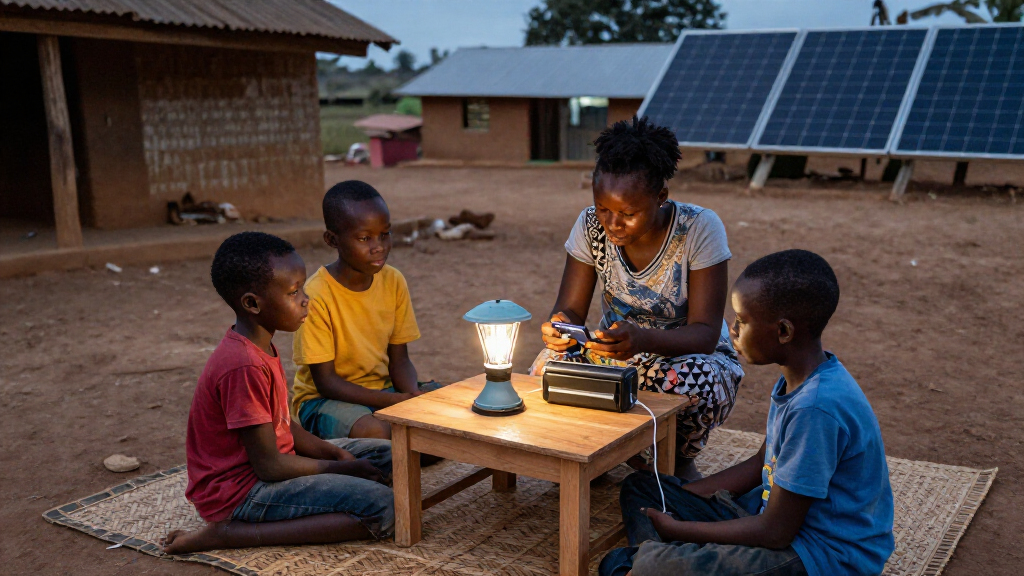
Google says its three-year collaboration with Ignite Energy Access has helped address mapping and delivery barriers to off-grid solar in sub-Saharan Africa. The company estimates the partnership enabled more than 160,000 tonnes of CO2-equivalent emissions reductions in the first half of 2026, alongside 3.7 million devices delivered since 2023.
Google says its three-year partnership with Ignite Energy Access has helped deliver 3.7 million solar devices across sub-Saharan Africa since 2023, and the company estimates the work enabled more than 160,000 tonnes of CO2-equivalent emissions reductions in the first half of 2026. The collaboration applies mapping, routing and supply-chain tools to obstacles that can make it difficult to reach households beyond the electricity grid.
Google described the work in a report published October 26, 2026. It said Ignite teams and Google researchers, engineers and data specialists held more than 100 advisory sessions over three years. The effort focused on finding homes without formal addresses, reaching them across rural terrain and identifying small solar installations using satellite data.
To locate potential customers, the teams combined satellite imagery with Google’s Open Buildings dataset and routing algorithms, according to Google. The company said its researchers are also developing geospatial models to identify rural paths and incorporate them into delivery routes. Google’s operations research models are being used to assess where warehouses and local mini-hubs could be placed, taking into account transport costs, vehicle capacity, routes and inventory expenses.
The partnership is also testing computer-vision models to identify rooftop solar systems from orbit. Google said a single rooftop panel can occupy roughly one pixel in standard satellite imagery, making it difficult to identify installations at scale. The models use drone imagery supplied by Ignite as ground-truth data; the company said researchers are testing code variations to improve precision and recall.
How Better Maps Could Expand Solar Access
The reported work addresses practical barriers to bringing power to people who are difficult to reach with conventional grid infrastructure. Google’s report says more than 600 million people in sub-Saharan Africa live without electricity, while many rural homes are absent from standard maps. Better household location data and routing could help providers plan deliveries and identify communities that remain underserved.
The potential relevance extends beyond lighting. Google and Ignite say they are modeling community-level microgrids that could supply enough power for electric cooking, which typically requires more energy than an individual rooftop solar kit can provide. The report presents this as a future area of work, not a completed rollout. Wider access to electricity and clean cooking could affect household energy use and exposure to cooking smoke, but the source does not provide results from the microgrid modeling.
Products Worth Considering

Jackery Explorer 300 Portable Power Station, 292Wh

Anker SOLIX C200 DC Portable Power Station, 192Wh, 200W

Logitech MX Master 4 for Mac, Ergonomic Bluetooth Mouse with Haptic Feedback, Ultra-Fast Scrolling, USB-C Charging, for MacOS, iPadOS, Windo
As an affiliate, we earn on qualifying purchases.
From Solar Kits to Microgrid Planning
Ignite Energy Access is described by Google as an off-grid energy company with an aim of connecting 100 million people across Africa by 2030. The report frames the partnership as a way to address data and logistics needs beyond Google’s own operations. Its tools are intended to support planning and delivery; the account does not say that Google itself supplies the solar devices.
Google’s emissions estimate is tied to the partnership and to the first half of 2026. The company attributes the reductions to solar devices delivered through the work, reporting 3.7 million devices delivered across the region since 2023. The figures and attribution come from Google’s own account, which does not provide an independent assessment or a detailed method for calculating the emissions estimate.
““In the first half of 2026 alone, we estimate our partnership with Ignite Energy Access has enabled over 160,000 tCO2e in emissions reductions.””
— Google, in its report published October 26, 2026
How the Impact Figures Were Calculated
The report does not provide the methodology behind the emissions estimate, an independent verification of the 160,000-tonne figure, or a breakdown by country or project. It also does not say how many of the 3.7 million devices are currently operating, how many households they serve, or how the deliveries are distributed across sub-Saharan Africa.
Google describes the satellite-detection models as under development and says the team is testing variations to improve precision and recall. The report does not give model performance figures, deployment dates or confirmation that the approach is already being used to direct large-scale installations. The microgrid work for electric cooking is described as modeling and planning, with no announced construction schedule or target communities.
Testing Models and Planning Microgrids
Google says the teams are continuing to refine the computer-vision models and geospatial routing tools. Their next steps, as described in the report, include improving identification of small solar systems and using the resulting data to guide future deployment planning.
The partnership is also modeling community microgrids intended to support electric cooking. Google has not announced a rollout timetable, project locations or a forecast for how many households such systems could serve. Further detail on model accuracy, emissions accounting and implementation plans would clarify how the reported work translates into expanded access.
Key Questions
What did Google and Ignite Energy Access report?
Google said the partnership helped deliver 3.7 million solar devices across sub-Saharan Africa since 2023. It estimated that the collaboration enabled more than 160,000 tonnes of CO2-equivalent emissions reductions in the first half of 2026.
How is the partnership trying to reach homes beyond the grid?
The teams are combining satellite imagery, Google’s Open Buildings dataset and routing tools to locate homes and plan deliveries. Google also says its models assess rural paths and possible warehouse and mini-hub locations.
Are the satellite models already being used at scale?
The report says computer-vision models are being developed and tested using drone imagery provided by Ignite. It does not say they are already deployed at scale or provide accuracy results.
What is the clean-cooking part of the partnership?
Google says the partners are modeling community microgrids that could provide enough electricity for electric cookstoves. The report gives no rollout date, locations or number of households planned.
Has the emissions estimate been independently verified?
Google presents the figure as its own estimate. The report does not provide a calculation method or independent verification.
Source: rss