
🔍 Read the full analysis: A Home Network Upgrade In 2027? Start With These 9 Best Wi-Fi 7 Routers on ThorstenMeyerAI.com

Get the latest gadgets delivered free with Prime
- Fast, free delivery on millions of items
- Prime Video, Amazon Music and more included
- Member-only deals all year
TL;DR
A comparison of nine Wi-Fi 7 routers names the TP-Link Archer BE550 its best overall pick for balancing tri-band capacity and wired connections. The recommendations range from simpler dual-band models to a quad-band gaming router, but the source stresses that device compatibility, home layout and wired needs matter more than the Wi-Fi 7 label alone.
ThorstenMeyerAI.com’s nine-router comparison ranks the TP-Link Archer BE550 as its best overall Wi-Fi 7 pick, citing a balance of tri-band flexibility and useful wired connections. The guide also points shoppers toward a quad-band gaming model for demanding setups and less complex dual-band options for smaller networks, while warning that a router’s benefits depend on compatible devices, home layout and internet service.
The comparison weighs each router’s band configuration, wired ports and feature set against typical household needs, as do other Wi-Fi 7 router comparisons. It says its ranking favors practical balance over headline speed claims or specialist features, placing the BE550 ahead of alternatives for a broad range of homes. The source does not provide measured performance results, testing conditions or prices in the supplied material.
For a higher-end setup, the guide names the ASUS ROG Rapture GT-BE98 Pro, whose quad-band design and gaming-oriented controls suit more demanding networks. It describes the TP-Link Archer BE230 as a simpler entry point. Other models included in the comparison are the TP-Link Archer BE400, ASUS RT-BE82U, NETGEAR RS90, NETGEAR RS140, NETGEAR BE9300 and TP-Link BE600.
The source presents the BE9300 and BE600 as tri-band alternatives to the BE550, with the right choice depending on client load, wired equipment and network layout—factors also discussed in this guide to Wi-Fi 7 home connectivity. The Archer BE400, RT-BE82U, RS90 and RS140 are grouped as dual-band options for shoppers who favor a more straightforward setup over additional band flexibility. The source does not give a full model-by-model specification table in the material provided.
The 9 picks
- 1
 ASUS ROG Rapture GT-BE98 Pro Quad-Band WiFi 7 Gaming RouterView on Amazon →
- 2
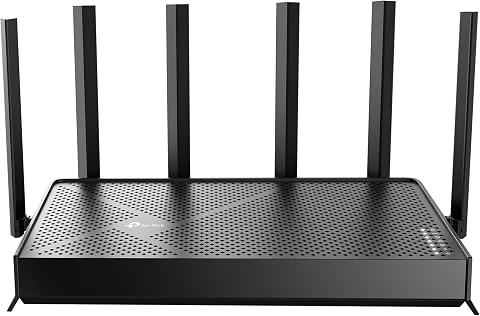 TP-Link Archer BE600 Tri-Band Wi-Fi 7 RouterView on Amazon →
- 3
 NETGEAR Nighthawk BE9300 Tri-Band WiFi 7 RouterView on Amazon →
- 4
 TP-Link Archer BE550 Tri-Band Wi-Fi 7 RouterView on Amazon →
- 5
 NETGEAR Nighthawk RS140 Dual-Band WiFi 7 RouterView on Amazon →
- 6
 ASUS RT-BE82U Dual-Band Wi-Fi 7 RouterView on Amazon →
- 7
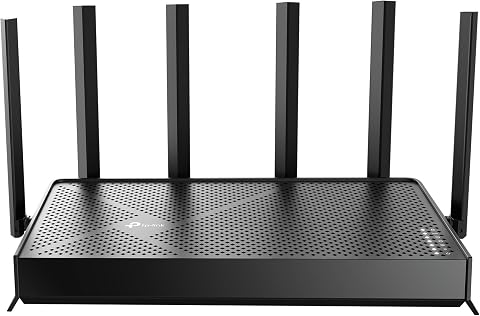 TP-Link Archer BE400 BE6500 Dual-Band Wi-Fi 7 RouterView on Amazon →
- 8
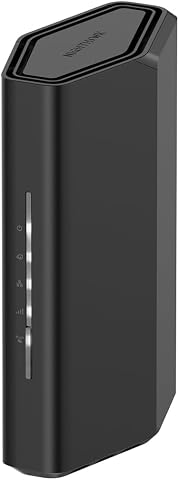 NETGEAR Nighthawk RS90 WiFi 7 Dual-Band RouterView on Amazon →
- 9
 TP-Link Archer BE230 Dual-Band Wi-Fi 7 RouterView on Amazon →
Choose Bands for Your Household
The comparison matters because Wi-Fi 7 naming alone does not tell shoppers whether a router fits their home. Band count is not a direct speed guarantee: additional bands can give a busy network more ways to distribute traffic, but may add cost and complexity that a smaller household does not need.
Wired connections can be just as decisive. A home with a desktop computer, storage device, console or wired access point should check that port types and speeds match its internet plan and equipment. A router cannot remove a bottleneck elsewhere in the network simply by supporting a newer wireless standard.
Coverage is another separate issue. Walls, floors, router placement and neighboring networks can affect service, so a higher-capacity model may not solve a weak signal in a distant room. Readers whose main problem is coverage may need to consider mesh or access-point expansion, rather than paying for capacity they cannot use.
Products Worth Considering

LG UltraGear 32GX850A-B 32-inch 4K UHD Glossy OLED Gaming Monitor

LG UltraGear 34GX90SA-W 34-inch WQHD Curved OLED Gaming Monitor

Apple Watch Series 8 GPS, 41mm, Midnight Aluminum Case with Midnight Sport Band (S/M)
As an affiliate, we earn on qualifying purchases.
How the Nine Models Differ
The source’s ranking uses a needs-based approach: it compares two-, three- and four-band designs, wired connectivity and controls for different kinds of users. The BE550 leads because the guide sees it as a balanced option. The GT-BE98 Pro occupies a more specialized premium role, while dual-band choices aim at less complex networks.
A Wi-Fi 7 router can still connect older wireless devices, according to the guide, but those devices do not gain every Wi-Fi 7 capability just by connecting. The practical case for upgrading is stronger when the devices used most often support the newer standard or when the household plans to add compatible equipment. The guide advises checking the actual phones, computers, consoles and adapters in use before buying.
The comparison also cautions against treating advertised capabilities as promises of real-world results. Home construction, placement, client hardware and service speed all shape performance. The supplied source offers buying guidance rather than a documented laboratory test, and it gives no specific speed measurements for the nine models.
“The central tradeoff is whether you need extra bands and ports for busy households or can save space and complexity with a dual-band router.”
— ThorstenMeyerAI.com comparison
Performance Depends on Each Home
The supplied comparison does not include prices, full specifications, benchmark results or test conditions, so readers cannot use it alone to compare measured throughput or value. Its rankings should be read as editorial buying guidance, not proof that one model will outperform another in every house.
It is also unclear how the nine routers compare on firmware support, security-update commitments, mesh features, setup experience and current availability. Those details can affect a purchase and should be checked with the manufacturers or retailers before choosing a model. The source does not establish that every listed router will be the right fit—or remain the best value—for a 2027 purchase.
Actual gains from Wi-Fi 7 remain dependent on compatible client devices, router placement, home construction and internet-service limits. Older devices can connect, but the source says they will not use all the standard’s features. No particular speed improvement is guaranteed by the guide.
Check the Network Before Buying
Shoppers planning an upgrade should first list the devices that will use Wi-Fi most, map wired equipment and identify where coverage is weak. Then compare each candidate’s bands, ports and expansion options against those needs, rather than relying on advertised capacity alone.
Before a 2027 purchase, readers should also check current prices, detailed specifications, availability and support information; none is established in the supplied comparison. The guide’s next step for buyers is practical rather than a scheduled product development: select the router that fits the household’s devices and layout, and consider mesh or access points if coverage—not capacity—is the problem.
Key Questions
Which router does the comparison recommend overall?
It ranks the TP-Link Archer BE550 first, citing its combination of tri-band flexibility and a useful mix of wired connections. That is the source’s recommendation, not a guarantee of the best results in every home.
Which model is aimed at demanding gaming setups?
The source identifies the ASUS ROG Rapture GT-BE98 Pro as the higher-end, gaming-focused option, highlighting its quad-band capacity and gaming controls. It says most homes may not need that scale or added complexity.
Are dual-band Wi-Fi 7 routers enough for a home?
They may suit a smaller household or a network with simpler needs. The comparison lists the Archer BE230, Archer BE400, ASUS RT-BE82U, NETGEAR RS90 and RS140 among its dual-band options; the right fit depends on active devices and network requirements.
Will older devices benefit from a Wi-Fi 7 router?
Older Wi-Fi devices can connect, but they do not gain every Wi-Fi 7 capability. The source recommends checking the standards supported by the devices used most before upgrading.
Does buying a Wi-Fi 7 router guarantee better coverage?
No. The source says walls, floors, placement and neighboring networks affect coverage. If dead zones are the main issue, compare mesh or access-point options instead of assuming a higher-capacity router will fix them.
Source: ThorstenMeyerAI.com