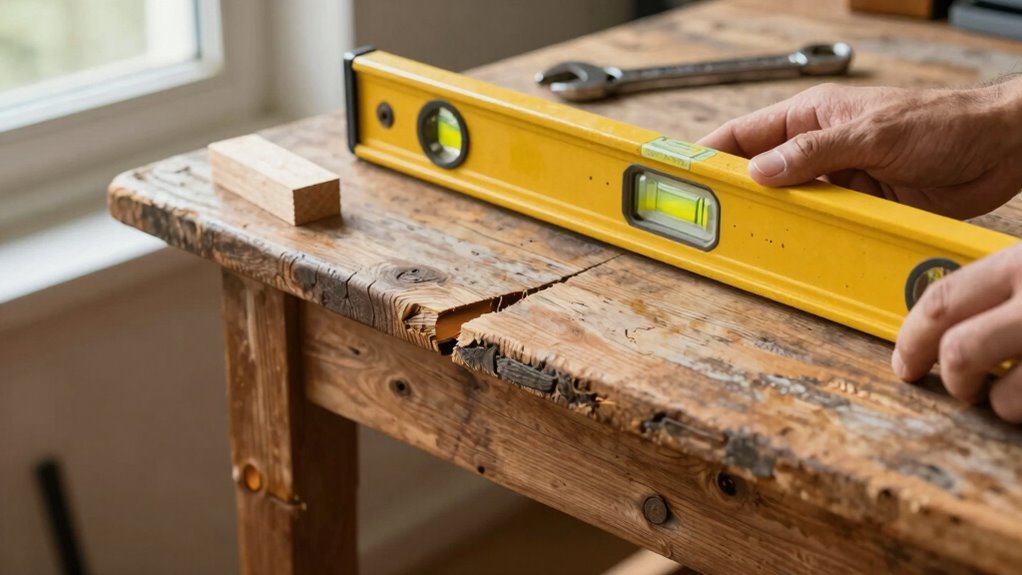

To fix a wobbly table without buying a new one, start by inspecting and tightening loose screws or bolts on the legs and joints. Check for uneven legs and use shims or wedges to level them on uneven floors. If any feet are damaged, replace or reinforce them with proper supports or braces. Regular maintenance helps prevent future wobbling. Keep these tips in mind, and you’ll be surprised how quickly stability can be restored—next, you’ll discover even more solutions.
Key Takeaways
- Tighten all screws, bolts, and joints, replacing damaged fasteners to ensure stability.
- Use shims or wedges under uneven legs to level and stabilize the table.
- Add diagonal supports or braces to reinforce weak or wobbly legs.
- Inspect for warping or damage and repair or replace broken parts as needed.
- Perform regular maintenance and avoid dragging the table to prevent loosening and damage.

Furniture Leveler 12pcs Kit Size Variety | Multi-Purpose Rubber Shim for Leveling Feet Stable | Anti-Wobble Pad for Uneven Table, Dresser Leg, Toliet and More Furniture | Prevent from Wobbling
- Multiple Size Options: Variety of sizes for perfect fit
- Customizable and Durable: Cuttable, stackable, holds 22,000 lbs
- Versatile Home Use: Stabilizes furniture and fixtures
As an affiliate, we earn on qualifying purchases.
As an affiliate, we earn on qualifying purchases.
Identify Why Your Table Wobbles and How to Diagnose It
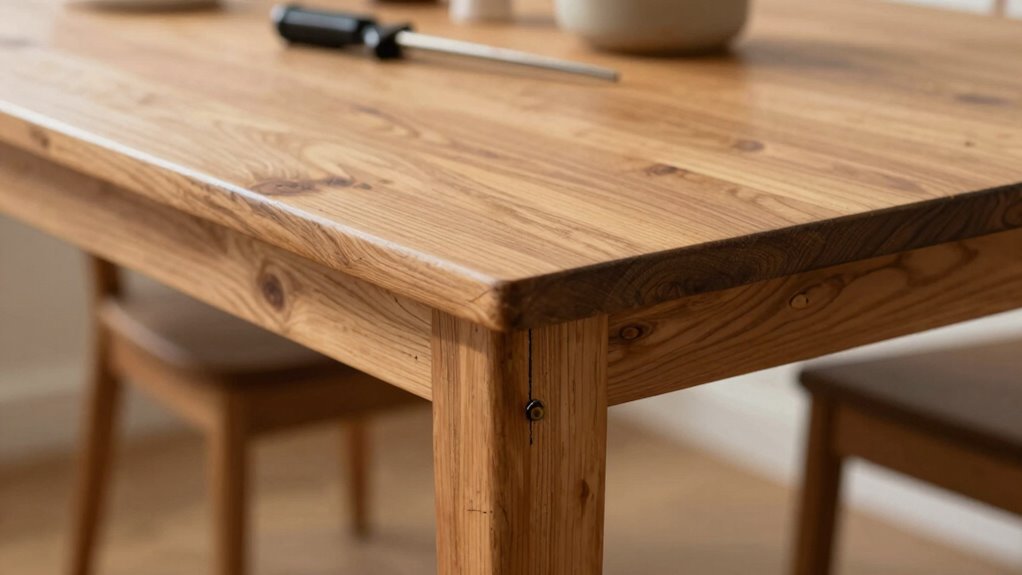
Ever wonder why your table wobbles? The first step is to inspect the material for any warping, cracks, or damage that could cause instability. Check the table legs and surface for unevenness or defects by closely examining each part. Next, consider the weight distribution; unevenly placed items can make the table tilt or wobble. Place objects in different positions to see if the wobbling changes, which helps identify if the problem stems from imbalance. Sometimes, the material itself may have shifted or become compromised, leading to uneven support. By thoroughly inspecting the material and observing how weight is distributed across the table, you’ll gain clues on where the issue originates. Additionally, understanding structural integrity can help determine if internal damage is contributing to the wobble. Recognizing signs of material fatigue is also crucial, as it indicates potential failure points. This diagnosis is key to applying the right fix later. Furthermore, assessing the joint stability can reveal loose or degraded connections that may be causing instability. Paying attention to supporting structures can also help identify hidden issues that affect overall stability.
Furniture Leveler 12pcs Kit Size Variety | Multi-Purpose Rubber Shim for Leveling Feet Stable | Anti-Wobble Pad for Uneven Table, Dresser Leg, Toliet and More Furniture | Prevent from Wobbling
- Multiple Size Options: Variety of sizes for perfect fit
- Customizable and Durable: Cuttable, stackable, holds 22,000 lbs
- Versatile Home Use: Stabilizes furniture and fixtures
As an affiliate, we earn on qualifying purchases.
As an affiliate, we earn on qualifying purchases.
Check and Tighten Loose Screws and Bolts
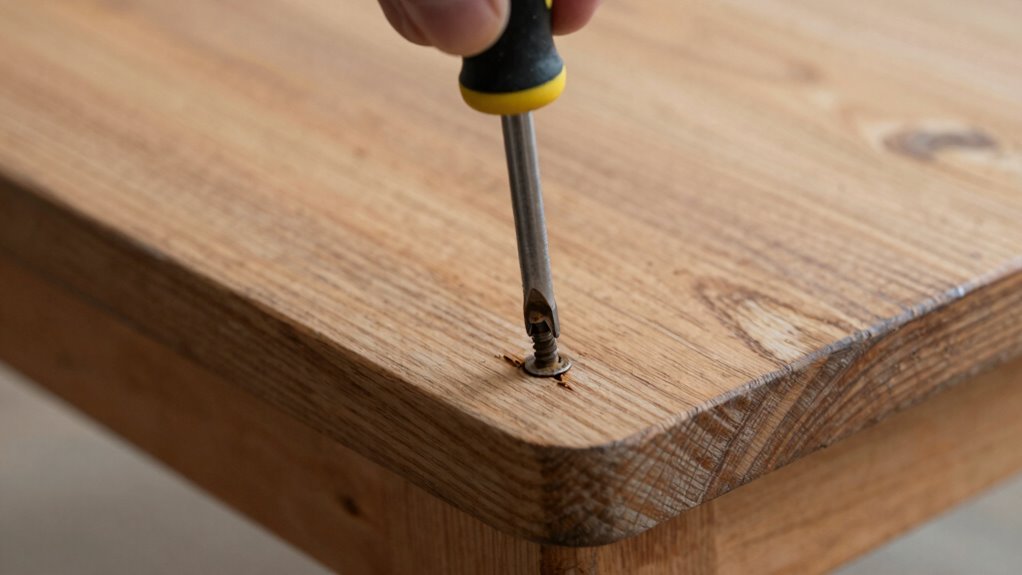
Loose screws and bolts are a common cause of a wobbly table, so it’s important to check and tighten them first. Grab a screwdriver or wrench, and examine all visible fasteners on the table’s legs, apron, and joints. During screw tightening, ensure each screw is snug but not overtightened, which could damage the wood or strip the threads. For bolts, secure them firmly, making sure they aren’t loose or missing. If any fasteners are stripped or damaged, replace them immediately. Tightening these connections often stabilizes the table without much effort. Remember, loose screws and bolts can cause uneven weight distribution, leading to wobbling. Regularly inspecting and securing fasteners is a simple step to prolong your table’s lifespan and keep it steady. Additionally, understanding the importance of proper fastening techniques can help prevent future issues. To further enhance stability, consider inspecting the material quality of your table, as higher-quality materials tend to hold fasteners better over time. Maintaining a regular tightening schedule can also prevent loosening caused by everyday use.

Blulu 2 Pcs 32 L x 3 W C Channel Steel Support Metal Support Bracing Hidden C Bracket for Table Top Live Edge Slab Woodworking, Black Coat Finish
- Package Includes: 2 steel support brackets for larger projects
- Size and Compatibility: 32 x 3 x 0.5 inches, versatile for various uses
- Color and Finish: Black coating for aesthetics and rust resistance
As an affiliate, we earn on qualifying purchases.
As an affiliate, we earn on qualifying purchases.
Level Uneven Legs With Simple DIY Techniques
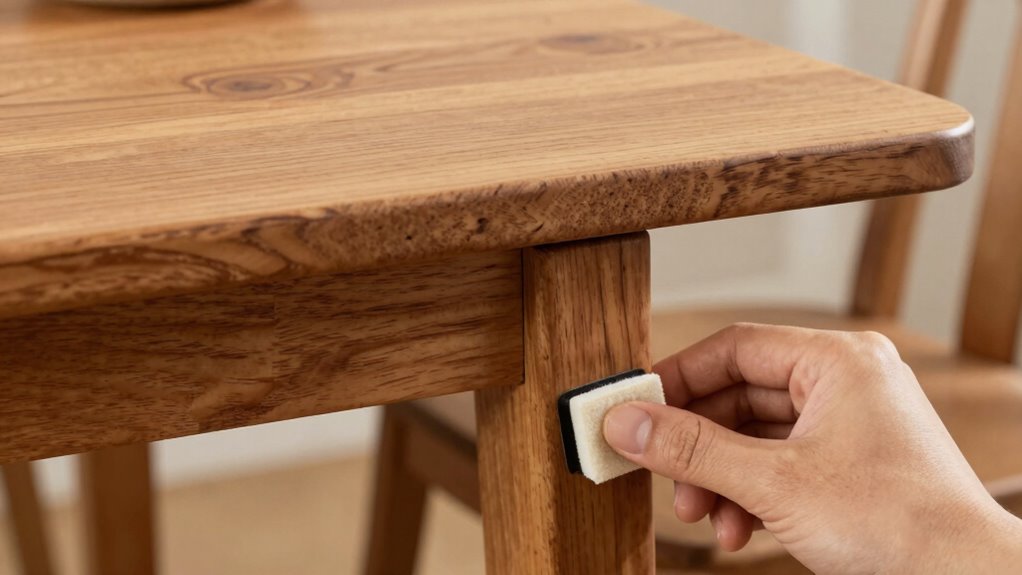
To level uneven legs, start by carefully adjusting each one until the table sits flat. If some legs are still uneven, use wedges or shims to fill the gaps and stabilize the surface. These simple DIY techniques can make a big difference in keeping your table steady. Additionally, inspecting household furniture regularly can help identify and address issues before they worsen. Understanding home maintenance practices can also prevent future wobbliness and extend the life of your furniture. For more stability, consider using furniture repair techniques like tightening loose joints or applying wood glue where needed. Regularly checking for furniture stability can help you maintain a safe and level surface over time. Incorporating impact investing principles into your maintenance routine can also promote sustainable and long-lasting furniture solutions.
Adjust Legs Carefully
If your table wobbles, start by checking which legs are uneven. You can carefully tweak them by tightening or loosening screws or adding small modifications. To make this easier, consider using cushion pads or decorative covers to level the legs without permanent changes. Here’s a quick guide:
| Leg | Adjustment Needed | Notes |
|---|---|---|
| Front Left | Add a cushion pad | Use a decorative cover for a neat look |
| Front Right | Tighten screw | Keep it snug but not over-tightened |
| Back Legs | Loosen or tighten | Balance the table evenly |
Additionally, understanding furniture stability can help you identify other common issues that cause wobbling. Knowing how to detect uneven legs can prevent future problems and improve your DIY skills. Ensuring proper weight distribution can also help maintain the table’s steadiness over time. This simple approach ensures your table stays steady and looks good. Regularly checking for uneven legs can prevent future wobbling problems. Always check stability after adjustments. For best results, remember to use DIY tools properly and follow safety tips to avoid damage or injury.
Use Wedge or Shims
When your table legs are uneven, using wedges or shims offers a simple and effective DIY solution. These small adjustments can markedly improve furniture stability without needing to replace your table. To start, identify which legs are shorter or uneven. Then, select appropriate shims or wedges made of wood, plastic, or cardboard. Insert the wedge or shim tightly under the shorter leg, ensuring it lifts the leg to match the others. Proper wedge installation prevents wobbling and enhances stability. Check the table’s levelness after each adjustment, adding more shims if needed. This quick fix is inexpensive and straightforward, making it perfect for addressing uneven legs without professional help. With a little effort, you’ll restore your table’s stability using simple wedge or shim techniques. Additionally, understanding the principles of floating on water can inform how you position and balance your furniture for optimal stability.

JEGONFRI 209PCS Wood Screw Assortment Kit, 6 Sizes Flat Head Phillips
- Variety of Sizes: Includes 6 screw sizes for different projects
- High-Quality Material: Made of durable 1022A carbon steel
- Corrosion Resistant: Galvanized surface prevents rust and corrosion
As an affiliate, we earn on qualifying purchases.
As an affiliate, we earn on qualifying purchases.
Use Shims to Stabilize Your Table on Uneven Floors
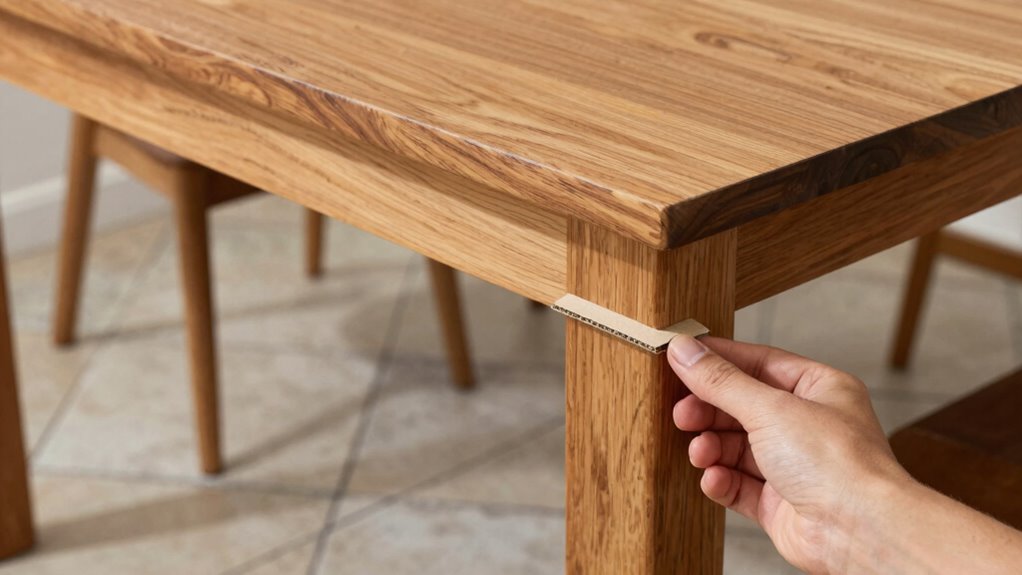
Ever notice how your table wobbles every time you set down a glass? That’s usually due to uneven floors. Using shims is an effective way to achieve floor leveling and stabilize your table. Place small, thin pieces of wood, cardboard, or plastic under the uneven legs until the wobble stops. For added stability, you can also attach furniture pads to the bottom of each leg for grip and protection. Additionally, incorporating natural materials such as cork or rubber can further improve stability and protect your flooring. These materials are recognized for their shock absorption qualities and durability, making them ideal for furniture stabilization. Implementing floor leveling techniques can help prevent future wobbling caused by settling or shifting foundations. Here’s a quick guide:
| Leg | Shim Material | Adjustment Method |
|---|---|---|
| Front Left | Cardboard | Insert until stable |
| Front Right | Wood | Sand down for level |
| Back | Plastic | Secure with adhesive |
This simple fix helps your table stand firm without buying new furniture.
Replace Damaged or Worn-Out Table Feet
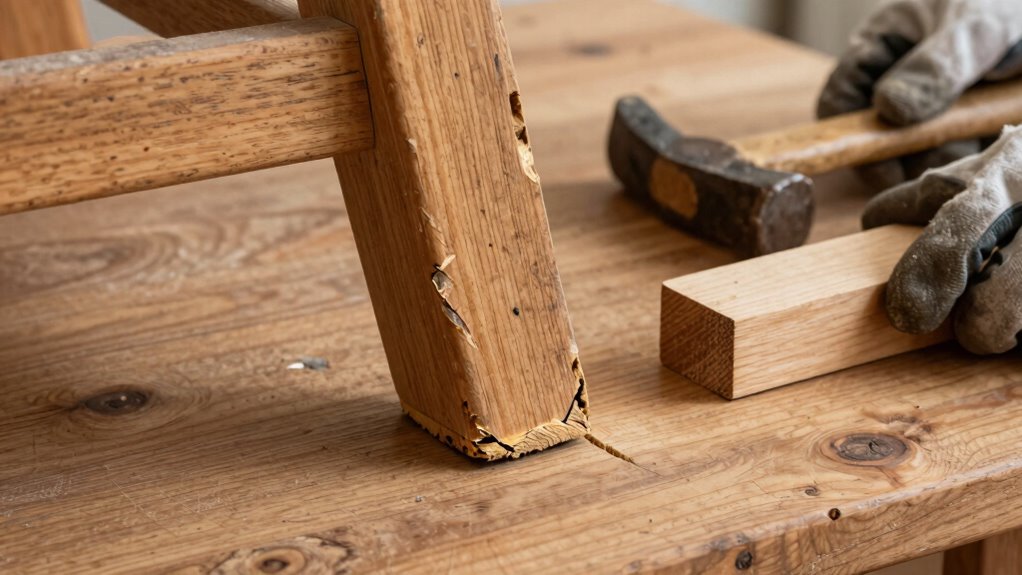
Damaged or worn-out table feet can cause instability and wobbling, making your furniture unsafe and less functional. To fix this, consider table foot replacement to restore stability. Start by removing the old, damaged feet with a screwdriver or pliers. Visualize:
- A chipped, uneven foot hanging loose from the leg.
- A cracked or rotted wooden foot with splinters.
- A wobbly leg with a loose or broken foot wobbling under pressure.
Once removed, attach new feet suitable for your table’s style and height. This compromised leg repair not only stabilizes your table but also extends its lifespan. Proper table foot replacement ensures your furniture remains sturdy and safe for everyday use.
Reinforce Weak Joints for Better Stability
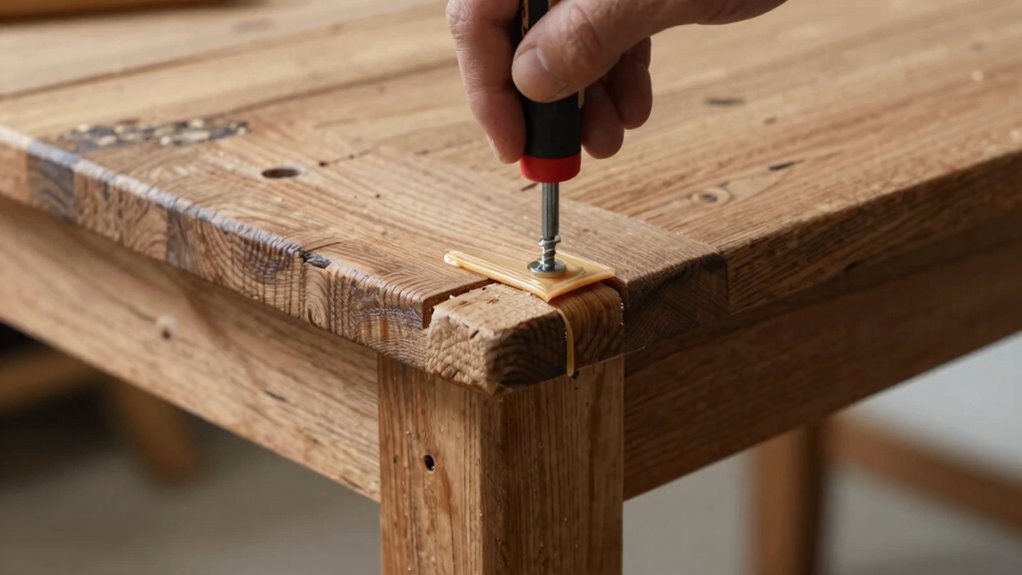
Replacing worn-out or damaged table feet can improve stability, but sometimes the joints themselves need reinforcement to prevent wobbling. To achieve this, focus on joint reinforcement techniques. Start by checking loose joints and tightening any screws or bolts. If joints are still unstable, consider adding leg bracing—diagonal supports that connect legs to the tabletop or other legs. Leg bracing enhances stability by distributing weight more evenly and reducing movement at weak points. You can create simple bracing with wood strips or metal brackets, attaching them securely with screws. For added strength, apply wood glue to joints before tightening screws. Reinforcing weak joints with proper leg bracing stabilizes your table and keeps it wobble-free, extending its lifespan without needing a replacement. Incorporating proper reinforcement techniques can further ensure your table remains sturdy over time. Using joint reinforcement methods can help maintain your table’s stability long-term, especially when combined with regular maintenance. Additionally, selecting high-quality hardware and fasteners can significantly improve joint strength and durability.
Your Wobbly Table Still Wobbles? When to Call a Professional
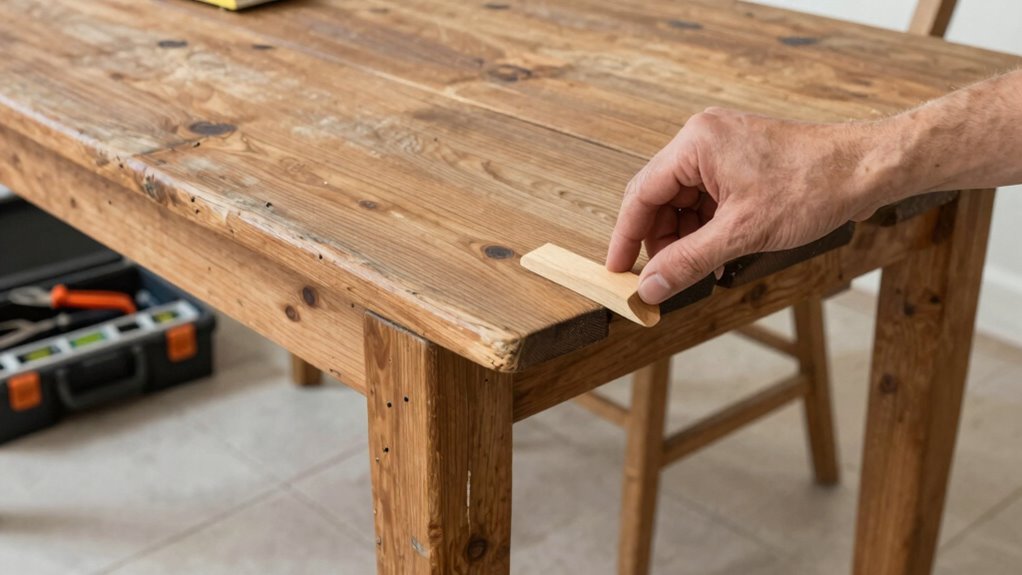
Sometimes, despite your efforts to reinforce joints and add bracing, the table still wobbles. When that happens, it’s time to contemplate calling a professional. A professional assessment can pinpoint underlying issues, like warped legs or hidden structural damage, that aren’t visible to the naked eye. They have the expertise to perform structural repair effectively.
Imagine these scenarios:
- You notice uneven legs wobbling independently.
- The table wobbles despite your fixes, hinting at internal cracks.
- You’ve tried all DIY methods, but stability remains elusive.
In these cases, a skilled professional can evaluate the table’s integrity and perform the necessary repairs, ensuring your table is sturdy and safe for everyday use.
Tips to Prevent Your Table From Wobbling in the Future
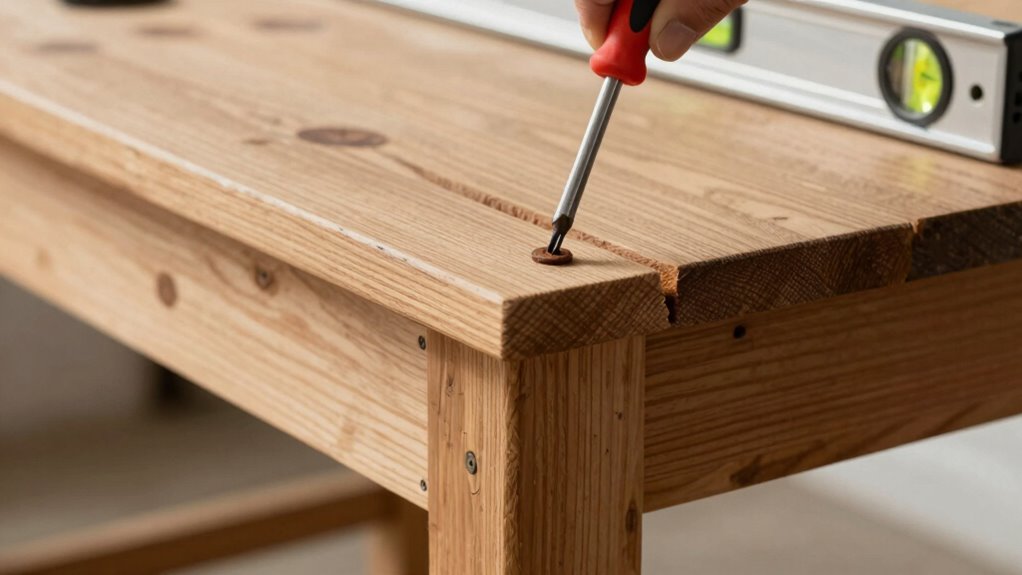
To keep your table stable over time, taking proactive steps can make a big difference. Regular table maintenance is key to maintaining furniture stability. Check the legs and joints periodically, tightening screws or bolts as needed. Use furniture pads or felt protectors under the legs to prevent uneven wear and shifting. Guarantee your table is placed on a level surface; uneven floors can cause wobbling. Avoid dragging the table across the floor, which can loosen joints or damage legs. If you notice any instability, address it immediately to prevent further issues. By maintaining your furniture properly and being attentive to small problems early, you can extend the life of your table and keep it wobble-free for years to come.
Frequently Asked Questions
Can Temperature Changes Cause My Table to Wobble?
Yes, temperature changes can cause your table to wobble. Material expansion and contraction due to climate effects make wood and other materials shift slightly, especially if they’re sensitive to temperature fluctuations. These small movements can create unevenness, making your table wobble. To fix this, check for loose screws, tighten them, or add small shims where needed. Consistent climate control can also help prevent future wobbling caused by temperature shifts.
Are There Specific Tools Recommended for Fixing Wobbly Tables?
You’ll need measuring tools like a ruler or tape measure to identify uneven legs precisely. For fixing your wobbling table, consider adhesive options such as wood glue or epoxy for securing loose joints. Use clamps to hold parts in place while the adhesive sets. These tools and materials help stabilize your table effectively, ensuring it stays steady without needing to buy a new one.
How Long Do DIY Fixes Typically Last?
DIY fixes for a wobbly table usually last several months to a few years, depending on the repair quality and table use. If you use durable materials and guarantee tight, secure fixes, you’ll enhance table longevity and repair durability. Regularly check and tighten the fixings to prolong the stability. While DIY repairs can be effective, heavy use or movement may require re-tightening or additional fixes over time.
What Types of Shims Are Best for Different Table Materials?
You should choose wooden or metal shims for sturdy, long-lasting support, especially under heavy tables, while plastic or cork shims work well for delicate or smooth surfaces to prevent scratches. Wooden shims are versatile and durable, metal shims provide strength, plastic shims are flexible and inexpensive, and cork shims offer gentle leveling for sensitive materials. Select the type based on your table’s material and weight to guarantee a stable, wobble-free surface.
Is It Safe to Repair a Wobbling Table Myself?
You can safely repair your wobbling table yourself if you’re cautious and prepared. Imagine tightening loose joints like tightening a ship’s rigging—steadying it for smooth sailing. Using epoxy bonding for small cracks and considering table leg replacement for damaged ones keeps your project manageable. Just follow instructions carefully, wear safety gear, and work in a well-ventilated area. With patience, you’ll restore stability without risking harm or further damage.
Conclusion
Now that you know how to fix a wobbly table, why settle for instability when a simple fix can restore its stability? With a few easy steps, you can enjoy a sturdy surface without buying a new one. So, next time your table wobbles, will you take action or let it ruin your space? Remember, a little effort goes a long way in keeping your furniture solid and reliable.