TL;DR

Get the latest gadgets delivered free — and shop member deals
- Fast, free delivery on millions of items
- Access to Prime Big Deal Days deals on October 6–7
- Prime Video, Amazon Music and more included
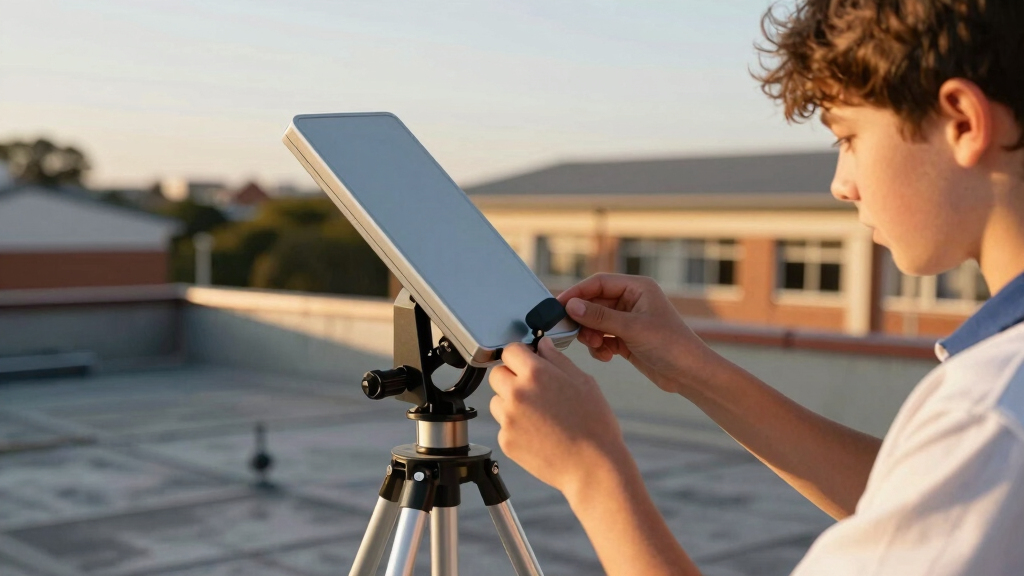
An Australian teenage team has developed affordable radio astronomy kits aimed at schools, particularly in rural regions. This initiative seeks to democratize access to space science education. The project is ongoing, with plans to expand its reach.
An Australian teenage team has developed low-cost radio astronomy equipment to make space science accessible for schools, especially in rural areas, marking a significant step in democratizing space education.
The team, composed of high school students from Australia, created a simplified radio telescope kit that costs significantly less than traditional models. The project was initiated as part of a youth science program and aims to provide schools with affordable tools to observe and study radio signals from space. The kits are designed to be easy to assemble and operate, with the goal of integrating radio astronomy into school science curricula. The initiative has received support from local educators and science organizations, and distribution has begun to select schools in rural regions where access to advanced science equipment is limited.
Why It Matters
This development matters because it has the potential to broaden participation in space science education, especially in underserved rural communities. Making radio astronomy accessible could inspire more students to pursue careers in STEM fields and foster greater interest in space exploration. Additionally, it addresses the high costs traditionally associated with radio telescopes, which have limited educational use.
As an affiliate, we earn on qualifying purchases.
Background
Radio astronomy has historically required expensive, complex equipment, limiting its use to research institutions. Recent technological advances have enabled the creation of smaller, more affordable radio telescopes, but widespread adoption in schools remains limited. The project by the Australian teen team is part of a broader movement to democratize space science tools, building on previous efforts to develop low-cost educational kits. The initiative aligns with global trends toward making STEM education more inclusive and accessible.
“We wanted to make radio astronomy accessible for everyone, especially in rural areas where resources are limited. Our kit is simple, affordable, and designed for students to learn hands-on.”
— Team spokesperson, a high school student
“This initiative could revolutionize how we teach space science in schools, opening up new opportunities for students to engage with real scientific tools.”
— Science educator involved in the project
educational radio telescope kit for students
As an affiliate, we earn on qualifying purchases.
As an affiliate, we earn on qualifying purchases.
What Remains Unclear
It is not yet clear how widely the kits will be adopted beyond the initial pilot schools, or how effective they will be in engaging students long-term. Details on funding and ongoing support are still emerging.
low-cost radio astronomy equipment
As an affiliate, we earn on qualifying purchases.
As an affiliate, we earn on qualifying purchases.
What’s Next
The team plans to expand distribution to more schools across Australia and potentially internationally. They are also working on developing supplementary teaching materials and seeking partnerships with educational organizations to support wider adoption. Further evaluation of the kits’ impact on student engagement and learning outcomes is expected in the coming months.
As an affiliate, we earn on qualifying purchases.
Key Questions
How affordable are the radio astronomy kits?
The kits are designed to be significantly cheaper than traditional radio telescopes, with costs estimated to be a fraction of the usual price, making them accessible for schools with limited budgets.
Can these kits be used by students with no prior experience?
Yes, the kits are designed to be easy to assemble and operate, targeting students with little to no background in radio astronomy or electronics.
What kind of educational outcomes are expected from using these kits?
They aim to improve understanding of space science, radio signals, and scientific methods, while also inspiring interest in STEM careers among students.
Are there plans to expand this project internationally?
While currently focused on Australian schools, the team is exploring opportunities for international collaboration and distribution in the future.
Fall Picks
fall essentials
As an affiliate, we earn on qualifying purchases.