
TL;DR
China has deployed the LineShine supercomputer, utilizing 20,480 CPU-only nodes with Armv9 processors, achieving 1.54 ExaFLOPS in AI training performance. This development bypasses US GPU export restrictions and highlights a shift toward CPU-centric supercomputing.
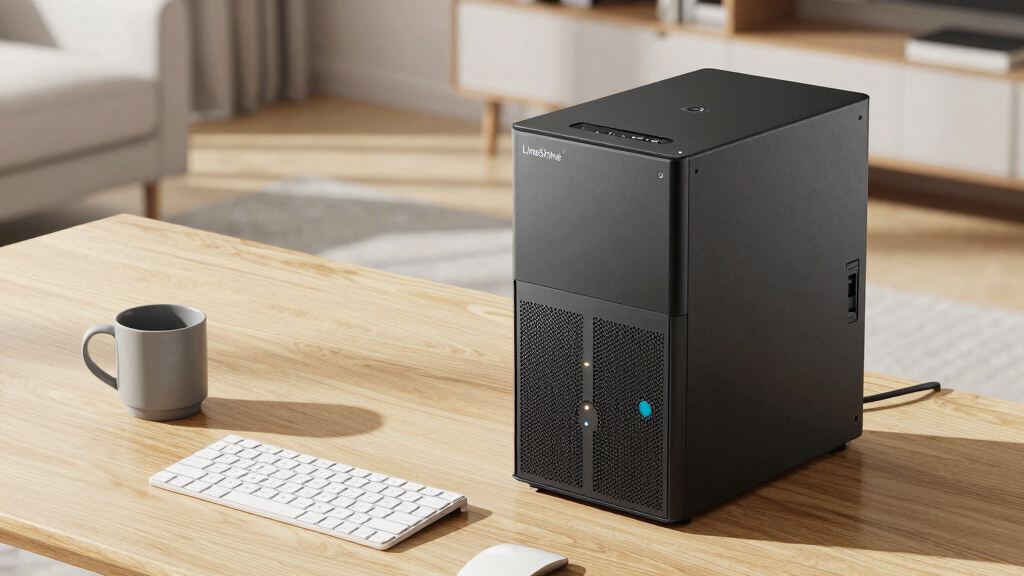
China’s National Supercomputing Center has announced the deployment of the LineShine supercomputer, a CPU-only system that achieves 1.54 ExaFLOPS in AI training performance, bypassing US-imposed GPU export restrictions.

Get the latest gadgets delivered free with Prime
- Fast, free delivery on millions of items
- Prime Video, Amazon Music and more included
- Member-only deals all year
The LineShine supercomputer consists of 20,480 nodes, each with two Armv9-based LX2 processors, totaling 40,960 processors and approximately 2.45 million CPU cores. Each LX2 processor features a highly optimized architecture with two compute chiplets, 304 cores, and advanced memory subsystems combining 32 GB of HBM and 256 GB of DDR5 memory, supporting high bandwidth and large memory pools.
Performance metrics include 60.3 TFLOPS FP64, 240 TFLOPS BF16/FP16, and 960 TOPS INT8 per processor. The entire system delivers 1.54 ExaFLOPS in BF16 training, peaking at 2.16 ExaFLOPS during specific AI workloads. Theoretical peak FP64 performance of the system is estimated at 2.47 ExaFLOPS, though actual throughput remains unconfirmed.
Why It Matters
This development signifies a major shift in China’s supercomputing strategy, emphasizing CPU-only architectures to bypass restrictions on US-made GPUs. The deployment of such a powerful CPU-centric system demonstrates China’s ability to sustain high-performance AI and HPC workloads without reliance on foreign accelerators, potentially impacting global supercomputing and AI research dynamics.
Additionally, the system’s ability to handle dense AI training and scientific tasks with large memory pools and high bandwidth may influence future design choices worldwide, especially in regions seeking to reduce dependence on US technology.
Products Worth Considering

Apple MacBook Air 15-inch Laptop with M5 Chip, 16GB Memory, 512GB SSD, Liquid Retina Display, and 12MP Center Stage Camera (Midnight)

Apple MacBook Air 13-inch with M5 chip, 16GB Memory, 1TB SSD, Starlight

DJI Mini 4K Drone with 4K UHD Camera
As an affiliate, we earn on qualifying purchases.
Background
Over recent years, China’s supercomputing efforts have increasingly relied on CPU-only systems due to US export bans on high-performance GPUs, notably Nvidia’s accelerators. The deployment of the LineShine supercomputer follows previous projects that also used CPU-centric designs, but this system’s scale and performance mark a significant milestone. The use of Armv9 processors with advanced memory subsystems reflects China’s focus on developing indigenous, high-performance computing solutions for AI and scientific research.
Historically, most leading supercomputers have depended on heterogeneous architectures combining CPUs and GPUs for maximum performance. China’s approach with LineShine indicates a strategic pivot toward CPU-based AI/ HPC systems that could challenge conventional GPU-dominated models.
“The deployment of the LineShine supercomputer highlights China’s strategic shift towards CPU-centric supercomputing, especially in the context of US export restrictions on GPUs.”
— Anton Shilov, Tom’s Hardware
“LineShine demonstrates our capability to build high-performance AI supercomputers using indigenous CPU technology, bypassing external restrictions.”
— Chinese National Supercomputing Center
What Remains Unclear
Details about the actual sustained performance during typical workloads, power efficiency, and operational stability of the supercomputer remain unclear. It is also uncertain how the system compares in real-world AI training efficiency against GPU-based systems, as peak performance figures may not reflect typical usage.
What’s Next
The next steps include operational testing of the supercomputer in real AI and scientific workloads, further performance benchmarking, and potential scaling or deployment in other projects. Monitoring China’s ongoing development of CPU-based supercomputing infrastructure will reveal whether this approach gains wider adoption.
Key Questions
How does the LineShine supercomputer compare to GPU-based systems?
While it achieves 1.54 ExaFLOPS in AI training, its efficiency and performance in real-world scenarios compared to GPU systems are still being evaluated. Theoretical peak performance suggests it could reach higher levels, but actual operational metrics are pending.
Why is China focusing on CPU-only supercomputers?
China aims to bypass US export restrictions on GPUs and develop indigenous high-performance computing solutions that are less dependent on foreign technology, especially for AI and scientific research.
What are the advantages of CPU-only supercomputers for AI?
They offer seamless memory sharing, avoid costly data transfers between CPU and GPU, and can better handle irregular control flows, complex I/O, and large datasets typical in scientific computing.
Will this influence global supercomputing architectures?
Potentially, as China’s success could encourage other regions to explore CPU-centric designs, especially in contexts where supply chain restrictions or geopolitical considerations are significant.