
TL;DR
Get ready for Prime Big Deal Days — try Prime free
Exclusive member deals on October 6–7, plus fast free delivery. Cancel anytime.
As an affiliate, we earn on qualifying purchases.
The Maryland Clean Energy Center, in partnership with the Maryland Energy Administration, is allocating $2.7 million to fund solar and storage projects at 25 affordable housing properties. This initiative aims to reduce energy costs and enhance grid resilience for low-income residents, with funds recycled through a revolving loan fund.
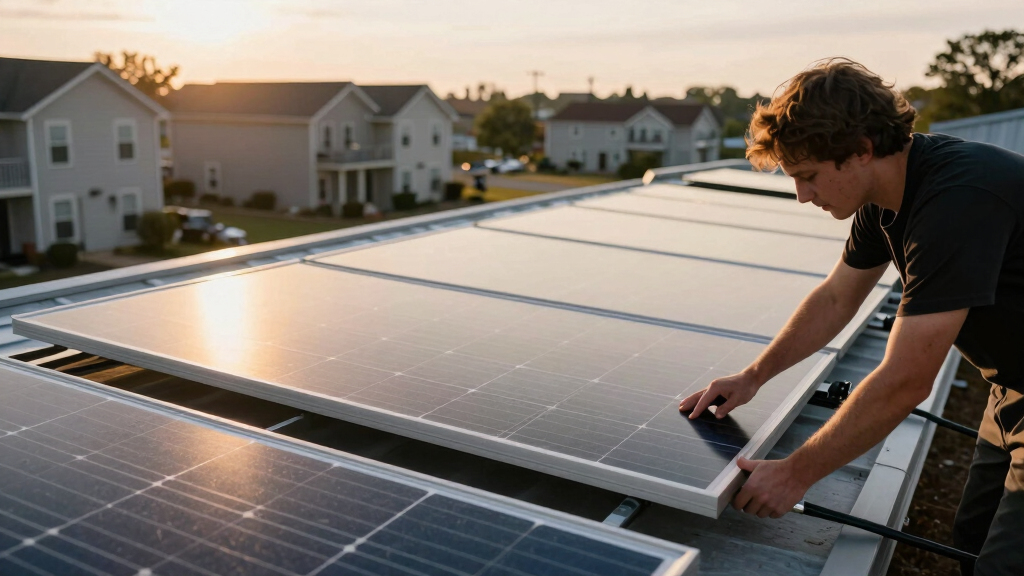
The Maryland Clean Energy Center (MCEC), in collaboration with the Maryland Energy Administration (MEA), has announced a $2.7 million funding initiative to support solar and storage projects at 25 affordable housing properties across the state. This funding aims to improve energy affordability and resilience for more than 2,400 households.
The latest round of funding is part of Maryland’s Strategic Revolving Fund (SRF), designed to make renewable energy technologies more accessible and affordable. Previous SRF allocations supported solar projects on multi-family housing in counties including Anne Arundel, Baltimore, Harford, Howard, and Prince George’s, resulting in approximately 2.72 MW of rooftop solar capacity and an estimated 3,267 MWh of renewable energy production.
According to Kathy Magruder, executive director of the Maryland Clean Energy Center, the success of earlier funding rounds demonstrates the importance of revolving capital in advancing the clean energy transition. She explained that the funds help bridge the gap between project design and construction, ensuring that communities most in need benefit from solar and storage solutions while securing federal incentives that might otherwise be lost.
The new funding is expected to reduce energy costs for low-income residents by about 20%, while also increasing grid resilience through energy storage systems. The SRF operates on a repayment model, meaning funds are returned after project completion and then reinvested into new projects, creating a sustainable funding cycle.
Kelly Speakes-Backman, director of the Maryland Energy Administration, emphasized the role of renewables in Maryland’s energy strategy, stating that the state’s investment in clean energy sources like solar enhances community resilience and affordability.
Impact of State-Funded Solar Projects on Low-Income Communities
This initiative highlights Maryland’s commitment to expanding access to renewable energy for underserved populations. By funding solar and storage projects at affordable housing sites, the program aims to lower energy bills, improve energy reliability, and promote environmental sustainability. The use of revolving funds ensures ongoing investment, making renewable energy deployment more sustainable and scalable, which could serve as a model for other states seeking to integrate social equity with clean energy goals.
solar panel for multi-family housing
As an affiliate, we earn on qualifying purchases.
As an affiliate, we earn on qualifying purchases.
Background of Maryland’s Clean Energy Funding Efforts
Maryland has been active in supporting renewable energy through various programs, including the Strategic Revolving Fund, which has previously financed solar projects on multi-family housing. These efforts have contributed to a statewide increase in solar capacity and have demonstrated the financial viability of renewable projects in affordable housing. The current funding round continues this trend, emphasizing the state’s focus on energy affordability and resilience for low-income residents.
“The success of these initial draws demonstrates the essential role of revolving capital in the clean energy transition.”
— an anonymous researcher
As an affiliate, we earn on qualifying purchases.
Uncertainties Surrounding Project Implementation and Outcomes
It is not yet clear how quickly the projects will be completed, the exact locations of all participating properties, or the specific impacts on individual households. Additionally, the long-term financial and environmental benefits remain to be fully evaluated as projects progress.
solar power system for affordable housing
As an affiliate, we earn on qualifying purchases.
As an affiliate, we earn on qualifying purchases.
Next Steps for Maryland’s Solar and Storage Initiatives
The Maryland Clean Energy Center and the Maryland Energy Administration will oversee the implementation of the funded projects, with expected project completion over the next 12 to 24 months. Follow-up assessments will determine the actual energy savings and resilience improvements, and further funding rounds may be announced based on project success and community needs.
residential solar battery backup
As an affiliate, we earn on qualifying purchases.
As an affiliate, we earn on qualifying purchases.
Key Questions
How many households will benefit from this funding?
More than 2,400 households across 25 affordable housing properties will benefit from reduced energy costs and increased resilience.
What is the purpose of the Strategic Revolving Fund?
The SRF aims to make renewable energy projects more affordable by providing working capital that is repaid after project completion, allowing funds to be reinvested in new projects.
How will the projects impact energy costs for residents?
The projects are expected to cut energy costs by approximately 20% for low-income residents, helping to improve affordability.
Are these projects part of Maryland’s broader clean energy goals?
Yes, they align with Maryland’s efforts to expand renewable energy use, improve grid resilience, and promote environmental sustainability.
When will the projects be completed?
Project completion is expected within the next 12 to 24 months, with ongoing assessments to evaluate their impact.
Source: Solar Power World
Fall yard work Picks
leaf blowers
As an affiliate, we earn on qualifying purchases.