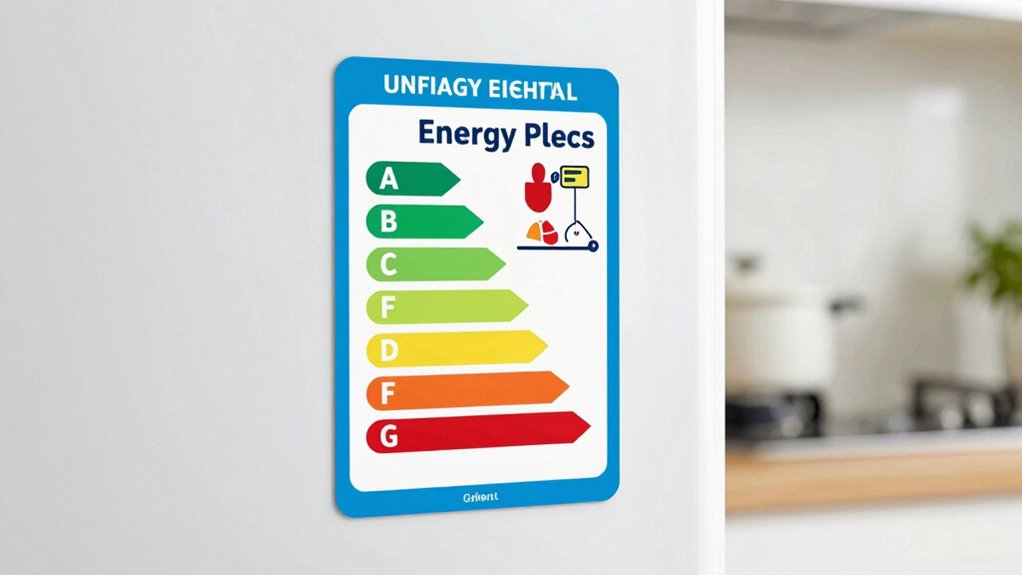

Energy labels show you how efficient a product or building is, helping you choose eco-friendly and cost-saving options. They use color codes, letter grades, and icons to quickly convey performance, with A or green indicating high efficiency. Numerical ratings and symbols break down specific details like power use and environmental impact. By understanding these signs, you can compare options easily and make smarter, energy-conscious decisions—if you want to learn more, keep exploring this guide.

Get the latest gadgets delivered free — and shop member deals
- Fast, free delivery on millions of items
- Access to Prime Big Deal Days deals on October 6–7
- Prime Video, Amazon Music and more included
Key Takeaways
- Energy labels rate appliance and building efficiency using standardized tests, helping consumers compare and choose eco-friendly options.
- Ratings range from A (most efficient) to G (least efficient), often complemented by icons and color codes for quick understanding.
- Labels include data on energy consumption, performance, and environmental impact to guide cost-effective, sustainable decisions.
- Interpreting labels involves checking numerical scores, icons, and color cues, not just the visual design or star ratings.
- Use energy labels to reduce costs, support renewable energy, and make informed choices for a greener, more efficient lifestyle.
As an affiliate, we earn on qualifying purchases.
What Are Energy Labels and Why Do They Matter?
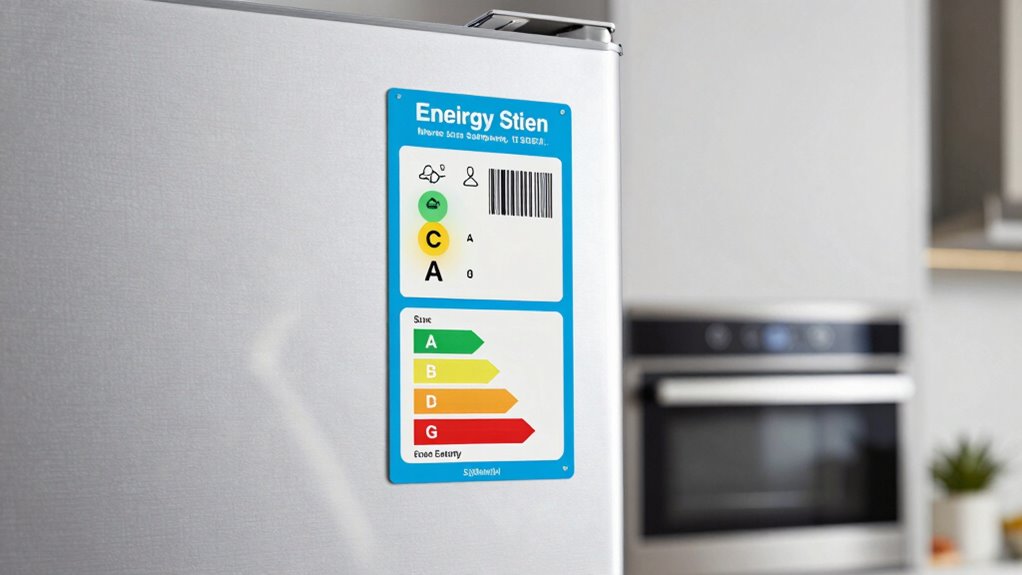
Have you ever wondered how to tell if an appliance is energy-efficient? Energy labels help you do just that by providing clear information about an appliance’s energy consumption. They’re important because they guide you toward choosing products that save energy, reduce costs, and are better for the environment. Energy-efficient appliances often support the use of renewable energy sources, making your home greener. Additionally, understanding the energy labeling system can help you select the right product for your needs and avoid models with misleading claims. Many governments also offer incentives for energy-efficient appliances, making it more affordable to upgrade. These labels make it easy to compare different models quickly, so you can select the most efficient option available. Understanding energy labels empowers you to make smarter choices, lower your utility bills, and contribute to a more sustainable future. Being aware of indoor air quality benefits can further enhance your home environment by ensuring healthier living conditions alongside energy efficiency. Recognizing the role of energy consumption data can also help you better interpret labels and make informed decisions.
As an affiliate, we earn on qualifying purchases.
How Are Energy Efficiency Ratings Calculated?
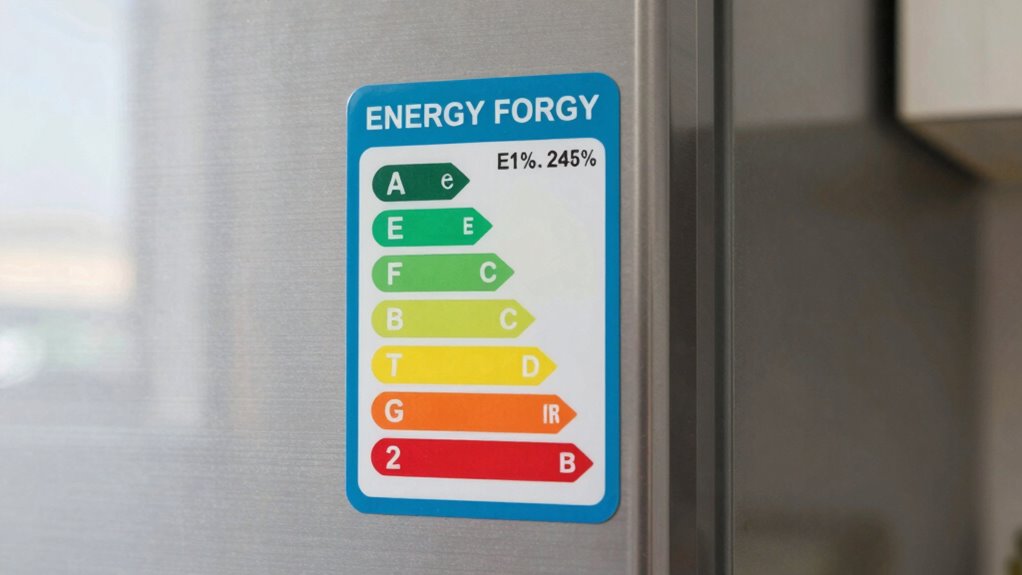
To understand how energy efficiency ratings are calculated, you need to look at the measurement methods used to evaluate performance. These methods determine the actual energy use of appliances or systems under real-world conditions. The labeling system then translates these measurements into a clear, easy-to-understand rating that helps you compare different products quickly. Incorporating nutrient-rich ingredients like beets can also influence energy consumption and sustainability considerations in product design. Moreover, testing standards ensure that these measurements are consistent and reliable across various appliances. Understanding the Paint Sprayer Zone and its guidelines can provide insights into how equipment maintenance and proper operation affect energy efficiency. Additionally, understanding the role of support networks for new fathers can highlight the importance of community support in maintaining energy and well-being during recovery or adjustment periods. Clear performance benchmarks are essential for consumers to make informed decisions about energy-efficient choices.
Measurement Methods Employed
Energy efficiency ratings are calculated through standardized testing procedures that measure a product’s energy consumption under specific conditions. These measurement techniques verify consistent and reliable data, allowing for accurate comparisons across different products. During testing, your device is subjected to controlled environments that mimic real-world usage, capturing precise energy use. This process minimizes variables that could affect data accuracy, such as ambient temperature or operation patterns. Additionally, measurement protocols include detailed steps for data collection and analysis to enhance reliability. By following strict protocols, manufacturers and testing agencies gather consistent data that genuinely reflects a product’s energy performance. The use of standardized measurement methods guarantees that ratings are fair and comparable, giving you confidence in the information provided on energy labels. standardized testing procedures ensure the accuracy and reliability of the energy ratings. Incorporating independent verification further strengthens the trustworthiness of the results, ensuring consumers receive accurate information. Ultimately, these techniques help you make informed decisions based on reliable and precise energy consumption data.
Calculation of Energy Use
Energy efficiency ratings are calculated based on the data collected from standardized tests that measure a product’s actual energy consumption during typical use. These tests simulate real-world conditions to guarantee accuracy. During the efficiency calculation, your device’s energy consumption is recorded over a specific period, accounting for its normal operation. The results are then used to derive a numerical rating that reflects how efficiently the product uses energy. This rating helps you compare different models and understand their performance. It’s important to note that the calculation focuses on real-life energy use, not just theoretical or maximum potential. By understanding the efficiency calculation process, you gain insight into how energy labels determine a product’s overall energy performance, making it easier to choose energy-saving options. Additionally, these ratings are often represented by visual symbols that quickly convey the energy efficiency level at a glance. Understanding the testing protocols involved can further improve your ability to interpret these ratings accurately. Moreover, standardized testing methods ensure consistency across different products, allowing consumers to make more informed decisions. Knowing how these measurement tools function helps in appreciating the accuracy of the data used in energy ratings.
Labeling System Explained
Understanding how energy efficiency ratings are calculated can seem complex, but the process is designed to be transparent and consistent. The labeling system uses efficiency metrics to compare products objectively. These metrics are based on standardized testing procedures that measure energy consumption under specific conditions. The results are then translated into labels ranging from A (most efficient) to G (least efficient). Here’s a quick overview:
| Efficiency Metric | Description |
|---|---|
| Energy Consumption | Total energy used in operation |
| Performance Index | How well the product performs |
| Environmental Impact | CO2 emissions during use |
| Power Usage | Power draw in watts |
| Longevity | Expected lifespan |
This system helps you easily understand a product’s efficiency at a glance.
As an affiliate, we earn on qualifying purchases.
How to Decode Color Codes and Letter Grades on Energy Labels
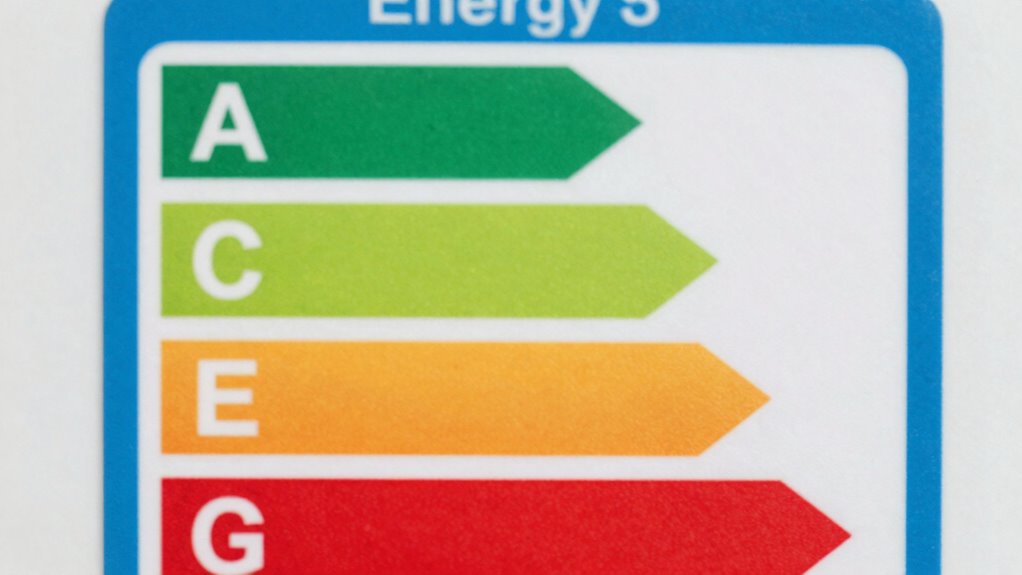
Decoding the color codes and letter grades on energy labels helps you quickly assess a product’s efficiency. Color codes typically range from green to red, with green indicating high efficiency and red signaling lower performance. These visual cues make it easy to compare products at a glance. Letter grades, such as A through G, also convey efficiency levels, with A representing the most efficient options. Keep in mind that a higher letter grade or a green color usually means lower energy consumption and cost savings. Recognizing how color codes and letter grades work empowers you to choose appliances that save energy, reduce bills, and are better for the environment. Understanding energy label standards ensures you are interpreting these indicators correctly and making better-informed choices. Additionally, being aware of wiring safety and proper installation can prevent heat buildup and potential hazards associated with inefficient or faulty appliances. Knowing how energy efficiency ratings are determined helps you make more accurate comparisons across different products. Being familiar with sustainable labeling can also guide you toward environmentally friendly options beyond just energy performance. Moreover, the performance testing methods used to establish these ratings ensure consistency and reliability in the information provided.
energy star rated air conditioner
As an affiliate, we earn on qualifying purchases.
As an affiliate, we earn on qualifying purchases.
What Do Numerical Energy Efficiency Ratings Mean?
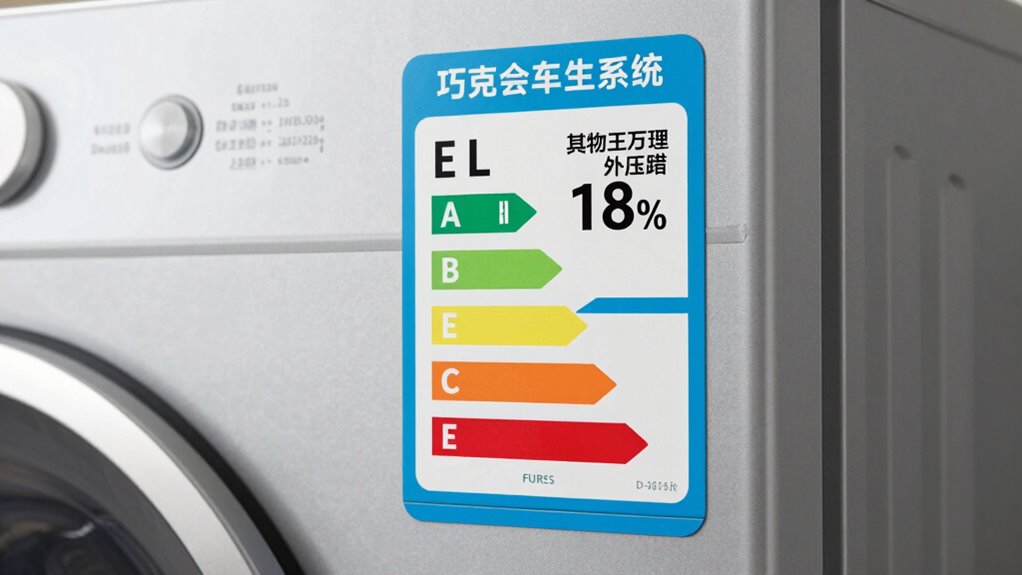
Understanding the numerical energy efficiency ratings helps you compare appliances easily. The rating scale shows how efficient each product is, with higher scores indicating better performance. By learning what these numbers mean, you can make smarter choices that save energy and money. Embracing calm and clarity in your decision-making process can also help you focus on what truly matters when selecting energy-efficient appliances. Recognizing energy-saving features can further enhance your ability to choose products that align with your sustainability goals. Additionally, familiarizing yourself with energy label classifications can streamline your selection process and ensure optimal efficiency. Being aware of potential unit failures can also help you identify when an appliance might need maintenance or replacement to maintain efficiency.
Rating Scale Explanation
Have you ever wondered what those numerical energy efficiency ratings actually mean? They’re part of the rating scale that helps you understand where a product falls on the efficiency spectrum. Here’s how it works:
- Higher numbers indicate better efficiency, meaning less energy consumption for the same performance.
- Ratings typically range from a low to high scale, such as 1 to 10 or A+++ to D.
- The scale is designed to make comparing products straightforward, with more efficient options scoring higher.
- Keep in mind, these ratings are relative; a product with a high score uses less energy than one with a lower score.
Understanding this rating scale helps you make smarter choices and select the most efficient appliances.
Numerical Range Significance
Ever wonder what the numerical values in energy efficiency ratings really tell you? These numerical ranges indicate the rating significance, highlighting how energy-efficient an appliance is. Typically, lower numbers mean better energy performance, while higher numbers suggest less efficiency. For example, a rating of 1 or 2 signifies top-tier energy savings, whereas a rating of 8 or 9 points to higher energy consumption. Understanding these numerical ranges helps you compare appliances quickly and make informed decisions. They serve as a standardized way to interpret efficiency, cutting through marketing claims. Keep in mind that these numbers don’t tell the full story but are essential for grasping an appliance’s overall energy impact. Recognizing the rating significance ensures you’re choosing options that align with your energy-saving goals.
Interpreting Efficiency Scores
Numerical energy efficiency ratings provide a quick snapshot of how well an appliance uses energy, making it easier for you to compare options at a glance. Your energy score indicates the appliance’s efficiency rating, with higher scores signifying better performance. To interpret these scores:
- A higher efficiency rating means lower energy consumption and cost savings.
- Scores are typically scaled from A to G, with A being the most efficient.
- An appliance with a top-tier score often has advanced technology or better insulation.
- Be cautious of appliances with lower energy scores, as they tend to use more energy and cost more over time.
Understanding these efficiency scores helps you make smarter choices, saving money and reducing environmental impact.
What Icons and Symbols Are Used on Energy Labels?
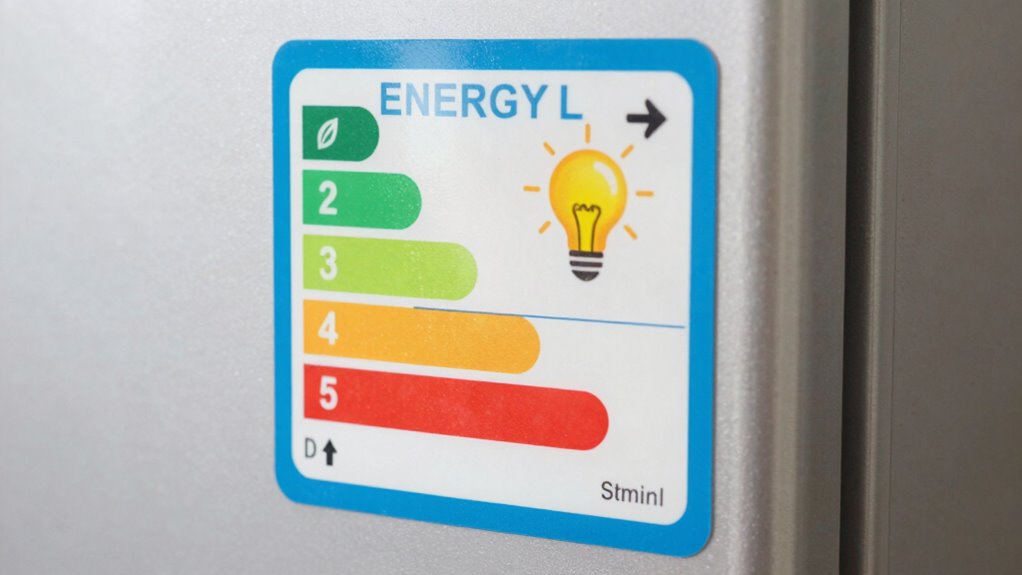
What symbols and icons appear on energy labels, and what do they mean? Energy labels use various icons to quickly communicate key information. For example, a leaf icon often indicates eco-friendliness, while a snowflake might show cooling efficiency. The icon meanings help you understand the appliance’s features at a glance. Battery symbols can highlight energy storage capabilities, and water droplets may relate to water usage or efficiency. These symbols are designed for quick interpretation, making it easier to compare products. Understanding symbol interpretations is vital for making informed choices. Recognizing common icons ensures you grasp what each label conveys without needing to read extensive details. This clarity helps you select appliances that meet your energy-saving and environmental goals efficiently.
How to Read and Compare Energy Labels on Appliances and Buildings
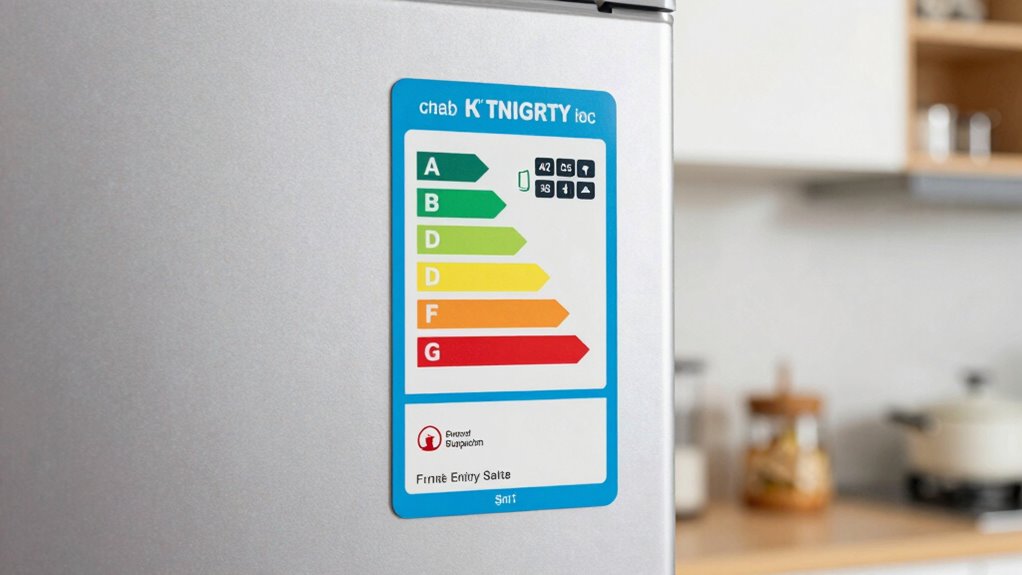
To effectively compare energy labels on appliances and buildings, you need to understand the key components they display. First, look at the energy efficiency rating, which quickly shows how well the item performs compared to similar products. Second, check the energy consumption figures, often listed in kWh or other units, to assess ongoing costs. Third, examine the label’s design trends that highlight key info with colors or icons, making comparisons easier. Fourth, consider maintenance tips included on some labels, which can impact long-term efficiency. When comparing, focus on these elements to make informed decisions. Remember, appliance maintenance and understanding label design trends help you choose the most efficient options, saving energy and money over time.
Tips for Comparing Energy Labels to Find the Most Efficient Options
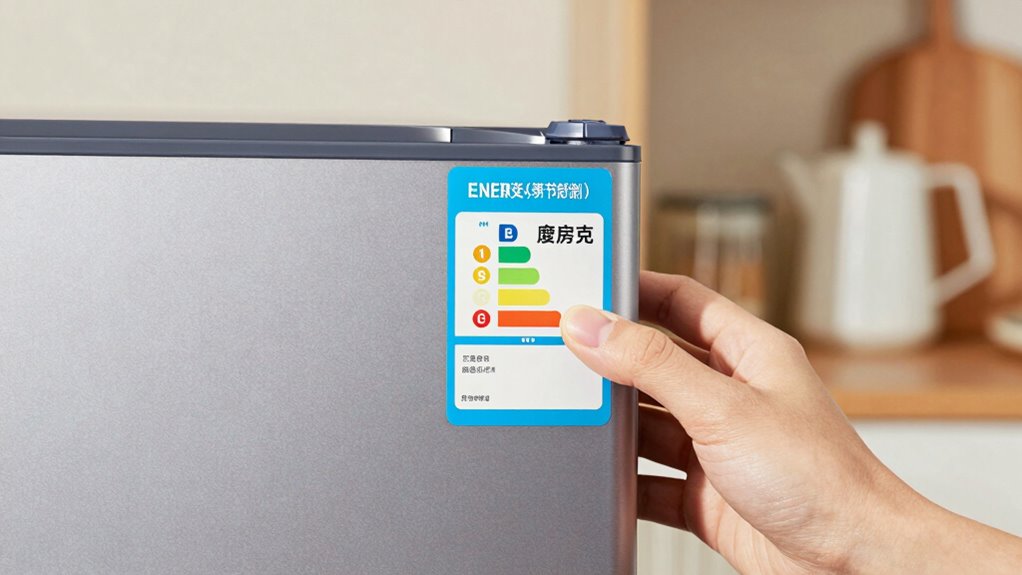
When comparing energy labels to find the most efficient options, focus on the energy efficiency rating first, as it provides a quick snapshot of how well each product performs relative to similar models. This rating helps you identify appliances with lower electricity consumption, saving you money and reducing your environmental impact. Pay attention to appliance ratings, which often include a scale from A to G or similar designations, indicating efficiency levels. Keep in mind that higher-rated appliances typically use less energy for the same performance. While other details like annual energy consumption figures are helpful, the efficiency rating offers the clearest comparison point. By prioritizing ratings, you can choose appliances that maximize efficiency and minimize electricity costs.
How Do Building Energy Labels Differ From Appliance Labels?
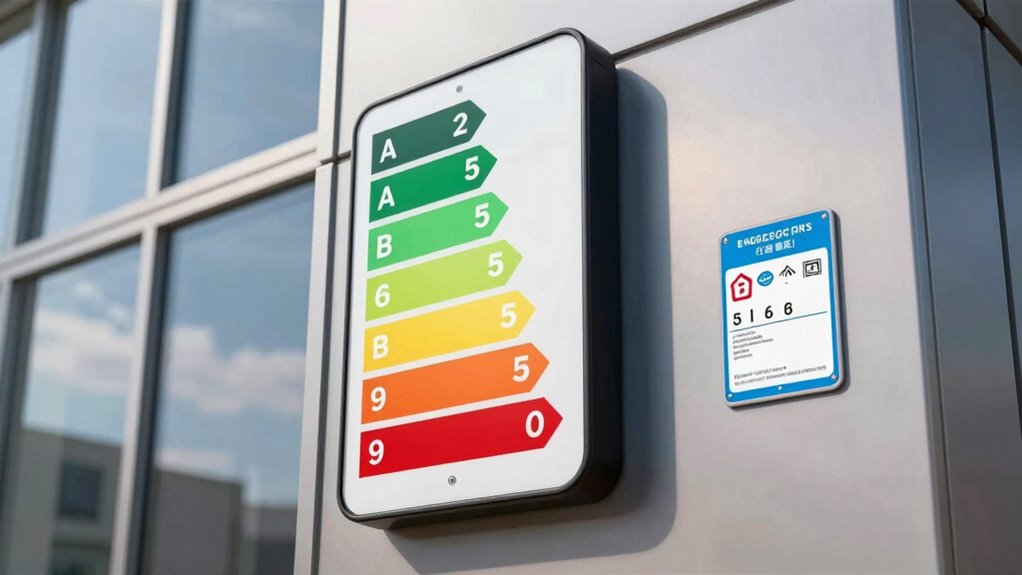
Building energy labels and appliance labels serve different purposes, though both aim to inform consumers about energy performance. Building labels focus on the overall efficiency of a structure, often considering factors like insulation, heating, cooling, and renewable energy integration. In contrast, appliance labels evaluate individual devices’ energy use. Here’s how they differ:
Building labels assess overall efficiency and renewable integration, while appliance labels focus on individual device energy use.
- Building labels often include ratings related to the smart grid connectivity, helping you understand how the building interacts with renewable energy sources.
- Appliance labels specify energy consumption per unit, guiding you to choose efficient appliances, but don’t account for renewable energy systems.
- Building labels can influence policies encouraging renewable energy adoption and grid integration.
- Appliance labels focus on immediate energy savings, whereas building labels reflect long-term sustainability and compatibility with smart grid advancements.
Using Energy Labels to Save Money and Reduce Environmental Impact
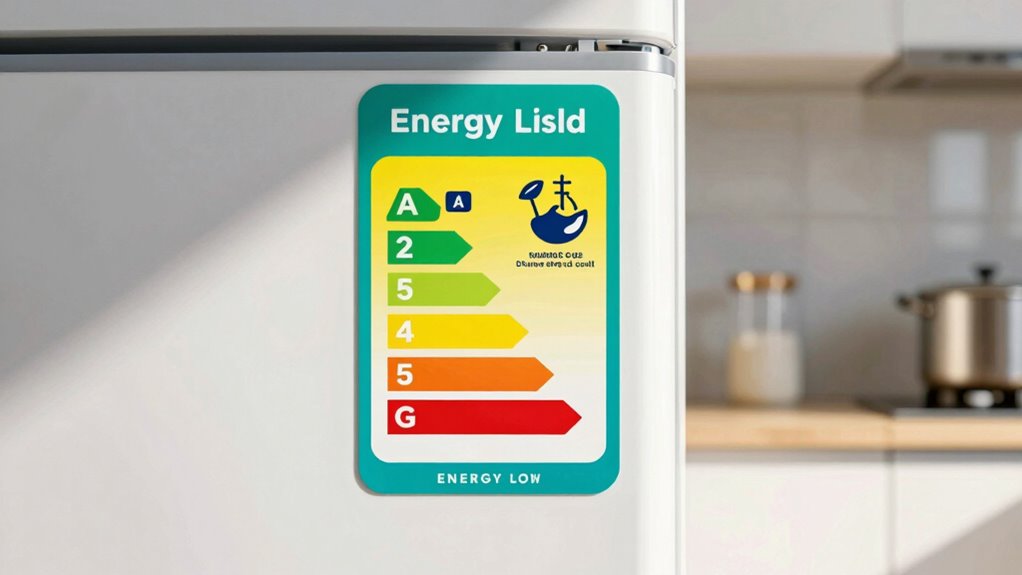
By paying attention to energy labels, you can lower your energy bills and save money over time. Choosing more efficient appliances and systems also helps you make eco-friendly choices. These actions reduce your environmental impact while keeping your costs in check.
Lower Energy Costs
Have you ever wondered how energy labels can help you save money? They guide you to choose appliances with lower energy consumption, reducing your utility bills over time. Here are four ways energy labels support cost savings:
- Identifying energy-efficient models that use less electricity.
- Encouraging the use of renewable energy sources to power your home.
- Promoting energy conservation habits by highlighting high-performing appliances.
- Helping you compare products easily to find the best value for your money.
Eco-Friendly Choices
Using energy labels makes it easier to choose eco-friendly appliances that save you money and lessen your environmental impact. Look for appliances with high energy efficiency ratings, often indicating they use less power and support renewable energy sources. These appliances often incorporate sustainable materials, reducing waste and resource consumption during manufacturing. By selecting products with better labels, you promote the use of renewable energy, which lowers your carbon footprint. Additionally, eco-friendly choices encourage manufacturers to prioritize sustainable materials and energy-efficient designs. Over time, you’ll notice savings on your energy bills while contributing to a healthier planet. Making informed decisions based on energy labels helps you adopt a more sustainable lifestyle without sacrificing performance or convenience.
Common Mistakes to Avoid When Interpreting Energy Labels
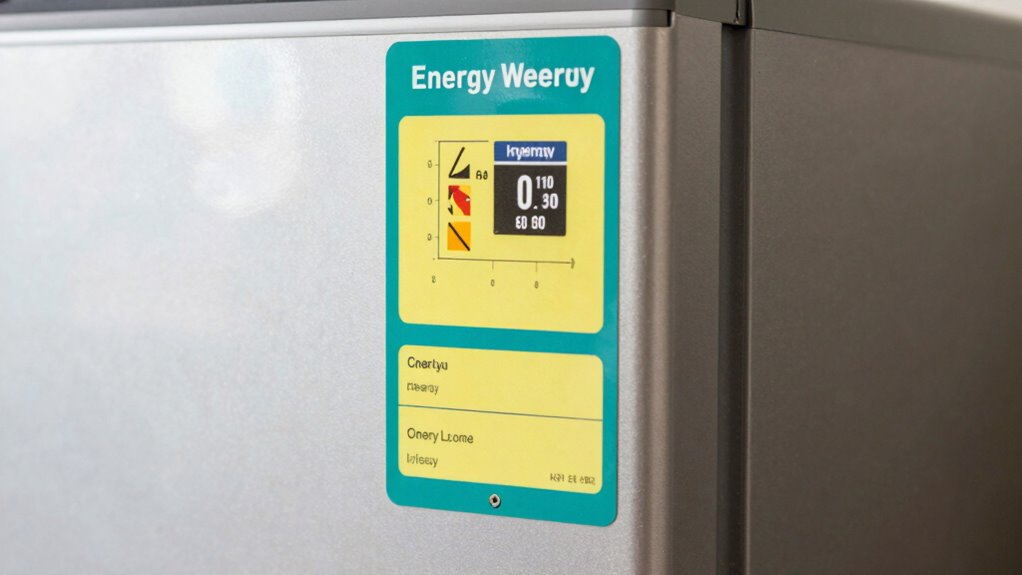
Interpreting energy labels can be tricky if you’re not careful, and many people make common mistakes that lead to misunderstandings. One frequent error is believing energy label myths, such as assuming a higher efficiency rating always means better performance. Another mistake is misinterpreting the scale; for example, thinking a class A label is the absolute best without considering specific energy consumption data. Additionally, relying solely on visual cues rather than reading the actual figures can cause confusion. Finally, ignoring updates to labeling standards may lead to label misinterpretations. To avoid these pitfalls, always double-check the detailed information and stay informed about current standards. Clarifying these points helps ensure you make well-informed, energy-efficient choices.
Frequently Asked Questions
How Often Do Energy Labels Get Updated or Revised?
Energy labels typically get updated or revised every 5 to 10 years, depending on the country and specific regulations. You should keep an eye on the label update frequency and revision cycles, as standards can change to reflect technological advancements and energy efficiency improvements. Staying informed guarantees you understand the latest ratings, helping you make better choices when buying appliances or energy-efficient products.
Are There International Standards for Energy Labels Across Countries?
Think of international standards for energy labels like a universal language for efficiency. While some efforts aim for global consistency and label harmonization, not all countries follow the same system. The European Union, for example, has clear standards, but others keep their own. So, progress is happening, but full global consistency remains a work in progress, making it essential for you to understand local labeling rules when buying appliances abroad.
Can Energy Labels Predict the Actual Long-Term Savings Accurately?
Energy labels can give you a good idea of potential long term savings, but they don’t always predict them accurately. Factors like usage habits, maintenance, and actual energy prices impact real savings. While label accuracy helps you compare appliances effectively, it’s important to take into account your specific situation. Don’t rely solely on labels; look at your energy consumption patterns to better estimate your long-term savings.
How Do Energy Labels Influence Appliance or Building Pricing?
Energy labels influence appliance and building pricing by highlighting energy efficiency, which buyers increasingly value. When an appliance or building has a higher energy efficiency rating, its market value tends to rise because it promises lower energy costs. You’ll find that energy-efficient options often command higher prices upfront but offer long-term savings, making them more attractive to cost-conscious consumers. Ultimately, energy labels help you make smarter investment decisions based on efficiency and value.
Are There Exemptions or Special Cases for Certain Types of Appliances?
Yes, some exempt appliances fall under special case standards. You might find that certain small or specialized devices, like medical or industrial equipment, are exempt from typical energy labeling requirements. These exemptions exist because they don’t meet standard criteria or are covered by different regulations. Always check local regulations, as exemptions can vary by region and appliance type, ensuring you understand which appliances require labels and which don’t.
Conclusion
Now that you know the nuances of energy labels, you can confidently compare, choose, and champion energy-efficient options. By decoding colors, deciphering ratings, and spotting symbols, you’ll save money, shrink your carbon footprint, and stay smarter about sustainability. Let this newfound knowledge be your guiding glow, turning complex labels into clear-cut clues. With every informed choice, you propel progress, promote power savings, and paint a greener, gleaming future for yourself and the planet.
Fall Picks
fall essentials
As an affiliate, we earn on qualifying purchases.