📊 Full opportunity report: Best Quiet Case Fans + the Airflow Setup That Actually Works on ThorstenMeyerAI.com — validation score, market gap, and execution plan.

Get the latest gadgets delivered free — and shop member deals
- Fast, free delivery on millions of items
- Access to Prime Big Deal Days deals on October 6–7
- Prime Video, Amazon Music and more included
TL;DR
This article identifies the best quiet case fans for 2026 and explains how to set up airflow to achieve effective cooling without noise. It emphasizes large, slow-moving fans and proper placement for optimal results.
In 2026, the leading case fans for quiet, effective cooling are the Noctua NF-A12x25 and NF-A14, which are confirmed to deliver high airflow at low noise levels. Proper airflow setup, emphasizing large, slow-moving fans, is essential for achieving a quiet, high-performance PC environment.
The Noctua NF-A12x25 (120mm) and NF-A14 (140mm) are regarded as the top-engineered fans, moving over 100 CFM at under 1000 RPM with noise levels around 16 dB, according to independent testing. These fans feature refined bearings and motors that produce no mechanical noise, making them suitable for 24/7 operation in high-power workstations. The Arctic P12 Pro and P14 are highlighted as excellent budget options, offering nearly comparable airflow and static pressure performance at a fraction of the cost, with prices around $8.50 per fan. For users prioritizing silence, be quiet! Silent Wings 4 fans are designed to operate at approximately 17 dB, maintaining low noise even at higher RPMs. When using liquid cooling, static-pressure fans like the Arctic P12 Pro and Noctua NF-F12 are recommended for radiators and dense heatsinks, as they push air through restrictive fins efficiently while remaining quiet. Experts emphasize that larger fans spinning slowly are more effective and quieter than smaller, faster fans, especially when configured correctly within the case for optimal airflow.Best quiet case fans
+ the airflow that works.
The best fan won’t help if it’s pointed the wrong way. The whole recipe: big fans, running slowly, in a clean front-to-back path, with slightly more intake than exhaust. Build a config in Part 2 and watch the pressure balance respond.
Why Quiet Fans and Proper Airflow Matter in 2026
Choosing the right fans and airflow setup is critical for maintaining high-performance computing without excessive noise. For AI workstations and other demanding tasks, effective cooling ensures hardware longevity and stability, while reduced noise enhances user comfort and productivity. The emphasis on large, slow fans reflects a shift toward balancing cooling needs with acoustic comfort, especially as hardware becomes more powerful and generates more heat. Proper airflow configuration can prevent thermal throttling, extend hardware lifespan, and create a more pleasant working environment.
As an affiliate, we earn on qualifying purchases.
Evolution of PC Cooling and Fan Technology
Over recent years, fan technology has advanced significantly, with manufacturers focusing on engineering larger, more efficient fans that operate at lower RPMs to reduce noise. The trend toward 140mm fans over 120mm models has gained momentum, driven by the principle that moving more air slowly is quieter and more effective than small, fast fans. The rise of premium fans like Noctua's NF-A12x25 and budget-friendly options like Arctic P12 Pro has expanded choices for builders seeking quiet operation without sacrificing cooling performance. Additionally, the importance of airflow setup—placing intake and exhaust fans strategically—has become central to achieving optimal thermal management in high-power systems.
"Large, slow-moving fans are the key to quiet, effective cooling in high-performance PCs. Proper airflow configuration amplifies their benefits."
— Thorsten Meyer, AI hardware expert
As an affiliate, we earn on qualifying purchases.
Unresolved Questions About Long-Term Reliability and Setup
While the recommended fans have demonstrated excellent performance in testing, long-term durability and performance consistency over years of continuous operation remain to be fully verified. Additionally, specific airflow configurations may vary based on case design and component placement, and optimal setups are still being refined through user experience and testing in different environments.
As an affiliate, we earn on qualifying purchases.
Next Steps for Builders and Enthusiasts in 2026
Manufacturers are expected to release new fan models with further noise reduction and efficiency improvements. Enthusiasts should experiment with different airflow configurations, focusing on large, low-RPM fans and strategic placement within their cases. Ongoing testing and community feedback will help refine best practices for achieving quiet, effective cooling in high-performance systems.
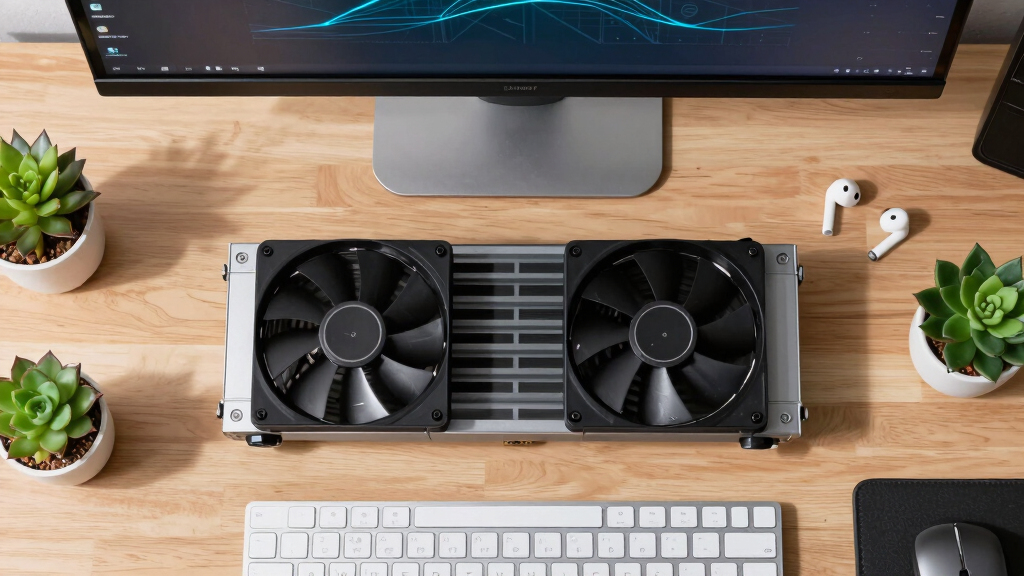
static pressure case fans for radiators
As an affiliate, we earn on qualifying purchases.
As an affiliate, we earn on qualifying purchases.
Key Questions
Are larger fans always quieter than smaller ones?
Generally, yes. Larger fans can move the same amount of air at lower RPMs, producing less noise. However, proper placement and airflow setup are also crucial for achieving quiet operation.
Yes, models like the Arctic P12 Pro and P14 offer nearly the same airflow and static pressure as premium fans at a much lower cost, making them suitable for budget builds that still prioritize quiet operation.
What is the best way to set up airflow in a high-performance PC?
Use large, low-RPM intake fans at the front and exhaust fans at the rear or top, ensuring a gentle, continuous flow of air through the case. Avoid creating turbulence or dead zones, and match fan types to their specific roles (airflow vs. static-pressure).
Are static-pressure fans necessary for radiators?
Yes. Static-pressure fans are designed to push air through dense fins effectively, making them ideal for radiators and heatsinks in liquid cooling setups.
Source: ThorstenMeyerAI.com
Fall Picks
fall essentials
As an affiliate, we earn on qualifying purchases.