
📊 Full opportunity report: Anonymous daily check-ins for 12-step sponsors on IdeaNavigator AI — validation score, market gap, and execution plan.
Prime for Young Adults — start your free trial
Fast free delivery, streaming and member deals for eligible 18–24 year olds.
Try it freeAs an affiliate, we earn on qualifying purchases.
TL;DR
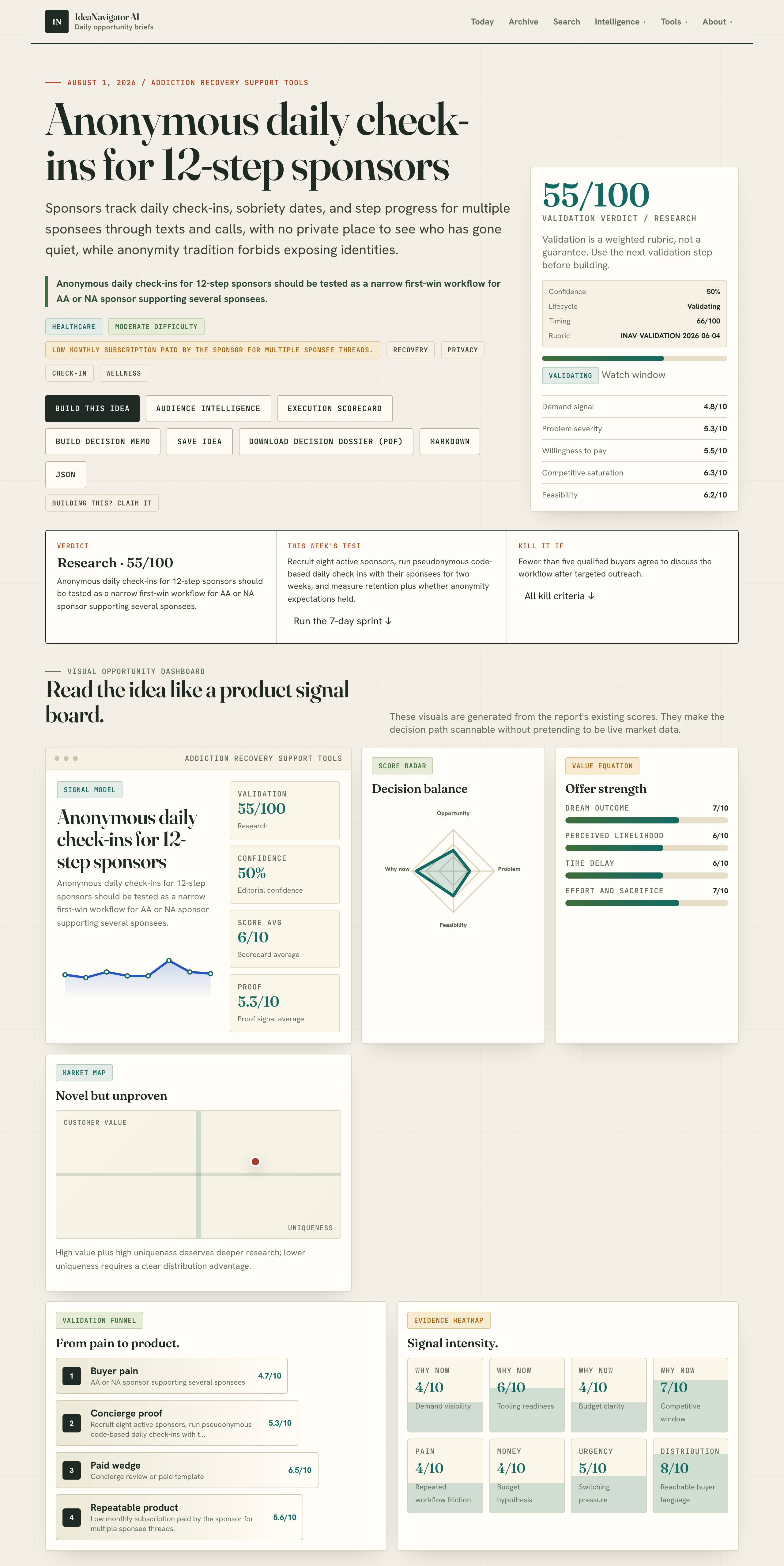
A proposed system for anonymous daily check-ins for 12-step sponsors is being tested to address privacy concerns and improve support tracking. The pilot involves eight sponsors over two weeks.
Researchers and developers are testing a new platform enabling 12-step sponsors to conduct anonymous daily check-ins with multiple sponsees. The system aims to improve privacy, support tracking, and address challenges posed by mainstream messaging apps leaking personal information. This development could influence how addiction recovery support is managed digitally, especially amid increasing concerns over privacy and anonymity.
The proposed platform allows sponsors to create pseudonymous check-in threads where sponsees can report daily sobriety status with a simple green or red indicator and optional notes. The system uses one-time codes to invite sponsees, avoiding the storage of real names or phone numbers, thus aligning with the anonymity tradition of AA and NA. The initiative is currently in a pilot phase involving eight active sponsors who are testing the system over two weeks, with success measured by retention and adherence to anonymity standards.
According to an anonymous researcher involved in the project, the goal is to validate whether this approach improves privacy and ease of tracking compared to traditional methods like texts and calls. The platform is designed to be low-cost, with a subscription model paid by sponsors for access to multiple sponsee threads. The effort responds to the shift of recovery support to mobile devices, where existing messaging apps risk exposing personal contacts and identities, conflicting with the core principles of the programs.
While initial feedback from participating sponsors is positive, it is not yet clear whether the system will be widely adopted or how it will perform over longer periods. The developers plan to analyze user engagement and privacy compliance after the two-week testing window before deciding on further rollout or adjustments.
Potential Impact on Privacy and Support Tracking
This development could significantly improve privacy protections for individuals involved in addiction recovery by providing a secure, pseudonymous platform for daily check-ins. It addresses a critical gap where mainstream messaging apps risk exposing personal contacts, which can deter participation or compromise anonymity. If successful, this system might set a new standard for digital recovery support tools, balancing ease of use with strict privacy adherence.
Moreover, the initiative highlights a broader shift toward specialized, privacy-focused apps in the recovery community, potentially influencing future technology solutions tailored to sensitive support environments. For sponsors, it offers a new way to manage multiple sponsees efficiently while maintaining confidentiality, which could enhance engagement and accountability.
As an affiliate, we earn on qualifying purchases.
Digital Support in Addiction Recovery and Privacy Concerns
As addiction recovery increasingly relies on mobile technology, the use of mainstream messaging apps has raised privacy concerns, especially given their tendency to leak personal contacts and identities. Traditional methods like texts and calls lack a dedicated privacy layer, making it difficult for sponsors to monitor multiple sponsees discreetly. This challenge has prompted efforts to develop specialized tools that respect the anonymity traditions of AA and NA while providing effective support management.
The idea of pseudonymous check-ins is not new but has gained renewed interest amid rising privacy awareness and the proliferation of digital recovery tools. Previous attempts have focused on secure messaging platforms, but these often require complex setups or compromise anonymity. The current pilot aims to test a lightweight, code-based approach that could be easily adopted by sponsors supporting several sponsees, aligning with the core principles of the programs.
This initiative comes at a time when the recovery community is exploring how to leverage technology without undermining foundational values, making it a timely development in the ongoing evolution of digital support systems.
“The goal is to create a simple, privacy-preserving check-in system that respects the anonymity traditions of AA and NA while providing sponsors with better support tools.”
— an anonymous researcher
privacy-focused addiction recovery app
As an affiliate, we earn on qualifying purchases.
As an affiliate, we earn on qualifying purchases.
Unconfirmed Long-Term Adoption and Effectiveness
It remains unclear whether the pseudonymous check-in system will be adopted widely beyond the pilot phase or how it will perform over extended use. The long-term impact on privacy, engagement, and adherence to anonymity principles is still to be evaluated, and further testing is needed to confirm its scalability and effectiveness.
As an affiliate, we earn on qualifying purchases.
Next Steps for Broader Testing and Evaluation
Developers plan to complete the two-week pilot with the initial eight sponsors, analyze user engagement and privacy compliance, and gather feedback for potential improvements. If results are positive, they may prepare for a broader rollout or integration with existing recovery support platforms. Further research will also explore user satisfaction and long-term viability.
pseudonymous recovery support platform
As an affiliate, we earn on qualifying purchases.
As an affiliate, we earn on qualifying purchases.
Key Questions
How does the pseudonymous check-in system protect user privacy?
The system uses one-time codes to invite sponsees, avoiding the storage of real names or phone numbers, and only displays simple status indicators with optional notes, aligning with anonymity principles.
Can sponsors support multiple sponsees with this platform?
Yes, sponsors can create multiple threads for different sponsees, each managed through a low-cost subscription, making it scalable for those supporting several individuals.
Will this system replace traditional check-ins like calls and texts?
It aims to supplement existing methods by providing a private, structured, and easy-to-monitor alternative, not necessarily replace direct communication but enhance privacy and tracking.
Is the platform compliant with AA and NA traditions of anonymity?
Yes, the system is designed to adhere to these traditions by avoiding the collection or display of real names and contact details, focusing solely on anonymous status updates.
When will the results of the pilot be available?
Results are expected after the two-week testing period, with further analysis planned to assess usability, privacy, and potential for wider adoption.
Source: IdeaNavigator AI
NFL season / tailgating Picks
team gear
As an affiliate, we earn on qualifying purchases.