

Introducing Forezai · TradingAgents — a committee of LLMs decides paper-trades

📊 Full opportunity report: Introducing Forezai · TradingAgents — a committee of LLMs decides paper-trades on ThorstenMeyerAI.com — validation score, market gap, and execution plan.

TL;DR

Forezai has launched TradingAgents, a system where multiple LLMs collaborate to simulate trading decisions. This approach seeks to test whether LLM-driven committees can outperform random or rule-based strategies in paper trading, marking a step toward AI-assisted market analysis.

Forezai has launched TradingAgents, a new operational version of its multi-agent framework where a committee of large language models (LLMs) makes simulated trading decisions, moving beyond experimental research into practical testing.

The project builds on prior research that tested parametric trading strategies against prediction markets, revealing that most rule-based methods fail to survive real-world data despite promising backtests. In response, Forezai’s TradingAgents employs a structured multi-LLM system, with specialized roles such as analysts, debate agents, risk assessors, and portfolio synthesizers, to generate and justify trading recommendations.

The new fork adds an operational layer, including an automated scheduler, paper-trading execution via multiple broker modes, and a web dashboard for monitoring performance. It runs locally, with safety measures to prevent real money trading unless explicitly overridden. The system does not claim to predict markets but aims to assess whether a committee of LLMs can produce decisions at least no worse than random, based on the same data a human trader would see.

Introducing Forezai · TradingAgents — Thorsten Meyer AI
AGENTS
● ANNOUNCEMENT / MAY 2026
THORSTEN MEYER AI · FOREZAI · § 03
FOREZAI · 03
TRADINGAGENTS · LAUNCH
Research Series · Companion to Polybot Week 1-2 · 2026-05-17

Introducing Forezai · TradingAgents.
A committee of LLMs
decides paper-trades.

After two weeks of finding out most parametric strategies don’t work, the obvious next research question: can multi-agent LLM judgment do any better?
A fork of the open-source TradingAgents framework (TauricResearch): thirteen LLM agents in four stages — four parallel analysts · a bull-bear debate with research-manager arbitration · a three-voice risk team · a two-layer trader + portfolio-manager decision. The fork keeps the agent graph intact and adds the operational layer the upstream doesn’t ship: an autonomous loop · a multi-broker abstraction · a local web dashboard · Codex OAuth · MCP plug-ins · 520+ unit tests. The question is narrower than “do LLMs predict the market” — that prior is “no, with high confidence.” The narrower question is: when LLMs are structured into specialised adversarial roles, does the committee produce decisions at least no worse than a coin flip after fees? Honest priors before running: it might fail too. If it appears to work, the most likely explanation is variance.
This is not financial advice. Nothing in this announcement should be used to inform real trading decisions. The software described trades simulated money by default. If you reconfigure it to trade real money, you should expect to lose that money — regardless of how clever any individual agent’s reasoning looks. Algorithmic trading is zero-sum after fees and structurally hostile to part-time retail strategies.
13 agents
Specialised roles in four stages
Analysts · Debate · Risk · Decision
78% / -33%
Polybot prior: fleet win rate
combined with -33% bankroll
520+
Passing unit tests across engine,
services, HTTP routes (starting baseline)
€0 floor
LLM cost on Codex OAuth
(falls back to public API per token)
FOREZAI / TRADINGAGENTS· APACHE 2.0 FORK· UPSTREAM TAURIC RESEARCH· LANGGRAPH· 13 AGENTS / 4 STAGES· 4 PARALLEL ANALYSTS· BULL-BEAR DEBATE· 3-VOICE RISK TEAM· TRADER + PORTFOLIO MANAGER· 5-TIER FINAL RATING· ALPACA PAPER + LOCAL + SHADOW· LIVE ENDPOINTS HARD-REFUSED· FASTAPI + REACT VIA CDN· CODEX OAUTH· MCP PLUG-IN REGISTRY· 520+ UNIT TESTS· POLYBOT WEEK 1: 21 EXPERIMENTS· WEEK 2: -33% BANKROLL· 78% FLEET WIN RATE· HONEST RESEARCH, NOT EDGE· FOREZAI / TRADINGAGENTS· APACHE 2.0 FORK· UPSTREAM TAURIC RESEARCH· LANGGRAPH· 13 AGENTS / 4 STAGES· 4 PARALLEL ANALYSTS· BULL-BEAR DEBATE· 3-VOICE RISK TEAM· TRADER + PORTFOLIO MANAGER· 5-TIER FINAL RATING· ALPACA PAPER + LOCAL + SHADOW· LIVE ENDPOINTS HARD-REFUSED· FASTAPI + REACT VIA CDN· CODEX OAUTH· MCP PLUG-IN REGISTRY· 520+ UNIT TESTS· POLYBOT WEEK 1: 21 EXPERIMENTS· WEEK 2: -33% BANKROLL· 78% FLEET WIN RATE· HONEST RESEARCH, NOT EDGE·
FIG. 01 — THE 13-AGENT COMMITTEE
Thirteen specialised roles · four stages · biases made to argue in public
The architecture forces the system to articulate its reasoning rather than relying on what a single context window happens to recall
Stage 1 · Four analysts in parallel4 agents
Market
Structure, ranges, regime indicators
News + Insider
News flow, filings, insider activity
Fundamentals
Balance sheet, earnings, ratios
Social Sentiment
Social-media tone, retail signal
Stage 2 · Bull-bear debate + research-manager arbitration3 agents
Bull researcher
Argues upside thesis from analyst reports
Bear researcher
Argues downside thesis from same reports
Research manager
Arbitrates · writes single synthesis
Stage 3 · Three-voice risk team3 agents
Aggressive
Looks for upside · accepts variance
Conservative
Looks for downside · protects capital
Neutral
Balances · forces downside articulation
Stage 4 · Two-layer decision2 agents
Trader
Three-tier proposal · buy / hold / sell
Portfolio manager
Five-tier rating + price target + horizon · sees arguments only, never raw data
The portfolio manager only sees the arguments, never the raw data — which forces the committee to make its reasoning explicit rather than relying on a single context window’s recall. The upstream framework ships the agent graph; it does not ship the operational machinery to run that graph on autopilot, observe its results honestly, store them for later inspection, or prevent the operator from accidentally trading real money. That gap is what the Forezai fork fills.
FIG. 02 — THE POLYBOT PRIOR · WHY THIS IS A DIFFERENT BET
Two weeks of paper-trading prediction markets · the trap underneath the headline numbers
25 experiments · 78% fleet-wide win rate · -33% bankroll · most parametric strategies are structurally negative-expectation when measured honestly
The flattering number
78%
Fleet-wide win rate · week 2
“You can win four out of five trades and still go broke, because the one loss is bigger than the four wins put together.” Win rate without P&L context is a mechanical illusion.
The honest number
−33%
Fleet bankroll · week 2 close
The strongest possible demonstration of the trap. A parametric trading strategy that looks compelling in a backtest will almost always fail to survive a fresh sample. Most “edges” are mechanical artefacts.
Week 1: 21 parallel strategy experiments · early winners mostly mechanical illusions · exactly one strategy (a fair-value taker on BTC) showed the mathematical signature of real edge over a few hundred settled trades. Week 2: same fair-value strategy with more data collapsed. A separate mid-week hypothesis (market-making) also failed cleanly. Fleet ended week 2 at roughly negative thirty-three percent of bankroll. The honest research finding wasn’t on the winning side — it was on the losing side. Adding more parameters to Polybot wouldn’t change that. TradingAgents is asking a separable question.
FIG. 03 — WHAT THE FORK ADDS · THE OPERATIONAL LAYER
Six layers the upstream framework doesn’t ship
Same agent graph, intact. The fork makes it a research instrument rather than a tech demo.
01 · Loop
An autonomous loop
Scheduler · watchlist · auto-trader maps ratings to paper orders · allow-list filtering · per-ticker cooldowns · sector caps · cash checks · position manager evaluates open positions every 60s for TP / SL / max-hold. Append-only audit logs.
02 · Brokers
Multi-broker abstraction
Three modes: local Python broker (yfinance fills, JSON-persisted) · Alpaca paper-trading adapter · “shadow” mode running both in parallel with divergence view. Real Alpaca live endpoints are hard-refused at multiple layers.
03 · Dashboard
A local web dashboard
FastAPI backend · React via CDN, no Node toolchain · SVG equity curve · rolling-peak drawdown · win-rate by rating / ticker / model · exit-reason breakdown · LLM cost vs realised P&L joined by run ID. Runs locally; nothing sent to a cloud service.
04 · Codex
Codex OAuth
Runs the engine on a ChatGPT Pro subscription via the Codex backend. LLM cost floor effectively zero if you already have ChatGPT Pro. Token stored encrypted locally. Falls back to the regular OpenAI API if you’d rather pay per token.
05 · Alerts
Multi-channel alerts
Slack · Discord · SMTP email · configurable filter on rating events and order fills · append-only history kept locally. Webhook URLs masked in API responses so a screenshot can’t accidentally leak credentials.
06 · MCP
MCP plug-ins
Registry for adding Anthropic Model Context Protocol servers (Kensho · Aiera · FactSet · Morningstar · LSEG) as analyst tools. Plug-ins advertise category (fundamentals · news · market data · social) · probe endpoint tests credentials.
Honest-by-design touches: every generated report prepends “Research, not advice” and appends a footer with version, commit, provider, models used, run ID, and cost. Closed trades carry the same metadata. 520+ passing unit tests across engine, services, and HTTP routes. The intent: when the system loses money, the journal makes it impossible to pretend it didn’t.
FIG. 04 — HONEST PRIORS · BEFORE RUNNING THIS IN ANGER
Three priors stated before the data starts arriving
The bias of the project: when the data says no, the dashboard says no, the article says no
1
It might fail too. LLMs are not oracles, and a sophisticated framework around language-model outputs does not change the underlying error rate of the model. Sample is still everything. The framework’s outputs are subject to the same statistical noise as any prediction system over small samples.
Highest likelihood
2
If it appears to work, the most likely explanation is variance. The same trap that caught the first article’s candidate edge applies here. A high win rate over fifty trades means much less than it looks. Without out-of-sample confirmation, a flattering early sample tells you almost nothing about whether the system has real edge.
Second-most likely
3
If it appears to work for the right reasons — empirical win rate matches stated confidence, and alpha-versus-benchmark persists across non-overlapping samples — that would be a meaningful research finding. Whether that happens, I don’t know. The point of putting it in the open is that the data will say.
Genuinely open
This is explicitly not a launch announcement for a product anyone should connect a real brokerage account to. The Alpaca live endpoints are hard-refused at multiple layers in the code, and the design choice is deliberate. The right next step is data, not deployment. The bias of the whole project is straightforward: when the data says no, the dashboard says no, the article says no, and no one tries to retroactively rescue the thesis. That’s the contribution.
FIG. 05 — WEEK THREE · WHAT THE METHODOLOGY WILL MEASURE
Four concrete measurements before publishing findings
The hope: write the week-three article from a position of “here’s what the data says”. The fear: another candidate falsified at higher sample. Both outcomes are publishable.
M1 · Sample discipline
Small watchlist for a few weeks before publishing
A handful of tickers across two or three sectors. Long enough to gather sample, narrow enough to keep attention on what’s actually happening per agent. Avoid the noise of a 65-ticker autonomous loop until the smaller version has been read carefully.
M2 · Calibration view
Stated confidence vs. realised win rate
When the system says “75% confident”, do the trades actually win 75% of the time? Same measurement applied to Polybot’s fair-value model. If the model is systematically over-confident, that bias dominates everything downstream.
M3 · Cost accounting
Cost per ticker · per rating · per profitable trade
With Codex OAuth the marginal LLM cost is effectively zero. With the public OpenAI API, each run is hundreds of agent turns. The honest question: does this scale economically if you ever did run it at real cost?
M4 · Non-overlapping windows
Alpha vs benchmark · out-of-sample
Not within-sample alpha — trivially inflatable. Hold out one period entirely, run the system on the next, then check whether the held-out result matches the in-sample stats. If they diverge sharply, the in-sample was curve-fit.
Open under Apache-2.0 with upstream cited from every relevant surface. Not open: the operator’s running results, the specific watchlist, the per-agent prompt customisations, the alert channels, the trade journals — kept local for the same reason Polybot’s per-experiment data is kept local. Publishing exact configurations encourages people to copy them with real money, which is the opposite of what an honest research project should do. Summary findings will be published. Recipes will not.
The bet is on a different mechanism, not a different parameter setting. The point is not to find a money-printing AI. The point is to put honest measurements of these systems into the public record — so the next person looking at the space starts a step further along than the last.
Thorsten Meyer AI · Introducing Forezai · TradingAgents · § 03

Potential Impact of LLM Committee Trading Systems

This development is significant because it explores whether AI, specifically structured LLM committees, can improve decision-making in complex, uncertain environments like trading. If successful, it could influence future AI research in finance, risk management, and automated decision systems, even if only in simulated environments.

How to Day Trade for a Living: A Beginner’s Guide to Trading Tools and Tactics, Money Management, Discipline and Trading Psychology (Stock Market Trading and Investing)

How to Day Trade for a Living: A Beginner’s Guide to Trading Tools and Tactics, Money Management, Discipline and Trading Psychology (Stock Market Trading and Investing)

As a day trader, you can live and work anywhere in the world. You can decide when to…

As an affiliate, we earn on qualifying purchases.

As an affiliate, we earn on qualifying purchases.
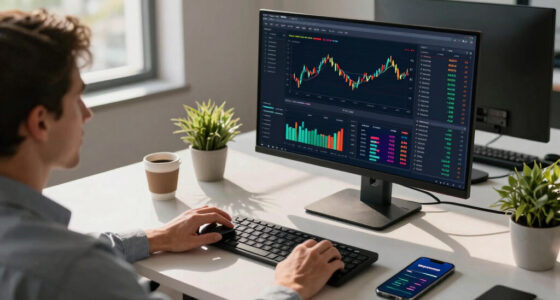
Background of AI in Trading and Forezai’s Research

Previous research by Thorsten Meyer and colleagues demonstrated that many parametric trading strategies fail to survive real-market conditions, highlighting the limitations of rule-based algorithms. This prompted interest in alternative approaches, including AI-driven decision-making. Forezai’s prior experiments involved a multi-strategy paper trader called Polybot, which showed that winning strategies often collapse when tested with fresh data. The current project builds on this insight by testing whether a committee of LLMs, structured with diverse roles and arguments, can produce more robust trading signals.

“Our goal is to see if a committee of specialized LLMs can generate trading decisions that are at least as reliable as random choices, given the same data a human would analyze.”

— Thorsten Meyer

Full Instructions in the Art of Crepe Paper Basket Weaving

Full Instructions in the Art of Crepe Paper Basket Weaving

As an affiliate, we earn on qualifying purchases.
As an affiliate, we earn on qualifying purchases.

Uncertainties About AI-Driven Trading Decision Quality

It remains unclear whether the LLM committee can consistently produce decisions that outperform random or rule-based strategies over extended periods or in live trading environments. The current system is designed for paper trading, and its effectiveness in real markets, including robustness to market volatility and unforeseen events, has not yet been demonstrated.

Additionally, questions about the limits of LLM reasoning, the impact of model biases, and the scalability of this approach are still open. The framework’s ability to articulate reasoning explicitly is promising, but whether this translates into tangible trading advantages is yet to be proven.

Trading: Technical Analysis Masterclass: Master the financial markets

Trading: Technical Analysis Masterclass: Master the financial markets

Language: english

As an affiliate, we earn on qualifying purchases.

As an affiliate, we earn on qualifying purchases.

Next Steps for Testing and Validating LLM Committee Trading

Forezai plans to run extended backtests and live paper trading sessions using the TradingAgents framework to assess performance over different market conditions. Future iterations may incorporate more diverse roles, refine the debate and synthesis processes, and explore integration with real-time data feeds.

Researchers and developers will monitor the system’s decision consistency, interpretability, and risk management capabilities, aiming to determine whether this AI approach can contribute meaningfully to automated trading strategies or serve as decision-support tools in financial analysis.

AI-Assisted Trading for Retail Traders: A Disciplined Framework for Probability, Risk Control, and Structured Decision-Making

AI-Assisted Trading for Retail Traders: A Disciplined Framework for Probability, Risk Control, and Structured Decision-Making

As an affiliate, we earn on qualifying purchases.

As an affiliate, we earn on qualifying purchases.

Key Questions

Can the LLM committee actually predict market movements?

No, the current system does not aim to predict market movements but to test whether a structured committee of LLMs can produce decision-making at least no worse than random choices based on the same data.

Is this system trading with real money?

No, the framework is configured for paper trading only. It includes safeguards to prevent unintended real-money trades unless explicitly overridden by the operator.

How does the LLM committee make decisions?

The system assigns specialized roles to different LLMs, which analyze data, argue opposing theses, and synthesize their reasoning into a final recommendation, making the decision process explicit and transparent.

What are the limitations of this approach?

Limitations include uncertainty about long-term performance, potential model biases, and the challenge of translating simulated decision-making success into real-world trading advantages.

What is the significance of this development?

This experiment explores whether AI, structured as a committee of models, can improve decision-making in complex environments, potentially influencing future research in automated trading and AI-assisted analysis.

Source: ThorstenMeyerAI.com

You May Also Like

VigilSAR Benchmark: There Is No Best Model

The VigilSAR Benchmark finds no universally best AI model, emphasizing context-dependent rankings based on capability, reliability, safety, and deployability.

Cleared by the US, derailed by the UK: Getty’s Shutterstock merger falls apart

Getty plans to abandon its $3.7B merger with Shutterstock after UK regulators impose restrictions, despite US approval. The deal is effectively dead.

Dow adds nearly 300 points Friday for new record close; S&P 500 notches eighth winning week: Live updates

The Dow Jones rises nearly 300 points, reaching a new record, while the S&P 500 marks its eighth consecutive weekly gain, amid positive market sentiment.

SpaceX gains 6% in premarket after record debut. Here’s what’s driving the valuation debate

SpaceX’s stock jumps 6% premarket following its historic IPO, with valuations and future growth prospects sparking debate among analysts.