📊 Full opportunity report: Speak To The Camera With Greater Ease: Practice For SMB Owners on IdeaNavigator AI — validation score, market gap, and execution plan.

Get the latest gadgets delivered free with Prime
- Fast, free delivery on millions of items
- Prime Video, Amazon Music and more included
- Member-only deals all year
TL;DR
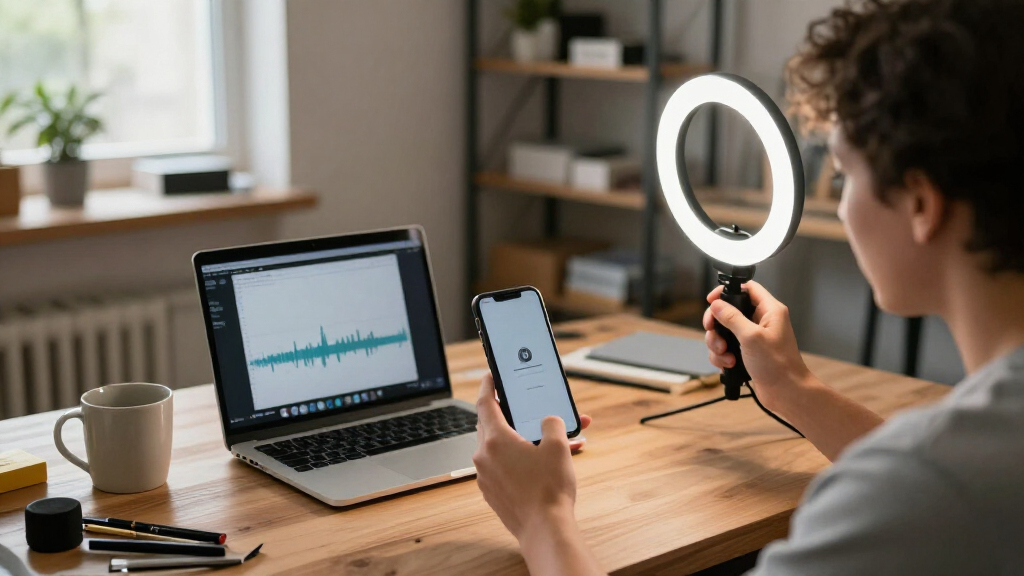
IdeaNavigator AI has outlined a proposed practice app for small-business owners who struggle to record video, with two-minute exercises and private feedback on delivery. The concept has not been presented as a launched product or tested result; its suggested validation is a 30-day cohort of 100 owners, measured against a waitlist group by whether they publish a video by day 45.
IdeaNavigator AI has outlined a proposed camera-practice app for small-business owners who know video could help their business but freeze when recording. The concept pairs short daily exercises with private feedback on speaking delivery, but no product launch, completed trial or effectiveness results are reported; the proposal calls for testing the idea with 100 owners.
According to the IdeaNavigator AI concept description, the proposed audience is a specific group: owners who recognize the value of video but struggle to get through a recording. The problem description includes stumbling, self-criticism and repeated takes, which can keep a business from publishing any video. The concept argues that conventional public-speaking courses may not address the experience of speaking alone to a camera, though it provides no research or user data to establish how common that gap is.
The concept description proposes a minimum viable product with daily, two-minute prompted exercises, starting with reading and progressing toward speaking more freely. It says the app would assess pace, filler words, eye line and energy, show progress over time, and use confidence streaks as users move toward recording real business content. These are proposed features, not confirmed capabilities of an available app.
For validation, IdeaNavigator AI proposes a 30-day cohort of 100 business owners and a waitlist control group. The stated outcome is whether participants publish their first real video by day 45. The concept also suggests a consumer subscription and a team tier for agencies coaching clients, but gives no pricing, operating costs or evidence of demand.
A product concept · proposed pilot
Speak To The Camera With Greater Ease
A proposed practice app for small-business owners who freeze when recording. Its promise is a repeatable path from short private exercises to publishing a real business video. The idea has not been launched or tested.
01 / The audience and the friction
When recording feels harder than speaking
The concept targets owners who see a role for video in their business but struggle to get through a recording session.
The trigger
Solo camera pressure
Speaking to a lens can feel different from speaking with customers, especially when every take invites self-criticism.
The loop
Stumbles and retakes
Repeated attempts can keep an owner from finishing and sharing a useful business video.
The hypothesis
Practice in private
Short, private feedback loops may make practice easier to repeat. The concept provides no user data establishing the size of this need.
02 / Proposed product journey
From a prompt to a published video
The suggested workflow builds gradually toward real business content. Each step describes a proposed feature, not a confirmed app capability.
Read aloud
Begin with a short, guided two-minute prompt.
Speak freely
Move from reading toward more natural delivery.
Review signals
Proposed feedback covers pace, filler words, eye line and energy.
Record for business
Use practice to work toward sharing a real video.
03 / Proposed validation
Test publishing, not confidence alone
The stated outcome is observable: whether an owner publishes a first real video by day 45.
What the pilot would track
A comparison is only a first signal
The proposal pairs a 30-day group of 100 owners with a waitlist control. Comparing publishing by day 45 could offer an initial signal about whether the exercises are associated with more owners sharing a video.
Evidence boundary: No cohort start, participant assignment, outcome, or effectiveness result is reported. A small pilot would not establish performance across industries or video types.
04 / Open questions
Important details remain unproven
The proposal outlines a testable direction, while product, technical and commercial questions still need answers.
Measurement
How would feedback work?
No model or method is named for evaluating eye line, energy or delivery. The reliability and usefulness of these assessments have not been reported.
Privacy
What happens to recordings?
Storage, access and recording-handling details are unspecified, as are recruitment and assignment methods for the proposed comparison.
Business model
Would customers pay?
A consumer subscription and agency team tier are suggested. Pricing, demand, operating costs and retention are unknown.
Study design
What counts as success?
The concept does not define a published video, the threshold for continuing development, or the dates and process for a completed pilot.
05 / Key questions
What we know—and what we don’t
Is the app available now?
The information describes a proposed concept. It reports no launch, public availability or release date.
Who is it for?
Owners who believe video can help their business but feel stuck recording, including those caught in repeated takes or self-criticism.
What would users do?
Try proposed two-minute daily exercises that progress from reading to speaking more freely, with feedback on four delivery signals.
How would the idea be tested?
A proposed 30-day cohort of 100 owners would be compared with a waitlist group. The measure is a first published video by day 45; no results are reported.
What is known about pricing?
Nothing specific. A consumer subscription and agency tier are suggested, but prices and demand have not been established.
What is the next stated step?
Run the proposed cohort and check whether practice carries over into public posting. No schedule or recruitment process is provided.
The proposed path
Private practice→ Delivery feedback→ Real business video→ Day-45 checkTesting Whether Practice Leads to Publishing
The IdeaNavigator AI proposal targets a practical obstacle for small businesses: video may be part of their marketing plans, but recording discomfort can prevent them from producing anything to share. If the proposed workflow helps owners move from practice to publication, it could address a narrower and more measurable need than general presentation training. The suggested day-45 publishing measure focuses on an observable action rather than confidence alone.
That outcome matters because an app can improve a practice score without changing what a business actually does. As described in the proposal, comparing a cohort with a waitlist group could offer an initial signal about whether the exercises are associated with more owners publishing a video. However, the proposal supplies no results, and a small pilot would not by itself establish how well the approach works across different industries, experience levels or types of video.
The commercial case is also unproven. The concept suggests a subscription that would depend on owners seeing enough value to keep using the exercises, while an agency tier would depend on coaches finding the app useful with clients. Product demand, retention and willingness to pay are not answered by the concept description.
Products Worth Considering

DJI Mic 3 Wireless Microphone System (2 Transmitters, 1 Receiver, Charging Case)

Apple AirPods Pro 3 Wireless Earbuds with Active Noise Cancellation

Bose QuietComfort True Wireless Earbuds with Active Noise Cancellation, Black
As an affiliate, we earn on qualifying purchases.
From Video Anxiety to a Testable Workflow
In its proposal, IdeaNavigator AI frames the opportunity around pressure on businesses of all sizes to use video in marketing. It links that need to camera anxiety: a person may be comfortable speaking with customers but find solo recording difficult, particularly when each take invites self-criticism. The description does not cite market data to quantify video use or the number of owners affected.
The proposal also points to multimodal AI as a possible way to assess visible and spoken delivery, including pace, filler words, eye contact and energy. It does not name a model, describe how measurements would be calculated, or report validation of those assessments. Its approach is a product hypothesis: short, private feedback loops may make practice easier to repeat and help users progress toward recording content for public use.
According to the proposed plan, the cohort would test that hypothesis before treating the app as a proven solution. The comparison with a waitlist group is intended to distinguish the experience of using the exercises from simply being invited to participate, though the plan does not specify how participants would be recruited or assigned.
Evidence and Product Details Still Missing
No trial findings are available. IdeaNavigator AI’s concept description does not say that the 100-person cohort has begun, identify a launch schedule, or report how many owners have used a prototype. It also gives no evidence that the app’s feedback would improve delivery or lead to more published videos.
Important implementation details remain open, including how the app would evaluate eye line and energy, what data it would store, and how recordings would be handled. Pricing, subscription terms and the agency tier’s features are not specified. The description also does not define what counts as a published video, how the waitlist comparison would be conducted, or what result would justify continuing development.
A Cohort Would Test Real-World Use
IdeaNavigator AI’s concept description identifies the next stated step as a proposed 30-day cohort with 100 owners, alongside a waitlist control, followed by a check on day 45 to see whether participants have published a first real video. No dates, recruitment process or completed study are provided, so the timing and status of that test remain unknown.
If a pilot proceeds, its results could help determine whether owners complete the exercises and whether practice carries over to public posting. Further evidence would be needed to assess continued use, the reliability and usefulness of automated feedback, and demand for either subscription option. Until those details are reported, the app remains a concept with a proposed validation plan rather than a demonstrated product.
Source: IdeaNavigator AI
Key Questions
Is the camera-practice app available now?
The information describes a proposed app concept. It does not report a launch, public availability or a release date.
Who is the proposed app for?
It is aimed at business owners who know video matters but feel stuck when recording, including people who struggle with repeated takes or self-criticism.
What would users do in the app?
The proposed exercises would take about two minutes a day, moving from reading to speaking more freely. The app would offer feedback on pace, filler words, eye line and energy.
How would the idea be tested?
The proposed test is a 30-day group of 100 owners compared with a waitlist control. The stated measure is whether participants publish a first real video by day 45; no results have been reported.
What remains unknown about the business model?
The concept suggests a consumer subscription and an agency team tier, but pricing, demand and retention have not been established in the information provided.
Source: IdeaNavigator AI