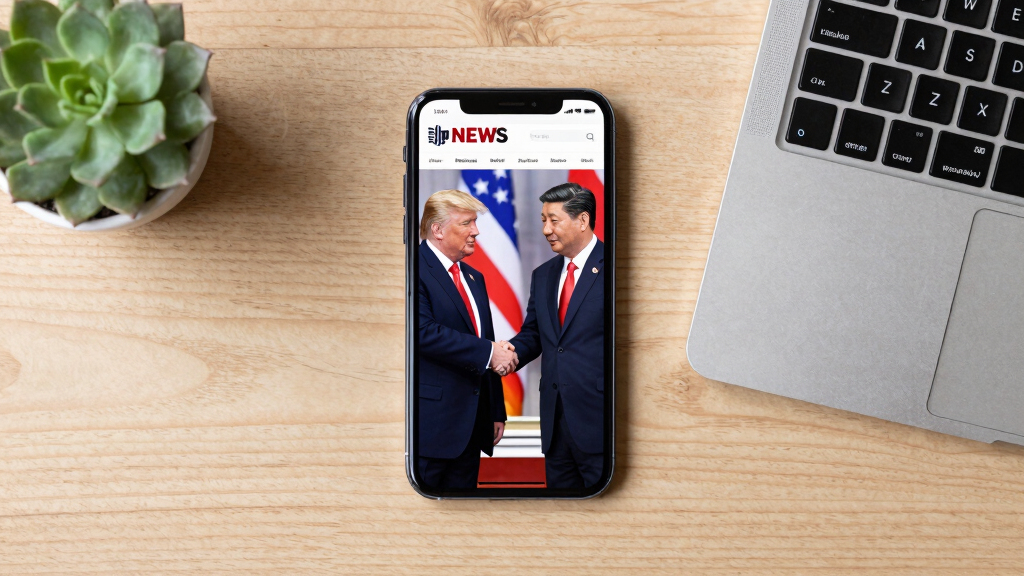

TL;DR
U.S. President Donald Trump and Chinese President Xi Jinping met in Beijing, but analysts say the summit was more ceremonial than substantive, with no major agreements reached. The event’s significance lies in its diplomatic symbolism rather than policy breakthroughs.
U.S. President Donald Trump and Chinese President Xi Jinping departed Beijing without reaching major trade or policy agreements, underscoring analysts’ view that the summit was primarily symbolic rather than substantive.

Get the latest gadgets delivered free with Prime
- Fast, free delivery on millions of items
- Prime Video, Amazon Music and more included
- Member-only deals all year
The two leaders met over two days in Beijing, with extensive diplomatic pageantry but no concrete commitments on trade, security, or other contentious issues. According to political analysts, the meeting served more as a diplomatic gesture aimed at stabilizing relations amid ongoing tensions. The Chinese government claimed the summit demonstrated stability and mutual respect, but did not specify any new policy initiatives. U.S. officials indicated that while the meeting was cordial, it did not result in tangible outcomes or new agreements.
Why It Matters
This summit’s primary significance is its symbolic value in U.S.-China relations. While it may temporarily ease tensions, the lack of substantive agreements suggests limited immediate impact on ongoing disputes over trade, technology, and security. For policymakers and markets, the event underscores the continuing complexity of U.S.-China diplomacy, where gestures often outweigh concrete policy shifts. The summit’s tone and outcome could influence upcoming negotiations and international perceptions of both countries’ diplomatic intentions.
Products Worth Considering

Samsung Galaxy Tab S10 Lite, 10.9-inch LCD, 6GB RAM, 128GB Storage, Gray

Apple MacBook Air 15-inch Laptop with M5 Chip, 16GB Memory, 512GB SSD, Liquid Retina Display, and Touch ID (Midnight)

Anker SOLIX C300 Portable Power Station with 60W Solar Panel, 288Wh, 300W
As an affiliate, we earn on qualifying purchases.
Background
This summit follows a series of high-stakes interactions between the U.S. and China over the past year, including trade disputes, technology bans, and security concerns. Historically, such summits have often been more about diplomatic optics than immediate policy change, but recent meetings have occasionally yielded tangible agreements. The Beijing summit was scheduled amid ongoing global economic uncertainties and regional security tensions, with both sides seeking to project stability despite underlying disagreements.
“This summit was more about signaling stability and maintaining face than about making substantive policy progress.”
— Dr. Emily Chen, political analyst
“While no new agreements were announced, the meeting helped reinforce open lines of communication between the two leaders.”
— U.S. State Department spokesperson
What Remains Unclear
It remains unclear whether future negotiations will produce tangible policy changes or if this summit will influence the trajectory of U.S.-China relations in the coming months. The long-term impact of the meeting on trade negotiations or regional security remains to be seen.
What’s Next
Next steps likely include continued diplomatic engagement, with both sides possibly preparing for more detailed negotiations. Analysts will monitor for any signs of policy shifts or new agreements emerging from upcoming meetings or bilateral discussions.
Key Questions
Did the summit result in any new trade agreements?
No, the summit concluded without any new trade or policy agreements, according to official statements.
Why do analysts see the summit as more symbolic than substantive?
Experts point to the lack of concrete policy commitments or agreements, emphasizing the event’s role in diplomatic signaling rather than policy change.
What was the Chinese government’s official stance on the summit?
Beijing claimed the summit demonstrated stability and mutual respect but did not specify any new initiatives or agreements.
How might this summit affect future U.S.-China relations?
While it may temporarily ease tensions, the lack of substantive outcomes suggests limited immediate impact, and future relations will depend on subsequent negotiations and policies.