
📊 Full opportunity report: VR Factory Training: A Cost-Effective Solution For Industrial Skills Development on IdeaNavigator AI — validation score, market gap, and execution plan.
TL;DR
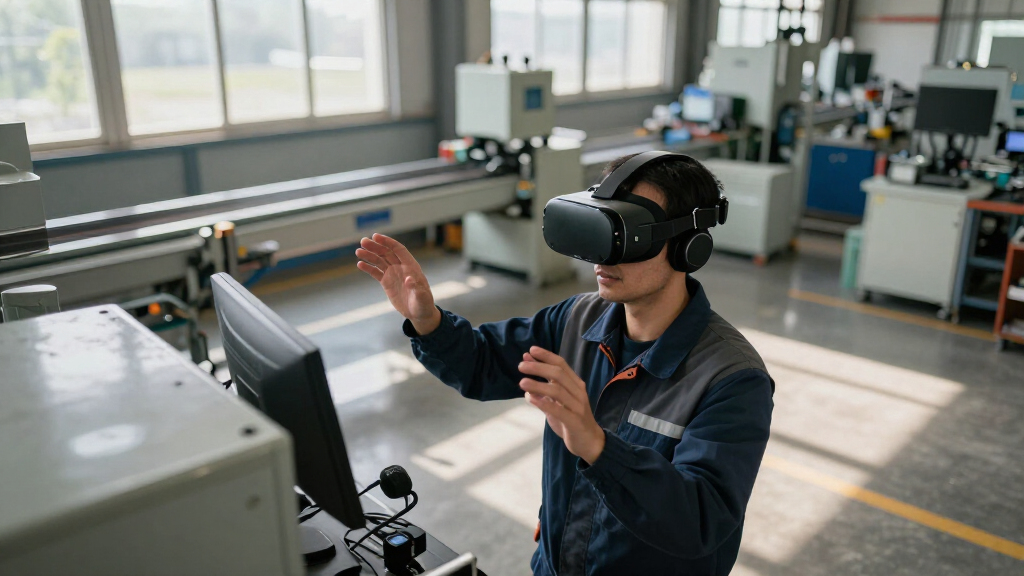
A new VR training module focused on high-risk manufacturing procedures is being piloted at mid-sized plants. It aims to improve onboarding speed and safety compliance while reducing costs. Early results could reshape industrial workforce development.
Manufacturers are piloting a virtual reality (VR) training platform aimed at addressing persistent skills gaps and safety risks in industrial settings. The initiative focuses on deploying VR modules for high-risk procedures like lockout/tagout and forklift safety, using affordable standalone headsets and cloud-based tracking systems. This development comes amid a severe labor shortage and the need for rapid, standardized onboarding, with early pilot results expected to influence broader adoption across the manufacturing sector.
The VR factory training platform is designed specifically for mid-to-large manufacturing plants seeking scalable solutions to onboard new workers efficiently while enhancing safety. The pilot involves deploying 5-10 standalone Meta Quest headsets, each preloaded with core safety modules, along with a cloud dashboard that monitors completion rates, scores, and hazard recognition accuracy. The goal is to measure whether VR training can shorten the time to reach competency and improve hazard detection compared to traditional classroom methods.
According to an anonymous researcher, the platform aims to serve as a cost-effective, flexible alternative to traditional training, which often involves slow, inconsistent, and safety-risky on-floor instruction. The initial focus on high-value, high-risk procedures is intended to demonstrate measurable improvements in training outcomes, with the potential to expand to additional procedures and plants if successful. Revenue models include SaaS subscriptions, custom scenario development, and optional hardware management services.
Industry estimates project the immersive enterprise training market to reach USD 14.55 billion in 2025, driven by declining hardware costs and the growth of cloud-native XR streaming. The current pilot is seen as a critical step toward validating VR’s role in manufacturing workforce development, especially as the sector faces an estimated 409,000 unfilled positions in August 2025 and anticipates needing 3.8 million new workers by 2033.
Impact of VR Training on Manufacturing Workforce Development
This initiative could significantly reduce onboarding time and safety incidents in manufacturing, which are critical issues amid ongoing labor shortages. By providing standardized, engaging, and risk-free training, VR modules have the potential to improve hazard recognition, boost worker confidence, and lower costs associated with high turnover and safety violations. If validated through pilot results, VR training could become a key component of industrial skills development, influencing how companies approach onboarding and safety compliance at scale.
As an affiliate, we earn on qualifying purchases.
Growing Need for Innovative Manufacturing Training Solutions
The manufacturing sector faces a dual challenge: a shrinking workforce and increasing safety regulations. Traditional training methods—classroom instruction and on-the-floor demonstrations—are often slow, inconsistent, and pose safety risks when using live machinery. The labor shortage has intensified, with 409,000 unfilled manufacturing jobs in August 2025, and projections indicate a need for 3.8 million new workers by 2033. Meanwhile, advancements in XR hardware and cloud streaming have made immersive training more accessible and affordable, prompting industry leaders to explore VR as a scalable solution.
Previous efforts to incorporate VR have been limited to niche applications, but recent market growth—estimated at a 20% CAGR—suggests broader adoption is imminent. The current pilot programs aim to demonstrate tangible benefits in onboarding efficiency and safety performance, which could accelerate industry-wide integration of VR-based workforce training.
standalone VR headset for industrial training
As an affiliate, we earn on qualifying purchases.
As an affiliate, we earn on qualifying purchases.
Uncertainties About VR Training Effectiveness and Adoption
It is not yet clear whether the pilot will demonstrate statistically significant improvements in onboarding speed or hazard recognition. The success depends on various factors, including user engagement, module design, and integration with existing training programs. Additionally, broader industry adoption will require validation across diverse procedures and plant environments, which remains to be seen. Cost-benefit analyses and long-term impact studies are still pending.
VR forklift safety training module
As an affiliate, we earn on qualifying purchases.
As an affiliate, we earn on qualifying purchases.
Next Steps for VR Factory Training Deployment
The upcoming 60-90 day pilot will involve testing VR modules with one cohort of new workers, comparing outcomes to a control group trained via traditional methods. Success metrics include reduced time-to-competency, higher hazard recognition scores, and positive supervisor feedback. If results are favorable, manufacturers are expected to expand VR training to additional procedures and plants, potentially leading to broader industry adoption and integration into standard onboarding protocols.
As an affiliate, we earn on qualifying purchases.
Key Questions
How cost-effective is VR training compared to traditional methods?
Initial estimates suggest that VR training can reduce costs associated with prolonged onboarding, safety incidents, and high turnover. The platform is offered via SaaS subscriptions, and hardware costs are declining, making it potentially more affordable at scale. However, comprehensive cost-benefit analysis will depend on pilot outcomes.
What procedures are currently being tested with VR modules?
The pilot focuses on high-risk procedures such as lockout/tagout and forklift safety, which are critical for workplace safety and compliance.
Will VR replace all traditional manufacturing training?
It is unlikely VR will fully replace traditional methods in the near term. Instead, it is expected to complement existing training, especially for safety-critical and complex procedures.
What are the hardware requirements for participating in VR training?
The pilot uses standalone Meta Quest headsets, which are relatively affordable and easy to deploy without extensive infrastructure.
When will broader industry adoption be expected?
Broader adoption will depend on pilot success, but if early results are positive, industry-wide implementation could begin within the next year or two.
Source: IdeaNavigator AI