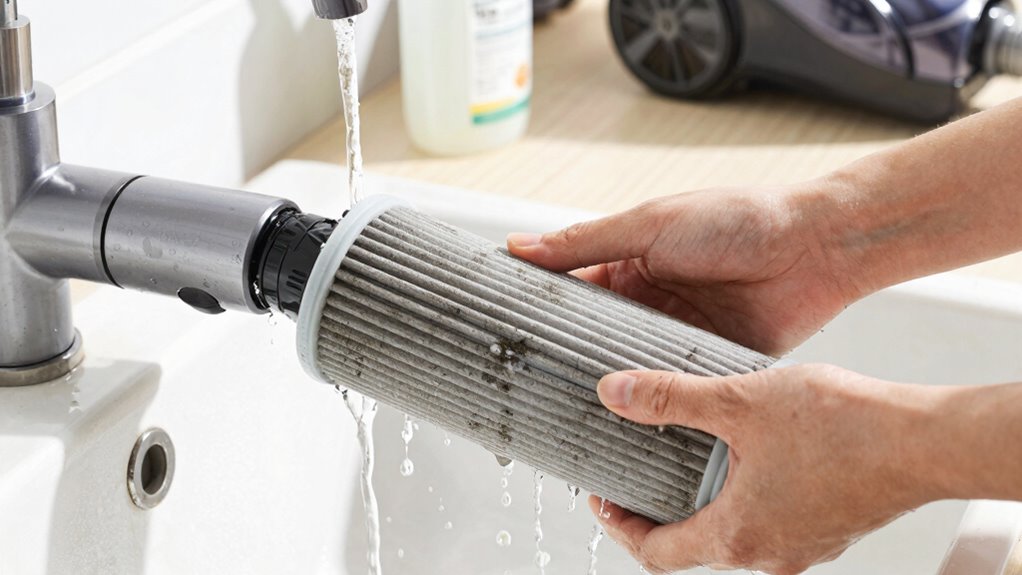

To clean your vacuum filter effectively, first check if it’s a washable type like foam—simply rinse it with water and let it dry completely before reinstalling. For HEPA or cartridge filters, gently tap or vacuum off dust, but avoid using water unless specified. Regular cleaning boosts suction and prolongs filter life. Want to guarantee you get it just right? Keep exploring for detailed steps and tips.
Key Takeaways
- Identify your filter type (HEPA, foam, cartridge) and follow specific cleaning or replacement instructions from the manual.
- Remove the filter carefully, inspecting for damage or excessive dirt before cleaning or replacing.
- Wash washable filters with water and mild soap, then dry completely before reinstalling.
- For non-washable filters, gently tap or brush off dust; replace when visibly dirty or damaged.
- Reinstall the filter securely and test the vacuum for restored suction and airflow.
Why Your Vacuum Isn’t Performing Well and How a Clean Filter Can Help

If your vacuum isn’t cleaning effectively, a clogged or dirty filter might be the culprit. Regular filter maintenance is essential to keep your vacuum performing at its best. When filters become clogged with dust and debris, airflow drops, reducing suction power and making cleaning less efficient. A dirty filter forces your vacuum to work harder, which can lead to motor strain and decreased lifespan. By keeping your filter clean, you guarantee ideal airflow and maintain strong vacuum performance. Ensuring proper airflow management is crucial for optimal cleaning results. Proper filter maintenance not only prevents dirt buildup in your vacuum’s motor but also helps in maintaining the contrast ratio necessary for thorough cleaning. This simple step prevents dirt buildup in your vacuum’s motor and extends its lifespan. Remember, a well-maintained filter not only improves cleaning results but also helps your vacuum operate smoothly and efficiently. Regular filter maintenance is a key part of keeping your vacuum functioning like new.
How to Recognize When Your Vacuum Filter Needs Cleaning
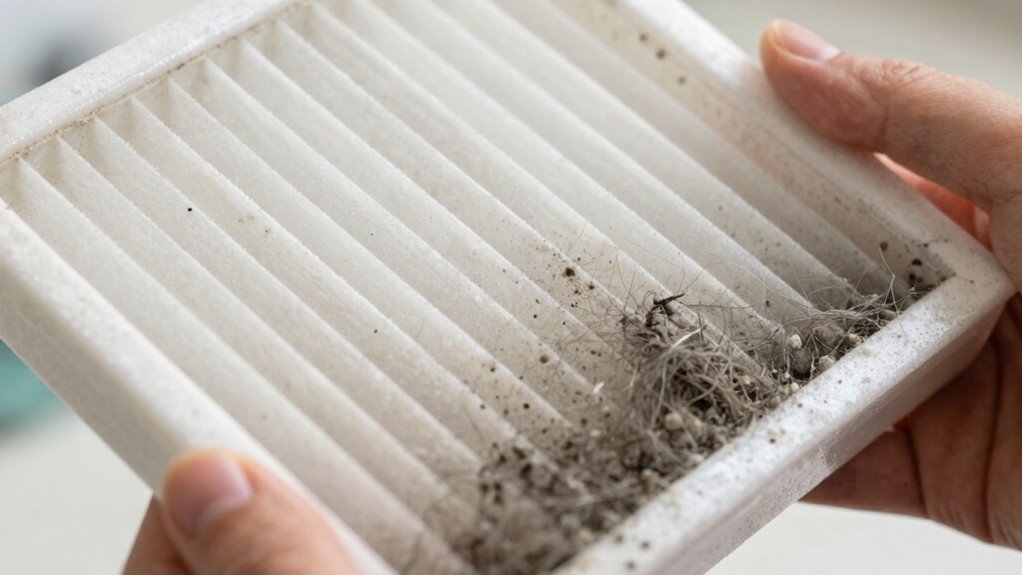
Knowing when to clean your vacuum filter helps maintain ideal performance. One key sign is a reduced filter lifespan; if your vacuum struggles to pick up debris or seems less powerful, it’s time for a clean. Another indicator is persistent odors that won’t go away, signaling that the filter is clogged and can’t effectively eliminate smells. Additionally, if you notice an increase in dust or allergens escaping back into the air, your filter likely needs attention. Regularly inspecting your filter and noting these signs ensures you stay ahead of performance issues. Cleaning the filter at the right time keeps your vacuum functioning efficiently and preserves its odor elimination capabilities, ensuring your home stays fresh and allergen-free. Using high-quality vacuum filters can also help extend the time between cleanings and improve overall performance. Proper filter maintenance can prevent the buildup of bacteria and mold, which can cause unpleasant odors and reduce filtration efficiency. Incorporating regular cleaning routines can further enhance the effectiveness and lifespan of your vacuum’s filtration system. Additionally, understanding air quality considerations can help you choose the right filters and cleaning practices to optimize your indoor environment. Regular cleaning also supports the performance of essential oils, which can improve air quality when used properly in your cleaning routine.
How to Remove and Inspect Your Vacuum Filter

Start by locating your vacuum filter in your machine, following the manufacturer’s instructions. Once you find it, carefully remove the filter and inspect it for any visible damage or cracks. Checking these details guarantees your vacuum operates efficiently and helps you decide if the filter needs cleaning or replacement. Additionally, understanding the maintenance requirements of your vacuum can extend the lifespan of the appliance and ensure optimal performance. Regularly reviewing cleaning procedures can also help prevent future clogs and improve overall suction. For example, some vacuums with gelato-inspired features may require specific care to maintain their performance quality, and being familiar with the proper maintenance practices can help you keep your vacuum running smoothly for longer. Properly caring for your filter is essential to prevent buildup of debris and to maintain the efficiency of your vacuum over time.
Locate the Filter Properly
To locate the vacuum filter, begin by unplugging your vacuum and checking the user manual for specific instructions, as filter placement can vary between models. Most vacuums have the filter accessible through a panel or opening, often near the dustbin or behind a cover. Look for clues like latches or clips that hold the filter in place, which make filter access easier. Once you identify the filter’s general location, carefully open the compartment or panel. If you’re unsure where the filter is, inspecting your vacuum’s exterior for labels or diagrams can help. Remember, proper filter placement is key to cleaning and maintenance, so take your time to locate it precisely before removing it for inspection. Ensuring the filter placement is correct can improve the vacuum’s efficiency and lifespan. Additionally, regularly checking the filter condition helps prevent build-up and maintains optimal suction power. Keep in mind that proper maintenance of your vacuum filter prolongs its effectiveness and reduces the need for frequent replacements.
Check for Damage
Ever wondered how to tell if your vacuum filter needs replacement or just a good cleaning? First, carefully inspect the filter for any visible damage. Look for tears, holes, or cracks that could compromise its effectiveness. If the filter appears damaged, it’s a sign you should replace it rather than clean it. Damaged filters can’t trap dust and debris properly, leading to reduced suction and poor air quality. Even if the filter looks intact but is very worn or clogged, consider a filter replacement for ideal performance. Sometimes, dirt buildup can hide damage, so handle the filter gently and examine both sides thoroughly. Checking for filter damage ensures your vacuum works efficiently and helps maintain a healthier environment. Additionally, understanding the importance of proper maintenance can extend the life of your vacuum and ensure optimal operation. Regularly inspecting and replacing filters is crucial for pump protection and overall device longevity. Being aware of the signs of wear can help you catch issues early and avoid costly repairs. For example, filter quality can vary, so choosing the right replacement can make a significant difference in performance. Incorporating regular checks, especially in urban environments, can prevent buildup of dust and allergens that affect air quality.
How to Clean Different Types of Vacuum Filters (HEPA, Foam, Cartridge)
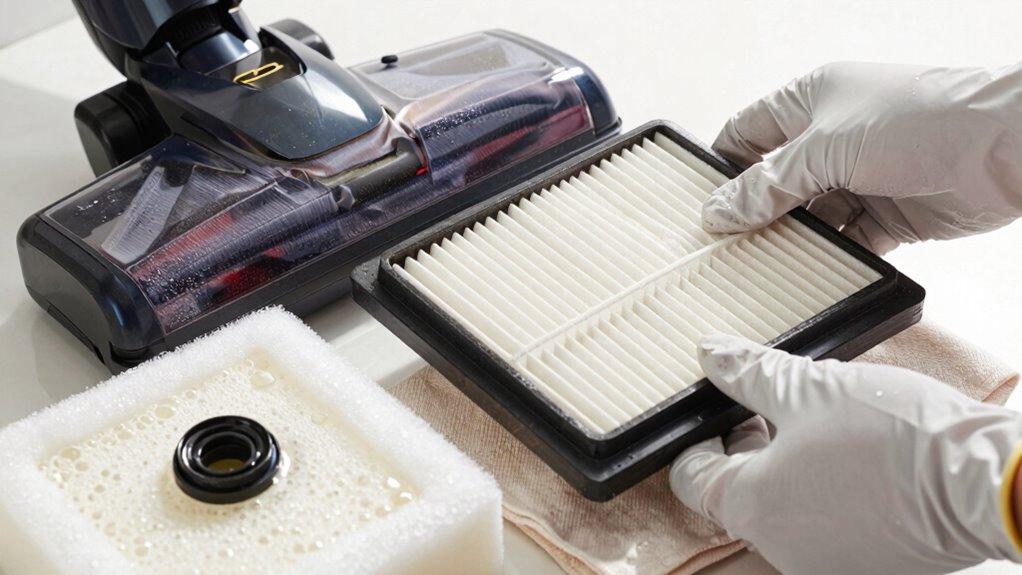
Have you ever wondered how to properly clean different types of vacuum filters like HEPA, foam, and cartridge filters? Proper filter maintenance depends on the filter type and cleaning techniques. HEPA filters usually aren’t washable and should be replaced when dirty, but some can be gently vacuumed to remove surface dust. HEPA filter lifespan is limited, so timely replacement is crucial for optimal performance. Foam filters are washable; rinse them with water until clear, then let them air dry completely before reinstalling. Cartridge filters often require a gentle tap or vacuuming to remove loose debris, but avoid water unless specified by the manufacturer. Always check your vacuum’s manual to confirm cleaning methods. Regularly maintaining your filters ensures ideal airflow and cleaning performance, saving you money and prolonging your vacuum’s lifespan. Using the appropriate cleaning method for each filter type helps maintain its effectiveness and longevity.
Dry and Wet Cleaning Tips for Vacuum Filters

Proper cleaning methods depend on your filter type and how dirty it is. For dry cleaning, gently tap or brush off loose dust into a trash bin, guaranteeing dust disposal is hygienic. If the filter is washable, rinse it with water, avoiding harsh detergents, and let it dry completely before reinstalling. Wet cleaning is effective for stubborn dirt; submerge the filter in water with a small amount of mild soap, then rinse thoroughly. Always dry the filter fully to prevent mold growth. Regularly check if the filter’s performance declines; if cleaning doesn’t restore suction, consider filter replacement. Keeping your filter clean using appropriate dry or wet methods ensures ideal vacuum performance and prolongs its lifespan. Proper dust disposal and timely filter replacement are key to maintaining a healthy home environment.
How Often Should You Clean Your Vacuum Filter?

How often you should clean your vacuum filter depends on how often you use your vacuum and the amount of debris it collects. If you notice a decline in suction or increased dust escaping, it’s time to clean it. Staying attentive to these signs helps keep your vacuum running efficiently.
Frequency Based on Usage
Wondering how often you should clean your vacuum filter? The answer depends on your usage frequency. If you vacuum daily or several times a week, you’ll need to clean the filter more often to maintain peak performance. Typically, frequent use shortens the filter lifespan, so cleaning every 1-3 months is recommended. If you vacuum less often, such as once a month, cleaning every 3-6 months should suffice. Regular maintenance ensures your vacuum runs efficiently and prevents clogs. Keep in mind that over time, dirt and debris can clog the filter, reducing suction power. Monitoring your usage patterns helps you establish a cleaning schedule that preserves the filter’s effectiveness and prolongs its lifespan. Staying proactive will save you time and money in the long run.
Signs You Need Cleaning
You’ll know it’s time to clean your vacuum filter when you notice a drop in suction power or your vacuum isn’t performing as efficiently as it used to. Over time, filters reach the end of their lifespan, causing airflow issues that reduce cleaning effectiveness. If your vacuum struggles to pick up debris or seems to work harder than usual, it’s a clear sign your filter needs attention. Clogged filters restrict airflow, making your vacuum less effective and potentially damaging the motor. Regularly inspecting and cleaning your filter guarantees ideal airflow and extends its lifespan. Don’t wait until your vacuum’s performance drops considerably—clean your filter as soon as you notice these signs to keep it functioning at its best.
Troubleshooting Common Vacuum Problems After Cleaning

After cleaning your vacuum filter, it’s common to encounter some performance issues that can be frustrating. If your vacuum isn’t suctioning properly or seems less effective, check your filter maintenance. Sometimes, a filter may need more thorough cleaning or replacement to restore the vacuum’s efficiency. Also, verify the filter is correctly installed. A poorly fitted filter can reduce vacuum lifespan and cause suction problems.
| Problem | Possible Cause | Solution |
|---|---|---|
| Loss of suction | Clogged filter or hose | Clean or replace filter and check hose |
| Unusual noise | Obstructed airflow | Clear blockages |
| Reduced airflow | Dirty filter | Deep clean or replace filter |
Frequently Asked Questions
Can I Clean My Vacuum Filter With Household Cleaning Products?
You should avoid using household chemicals to clean your vacuum filter, as they can damage the filter material and hinder filter maintenance. Instead, rinse the filter with warm water and mild soap if allowed, then let it dry completely before reinstalling. This gentle cleaning method preserves the filter’s effectiveness, ensuring your vacuum performs well and prolongs its lifespan. Always check your vacuum’s manufacturer instructions for proper cleaning guidance.
How Long Does It Take for a Vacuum Filter to Dry Completely?
Imagine your vacuum filter as a sponge soaking up moisture, waiting to breathe again. Typically, drying time depends on humidity and airflow, but it usually takes about 24 hours. To guarantee thorough moisture removal, place the filter in a warm, dry spot with good ventilation. Resist the urge to use it before it’s completely dry, or residual moisture could gunk up your vacuum’s performance, making it work harder.
Is It Necessary to Replace a Vacuum Filter After Cleaning?
You don’t always need to replace a vacuum filter after cleaning, but it’s good to contemplate filter replacement when cleaning no longer restores performance. Regular cleaning extends its life, but frequent cleaning might indicate it’s time for a filter replacement. Follow your vacuum’s recommended cleaning frequency to maintain efficiency. If your filter looks damaged or worn after cleaning, replacing it ensures your vacuum continues to work effectively.
What Should I Do if My Vacuum Filter Is Damaged?
If your vacuum filter is damaged, you should first assess the extent of the vacuum filter damage. Minor tears or cracks might be fixable with filter repair methods like using waterproof tape or adhesive designed for filters. However, if the damage is extensive, it’s best to replace the filter entirely to guarantee maximum performance. Always follow manufacturer guidelines to maintain your vacuum’s efficiency and prevent further damage.
Can Cleaning My Vacuum Filter Improve Air Quality in My Home?
Think of your vacuum filter as the lungs of your home; cleaning it can markedly boost air purification and allergen reduction. When you keep your filter clean, dust, pet dander, and pollen are trapped more effectively, improving air quality. Regular maintenance prevents buildup, helping your vacuum work efficiently and creating a healthier living space. So yes, a clean filter can make a noticeable difference in breathing easier and enjoying fresher air inside.
Conclusion
Remember, a clean vacuum filter isn’t just about better suction—it’s about ensuring your home stays healthier. Some believe that a spotless filter can even boost your vacuum’s lifespan, but don’t rely solely on appearances. Regular cleaning is essential, yet it’s equally important to recognize when a filter needs replacing. Think of it like caring for your own health—consistent attention keeps everything running smoothly. Keep your filter clean, and your vacuum will serve you better for years to come.