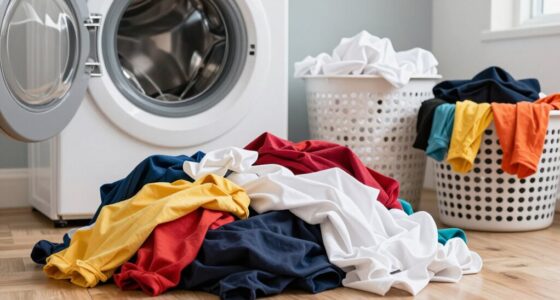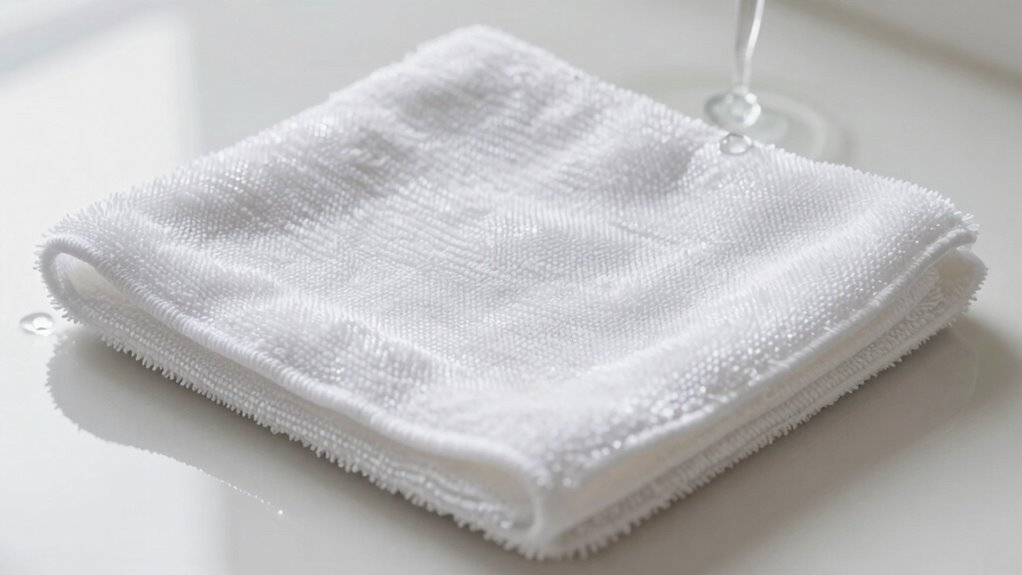

To clean microfiber properly, start by removing loose dirt and pre-treat stains with a gentle cleaner. Wash in cold or warm water using a mild detergent without fabric softeners or bleach, and always wash separately to prevent lint transfer. Avoid hot water and harsh chemicals, as they can damage fibers. For best results and longer lifespan, air dry or tumble dry on low heat. Keep learning the best techniques to protect your microfiber investments.
Key Takeaways
- Remove loose debris and pre-treat stains before washing to prevent fiber damage and buildup.
- Wash microfiber separately in cold or warm water using a gentle cycle and mild detergent.
- Avoid fabric softeners, bleach, and harsh chemicals that can coat or weaken fibers.
- Air dry or tumble dry on a low heat setting to preserve softness and fiber integrity.
- Store microfiber in a clean, dry area away from lint and direct sunlight to extend lifespan.

HOMEXCEL Microfiber Cleaning Cloth,12 Pack Cleaning Rags, Cleaning Towels with 4 Color Assorted, 11.5"X11.5"(Green/Blue/Yellow/Pink)
Effective Cleaning: Take these cleaning cloths in the perfect size (11.5" x 11.5") to clean your worktop, kitchen,…
As an affiliate, we earn on qualifying purchases.
As an affiliate, we earn on qualifying purchases.
Why Does Microfiber Get Dirty and How Does That Affect Cleaning?
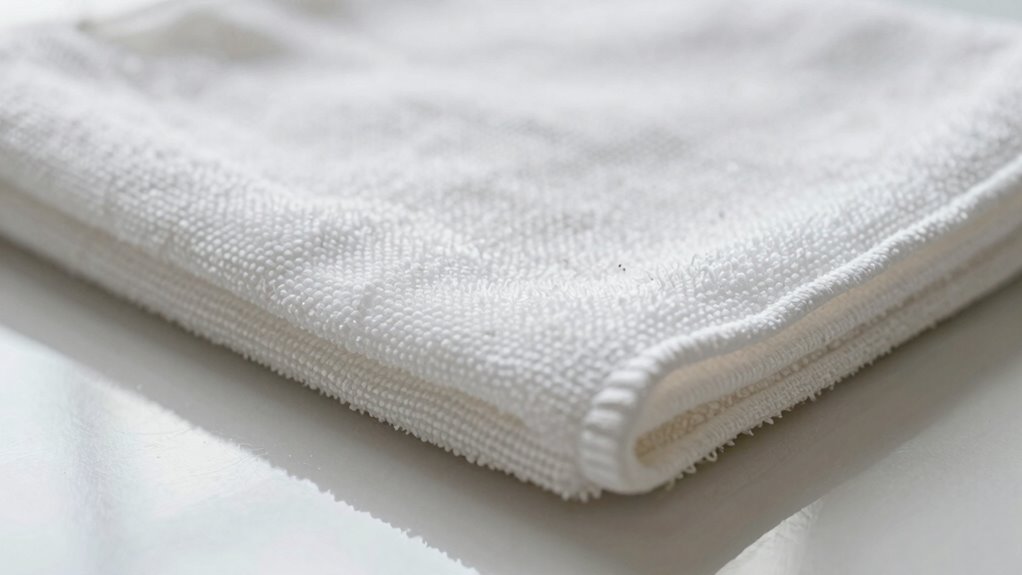
Microfiber gets dirty because its tiny fibers easily trap dirt, grease, and other particles during cleaning. Over time, fiber dirt accumulates in the material, creating microfiber buildup that’s hard to remove. This buildup can reduce the cloth’s effectiveness, making it less capable of picking up new dirt and grime. When microfiber becomes saturated with dirt and oils, it can spread contaminants instead of trapping them, which defeats the purpose of cleaning. Additionally, microfiber buildup can cause the fibers to clump together, decreasing surface contact and cleaning power. If you don’t wash your microfiber cloths properly, these particles linger, choking the fibers’ ability to do their job. That’s why understanding why microfiber gets dirty is key to maintaining its cleaning efficiency. Proper maintenance and regular washing methods are essential to prevent microfiber deterioration and ensure optimal cleaning performance. Neglecting to remove dirt properly can lead to fiber damage, which further diminishes cleaning effectiveness over time. To preserve microfiber’s cleaning ability, it’s important to follow specific care guidelines that help keep the fibers in good condition. Regular cleaning also helps prevent fiber degradation, which is critical for keeping microfiber effective for repeated use. Incorporating proper water temperature during washing can significantly impact the longevity of microfiber cloths.

USANOOKS Microfiber Cleaning Cloth Grey – 12 Pcs (12.5"x12.5") – High Performance – 1200 Washes, Ultra Absorbent Microfiber Towel Weave Grime & Liquid for Streak-Free Mirror Shine – Car Washing Cloth
10x GRIP-ROOT WEAVE – TRAP MORE, WORK LESS: Ultra-absorbent microfiber towels for car Grip Root weave works like…
As an affiliate, we earn on qualifying purchases.
As an affiliate, we earn on qualifying purchases.
Common Mistakes That Wreck Your Microfiber Cloths
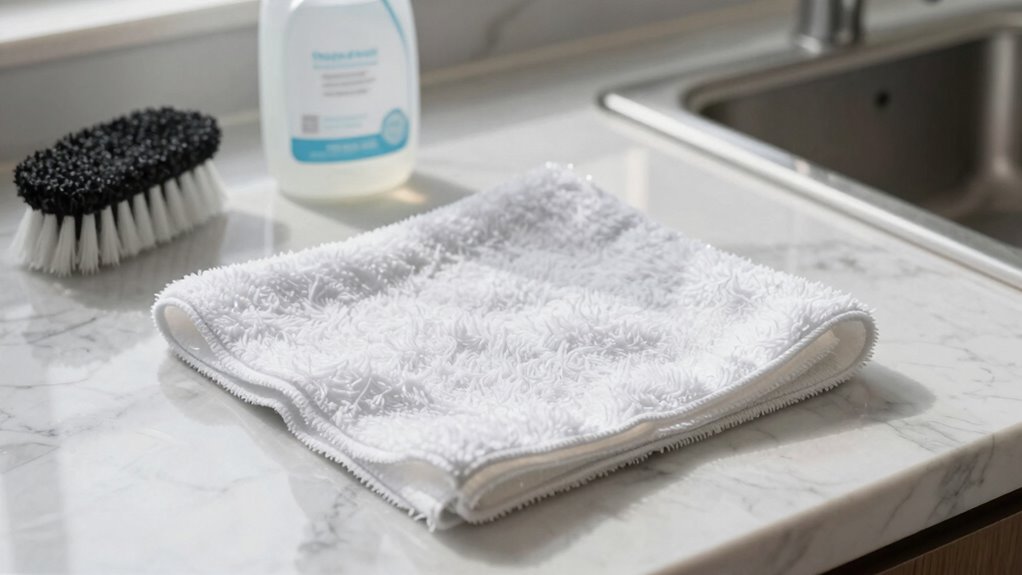
Many common mistakes can quickly ruin your microfiber cloths and reduce their cleaning effectiveness. First, using fabric softeners coats the fibers, decreasing their ability to attract dirt and grime. Second, washing with bleach causes damage to the delicate fibers, weakening their structure and shortening their lifespan. Third, neglecting proper washing methods—such as using hot water or harsh detergents—can cause fibers to fray or break down. These errors compromise the cloth’s ability to trap dirt, making cleaning less effective. Additionally, contrast ratio plays a crucial role in image quality, and neglecting it can diminish visual clarity. To keep your microfiber in top shape, avoid fabric softeners and bleach damage, and follow gentle washing techniques. Proper fiber maintenance guarantees your cloths remain durable and highly effective for a long time, preserving their cleaning performance over time.

HOMEXCEL Grey Microfiber Cleaning Cloth, 12 Pack Premium Microfiber Towels for Cars, Lint Free, Scratch-Free, Highly Absorbent, Reusable Cleaning Rags for Car, Household, Kitchen, Window, 11.5"X11.5"
Excellent Cleaning Performance: Our cloths are made of microfiber material, which has outstanding water absorption and oil absorption…
As an affiliate, we earn on qualifying purchases.
As an affiliate, we earn on qualifying purchases.
How to Prepare Microfiber Cloths for Washing
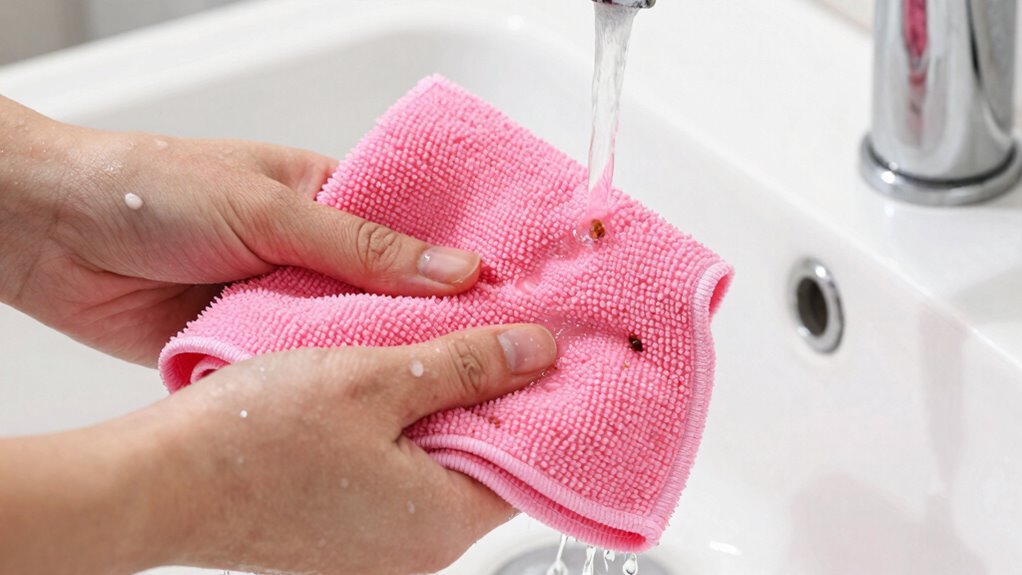
Before washing your microfiber cloths, start by removing any loose debris to prevent dirt from spreading. If you notice stains, pre-treat them with a gentle cleaner to lift the grime effectively. Taking these steps guarantees your cloths come out clean and ready for their next use. Proper preparation also helps preserve the quality of microfiber, ensuring it maintains its effectiveness over time. For optimal results, consider free floating techniques when handling and cleaning your cloths to avoid damage. Additionally, avoiding harsh chemicals or fabric softeners can help maintain the integrity of microfiber fibers, prolonging their usability. Using gentle washing methods helps safeguard the performance of microfiber, making your cleaning tools last longer.
Remove Loose Debris
Start by giving your microfiber cloth a thorough shake or brisk tap to dislodge loose dirt and debris. This simple step helps remove pet hair, lint, and other particles that can cling to the fibers. To guarantee the cloth is as clean as possible before washing, focus on these three key points:
- Shake vigorously over a trash bin or outside to loosen pet hair and lint.
- Use your hands to pick off stubborn debris or pet hair that resists shaking.
- Check both sides of the cloth for loose particles, especially if you’ve cleaned pet areas or dusty surfaces.
- Remember that proper preparation not only extends the life of your microfiber but also ensures maximum cleaning effectiveness. Additionally, understanding fiber types can help you choose the best cleaning and maintenance methods for different microfiber products.
- Be mindful of fabric care guidelines, as different microfiber types may require specific washing techniques to maintain their effectiveness and durability. Properly preparing your microfiber cloths helps prevent clogging and ensures they perform optimally over time. Incorporating appropriate cleaning techniques can also help maintain the integrity of the fibers and prolong the lifespan of your cloths.
Pre-Treat Stains
If your microfiber cloth has stubborn stains, pre-treating them before washing can make a significant difference. Effective stain removal starts with applying the right pre-treatment techniques. Begin by gently blotting the stain with a clean cloth to lift excess debris. Then, use a small amount of mild detergent or a specialized stain remover directly on the stain. Let it sit for 5-10 minutes to loosen dirt and oils. Avoid harsh chemicals that could damage the fibers. For stubborn stains, you might try a mixture of water and white vinegar or a bit of baking soda paste. Proper pre-treatment guarantees that when you wash the microfiber, all traces of stains are more likely to come out completely, preserving the fabric’s appearance and longevity. Understanding fabric care principles can help prevent damage and extend the lifespan of your microfiber cloths, especially by selecting eco-friendly and gentle cleaning solutions aligned with modern farmhouse decor aesthetics. Additionally, using appropriate cleaning methods ensures that the fibers remain intact and effective over time. Incorporating gentle, fiber-safe cleaning techniques can further enhance the durability of your microfiber cloths.
USANOOKS Microfiber Cleaning Cloth Grey – 12 Pcs (12.5"x12.5") – High Performance – 1200 Washes, Ultra Absorbent Microfiber Towel Weave Grime & Liquid for Streak-Free Mirror Shine – Car Washing Cloth
10x GRIP-ROOT WEAVE – TRAP MORE, WORK LESS: Ultra-absorbent microfiber towels for car Grip Root weave works like…
As an affiliate, we earn on qualifying purchases.
As an affiliate, we earn on qualifying purchases.
What Cleaning Products Are Safe for Microfiber?
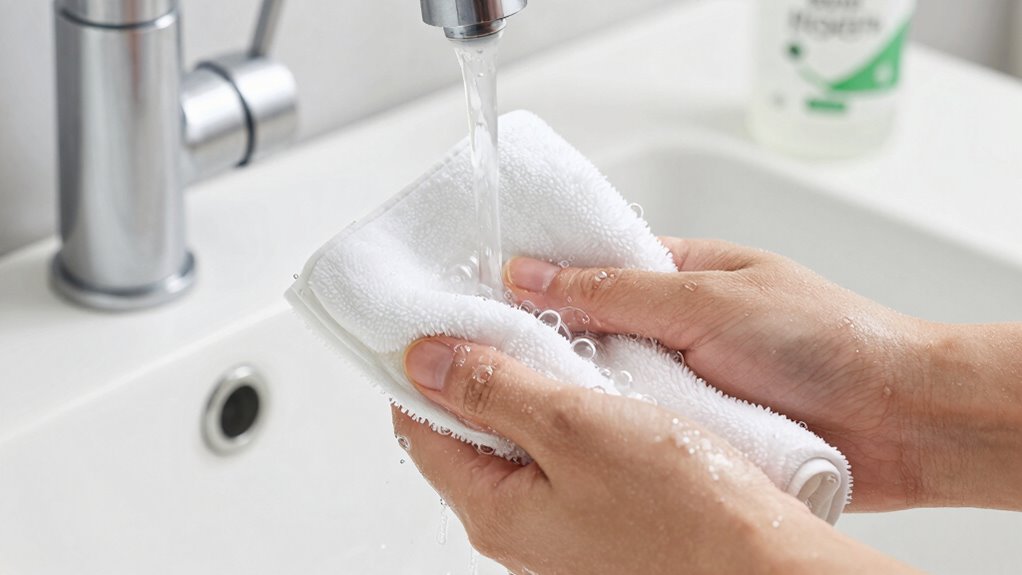
When cleaning microfiber, you want to stick with gentle solutions that won’t damage the fabric. Harsh chemicals can break down the fibers and reduce its effectiveness, so avoid strong cleaners. Instead, opt for mild detergents that clean effectively without harming your microfiber.
Gentle Cleaning Solutions
Choosing the right cleaning products is essential to maintaining microfiber’s delicate fibers. Gentle cleaning solutions help preserve its softness and durability. You can opt for eco-friendly options like mild dish soap, white vinegar, or baking soda, which are safe and effective. For DIY cleaning, mix a small amount of dish soap with water or create a vinegar solution for stubborn stains. These options are not only gentle but also environmentally conscious. Remember, harsh chemicals can damage microfiber fibers, so stick with products that are labeled safe for delicate fabrics. By using these simple, gentle solutions, you’ll keep your microfiber looking fresh without risking damage or residue buildup. Your microfiber will thank you for the careful, eco-friendly care.
Avoid Harsh Chemicals
Using gentle cleaning solutions is a great start, but it’s equally important to avoid harsh chemicals that can damage microfiber fibers. Harsh cleaning products, like bleach, ammonia, and strong solvents, pose serious chemical dangers to microfiber. These substances can weaken the fibers, cause fading, or leave residues that attract dirt. To keep your microfiber in top shape, steer clear of aggressive cleaners and opt for safer alternatives. Look for mild, pH-balanced solutions or simply use water and a gentle detergent. Always check labels to ensure the product is microfiber-friendly. Protect your investment by avoiding chemical hazards, which can compromise the fabric’s softness, durability, and appearance over time. When in doubt, choose products specifically designed for delicate fabrics.
Use Mild Detergents
To keep microfiber fabrics in good condition, choosing gentle detergents that are safe for delicate fibers is vital. Use mild detergent types like a small amount of liquid dish soap, specialized microfiber cleaner, or a gentle laundry detergent. These options help prevent damage and preserve the fabric’s softness. When considering cleaning frequency, avoid over-washing, as excessive cleaning can wear down the fibers. Instead, clean microfiber only when necessary—spot clean for minor stains and deep clean sparingly. Always check labels to ensure detergents are safe for microfiber and avoid harsh chemicals. By selecting the right detergent types and maintaining an appropriate cleaning schedule, you’ll keep your microfiber looking fresh and prolong its lifespan.
How to Wash Microfiber Cloths Properly and Extend Their Life
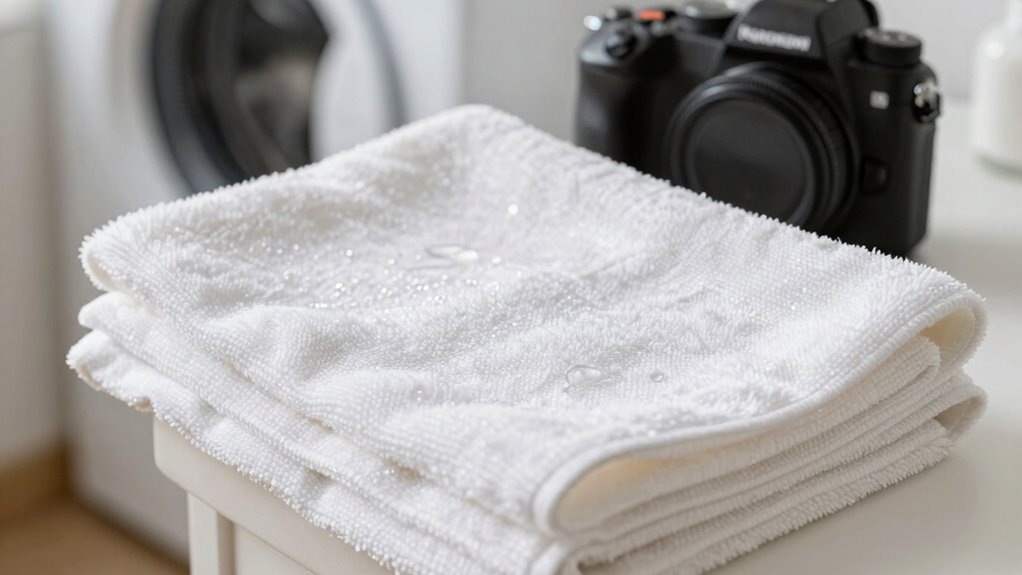
Washing microfiber cloths correctly is essential for maintaining their effectiveness and prolonging their lifespan. To keep fabric softness intact, wash them in cold or warm water, avoiding hot temperatures that can damage fibers. Use a gentle cycle with a mild detergent, preferably one free of fabric softeners and bleach, which can impair cleaning ability and cause color fading. Always wash microfiber separately from other fabrics to prevent lint transfer and preserve their texture. Rinse thoroughly to remove detergent residues that could weaken fibers over time. Avoid overloading the washing machine, as this can reduce cleaning efficiency and increase wear. Proper washing not only maintains fabric softness but also prevents premature fading of colors, ensuring your microfiber cloths stay effective and look new longer.
Best Practices for Drying and Storing Microfiber
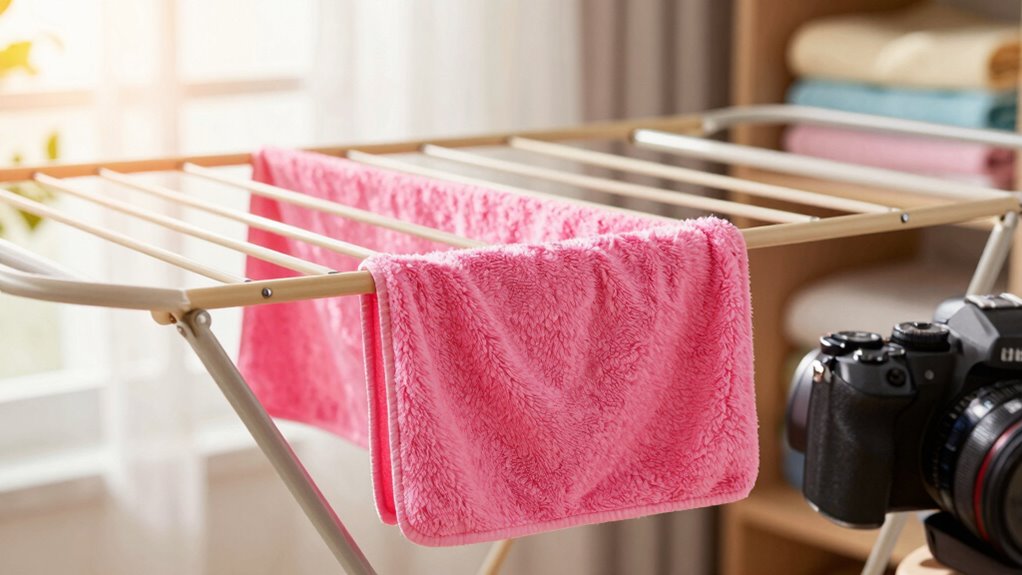
Proper drying and storage are essential for maintaining the softness and effectiveness of your microfiber cloths. Effective drying techniques prevent bacteria buildup and preserve fabric quality. To optimize your microfiber’s lifespan, consider these storage solutions:
- Hang your cloths in a well-ventilated area to promote air circulation.
- Avoid storing in damp or airtight containers that trap moisture.
- Keep microfiber in a clean, dry drawer or bin away from direct sunlight, which can degrade fibers.
Using proper drying techniques like air drying or low-heat tumble drying helps retain softness. Store microfiber separately from lint-producing fabrics to prevent contamination. These practices ensure your microfiber stays effective, soft, and ready for next use.
Debunking Microfiber Cleaning Myths: What Really Works
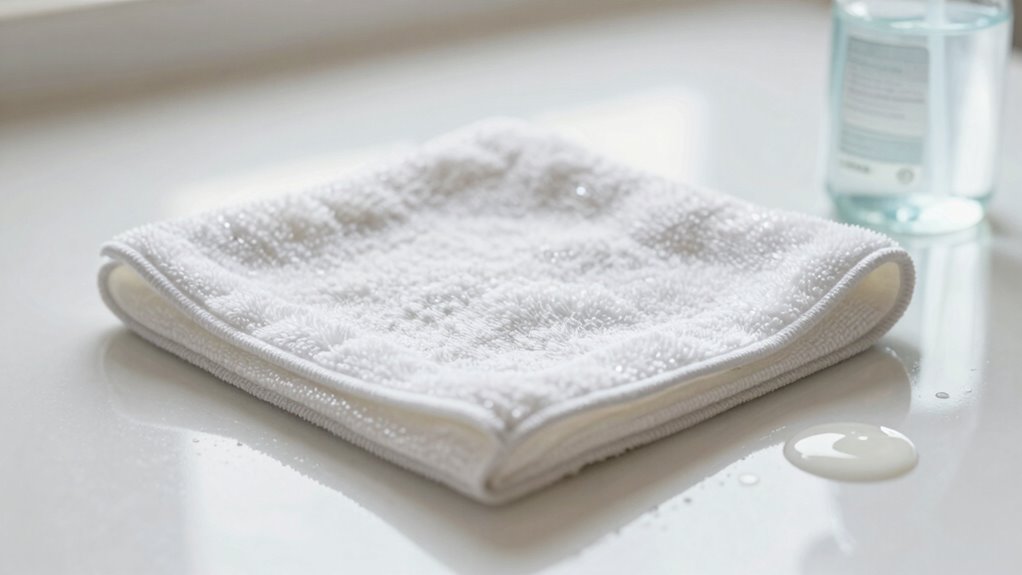
Many common beliefs about cleaning microfiber are actually myths that can hinder your efforts. Some think you need harsh chemicals or frequent washing to maintain microfiber’s durability, but that’s not true. Over-cleaning or using strong detergents can damage the fibers, reducing their lifespan and effectiveness. Microfiber durability depends on proper care, not excessive cleaning frequency. In fact, washing microfiber regularly with gentle detergent preserves its structure and cleaning power. It’s a myth that microfiber must be cleaned after every use; in reality, you can extend cleaning intervals if the fabric isn’t heavily soiled. Understanding what really works helps you avoid damaging your microfiber and ensures it continues to perform well over time. Stick to proper cleaning techniques for long-lasting, effective microfiber.
Frequently Asked Questions
Can I Use Fabric Softener on Microfiber Cloths?
You shouldn’t use fabric softener on microfiber cloths because it can cause microfiber damage. Fabric softeners leave a coating that reduces the cloth’s ability to attract dust and dirt, making it less effective. Plus, this coating can ruin the microfiber’s texture and cleaning power. Instead, wash microfiber with mild detergent and avoid softeners to keep your cloths in top shape and guarantee they work properly every time.
How Often Should I Replace Microfiber Cleaning Cloths?
You should replace microfiber cleaning cloths every 50 to 100 uses or when they show signs of wear, like fraying or persistent odors. Did you know that over time, cloth lifespan decreases as fibers trap dirt and bacteria? Regular replacement guarantees peak cleaning performance. By monitoring replacement frequency, you maintain hygiene and cleaning efficiency, preventing germs from spreading and preserving your cloths’ effectiveness for as long as possible.
Is It Safe to Use Microfiber on Delicate Surfaces?
Yes, microfiber is generally safe to use on delicate surfaces, thanks to its gentle fibers. To guarantee delicate surface safety, always check microfiber compatibility with the material you’re cleaning. Use a soft touch and avoid harsh chemicals that could damage sensitive surfaces. When in doubt, test a small, hidden area first. Properly maintained microfiber cloths help protect delicate surfaces while providing effective cleaning.
What Are Signs That My Microfiber Cloth Needs Replacing?
You’ll know it’s time to replace your microfiber cloth when you notice diminished cloth durability, meaning it tears or frays easily. Color fading is another clear sign—if the cloth’s vibrant hue dulls considerably, it’s losing effectiveness. Additionally, if it no longer traps dirt or leaves streaks, despite thorough cleaning, it’s a sign that your microfiber has reached the end of its lifespan. Replacing it guarantees ideal cleaning results.
Can Microfiber Be Reused After Washing Multiple Times?
Microfiber can definitely be reused after washing multiple times if you follow proper care. Many believe microfiber’s durability diminishes quickly, but washing frequency actually extends its lifespan. To keep it effective, avoid fabric softeners and high heat. As long as your microfiber remains clean and free of frays or tears, you can reuse it many times, saving money and reducing waste. Proper maintenance truly makes a difference in microfiber’s longevity.
Conclusion
By understanding how your microfiber gets dirty and avoiding common mistakes, you can keep it performing like new. Proper preparation, safe cleaning products, and gentle washing extend its lifespan—turning a simple cloth into a reliable cleaning partner. Sometimes, the smallest habits make the biggest difference, almost like fate guiding your hand. With a little care, you’ll find yourself reaching for that microfiber, trusting it to do its best—almost as if it’s meant to serve you.