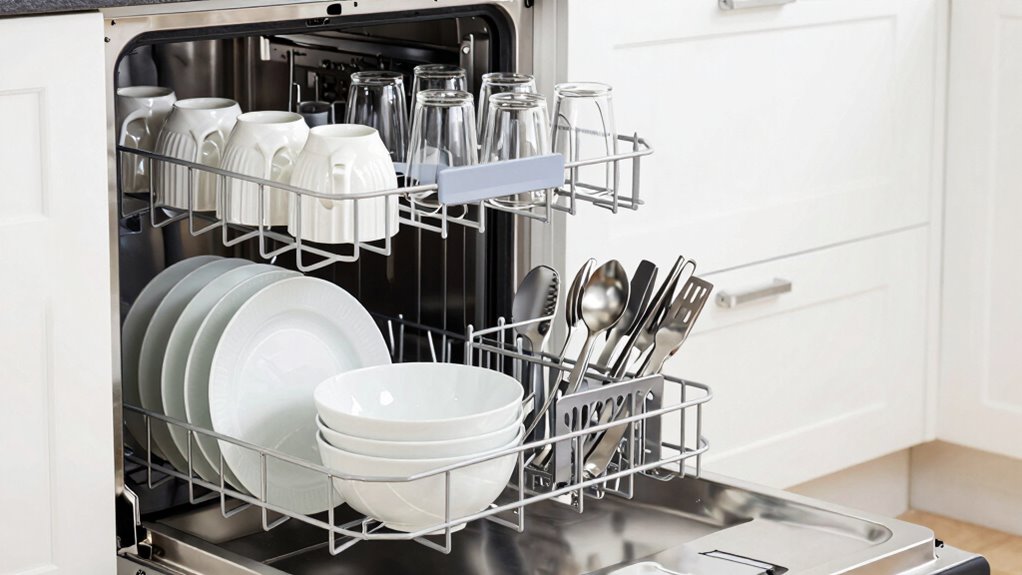

To get dishes cleaner, you should load your dishwasher with heavy, soiled items on the bottom facing downward and lighter or delicate ones on top, leaving enough space between items for water to circulate. Make sure spray arms can spin freely and aren’t blocked by large dishes. Use the correct placement for utensils with handles down and avoid overcrowding. For more tips on optimizing your dishwasher’s performance and a perfect loading pattern, keep exploring.
Key Takeaways
- Place heavily soiled items facing downward on the bottom rack for thorough cleaning.
- Keep dishes spaced apart to allow water and detergent to reach all surfaces effectively.
- Position cups and glasses facing downward with open space between them to improve water coverage.
- Ensure spray arms can spin freely without obstruction from large dishes or utensils.
- Arrange utensils with handles down and avoid nesting to maximize cleaning and drying efficiency.

Stero Dishwasher P57-5775 Door Guide, 28.25, PTFE, Blue
Genuine OEM replacement part
As an affiliate, we earn on qualifying purchases.
As an affiliate, we earn on qualifying purchases.
Why Proper Dishwasher Loading Matters for Clean Dishes
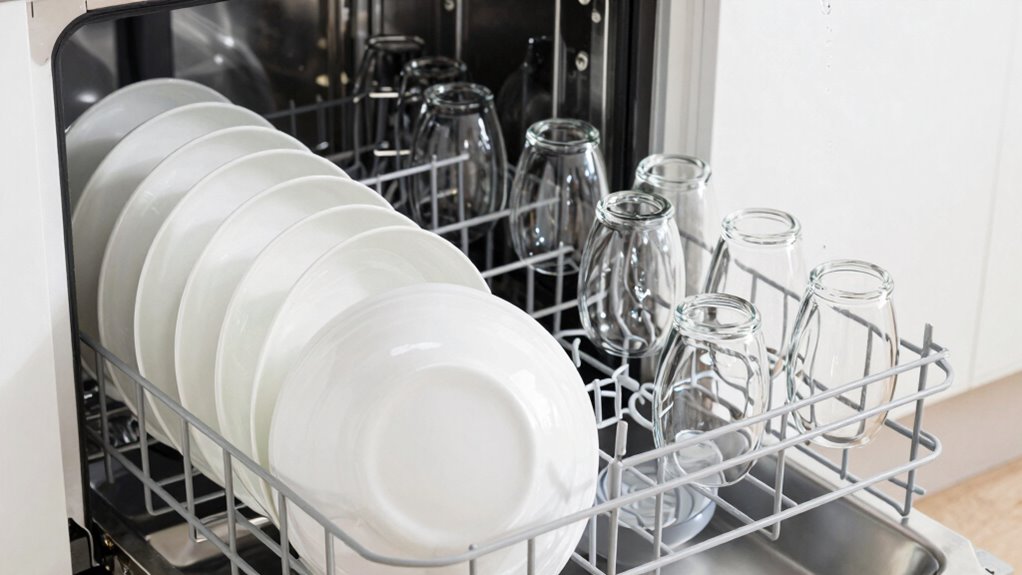
Properly loading your dishwasher is essential because it directly affects how effectively water and detergent reach each item. Using the right detergent types, whether powders, gels, or pods, ensures ideal cleaning performance. Proper loading prevents items from blocking spray arms and ensures water flows freely. Additionally, adding rinse aid helps dishes dry faster and reduces water spots, especially on glassware. When you load dishes correctly, detergent can evenly coat surfaces, breaking down food and grime more efficiently. Overloading or improper placement can shield items from water or cause residue buildup. Understanding water flow is crucial for optimizing cleaning results. Paying attention to your loading pattern can prevent water from being blocked and improve overall cleaning efficiency. By paying attention to your loading pattern, you maximize the benefits of your chosen detergent types and rinse aid, leading to cleaner, shinier dishes with less effort.

Cascade Complete Dishwasher Pods – Fresh Scent ActionPacs, Dishwasher Detergent, Dishwasher Soap, Detergent Pods, 78 Count
1. GREASE FIGHTING POWER: Cascade dishwasher pods dissolve fast to release the grease fighting power of Dawn
As an affiliate, we earn on qualifying purchases.
As an affiliate, we earn on qualifying purchases.
How to Arrange Your Dishes for Optimal Water Reach

To guarantee your dishes come out spotless, you need to arrange them so water can reach every surface. Proper placement ensures dishwasher detergents work effectively and water temperature is maximized. Keep these tips in mind:
Arrange dishes with space and proper orientation for spotless, effective cleaning.
- Load dishes with ample space between items for water flow
- Place pots and pans facing downward for better coverage
- Position glasses and cups at an angle to prevent pooling
- Avoid overcrowding to prevent water and detergent obstruction
- Using optimal dishwasher loading patterns can significantly improve cleaning results.

Finish Jet-Dry Dishwasher Rinse Aid, Compatible with Dishwasher Detergent, Prevents Spots & Residues, Dries, Shine & Protects, 32 oz, 315 washes
RINSE AID: Finish Jet Dry Rinse Aid is dishwasher rinse aid product.
As an affiliate, we earn on qualifying purchases.
As an affiliate, we earn on qualifying purchases.
Positioning Spray Arms and Ensuring Water Coverage

Make sure the spray arms are properly positioned so water reaches all dishes. Check that they spin freely and aren’t blocked by large utensils or items. When set correctly, your dishwasher will deliver ideal water flow coverage for a thorough clean. Proper cabling solutions and secure mountings ensure consistent water pressure and coverage across all dishes. Additionally, ensuring that the water pressure is adequate helps maintain uniform spray patterns for optimal cleaning performance. Regularly inspecting and maintaining the spray arm assembly can also prevent blockages and improve cleaning efficiency. To further enhance cleaning, consider inspecting the water inlet valve to ensure unobstructed water flow. Incorporating car protection accessories, such as remote car covers, can help safeguard your vehicle during dishwashing downtime, especially if you store your car in high-traffic or harsh environments.
Proper Spray Arm Placement
Ensuring the spray arms are correctly positioned is essential for thorough water coverage during each wash cycle. Proper spray arm placement improves spray arm alignment, maximizing water jet efficiency and guaranteeing every dish gets cleaned. Check that the arms spin freely without obstruction and are firmly attached. To enhance water coverage:
- Confirm the arms are aligned parallel to the bottom and top racks
- Ensure no dishes block the spray path
- Remove any debris or buildup from nozzles
- Adjust the arms if they wobble or don’t rotate smoothly
- Regularly inspect and maintain spray arm components to prevent buildup and ensure optimal performance
- Remember that water pressure plays a significant role in spray effectiveness and should be adequate for proper cleaning
- Be aware that dish placement also influences water flow, so loading dishes properly can improve cleaning results
- Additionally, proper loading techniques can help distribute water evenly across all items
- Incorporating routine dishwasher maintenance can further improve spray arm performance and overall cleaning efficiency.
Proper placement guarantees even spray distribution, reducing spots and residue. Remember, misaligned spray arms diminish water jet efficiency, leaving dishes less clean. Take a moment to regularly inspect and reposition the spray arms for consistent, optimal performance.
Optimize Water Flow Coverage
Proper spray arm placement directly affects how water reaches all areas of your dishes. To optimize water flow coverage, ensure spray arms spin freely without obstruction and are positioned correctly. Proper positioning allows water to circulate efficiently, reaching every corner with enough force to clean effectively. This not only improves cleaning performance but also promotes water conservation by reducing the need for repeat washes. Additionally, better water coverage enhances energy efficiency, as your dishwasher uses less water and energy per cycle. Regularly check spray arms for clogs or buildup that might hinder water flow. When water flows evenly and thoroughly, you’ll get cleaner dishes and save resources, making your dishwasher more effective and eco-friendly. Consistent water flow also helps prevent mineral buildup and prolongs the lifespan of your dishwasher components.
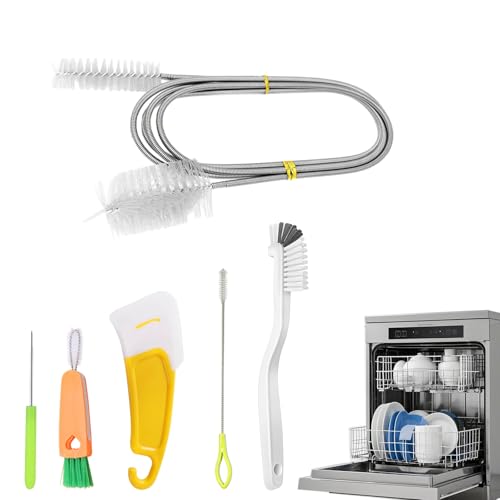
Dishwasher Cleaner Brush Kit – 6PCS Deep Cleaning Tools with Pick, Scraper, Straw Brush, Gap & Angle Brush, Flexible Tubes Brush for Spotless Dishwasher
Deep Clean Every Corner Tackle hidden grime with our 6-piece brush kit! Includes a pick, silicone scraper, straw…
As an affiliate, we earn on qualifying purchases.
As an affiliate, we earn on qualifying purchases.
Loading Different Types of Dishes Correctly
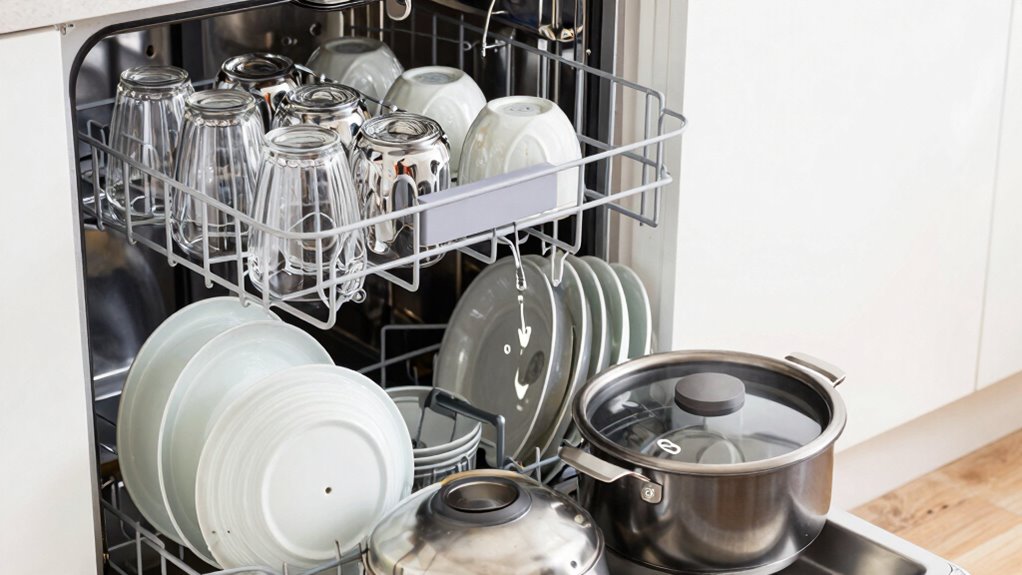
Loading different types of dishes correctly is essential for a thorough and effective wash. Proper placement ensures water reaches all surfaces and prevents damage. When loading, consider these key points:
Proper loading ensures thorough cleaning and prevents damage to your dishwasher and dishes.
- Place plates and bowls with soiled sides facing the spray arms for ideal cleaning.
- Load glasses and cups upside down to prevent trapping debris and improve drying.
- Position utensils with handles down for better cleaning and safety.
- Keep larger items, like pots and pans, angled to maximize water flow and avoid blocking spray arms.
- Additionally, arranging dishes to avoid overcrowding allows water and detergent to circulate more effectively, enhancing cleaning performance proper airflow. Your choice of detergent impacts cleaning performance, so select appropriate detergent choices for different loads. Regular dishwasher maintenance, like cleaning filters and spray arms, ensures consistent results. Dishwasher maintenance routines help preserve your dishwasher’s efficiency and extend its lifespan. Properly loading your dishwasher not only improves cleaning but also reduces the need for re-cleaning, saving time and resources. Correct loading techniques preserve your dishwasher’s efficiency and extend its lifespan.
Common Loading Mistakes That Hurt Cleaning Power
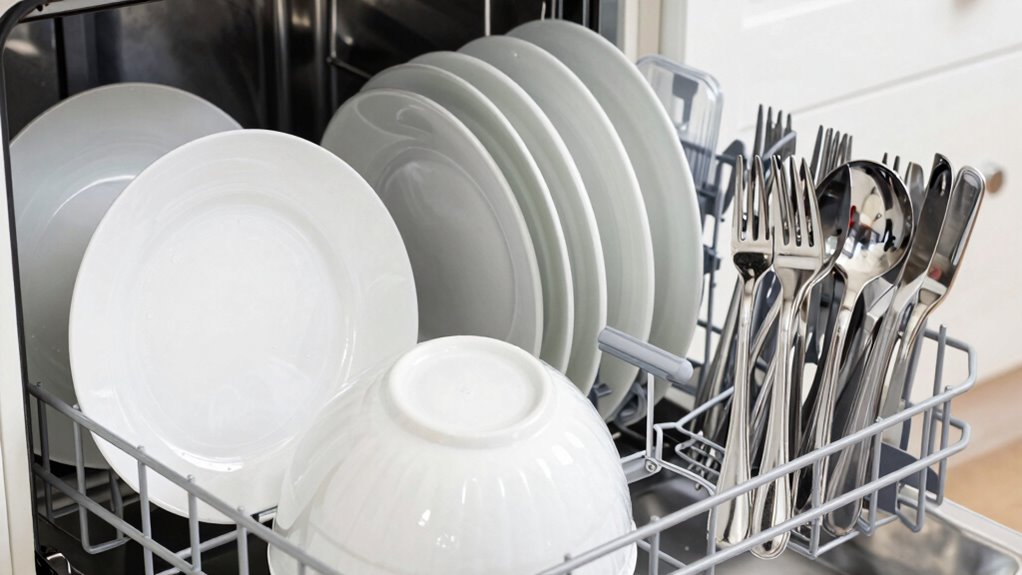
Overloading your dishwasher can block spray arms and prevent water from reaching all your dishes. Placing items too close together or at odd angles also reduces cleaning effectiveness. To get the best results, load your dishwasher with enough space and proper placement. Additionally, understanding the importance of proper loading techniques can help ensure optimal cleaning performance. Ensuring that dishes are loaded with correct spacing prevents blockages and allows water to circulate freely. Being mindful of loading patterns can further improve cleaning outcomes and prolong the lifespan of your dishwasher. Proper load arrangement is essential for maintaining your dishwasher’s efficiency and cleaning power. Paying attention to rack organization can optimize water flow and enhance overall cleaning results.
Overloading the Dishwasher
When you cram too many dishes into the dishwasher, it can actually prevent water and detergent from reaching all surfaces effectively. Overloading the racks reduces circulation, leaving some items dirty. To avoid this, consider these tips:
- Leave space between items to ensure proper water flow.
- Don’t block spray arms with large or awkwardly placed dishes.
- Place larger items on the sides or back to prevent blocking.
- Ensure detergent placement isn’t obstructed by overcrowded dishes.
- Remember, proper loading practices are essential for effective water circulation and optimal cleaning performance.
Overloading can also hinder proper detergent distribution, making cleaning less effective. Proper spacing allows water jets to reach every surface, and adjusting your dishwasher racks accordingly ensures a thorough clean. Remember, a well-loaded dishwasher isn’t just about fitting everything in—it’s about optimizing cleaning efficiency.
Incorrect Placement of Items
Incorrect placement of items is one of the most common mistakes that can compromise your dishwasher’s cleaning power. When loading, avoid blocking spray arms, which can happen if large utensils or dishes are placed improperly. Properly positioning dishwasher accessories, like racks and holders, ensures water reaches all surfaces. Also, pay attention to detergent placement—clumping or improper placement reduces effectiveness. Place detergent in the designated dispenser, not loose on dishes. Use this table as a guide:
| Dish Positioning | Detergent & Accessories | Common Mistakes |
|---|---|---|
| Plates facing downward | Dishwasher accessories secured | Blocking spray arms |
| Cups on top rack | Detergent in dispenser properly | Overloading cups or bowls |
| Utensils spaced apart | Avoid overcrowding accessories | Stacking items too tightly |
| Large items on bottom | Properly placed detergent | Covering spray nozzles |
| Small items in baskets | Accessories fit without obstruction | Incorrect detergent placement |
Follow these tips for cleaner dishes.
A Step-by-Step Loading Pattern for Sparkling Results
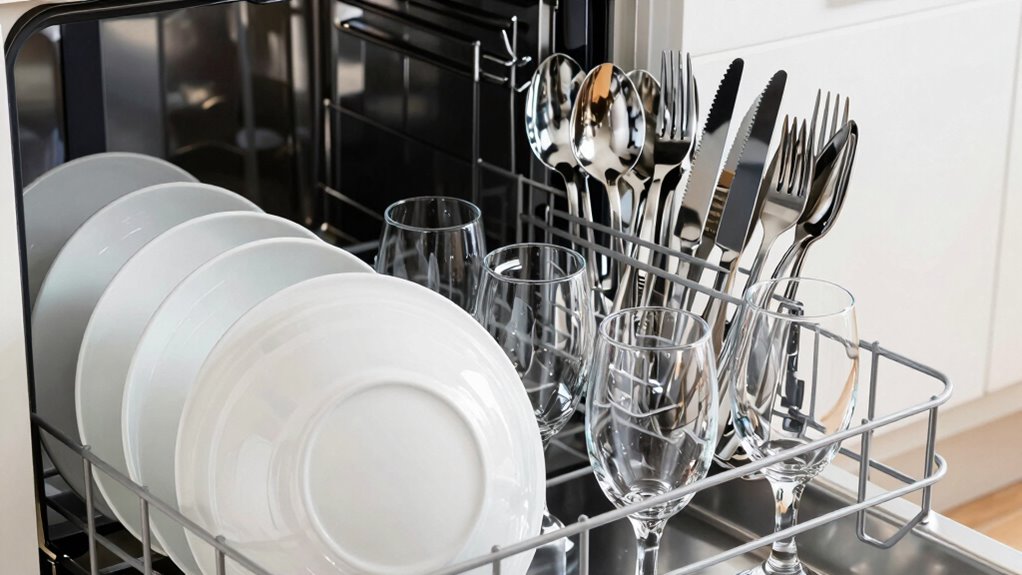
To achieve sparkling results, it’s essential to guarantee a precise loading pattern that maximizes water flow and ensures thorough cleaning. Start by placing heavily soiled items on the bottom rack, facing downward for ideal dirt removal. Use the upper rack for lighter, delicate items, ensuring they aren’t overcrowded. When selecting your cycle, consider the detergent types—powder, gel, or pods—and match them to the load’s dirt level. Opt for a cycle with high-pressure water jets for stubborn grime or a gentle cycle for fragile dishes. Make sure no items block the spray arms. Remember to:
- Arrange items with open space between them
- Position cups and bowls facing downward
- Avoid overlapping items
- Keep detergent dispensers clear and accessible
This pattern ensures maximum water contact and excellent cleaning results.
Using Racks and Custom Arrangements for Better Loading
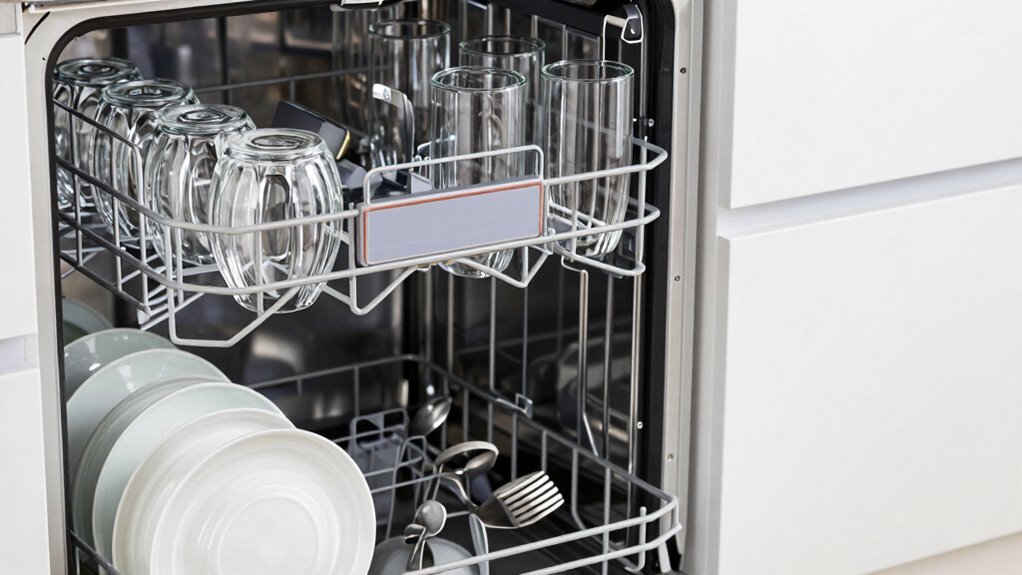
Using the right racks and arranging your dishes thoughtfully can considerably improve cleaning results. Effective rack organization guarantees that water reaches every surface and prevents dishes from blocking each other. Use adjustable racks to create custom arrangements tailored to each load. Place cups and glasses upside down in designated areas to avoid water pooling, and position plates so they don’t nest together, allowing water flow. For utensils, use the utensil baskets or trays, spreading items out to prevent nesting and improve cleaning. Customize rack configurations to fit oddly shaped or large items, ensuring they aren’t overcrowded. Properly arranged dishes maximize water contact and detergent efficiency, leading to cleaner results. Remember, thoughtful rack organization and custom arrangements make a significant difference in your dishwasher’s performance.
Adjusting Your Load for Different Dishwasher Models

Different dishwasher models often have unique features and rack configurations that require tailored loading adjustments. Some models rely heavily on dishwasher sensors to optimize water flow and cycle efficiency, so loading too densely can hinder sensor performance. Others have specific rack designs that accommodate larger or oddly shaped items, needing you to adjust placement accordingly. Additionally, detergent compatibility varies; certain models work best with specific detergent types, influencing how you load to avoid blockages or residue. To optimize performance:
- Ensure spray arms can rotate freely
- Position dishes to allow water access
- Avoid blocking sensors with large items
- Follow manufacturer guidelines for detergent use
Troubleshooting Persistent Cleaning Problems
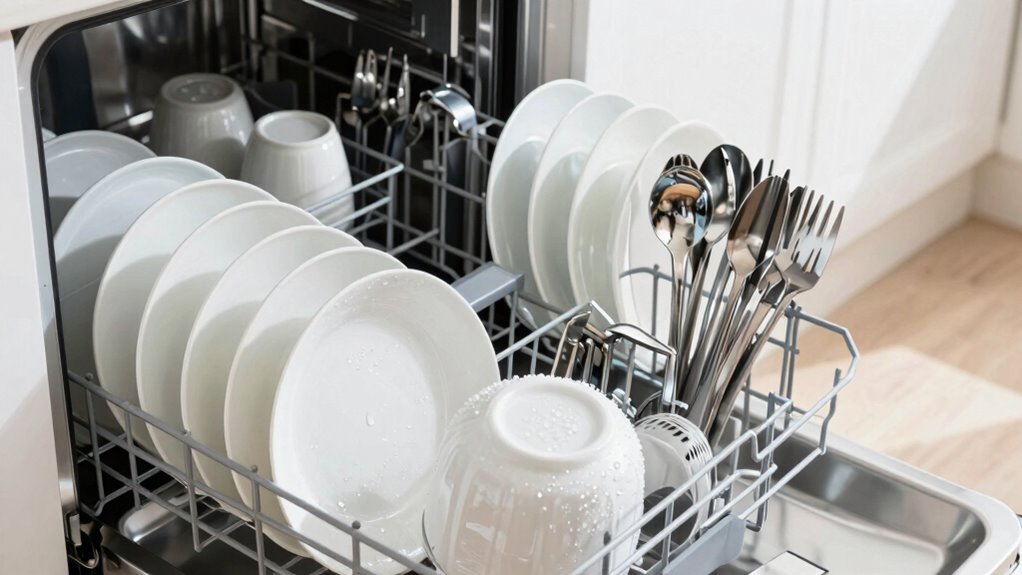
Are you still experiencing cleaning issues despite properly loading your dishwasher? First, check your dishwasher detergents—are you using the right type and amount? Sometimes, outdated or low-quality detergents can hinder cleaning performance. Also, verify your rinse aid is effective; a lack of rinse aid or poor-quality product reduces water sheeting, leaving residues. Clean the spray arms and filters regularly to prevent clogs that block water flow. Confirm water temperature; ideally, it should be around 120°F for ideal cleaning. If stains persist, try running an empty cycle with a dishwasher cleaner to remove mineral buildup. Adjusting these factors often improves cleaning results and enhances rinse aid effectiveness. Proper maintenance and choosing the right detergents make a significant difference in resolving persistent cleaning problems.
Frequently Asked Questions
Can Overloading the Dishwasher Improve Cleaning Efficiency?
Overloading your dishwasher won’t improve cleaning efficiency; in fact, it can hinder it. When you exceed the loading capacity, dishes don’t get enough water and detergent contact, leading to poor results. Proper utensil arrangement and balanced loading ensure water flows freely around each item. Keep dishes spaced out and avoid cramming, so water and detergent can do their job effectively, leaving your dishes cleaner with less effort.
How Often Should I Clean My Dishwasher’s Spray Arms?
You should clean your dishwasher’s spray arms at least once every three to six months. Regular cleaning prevents mineral buildup that can clog the spray nozzles, reducing water flow and causing dishwasher odor. If you notice dishes aren’t coming out as clean or a foul smell develops, it’s a sign to inspect and clean the spray arms promptly. Proper maintenance keeps your dishwasher running efficiently and your dishes sparkling.
What’s the Ideal Water Temperature for Optimal Dishwashing?
You should set your dishwasher’s water temperature to around 120°F (49°C) for ideal cleaning efficiency. This temperature effectively breaks down grease and grime without risking damage to your dishes or the machine. Too hot, and you might damage delicate items or waste energy; too cold, and your dishes won’t get thoroughly cleaned. Adjust your water heater to this perfect temperature to make sure your dishwasher performs at its best every time.
Do Different Detergent Types Require Specific Loading Adjustments?
Of course, different detergent types don’t demand a complete overhaul of your loading technique—because who wouldn’t want a little extra chaos? In reality, you should consider detergent compatibility to prevent residue or poor cleaning. Adjust your loading techniques to guarantee that detergent can reach all surfaces, especially for gel versus powder. Properly loading dishes helps maximize each detergent’s effectiveness, making your cleanup both easier and more efficient.
How Can I Tell if My Dishwasher’s Water Jets Are Clogged?
You can tell if your dishwasher’s water jets are clogged by performing a water jet inspection. Remove the spray arm and check for any spray arm blockage or debris blocking the jets. Turn on the water supply to see if water flows freely through the jets. If you notice weak spray patterns or uneven cleaning, it’s likely a spray arm blockage, and cleaning or replacing the jets will improve performance.
Conclusion
When you follow the right loading pattern, you’ll notice a real difference in how clean your dishes come out. It’s not just about placing items randomly; proper positioning guarantees water and detergent reach every surface. Think of your dishwasher like a well-orchestrated dance—each piece needs its turn. Get it right, and you’ll enjoy sparkling dishes every time, proving that a thoughtful load truly makes all the difference in achieving spotless results.