

To create a more restful bedroom, position your bed against a solid wall away from doors and windows for privacy and calm. Keep the space organized with smart storage to reduce clutter, and create separate zones for relaxation with calming colors and soft lighting. Avoid placing your bed under a window to prevent disturbances. Small adjustments in layout and decor can make a big difference—more tips await to help transform your space into a true sanctuary.

Get the latest gadgets delivered free with Prime
- Fast, free delivery on millions of items
- Prime Video, Amazon Music and more included
- Member-only deals all year
Key Takeaways
- Position the bed against a solid wall, away from doors and windows, to promote privacy and stability.
- Use calming colors and soft lighting to create a peaceful, soothing environment.
- Separate sleep and work zones with visual cues like rugs or lighting to enhance tranquility.
- Keep clutter minimized and organize storage to maintain a clean, stress-free space.
- Incorporate symbols and decor that resonate with personal values to foster a sense of sanctuary and relaxation.
As an affiliate, we earn on qualifying purchases.
How Your Bedroom Layout Can Help You Sleep Better
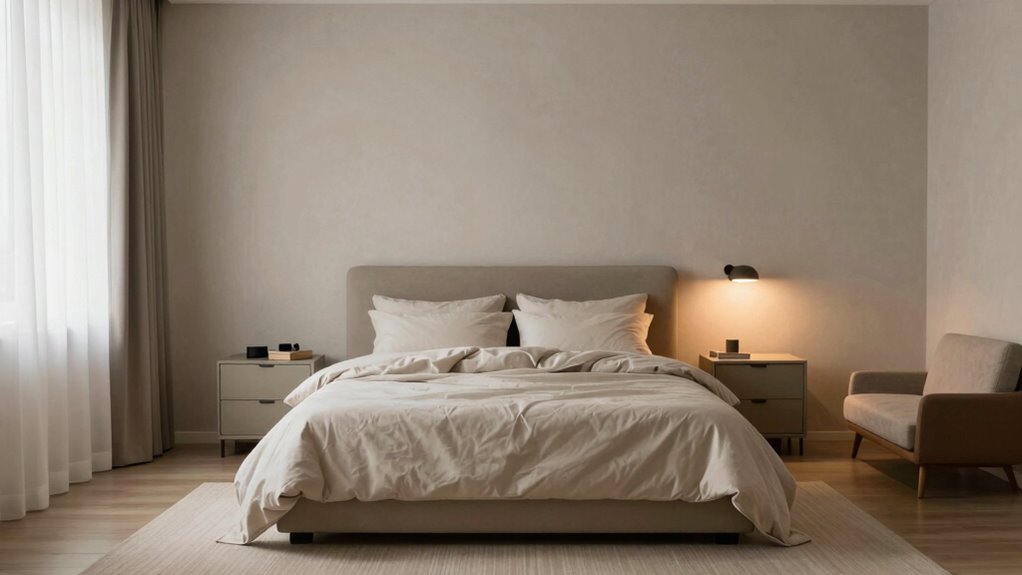
Your bedroom layout plays a crucial role in determining how well you sleep. Proper bed placement is key—position your bed away from windows and doors to minimize drafts and noise, creating a calmer environment. Avoid placing your bed directly under a window, as outside light and temperature fluctuations can disturb your rest. Lighting design also impacts sleep quality; opt for soft, warm lighting instead of harsh or bright lights. Use dimmers or bedside lamps to create a tranquil atmosphere before bedtime. Keep electronic devices out of reach or turn them off to reduce light exposure and blue light, which can interfere with melatonin production. Incorporating appropriate bedroom furniture can also help in establishing a peaceful space. A thoughtful layout that considers bed placement and Lighting design helps foster a peaceful space conducive to restful sleep. Additionally, selecting calm and neutral colors for your bedroom decor can promote relaxation and improve sleep quality. Paying attention to sleep-conducive environment factors such as airflow and noise reduction further enhances your chances of restful nights, especially by controlling distractions and disturbances.
As an affiliate, we earn on qualifying purchases.
Where’s the Best Spot for Your Bed to Promote Calm and Privacy?

Choosing the right spot for your bed can considerably enhance your sense of calm and privacy in the room. Ideally, place your bed away from the doorway, creating a designated privacy zone where you feel secure. Positioning it against a solid wall provides a sense of stability and separation from activity outside the space. Avoid placing the bed directly under a window or in line with the door, which can disrupt tranquility. Use the table below to visualize good bed placement options:
| Good Bed Placement | Less Ideal Placement |
|---|---|
| Against a solid wall | Under a window |
| Away from the door | Directly facing the door |
| Centered in a quiet zone | Near noisy areas |
| With space on both sides | Tight corners or clutter |
This setup fosters calm and reinforces privacy zones, essential for restful sleep. Proper bed placement can also influence overall room energy and comfort, especially when considering the impact of room layout on sleep quality. Additionally, thoughtful furniture arrangement can help optimize the room’s ambiance for relaxation. A well-organized home environment, aligned with principles of space utilization, enhances not only sleep quality but also overall well-being.
bedroom storage organization furniture
As an affiliate, we earn on qualifying purchases.
As an affiliate, we earn on qualifying purchases.
How to Organize Storage and Reduce Clutter for a More Relaxing Space
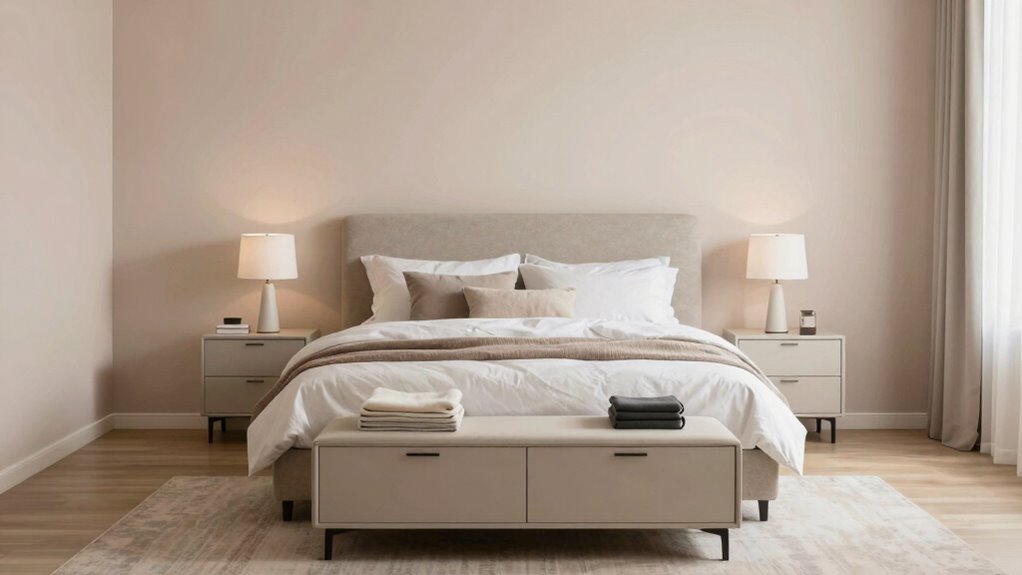
A cluttered bedroom can easily disrupt your sense of calm and make relaxation difficult. To create a more restful space, focus on closet organization to maximize storage and keep belongings out of sight. Use bins, shelves, or hanging organizers to categorize clothing, shoes, and accessories, making everything easier to find and reducing clutter. Incorporate decorative storage solutions like stylish baskets or ottomans to hide daily essentials while adding aesthetic appeal. Clear surfaces and neatly arranged drawers help maintain a sense of order, preventing clutter from overwhelming the room. Regularly reassess your storage needs and declutter unnecessary items. Considering cable failures and proper wiring solutions can help maintain a tidy and safe environment, especially if electronic devices are part of your bedroom setup. Additionally, employing smart storage solutions can optimize space and improve accessibility. Implementing a storage management system can help maintain organization over time, reducing the stress caused by clutter. For example, choosing lightweight and portable bike generators can be a practical addition for eco-conscious household energy needs. Paying attention to electrical safety when setting up electronic devices ensures your bedroom remains both organized and secure. With thoughtful closet organization and attractive storage options, your bedroom becomes a peaceful retreat where relaxation comes naturally.
bed placement guide for restful sleep
As an affiliate, we earn on qualifying purchases.
As an affiliate, we earn on qualifying purchases.
Creating Zones in Your Bedroom for Rest and Relaxation
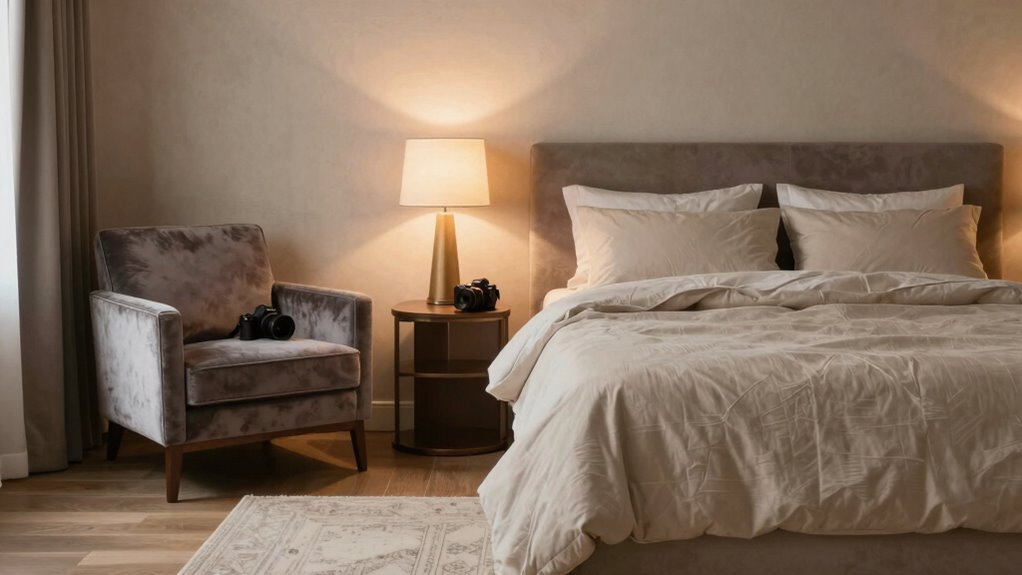
Creating zones within your bedroom helps establish clear boundaries for rest, work, and daily activities, making it easier to relax and focus. Use a calming color palette in your sleeping area, like soft blues or neutral tones, to promote relaxation. In the designated relaxation zone, incorporate warm lighting design, such as bedside lamps or dimmable fixtures, to create a cozy atmosphere. Separate your workspace with a different color accent or a subtle visual boundary, like a rug or a change in lighting. This visual distinction helps your mind associate each zone with its purpose, reducing stress and encouraging restful sleep. Additionally, spatial organization techniques can enhance the clarity of these zones and improve overall bedroom functionality. Incorporating outdoor cooling fans or other temperature control solutions can further create a comfortable environment, especially during warmer nights. Thoughtful arrangement of furniture and accessories can also contribute to spatial clarity and overall harmony in your bedroom. For added convenience and safety, consider integrating smart home security features that allow you to monitor and control different zones remotely. By thoughtfully designing these zones, you’ll create a bedroom that naturally supports both relaxation and productivity. Additionally, incorporating essential DIY tools can help you efficiently implement these design ideas and ensure safety during any modifications.
Tips for Maintaining a Calm, Restful Bedroom as Your Needs Change
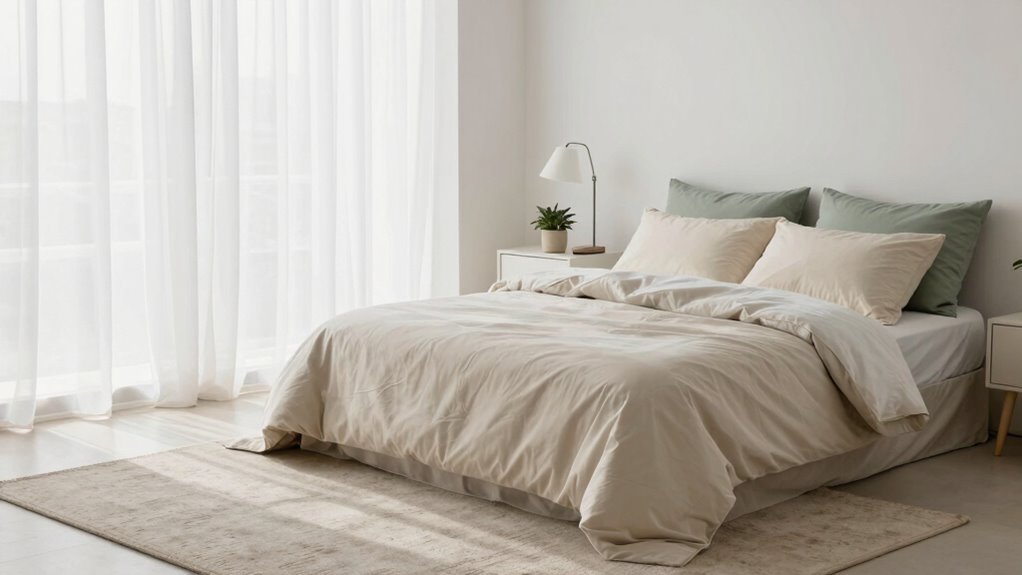
As your needs evolve, maintaining a calm and restful bedroom requires ongoing adjustments to your space. Your decorating style may shift, so consider updating accessories and colors to keep the environment soothing. Flexibility in your layout allows you to adapt easily without cluttering the room. Pay attention to lighting options—dimmer switches, warm bulbs, or blackout curtains can help create a tranquil atmosphere regardless of your changing routines. Regularly declutter and reorganize to minimize stress and promote relaxation. Keep essential elements like comfortable bedding and calming artwork, but don’t hesitate to refresh them as your preferences change. Incorporating battery capacity tips for portable oil radiators can also help ensure your space remains both cozy and safe as your needs develop. Additionally, choosing sustainable textile care practices for your bedding and curtains can support a healthier environment and contribute to your overall sense of well-being. Exploring sound healing science can inspire you to incorporate calming sound elements into your space for enhanced relaxation. Staying informed about mythology-inspired names can inspire you to incorporate meaningful symbols of strength and wisdom into your decor or personal routine. By staying mindful of your evolving needs, you ensure your bedroom remains a sanctuary for rest and rejuvenation.
Frequently Asked Questions
How Does Lighting Affect the Bedroom’s Restful Atmosphere?
Lighting design plays a key role in creating a restful bedroom atmosphere. You should maximize natural light during the day, using sheer curtains or blinds that can be adjusted easily. In the evening, opt for warm, soft lighting like dimmable lamps or fairy lights to promote relaxation. Avoid harsh, bright lights, which can make your space feel less tranquil. Proper lighting helps you unwind and prepares your mind for restful sleep.
What Colors Promote Relaxation in Bedroom Decor?
Ironically, vibrant reds or electric blues might seem exciting but can actually disrupt your sleep. Instead, opt for soft, muted shades like calming blues, gentle greens, or warm neutrals. Color psychology shows these mood enhancing hues promote relaxation and tranquility. By choosing these soothing colors for your bedroom decor, you create a peaceful environment that encourages rest and helps you unwind after a long day.
Can Plant Placement Improve Bedroom Tranquility?
Placing plants strategically can considerably boost bedroom tranquility. You should position greenery near windows or in corners to enhance air quality and introduce calming natural elements. Avoid cluttering your space with too many plants, but a few well-placed ones can create a peaceful atmosphere. Use plants like lavender or snake plants to promote relaxation. Proper plant placement helps foster a serene environment, making your bedroom a true retreat for rest and rejuvenation.
How to Incorporate Personal Touches Without Clutter?
You can incorporate personal touches by choosing a few meaningful personal mementos, like photos or souvenirs, and displaying them thoughtfully. Use decorative accents such as elegant frames or stylish trays to keep these items organized and visually appealing. Keep clutter at bay by limiting the number of items and rotating displays periodically. This approach adds personality to your space without overwhelming it, creating a cozy and restful atmosphere.
What Are the Best Soundproofing Options for a Calm Bedroom?
To create a calm bedroom, you should consider soundproof curtains and acoustic panels. Soundproof curtains block out noise and add a cozy feel, while acoustic panels absorb sound, reducing echoes and external disturbances. Install them strategically—cover windows with curtains and place panels on walls near noisy areas. These options help you enjoy a peaceful, restful space, free from unwanted sounds, and promote better sleep.
Conclusion
Think of your bedroom as a tranquil garden, where every element is thoughtfully placed to nurture peace. By arranging your space with calm and clarity, you create a sanctuary that invites restful nights. Let your layout be the gentle stream guiding you to serenity, washing away stress with each restful sleep. As your needs shift, tend to this haven, ensuring it remains a serene retreat where your mind and body can truly rejuvenate.
Halloween Picks
halloween
As an affiliate, we earn on qualifying purchases.