
To block light leaks and create a dark bedroom, start by inspecting your room thoroughly during different times to spot gaps around windows, doors, and vents. Seal cracks with weatherstripping or caulk, and consider installing blackout curtains or window films for maximum darkness. Use draft stoppers at doors and add layered curtains to improve coverage. Keep up with regular checks and upgrades to maintain ideal darkness—continue exploring these solutions to transform your sleep space.

Get the latest gadgets delivered free with Prime
- Fast, free delivery on millions of items
- Prime Video, Amazon Music and more included
- Member-only deals all year
Key Takeaways
- Identify and seal common light leak sources like window gaps, cracks, and door crevices using weatherstripping or caulk.
- Install blackout curtains or window films that block external light effectively and extend beyond window frames.
- Use draft stoppers and door sweeps to prevent light from leaking through gaps at door bottoms and sashes.
- Regularly inspect and maintain window seals, fixtures, and caulking to ensure ongoing darkness.
- Add layered window treatments and consider window inserts for enhanced light blocking and long-term light leak prevention.
As an affiliate, we earn on qualifying purchases.
Why Light Leaks Disrupt Sleep and How They Affect Melatonin

Light leaks in your bedroom can considerably disrupt your sleep because even small amounts of unwanted light can interfere with your body’s natural sleep signals. When exposed to light during sleep, your brain suppresses melatonin production, leading to melatonin suppression. Melatonin is essential for signaling your body that it’s time to rest, so its reduction causes sleep disruption. This disruption can make it harder to fall asleep, stay asleep, and reach restorative sleep stages. Even dim or stray light from streetlights, screens, or nearby lamps can interfere with these processes. By allowing light to seep in, you’re unintentionally signaling your brain that it’s daytime, which hampers your ability to sleep soundly and affects overall sleep quality. Proper light blocking can help maintain your melatonin levels and improve sleep quality. Additionally, using blackout curtains or sleep masks can be highly effective in creating a dark environment that supports healthy melatonin production. Incorporating darkness-enhancing techniques can further optimize your sleep environment for better rest, especially since light exposure can vary throughout the night and impact sleep cycles.
As an affiliate, we earn on qualifying purchases.
Common Sources of Bedroom Light Leaks You Should Know
You might be surprised to find light sneaking in through gaps around your windows or cracks in the doorframe. These small openings can let enough light in to disturb your sleep, even if you don’t notice right away. Fixing or sealing these sources is key to creating a truly dark bedroom.
Gaps Around Windows
Have you ever noticed a faint glow seeping around your window frames at night? Gaps around your window can let in unwanted light, disrupting your sleep. Check the window frame carefully for any cracks or spaces where light sneaks through. Even tiny gaps can cause a noticeable glow. Also, look at how your curtain rods are installed—if they’re not flush against the wall or window frame, light can escape through the gaps. Sealing these cracks with weatherstripping or caulk can make a big difference. Consider adding blackout curtains or lining existing ones to block any remaining light. Making these simple adjustments helps you create a darker, more restful bedroom environment. Addressing gaps around your windows is a straightforward way to improve your sleep quality. Additionally, understanding the role of light leaks in home environments helps in implementing effective fixes. In fact, air quality benefits from proper sealing can also contribute to a healthier sleeping environment. Being aware of regional window styles and materials can further enhance your strategies for blocking light. To optimize your efforts, exploring the humidity management of your space can prevent issues like condensation that may compromise window seals. Properly managing humidity levels can also help maintain the integrity of your seals over time.
Light Through Doorways
Even when your bedroom door is closed, gaps around the doorframe can let unwanted light seep in and disturb your sleep. This doorway illumination often results from hallway light intrusion, especially if your hallway has bright fixtures or outdoor lights. Small cracks or poorly sealed doorjambs allow light to escape or enter, disrupting your darkness goal. To fix this, consider installing draft stoppers or door sweeps at the bottom of the door. Weatherstripping around the frame can also minimize gaps, blocking hallway light intrusion effectively. If necessary, add a door curtain or draft blocker to improve coverage. These simple fixes help create a darker, more restful environment by reducing light leaks through doorways. Additionally, understanding light intrusion sources can help you identify and address other potential leaks around your home, including window gaps or other structural openings that contribute to unwanted light. Recognizing structural light leaks can further enhance your sleep environment by addressing hidden or overlooked sources of illumination. Being aware of light leaks around the entire room can help you create a more consistently dark and peaceful space. For example, inspecting outdoor lighting and adjusting its placement can significantly reduce external light intrusion.
As an affiliate, we earn on qualifying purchases.
How to Evaluate Your Room for Hidden Light Gaps
To guarantee your room stays truly dark, it’s essential to spot hidden light gaps that could ruin your efforts. Begin by turning off all lights and closing curtains, then observe your room during different moon phases, as a brighter moon can reveal small leaks that aren’t visible during a new moon. Use a flashlight or your phone’s light to check around window frames, doorways, and vents. Don’t forget to listen for ambient noise, which can sometimes mask or highlight light leaks from outside. Pay attention to corners and seams where light might sneak in. Moving slowly and carefully helps you identify even tiny gaps. Once you locate these areas, you’ll know where to focus your efforts to improve darkness and create a perfect sleep environment. Additionally, understanding how to evaluate your room for light leaks can help you identify the most effective fixes for a completely dark bedroom. Recognizing the importance of spiritual awakening and enlightenment can motivate you to create a space that supports restful, rejuvenating sleep. Being aware of environmental factors can further assist in maintaining optimal darkness and tranquility. Incorporating light-blocking window treatments can further enhance your efforts to eliminate unwanted light. Exploring soundproofing techniques can also help in reducing external disturbances that might interfere with your sleep environment.
weatherstripping for windows and doors
As an affiliate, we earn on qualifying purchases.
As an affiliate, we earn on qualifying purchases.
DIY Fixes for Bedroom Light Leaks

If you want to block out unwanted light, start by sealing any gaps and cracks around windows and doors. Blackout curtains can make a big difference, and draft stoppers help prevent light from slipping in under doors. Together, these DIY fixes can substantially improve your bedroom’s darkness. Properly insulating your windows can further enhance light-blocking efforts and improve overall energy efficiency. For optimal results, choosing well-draining soil for any window plants can also help reduce moisture buildup that might contribute to light reflections. Paying attention to auditory processing challenges can further enhance your sleep environment by minimizing disruptive sounds. Additionally, addressing light leaks from fixtures or outlets can prevent unwanted illumination from entering your space, and using light-blocking window films can provide an extra layer of protection against light intrusion.
Seal Gaps and Cracks
Gaps and cracks around windows and doors are common culprits of unwanted light leaks in your bedroom. These small openings allow moonlight intrusion and outdoor lighting to seep in, disrupting your sleep environment. To fix this, inspect all edges thoroughly and seal these gaps with weatherstripping or caulk. Weatherstripping is easy to apply around door frames and window sashes, creating a tight barrier against light. For larger cracks or holes, use a high-quality caulk designed for indoor use to fill and smooth out the surface. Make sure to press the sealant firmly into the gaps and allow it to dry completely before closing windows or doors. Sealing these spaces is a simple, effective way to block unwanted light, ensuring your bedroom stays dark and restful. Additionally, understanding light leaks and their sources can help you better plan your sealing strategy for a more effective blackout. Recognizing how light infiltration occurs can also guide you in choosing the most suitable sealing materials for different types of gaps.
Use Blackout Curtains
Blackout curtains are one of the most effective DIY solutions for preventing light from seeping into your bedroom. When you block out external light, your body can produce more nighttime melatonin, which is essential for restful sleep. These curtains create a dark environment that signals your brain it’s time to wind down, improving sleep quality. Choose thick, tightly woven fabrics or specially designed blackout materials that prevent even small light leaks. Hanging these curtains properly guarantees they cover the entire window with no gaps. You can also add a curtain rod extension or double up on curtains for extra darkness. By investing in blackout curtains, you’ll create a more consistent, dark sleeping environment that promotes better rest and overall health.
Apply Draft Stoppers
Draft stoppers are an easy and effective way to seal small openings around your windows and doors that may let in unwanted light. They block gaps where light sneaks through, creating a darker bedroom environment. You can choose from fabric draft stoppers or attach door sweeps to the bottom of your doors for a quick fix.
Here’s a quick comparison:
| Draft Stoppers | Door Sweeps |
|---|---|
| Cushioned fabric | Metal or rubber strip |
| Easy to move | Fixed in place |
| Suitable for windows | Best for exterior doors |
| Cost-effective | Long-lasting |
Using either option helps improve darkness and comfort, making your bedroom a true sanctuary from unwanted light.
Choosing and Installing Blackout Curtains for Total Darkness
Choosing the right blackout curtains is essential if you want to achieve complete darkness in your bedroom. Start by selecting curtains made from thick, tightly woven fabric that blocks out light effectively. Install sturdy curtain rods that can support the weight of these heavy curtains, ensuring they hang smoothly without gaps. Consider using a light sensor to automatically turn off any external lighting that might leak through gaps or around the curtains. Proper installation is key—hang curtains close to the ceiling and extend beyond the window frame to minimize light leaks. Use blackout lining for added darkness, and ensure the curtains overlap at the center when closed. With the right combination of fabric, hardware, and installation, you can create a dark, restful environment.
What to Look for in Effective Blackout Shades and Curtains

When selecting effective blackout shades and curtains, focus on their material and construction, as these determine how well they block light. Look for dense, tightly woven fabrics, or those specifically labeled as blackout. Guarantee the shades or curtains fit snugly against your window frames to prevent light leaks, which can disrupt your sleep hygiene. Consider layered options, combining blackout curtains with other window treatments for maximum darkness. The right blackout solutions also contribute to a calming bedroom ambiance, making it easier to relax and fall asleep. Pay attention to features like thermal lining, which can improve insulation and reduce noise. Overall, choosing high-quality, well-fitted blackout shades or curtains creates a sleep-friendly environment that promotes better rest and enhances your bedroom’s comfort.
How to Seal Gaps Around Windows and Doors
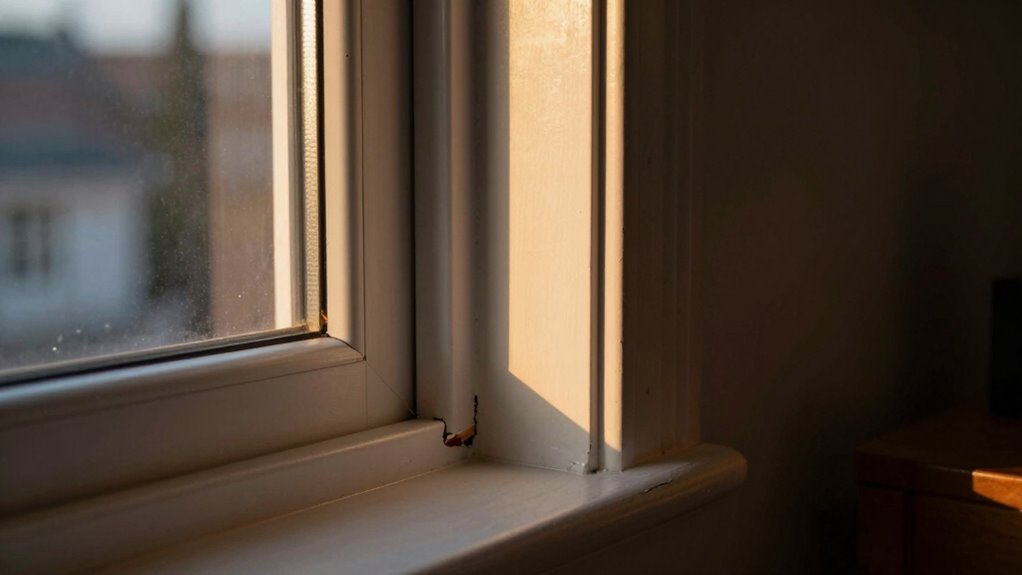
Sealing gaps around your windows and doors is essential for maintaining a dark, comfortable bedroom environment. These gaps can let in unwanted light and noise, undermining your window treatments and soundproofing efforts. To seal effectively, identify where light leaks and sound escape. Use weatherstripping or draft stoppers on doors and windows, and consider caulking small cracks. For larger gaps, foam sealant works well. Here’s a quick comparison:
| Sealant Type | Best For | Benefits |
|---|---|---|
| Weatherstripping | Doors & windows | Easy to install, flexible |
| Caulking | Cracks & gaps | Permanent, airtight seal |
| Draft stoppers | Door bottoms | Quick, removable |
Combining these methods enhances blackout and soundproofing, creating a truly dark bedroom.
Advanced Tips for Persistent Light Leaks
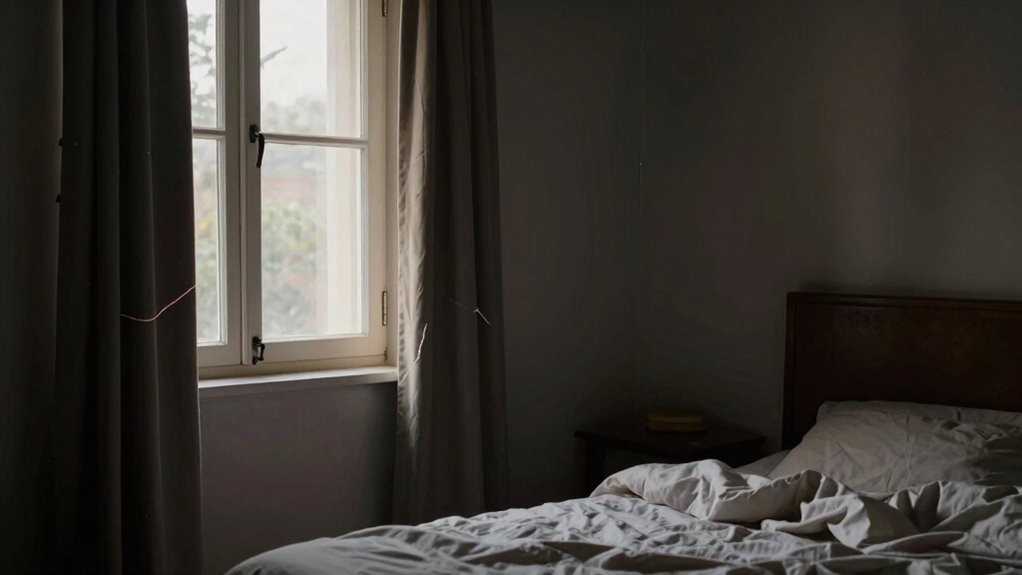
Even after sealing gaps around windows and doors, some light leaks may persist due to small cracks or misaligned fixtures. To combat this, consider applying blackout window film or adding weatherstripping to obscure any remaining openings. Use draft stoppers or fabric strips along window sashes to block stray light. Address misaligned fixtures by adjusting or replacing them to prevent light from seeping through gaps. Eliminating persistent light leaks reduces light pollution, helping you maintain better sleep hygiene. It’s also helpful to install layered blackout curtains or use light-blocking window inserts for extra protection. These advanced tips target even the smallest leaks, ensuring your bedroom stays dark. A truly dark environment supports restful sleep and minimizes disruptions caused by unwanted light intrusion.
Long-Term Maintenance for a Dark and Peaceful Bedroom
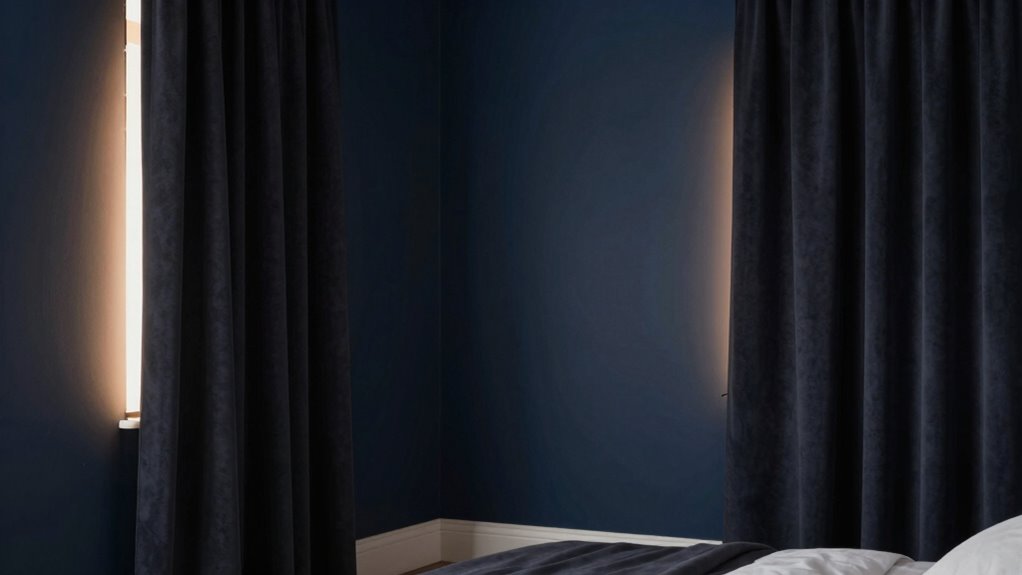
Maintaining a dark and peaceful bedroom requires regular attention and proactive habits. To keep your space ideal, focus on controlling ambient noise, improving sleep hygiene, and checking for light leaks.
Keeping your bedroom dark and peaceful involves regular maintenance and mindful habits.
You can:
- Use blackout curtains and seal gaps to prevent light intrusion
- Invest in white noise machines or earplugs to minimize ambient noise disruptions
- Establish a consistent bedtime routine to reinforce sleep hygiene
Consistently monitoring these elements ensures your bedroom stays conducive to restful sleep. Addressing ambient noise prevents disturbances, while good sleep hygiene helps your body adapt to darkness. Periodically inspect your window seals and lighting fixtures for leaks and make adjustments as needed. Staying vigilant with these habits not only preserves your bedroom’s darkness but also fosters a calming environment for deep, restorative sleep.
Frequently Asked Questions
Can LED or Electronic Devices Cause Light Leaks in Bedrooms?
Yes, LED or electronic devices can cause light leaks in bedrooms. LED emissions from gadgets or screens may seep through gaps or weak spots in window coverings, creating unwanted glow. Additionally, electronic interference can sometimes cause subtle flickers or glow from nearby devices. To prevent this, make certain devices are turned off or kept away from window areas, and seal any gaps around windows or curtains to block light leaks effectively.
Are There Eco-Friendly or Sustainable Blackout Solutions Available?
Did you know that 70% of window treatments end up in landfills? Luckily, eco-friendly curtains and sustainable blinds offer a greener solution, reducing waste and environmental impact. These options are made from organic or recycled materials, providing effective blackout for your bedroom while supporting sustainability. By choosing eco-friendly curtains or sustainable blinds, you can create a dark, restful space without compromising your eco-conscious values.
How Do Seasonal Changes Affect Light Leak Visibility?
Seasonal daylight considerably impacts how visible light leaks are in your bedroom. During summer, longer daylight hours make leaks more noticeable, especially if your window insulation isn’t tight. In winter, shorter days and thicker curtains help reduce light intrusion. To adapt, check your window insulation regularly and consider seasonal blackout solutions. Proper sealing and adjustable window coverings can keep your room dark regardless of seasonal changes.
What Safety Precautions Should I Take When Installing Blackout Curtains?
When installing blackout curtains, you should wear safety gear like gloves and goggles to protect your eyes and skin. Make sure to turn off the electrical safety features if you’re working near outlets or wiring, and avoid using damaged tools or cords. Always follow manufacturer instructions carefully, and if you’re unsure about electrical safety, consider hiring a professional. These precautions keep you safe while creating a dark, cozy bedroom environment.
Can Scent or Soundproofing Improve Sleep Alongside Light Control?
Yes, scent and soundproofing can dramatically boost your sleep quality. Sound masking creates a fortress of silence, making noise seem like a whisper, while aromatherapy benefits turn your bedroom into a sanctuary of calm. Together, these elements drown out distractions and soothe your mind, helping you fall asleep faster and stay asleep longer. Incorporate calming scents like lavender and install soundproofing to turn your bedroom into a sleep oasis.
Conclusion
By sealing those sneaky light leaks, you’re transforming your bedroom into a private sanctuary where dreams can flourish without interruption. Think of your space as a fortress of serenity, where darkness shields your sleep like a gentle night sky cloaking the world. With a few simple fixes and mindful maintenance, you’ll create a peaceful retreat that keeps unwanted light at bay, letting your melatonin rise and your restful nights blossom like a midnight garden.
Halloween Picks
halloween
As an affiliate, we earn on qualifying purchases.