
Doors often stick due to moisture causing wood to swell or warping from environmental changes. To fix this without replacing anything, check hinges and realign them, lubricate hinges and hardware, and sand or plane swollen edges gently. You should also inspect and replace weatherstripping if needed and control indoor humidity. If issues persist, there’s more you can do to fix and prevent sticking, which you’ll discover with a few simple steps.
Key Takeaways
- Moisture-induced swelling or warping of door materials causes sticking; control humidity and seal gaps to prevent this.
- Adjust hinge screws and realign the door to fix misalignment causing sticking issues.
- Lubricate hinges, locks, and tracks regularly with suitable lubricants to ensure smooth operation.
- Sand or plane swollen door edges to remove excess material and improve closure.
- Improve moisture control with proper ventilation and weatherproofing to prevent future swelling and sticking.

Qucship Door Hinge Lubricant 1 oz Needle Oiler, Upgraded Squeaky Door Hinge Lubricant for Lock, Tools, Bicycles
PREMIUM DOOR HINGE LUBRICANT; Eliminate annoying squeaks quickly and effectively. Qucship door hinge lubricant bonds to the surfaces,…
As an affiliate, we earn on qualifying purchases.
As an affiliate, we earn on qualifying purchases.
Why Do Doors Stick and When Should You Worry?
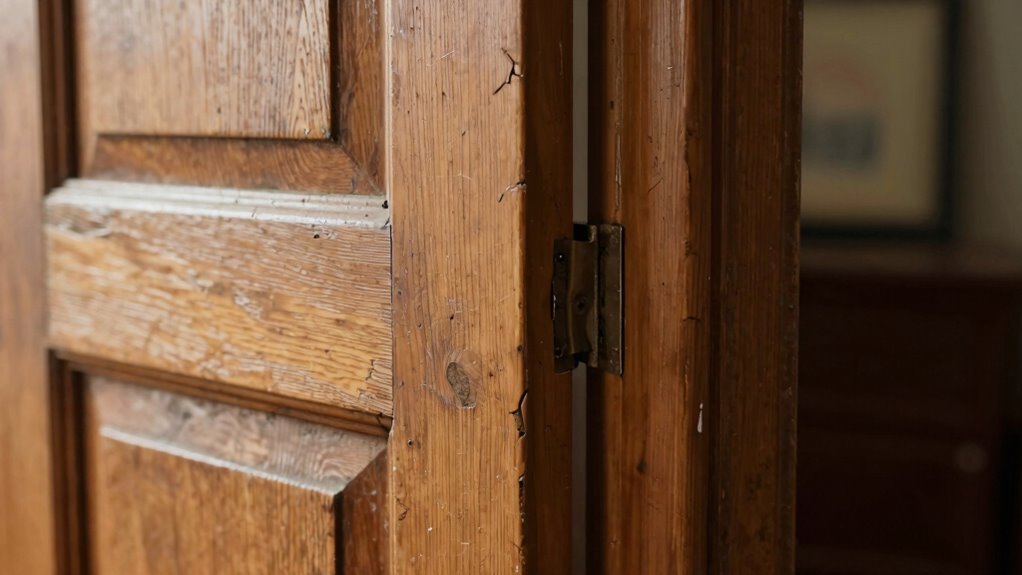
Doors tend to stick when the wood or metal expands or contracts due to changes in humidity and temperature. This movement causes the door to rub against the door frame, making it difficult to open or close smoothly. Often, moisture control is the key to preventing sticking; high humidity causes wood to swell, while dry conditions lead to shrinking. If your door consistently sticks during certain seasons, it’s a sign that the door frame might need adjustments or better moisture regulation. Addressing moisture control by using dehumidifiers or humidifiers can help stabilize the environment, reducing the chances of your door expanding or contracting excessively. Proper moisture regulation is essential for preventing these issues over time. Maintaining a consistent indoor humidity level can also help prevent doors from sticking, especially in areas prone to seasonal fluctuations. Ensuring good ventilation can help regulate indoor moisture and prevent excessive swelling or shrinking of door materials. Worry only if the sticking persists despite seasonal changes or if you notice warped or cracked wood.

Ninsula 33Ft Door Weather Stripping, (1/2in x 1/4in), Strong Adhesive, Sound Proof, Door Insulation, Weatherproof Foam Tape for Doors, Weatherstripping for Doors Frames, Windows
Extra Long Size: You'll get a 33FT door weather stripping (1/2in x 1/4in). Easy to install, no tools…
As an affiliate, we earn on qualifying purchases.
As an affiliate, we earn on qualifying purchases.
How to Diagnose Why Your Door Won’t Close Properly
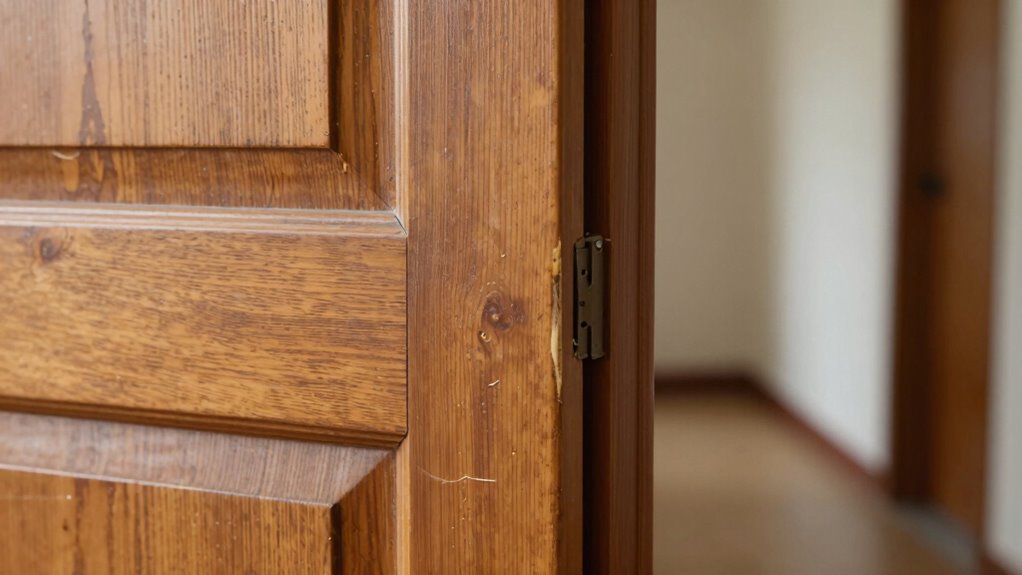
When a door refuses to close properly, the cause isn’t always obvious, but diagnosing the problem is the first step to fixing it. First, check the door material—wood, metal, or composite—as each expands or contracts differently with temperature changes, affecting how it fits. Next, examine the door color and finish; a darker stain or paint can absorb more heat, causing expansion and sticking. Finally, observe where the door contacts the frame—are there gaps, warping, or swelling? Incorporating Free Floating principles, assess whether the door is experiencing natural movement or environmental influences that could contribute to the issue. To diagnose: 1. Inspect the door material for swelling or warping. 2. Note if the door color or finish seems to influence sticking during temperature shifts. 3. Look for uneven gaps or misalignment along the edges or near hinges. Additionally, consider the environmental factors such as humidity or airflow that might cause the door to expand or contract unexpectedly.

8 Pack Sanding Sponge, Sanding Blocks 60/80/120/220 Grit Assortment, Sand Paper for Wood Furniture, Sander Pads, Washable and Reusable Sandpaper for Drywall Metal Glasses Repair
4 Different Grits: Includes 8 sanding blocks in 4 grits—60/80/120/220 (coarse, medium, fine, and superfine), 2 blocks per…
As an affiliate, we earn on qualifying purchases.
As an affiliate, we earn on qualifying purchases.
Adjust Hinges to Fix a Sticking Door

Start by checking if your hinges are properly aligned; misalignment often causes sticking. If needed, tighten loose screws or loosen them slightly to realign the door. For worn hinges, replacing them can provide a more permanent fix. Additionally, inspecting the cabling behind the door can prevent interference that might cause sticking or difficulty opening. Regular lubrication of hinges with appropriate essential oils, like lavender or eucalyptus, can also help maintain smooth operation and prevent squeaking or sticking over time. Using body-safe lubricants designed for hinges can be especially effective for long-lasting results. Maintaining door hardware properly can further reduce the likelihood of issues with sticking doors.
Check Hinge Alignment
If your door is sticking, checking the hinges is a quick and effective first step. Proper door hinge alignment guarantees the door swings smoothly and the latch lines up correctly. Here’s what to do:
- Inspect hinge placement – look for gaps or misaligned hinges that might affect the door’s position. Sometimes, wood expansion or contraction can cause hinges to shift slightly, leading to sticking issues. Understanding door hinge mechanics can help you identify the root cause more accurately. You might also notice that sound vibrations in the environment could influence hinge performance over time.
- Adjust the hinges – loosen and reposition hinges if they’re skewed, ensuring they’re flush against the door and frame. Using a hinge alignment tool can make this process easier and more precise.
- Test the door latch adjustment – after realigning hinges, open and close the door to see if the latch aligns properly without sticking.
- Consider door hinge maintenance to prevent future issues and keep the door functioning properly. Regular lubrication of hinges can also help maintain smooth operation over time.
Tighten or Loosen Screws
Tightening or loosening the hinge screws is a straightforward way to correct a sticking door. When screws are too loose, the hinge can shift, causing the door to stick or misalign. Proper screw tightness guarantees the hinge stays in place, facilitating effective hinge adjustment. If your door still sticks after tightening, loosen the screws slightly and adjust the hinge position. Use a screwdriver to test different screw tightness levels until the door opens smoothly. Keep in mind, over-tightening can strip screws or warp the hinge. Here’s a quick guide:
| Screw Tightness | Effect on Hinge | Resulting Action |
|---|---|---|
| Loose | Hinge shifts | Tighten screws |
| Too tight | Strains hinge | Loosen screws slightly |
| Properly tight | Secure hinge | No adjustment needed |
| Over-tightened | Damages hinge | Loosen screws |
Also, ensure that the hinge alignment is correct, as misaligned hinges can also cause sticking issues. For added stability, consider checking for irregularities in door frames, which can also contribute to sticking problems and may require further adjustment.
Replace Worn Hinges
Worn hinges can cause your door to stick or misalign, making it difficult to open and close smoothly. When simple adjustments aren’t enough, hinge replacement might be necessary. Here’s how to approach door hinge repair effectively:
- Inspect the hinges for rust, cracks, or looseness to identify worn parts.
- Remove the hinges carefully using a screwdriver, then replace them with new hinges of the same size.
- Align and secure the new hinges properly, ensuring they are tight and flush against the door and frame.
Replacing worn hinges restores proper door function and eliminates sticking issues. This straightforward hinge replacement process is often all it takes for smooth operation without costly door replacement.
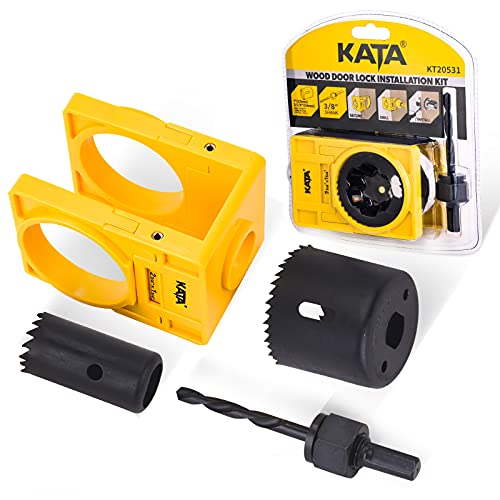
KATA 1-3/8" – 1-3/4" Door Lock Installation Kit for Wooden Doors with Guide Template, Door Lock Hole Saw, Carbon Steel
Carbon steel+plastic
As an affiliate, we earn on qualifying purchases.
As an affiliate, we earn on qualifying purchases.
Sand or Plane a Door That Catches or Won’t Close
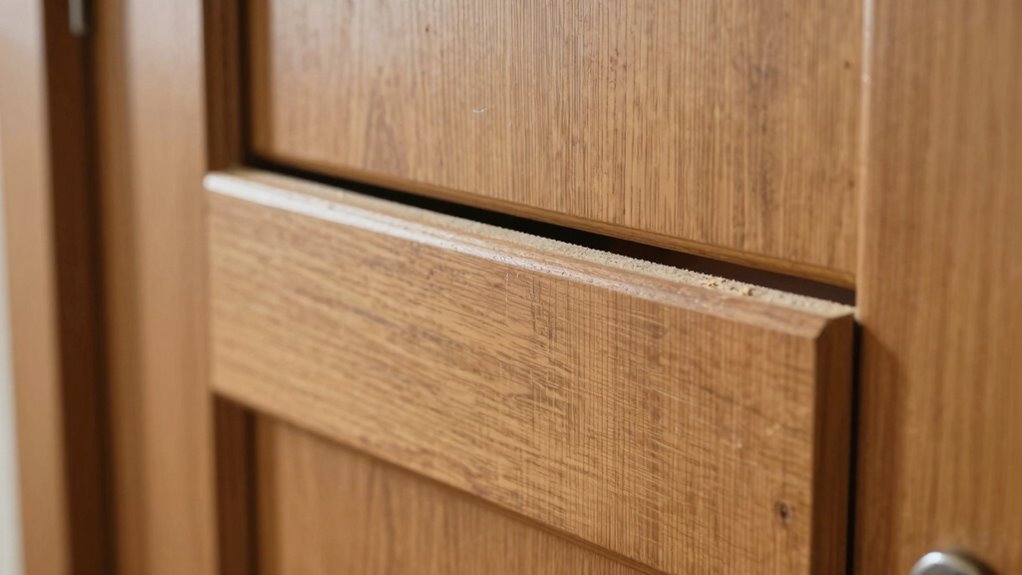
When a door sticks or won’t close properly, sanding or planing the edge can often resolve the issue quickly. If the door is swelling from humidity, it may rub against the frame, making closing difficult. To fix this, gently plane or sand the edge to create a smooth, even surface. This process helps improve paint adhesion, preventing future swelling and sticking. Imagine the door as a block of wood, with layers of paint and moisture causing expansion. Additionally, understanding waterpark safety tips can help prevent moisture-related issues that cause door swelling. Properly managing humidity levels in your home can also minimize water damage and keep doors functioning smoothly.
Repair Warped or Swollen Doors Without Replacing Them
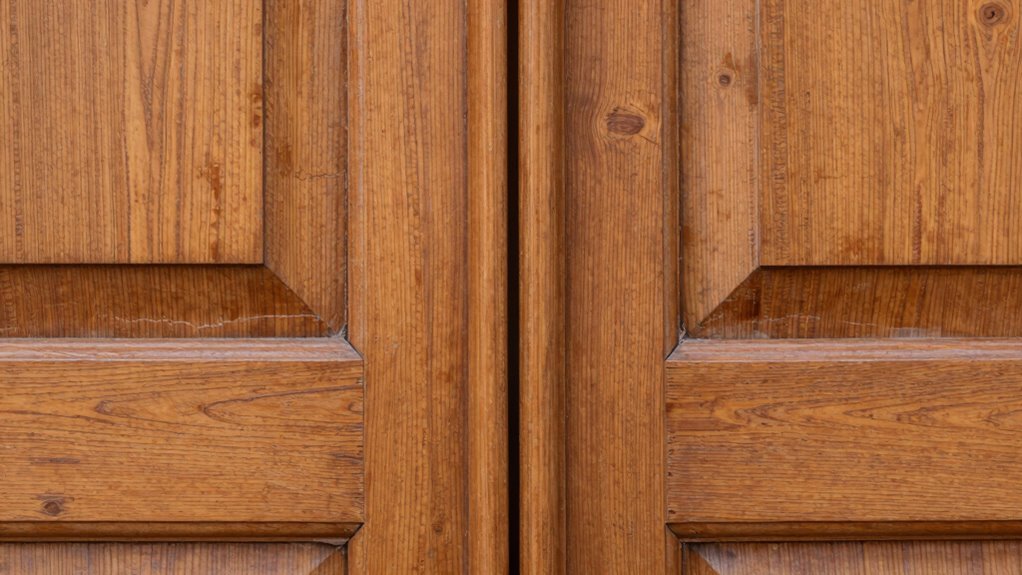
If a door continues to stick or won’t close properly after sanding or planing the edges, you might be able to fix it without replacing the entire door. Warped or swollen doors often result from moisture control issues, causing door swelling. To fix this:
- Identify the affected areas and gently sand or plane the swollen sections to restore the shape.
- Improve moisture control by using dehumidifiers or vents in humid spaces to prevent future swelling. Proper moisture management is essential in desert environments to maintain the integrity of wooden doors.
- Seal the door with a weatherproof finish or paint to protect against moisture infiltration.
- Proper door installation techniques can also prevent future sticking issues by ensuring correct hinges and clearances.
- Regularly monitoring moisture levels in your environment can help detect and address issues before swelling occurs. Ensuring good ventilation is also crucial for maintaining consistent moisture levels around your doors.
- Using a dehumidifier can be particularly effective in controlling excess humidity that causes swelling and warping over time.
These steps help reduce door swelling and warping, saving you the cost of replacement. Proper moisture management is key to preventing future issues, keeping your door functioning smoothly.
Keep Your Door Hardware Running Smoothly With Lubrication

Choosing the right lubricant is key to keeping your door hardware functioning smoothly. Regular maintenance, like applying lubricant at the right intervals, prevents sticking and squeaks. By staying consistent and using proper products, you’ll extend the life of your door hardware with ease. Additionally, understanding the ethical considerations involved in selecting environmentally friendly lubricants can help you make responsible choices. Considering the environmental impact of your lubricant choices ensures that your maintenance practices are sustainable and eco-conscious.
Proper Lubricant Selection
Selecting the right lubricant is essential to keep your door hardware operating smoothly and prevent sticking or squeaking. Using the proper lubricant guarantees effective door hinge lubrication and supports weatherstripping maintenance. Here are three tips to choose wisely:
- Opt for a lightweight, silicone-based spray for door hinges—it’s long-lasting and won’t attract dust.
- Avoid thick oils or grease, which can clog moving parts and cause more resistance over time.
- Use a lubricant that’s suitable for weatherstripping, helping it stay flexible and sealing properly.
Always apply lubricants sparingly, focusing on hinges and moving parts. Proper lubricant selection reduces friction, prevents rust, and keeps your door functioning quietly and smoothly.
Regular Maintenance Routines
Regular maintenance is key to ensuring your door hardware stays in good working condition. Consistent door maintenance, including lubrication, prevents sticking and wear. Perform seasonal adjustments to account for temperature and humidity changes that can affect door alignment. Regularly applying lubricant to hinges, locks, and tracks keeps everything moving smoothly. Schedule routine checks every few months to catch issues early. Use the right lubricant for each component to avoid damage. Here’s a quick reminder:
| Maintenance Step | Benefits |
|---|---|
| Lubricate hinges | Keeps door swinging smoothly |
| Adjust screws | Prevents misalignment and sticking |
| Check locks | Ensures secure operation |
| Clean tracks | Removes debris, reduces friction |
| Seasonal tweaks | Compensates for climate-related shifts |
Stay proactive to maintain a properly functioning door year-round.
When and How to Replace Weatherstripping on Your Door
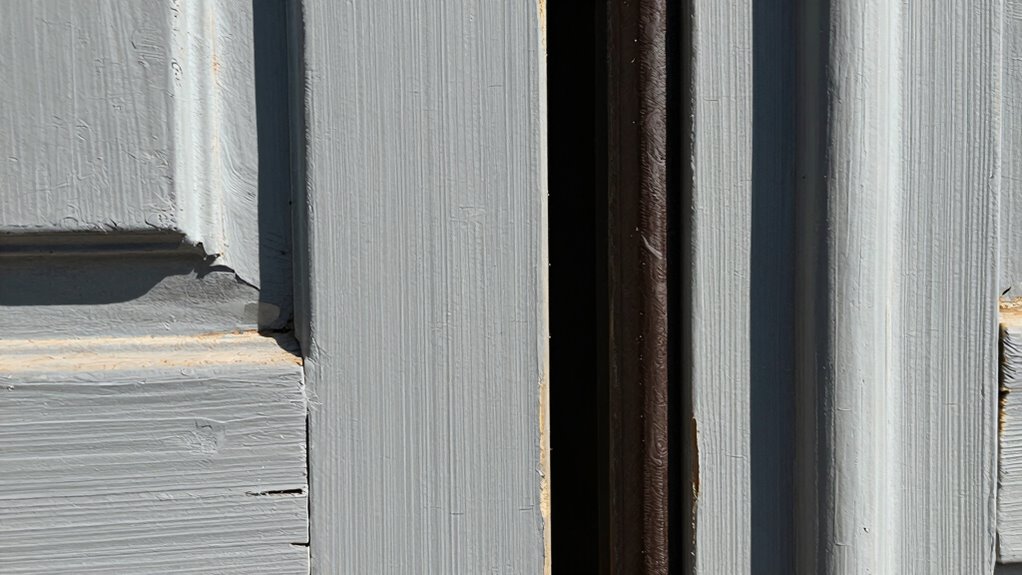
Weatherstripping needs replacement when it no longer seals properly, causing drafts, energy loss, or increased utility bills. When you notice these issues, it’s time to consider replacing your weatherstripping for better door insulation and to improve weatherstripping maintenance. Here are three signs to watch for:
Replace weatherstripping when drafts or energy loss become noticeable to improve insulation and efficiency.
- Visible cracks or tears in the weatherstripping material.
- Persistent drafts or cold spots near the door.
- Difficulty closing the door smoothly or a noticeable gap.
To replace it, first remove the old weatherstripping carefully, then clean the area thoroughly. Choose a new weatherstrip that matches your door’s size and shape, and ensure a tight seal. Proper replacement restores insulation and keeps your home more energy-efficient.
Tips to Prevent Doors From Sticking in the Future
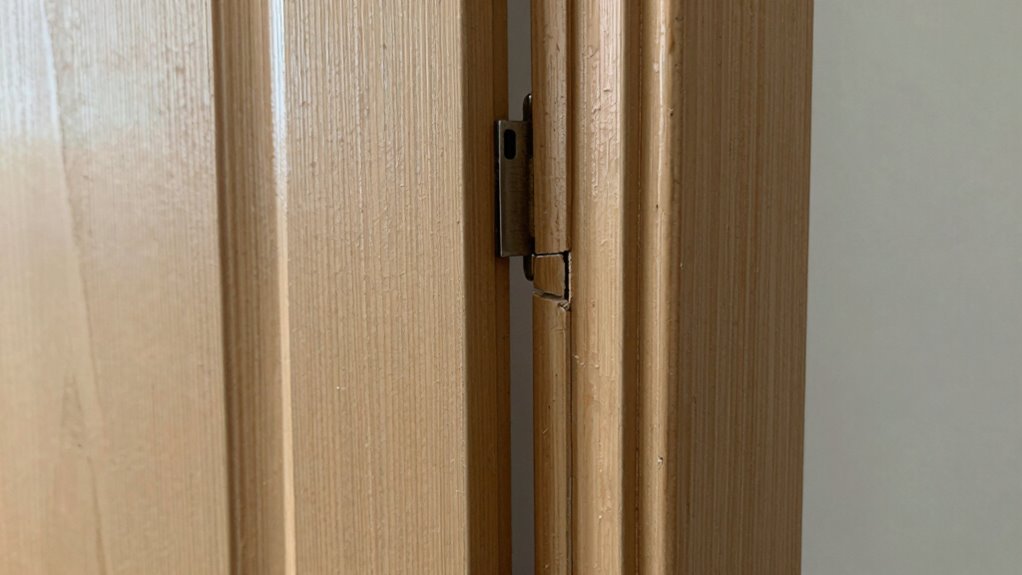
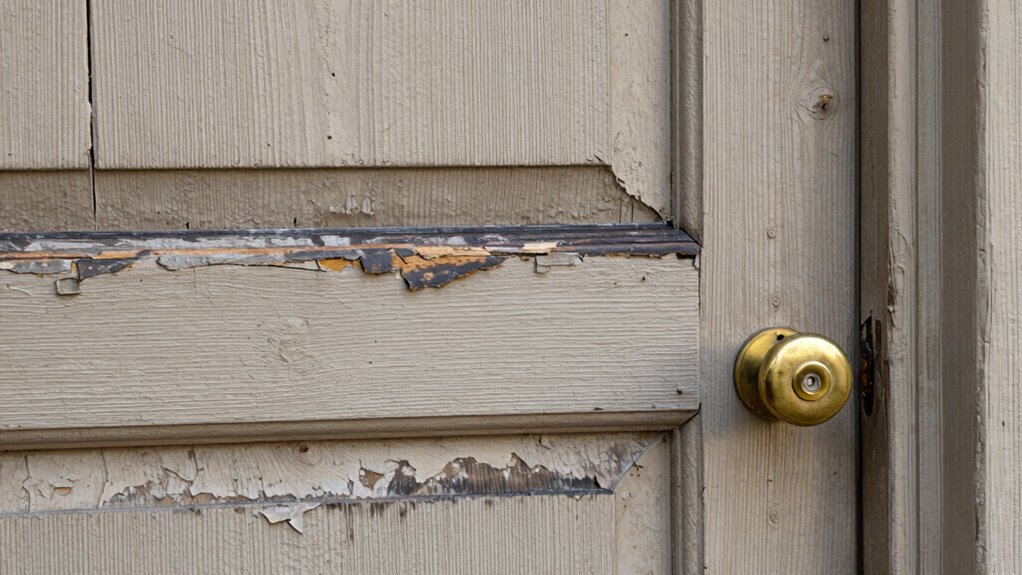
To prevent doors from sticking over time, regular maintenance and proper adjustments are essential. Keep an eye on your door frame for signs of warping or damage, as these can cause sticking issues. A quick paint touch-up around the edges can prevent paint from cracking and exposing wood to moisture, which leads to swelling. Regularly lubricate hinges and check for loose screws to ensure smooth operation. Consider this table for simple tips:
| Tip | Why it helps | When to do it |
|---|---|---|
| Inspect door frame | Prevents warping and misalignment | Every six months |
| Paint touch-up | Stops moisture damage, swelling | As soon as chips appear |
| Lubricate hinges | Keeps door opening smoothly | Monthly |
Consistent care keeps your door functioning without sticking.
When to Call a Professional for Persistent Door Issues
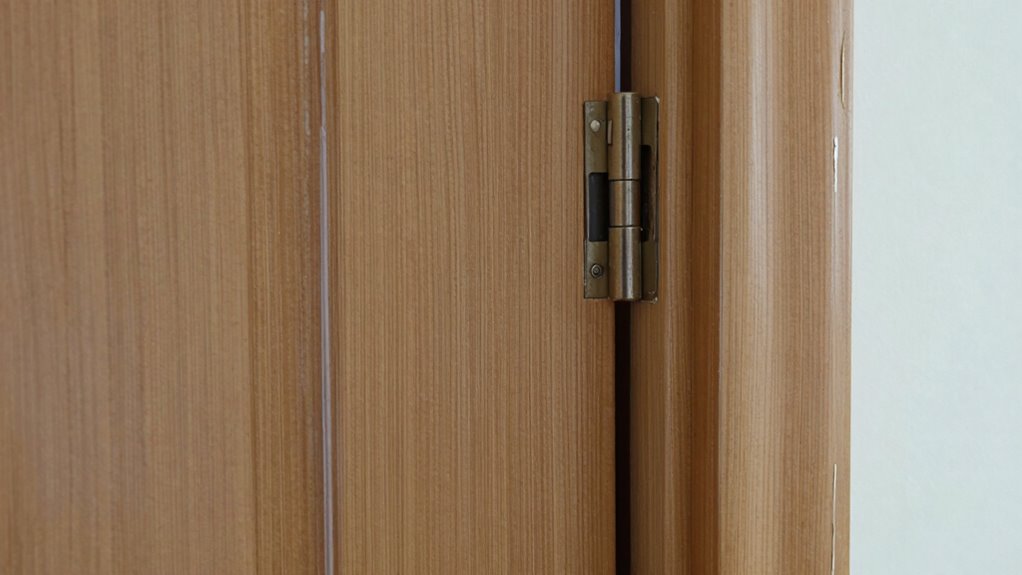
Even with consistent maintenance, some door sticking problems may persist or worsen over time. If you notice issues like the door catching despite adjustments, it might be time to call a professional. Here are signs to watch for:
- Persistent door frame expansion causes ongoing misalignment that you can’t fix with simple shims.
- Paint coating buildup thickens over time, making the door stick despite sanding or scraping.
- Unusual cracks or warping in the door or frame indicate structural issues that require expert assessment.
A professional can evaluate if door frame expansion is the root cause or if paint coating buildup has compromised the door’s smooth operation. Don’t delay if these issues worsen—they might need specialized repairs.
Frequently Asked Questions
Can Humidity Levels Cause Doors to Stick Over Time?
Yes, humidity levels can cause doors to stick over time. When humidity increases, moisture causes wood to expand, leading to humidity expansion that makes doors swell and stick. Conversely, low humidity can cause moisture damage, making wood shrink and misalign. To fix this, you can adjust hinges or sand down the sticking areas. Maintaining consistent indoor humidity levels helps prevent doors from sticking due to these moisture-related issues.
Are There Eco-Friendly Methods to Fix Stuck Doors?
Yes, you can fix stuck doors using eco-friendly methods. Try sanding down the door edges with recycled materials like reclaimed sandpaper or use natural lubricants such as beeswax or olive oil, which are sustainable solutions. These options avoid harsh chemicals and reduce waste, making them better for the environment. By choosing these eco-friendly fixes, you help protect the planet while effectively resolving your door sticking issues.
How Long Does a Door Repair Typically Take?
A door repair usually takes about one to two hours. First, you’ll check door hinge maintenance, tightening or lubricating hinges as needed. Then, you might need to do some door frame adjustments, like sanding or shimming, to make certain of smooth operation. If you’re comfortable with basic tools, you can handle these steps yourself, but for more complex issues, hiring a professional might save you time and ensure a proper fix.
Will Fixing a Door Affect Its Insulation Properties?
Imagine you’re in a time machine—fixing your door won’t cause a Jurassic Park-like impact on its insulation. When you repair a door, especially with the right door hardware, it generally preserves its insulation properties. The door material, whether wood, metal, or composite, plays a role, but proper adjustments won’t compromise energy efficiency. Just ensure you don’t over-tighten hardware, which could create gaps and reduce insulation effectiveness.
Can Door Sticking Indicate Structural Problems in My Home?
Door sticking can sometimes signal underlying foundation issues or framing shifts in your home. If you notice doors suddenly sticking or misaligning, it might indicate that the foundation is settling or that framing has shifted. You should inspect for cracks in walls or uneven floors and consider consulting a structural engineer. Addressing these concerns early can prevent more extensive damage and guarantee your home remains safe and stable.
Conclusion
Think of your door as a trusted friend that sometimes gets a little stubborn. With these simple fixes, you can keep it moving smoothly without replacing it. Regular maintenance is like giving your door a gentle tune-up, preventing future sticking issues. When problems persist, don’t hesitate to call in a pro—after all, even the sturdiest doors need a little extra help sometimes. Keep your entryway welcoming and hassle-free, and enjoy a smoother ride every time.