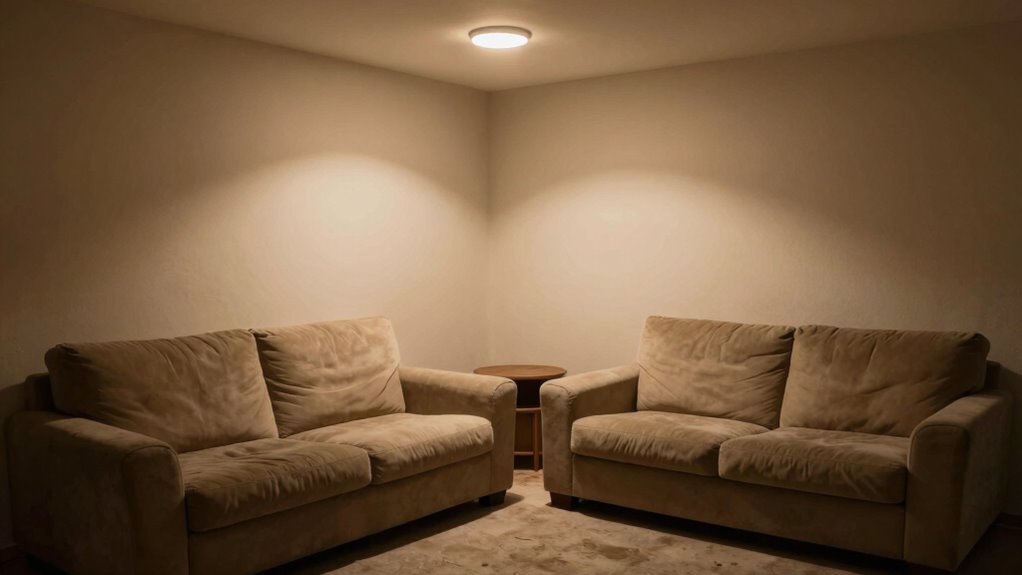

The biggest lighting mistake that makes a room look tired is relying solely on harsh, overhead lights. These create flat, uninviting spaces with strong shadows and glare, draining energy and warmth. To fix this, layer your lighting with softer, warmer fixtures, using dimmers and diffusers to balance brightness. Incorporating different light types adds depth and coziness. Keep going, and you’ll discover simple ways to transform your space into a warm, vibrant retreat.
Key Takeaways
- Relying solely on overhead lighting creates harsh shadows and flatness, making rooms look tired and uninviting.
- Overpowering, direct light washes out warmth and reduces visual interest, dulling the room’s vibrancy.
- Excessive brightness causes glare and intense shadows, which drain energy and emphasize imperfections.
- Lack of layered lighting results in flat spaces; combining ambient, task, and accent lights adds depth and warmth.
- Using warm, diffused, and dimmable lighting helps soften harshness, enhancing coziness and visual appeal.

libtit 4Pack 7inch LED Flush Mount Ceiling Light, Dimmable & 5Color Temperatures (3000K-6500K), 15W Round Slim White Light Fixture for Closet Hallway Kitchen Bathroom Laundry
【5CCT Selectable & Dimmable】 Choose Warm (3000K), Soft (3500K), Natural (4000K), Daylight (5000K), or Cool (6500K) to suit…
As an affiliate, we earn on qualifying purchases.
As an affiliate, we earn on qualifying purchases.
Why Harsh, Direct Lighting Drains Energy From Your Space
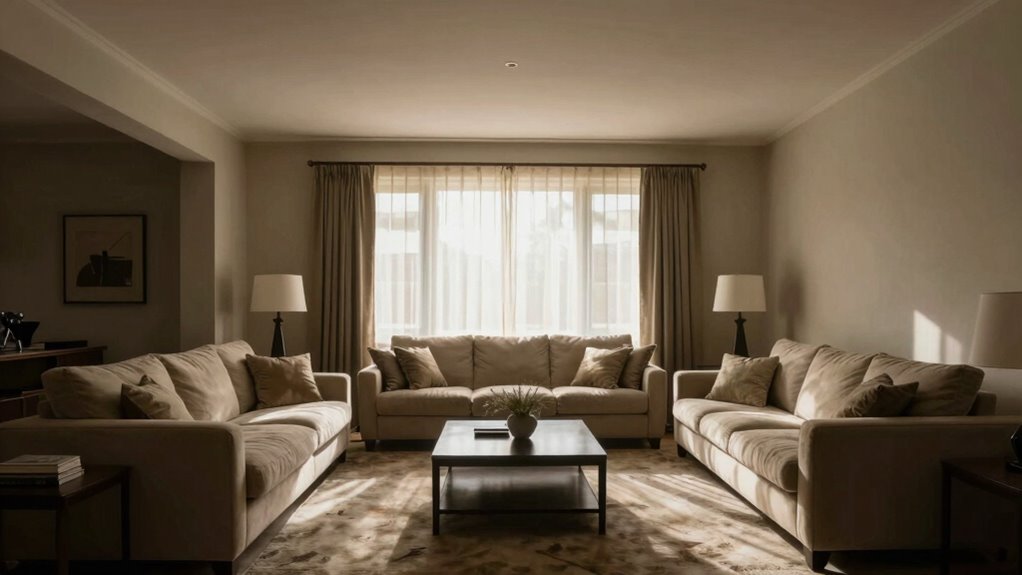
Harsh, direct lighting can make a room feel draining and uninviting because it creates intense shadows and glare. When your light has a cool, bluish color, it tends to feel colder and more sterile, it can amplify the sense of severity. Conversely, warm light with a yellow or amber hue softens the space, making it feel more welcoming. Light temperature and color directly influence the room’s energy, with cooler tones often draining warmth and comfort. Bright, unsoftened light can make your space seem more tired and less lively. Adjusting the light temperature to warmer tones helps reduce the severity, creating a more inviting atmosphere. Choosing the right light color and temperature is essential for transforming a draining, overly bright room into a cozy, energized space. Understanding lighting effects can help you make better choices for your space. Incorporating lighting design principles can further enhance the ambiance and overall mood of your room. Additionally, considering color accuracy in your lighting setup ensures the true appearance of your furnishings and decor is maintained, which can also contribute to a more vibrant and appealing environment. Proper lighting controls can give you flexibility to adjust your lighting to match different moods and activities, making your space more adaptable and comfortable. Being aware of lighting quality and how it impacts the overall feel of your room can lead to more intentional and satisfying lighting choices.
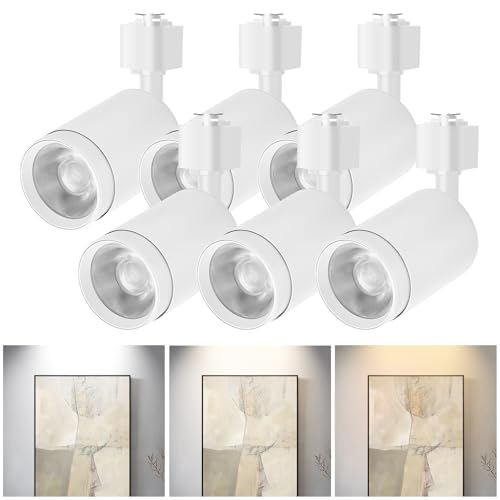
be studied 10W LED Track Lighting Heads – L-Type Adjustable Ceiling Spotlights, 3000K/4000K/5700K, Flicker-Free CRI90+ (6-Pack) – White Track Light Fixtures for Accent, Task & Art Lighting
The track lighting system allows you to easily reposition track lighting heads along the rail, providing customizable directional…
As an affiliate, we earn on qualifying purchases.
As an affiliate, we earn on qualifying purchases.
How to Recognize Signs of Overly Bright, Unsoftened Light
When your lighting feels overly intense or unsoftened, it often manifests through specific visual cues. You might notice glare or harsh shadows that make the space feel unwelcoming. The light intensity can appear blinding, especially in the daytime or near bright fixtures, creating a sense of discomfort. Pay attention to the light color—if it seems too cool or harsh, it can make the room look stark and uninviting. Overly bright, unsoftened light tends to wash out colors, dulling the vibrancy of your décor. You may also feel mentally drained or distracted by the uneven brightness. Recognizing these signs helps you understand that the lighting is too harsh, and adjusting the light intensity or choosing warmer light colors can restore a softer, more inviting atmosphere. Additionally, incorporating lighting techniques such as dimmers or layered fixtures can help achieve a balanced and cozy ambiance. Using natural lighting options can also soften the overall effect and reduce the reliance on artificial sources. Being aware of lighting design principles can further guide you in creating a comfortable environment.

GE Relax LED Light Bulbs, 60 Watt, Soft White, A19 (4 Pack)
Replacement Soft White Bulbs: Make your home more energy efficient with our soft white LED light bulbs; Relax…
As an affiliate, we earn on qualifying purchases.
As an affiliate, we earn on qualifying purchases.
How Harsh Lighting Makes Rooms Feel Dull and Uninviting
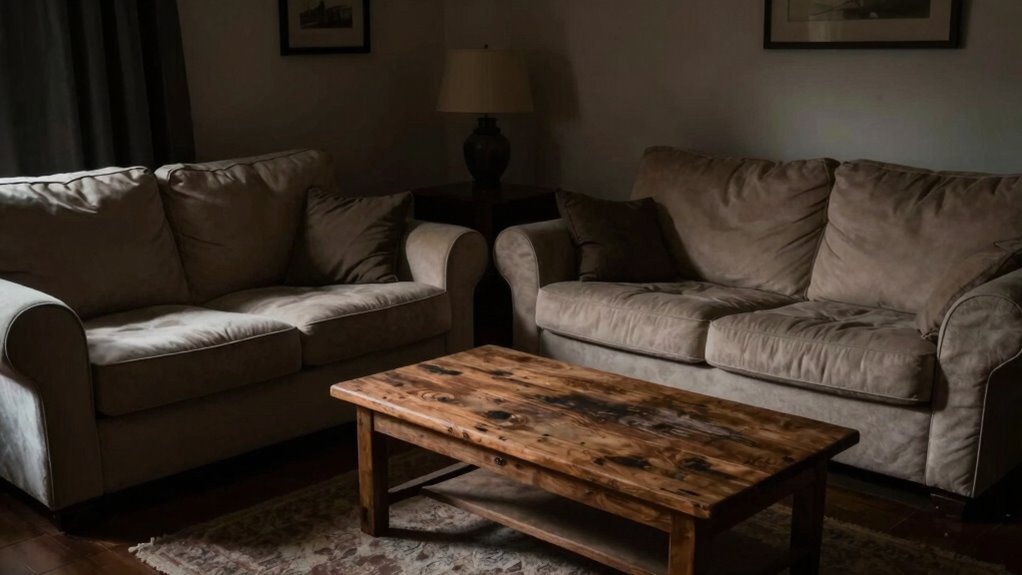
Harsh lighting can cast intense shadows that make a room feel dull and uninviting. When light sources are overpowering, they wash out warmth and create a cold, uninviting atmosphere. This harsh contrast can leave your space feeling more tired than lively. Incorporating appropriate lighting techniques can help soften the glow and enhance the room’s ambiance. Additionally, considering indoor air quality can improve overall comfort, as poor air circulation can sometimes amplify the feeling of dullness. For example, maintaining good ventilation practices ensures the environment feels fresher and more inviting. Using essential oils for respiratory health, such as eucalyptus or lavender, can also promote better breathing and a more refreshed atmosphere.
Intense Shadows Create Dullness
Intense shadows can make a room feel dull and uninviting by creating stark contrasts that draw attention to imperfections and clutter. These shadow patterns result from harsh lighting that doesn’t diffuse evenly across surfaces. When light is too direct or unfiltered, it creates sharp edges and deep shadows, making spaces appear more chaotic and less welcoming. To fix this, you need to promote better light diffusion, softening the shadows and creating a more uniform glow. Using fixtures with diffusers or adding lampshades helps spread light evenly, reducing harsh shadow patterns. Incorporating sustainable lighting solutions that focus on energy efficiency and eco-friendly materials can further enhance the atmosphere while supporting environmental goals. This subtle change transforms the atmosphere, making your room feel warmer, brighter, and more inviting, without the distraction of stark contrasts or uneven lighting.
Overpowering Light Sources
Overpowering light sources can wash out the warmth and depth of a room, leaving it feeling flat and uninviting. When lighting placement is too direct or intense, it creates harsh glare that diminishes the room’s natural ambiance. Additionally, using bulbs with a high color temperature—like cool white or bluish tones—can make a space feel sterile rather than cozy. To fix this, adjust your lighting placement to diffuse light evenly across the room, avoiding direct beams that overpower the space. Opt for warmer color temperatures, around 2700K to 3000K, to enhance comfort and invite relaxation. Incorporating lighting balance into your design ensures your lighting complements the room’s aesthetic, adding warmth and making the space feel welcoming rather than dull.
Harsh Shadows Reduce Warmth
When lighting creates deep shadows instead of soft, even illumination, it can make a room feel dull and uninviting. Harsh shadows diminish warmth by emphasizing contrast and blocking light from filling the space evenly. To counter this, choose lights with a warm color temperature and incorporate light diffusion. Proper diffusion softens the light, minimizing sharp shadows and creating a cozy atmosphere. Additionally, early detection of lighting issues can help prevent a room from feeling stark or unwelcoming. Adjusting both the color temperature and diffusion ensures your room feels inviting rather than stark. Here’s a quick guide:
| Light Feature | Effect on Room Atmosphere |
|---|---|
| Warm color temperature | Adds coziness and reduces starkness |
| Light diffusion | Softens shadows and balances illumination |

Yasotek Smart Wall Washer Lights Adjustable Color Temperature 2700K-6500K,72W 9600lm 1%-100% Brightness Dimmable LED Bar Light APP & Remote Control for Outdoor, Compatible with Alexa/Google Assistant
【WIFI APP Control and RF Remote Control】 This wall washer lights can be turned on/off by APP (…
As an affiliate, we earn on qualifying purchases.
As an affiliate, we earn on qualifying purchases.
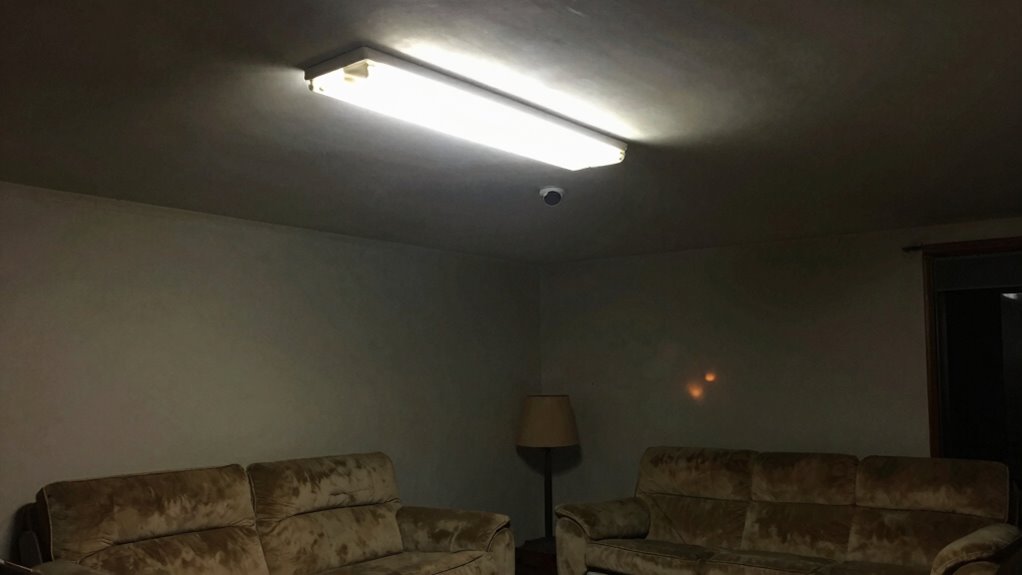
Relying heavily on overhead, bright lights can make a room feel harsh and uninviting, often contributing to a tired and sterile atmosphere. When your lamp placement is solely focused on ceiling fixtures, it eliminates the warmth and depth that layered lighting provides. Bright, cool light colors can intensify this effect, casting unflattering shadows and washing out textures. Instead, try balancing your lighting by incorporating table lamps or wall sconces with softer, warmer bulbs. Adjust light color to a warmer temperature to create a cozy feel. Proper lamp placement near seating areas or accent points helps diffuse light more evenly, reducing glare and harshness. Incorporating layered lighting techniques can further enhance the ambiance and depth of your space. Using lighting control systems can also allow you to adjust light levels easily throughout the day, creating a more dynamic and inviting environment. Paying attention to lighting design principles can help you achieve a more balanced and aesthetically pleasing setup. This simple change can immediately make your space feel more inviting and lively, counteracting the tired, clinical vibe overhead lights create.
How Layered Lighting Creates a Warm, Inviting Atmosphere
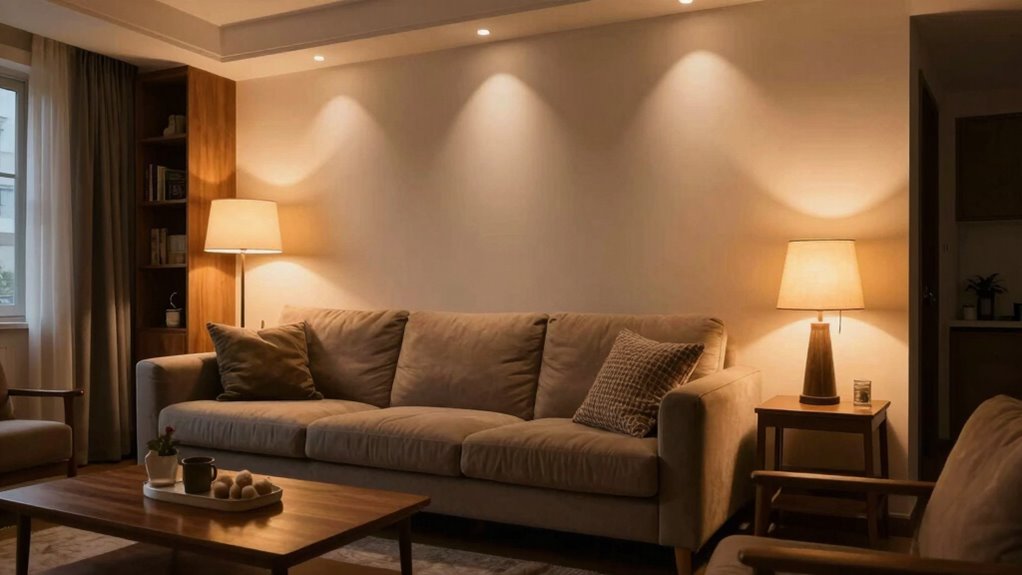
By combining different light sources, you can create a cozy, welcoming space that feels layered and thoughtfully designed. Balancing brightness levels prevents rooms from feeling too harsh or too dim, enhancing comfort. When you add visual depth through varied lighting, your room instantly appears warmer and more inviting.
Combining Different Light Sources
Layering different light sources is key to creating a warm, inviting atmosphere in any room. To do this effectively, pay attention to lamp placement, ensuring lights are positioned to highlight key areas without creating harsh shadows. Mixing ambient, task, and accent lighting adds depth and visual interest. Use a variety of color temperatures—warm whites for cozy areas and neutral tones for functional spaces—to foster a welcoming environment. Avoid relying solely on overhead lighting, which can flatten the space and make it feel tired. Instead, combine table lamps, floor lamps, and wall sconces to create a balanced, layered look. This combination not only enhances style but also provides flexibility, allowing you to adjust lighting to match the mood and activity in each room. Additionally, incorporating layered lighting techniques can further elevate the overall ambiance and functionality of your space. Paying attention to lighting placement ensures that each layer works harmoniously to achieve a cohesive and inviting atmosphere. Properly managing credit card security measures in your lighting setup can also protect your devices from cyber threats, ensuring a safe environment. Being mindful of smart lighting controls can help you customize and automate your lighting for even greater comfort and efficiency. Exploring lighting automation systems can streamline your lighting adjustments and enhance convenience throughout your home.
Balancing Brightness Levels
Achieving a warm, inviting atmosphere depends on how well you balance the brightness levels in your layered lighting setup. You want to create a soft, cohesive glow rather than harsh, glaring light. Start by mixing fixture styles that provide different brightness levels, such as dimmable overhead lights, table lamps, and accent lighting. Pay attention to lighting color—warm tones like soft white or amber bulbs make spaces feel cozy and welcoming. Avoid over-illuminating a room with too much brightness, which can make it feel tired and sterile. Instead, aim for a harmonious blend where each fixture contributes to the overall warmth without overpowering the space. Properly balancing these elements guarantees your room feels inviting and comfortable, not dull or overwhelming.
Creating Visual Depth
Creating visual depth in a room transforms a flat space into one that feels warm and inviting. You can achieve this by layering different types of lighting, such as combining natural light with ambient and accent fixtures. Natural light adds brightness and highlights color contrast, making the space feel lively. Use contrasting colors on walls, furniture, or decor to create visual interest and depth. Strategic placement of lights helps emphasize these contrasts, drawing the eye around the room. By balancing natural light with layered lighting, you avoid flatness and create a sense of dimension. This layered approach makes your space feel more dynamic, cozy, and welcoming—an inviting atmosphere that encourages you to relax and linger.
Easy Ways to Soften Harsh Lighting and Brighten Your Room
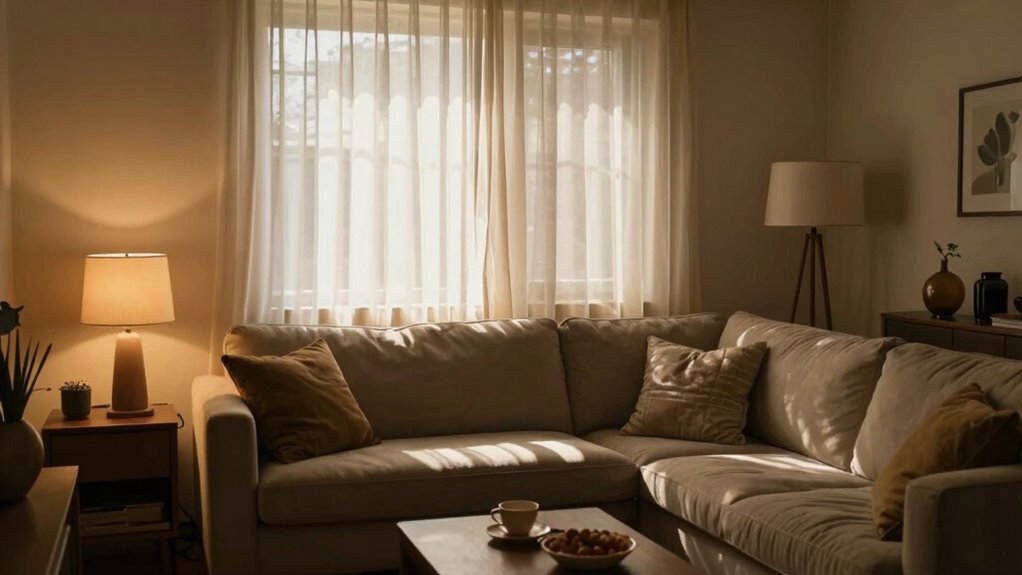
Harsh lighting can make a room feel cold and unwelcoming, but there are simple ways to soften its effect and brighten the space. Using dimming techniques allows you to adjust the brightness level, creating a warmer, more inviting atmosphere. Lowering the light intensity helps reduce glare and harsh shadows, making the room feel cozier. Additionally, tweaking the color temperature of your bulbs can considerably impact the room’s mood. Switch to bulbs with a warmer tone—around 2700K to 3000K—to add a gentle, soothing glow. This combination of dimming and warm color temperature transforms stark, unflattering light into a soft, welcoming ambiance, instantly making your space feel brighter and more inviting without the need for additional fixtures.
Choosing Fixtures and Bulbs for a Gentle, Cozy Glow
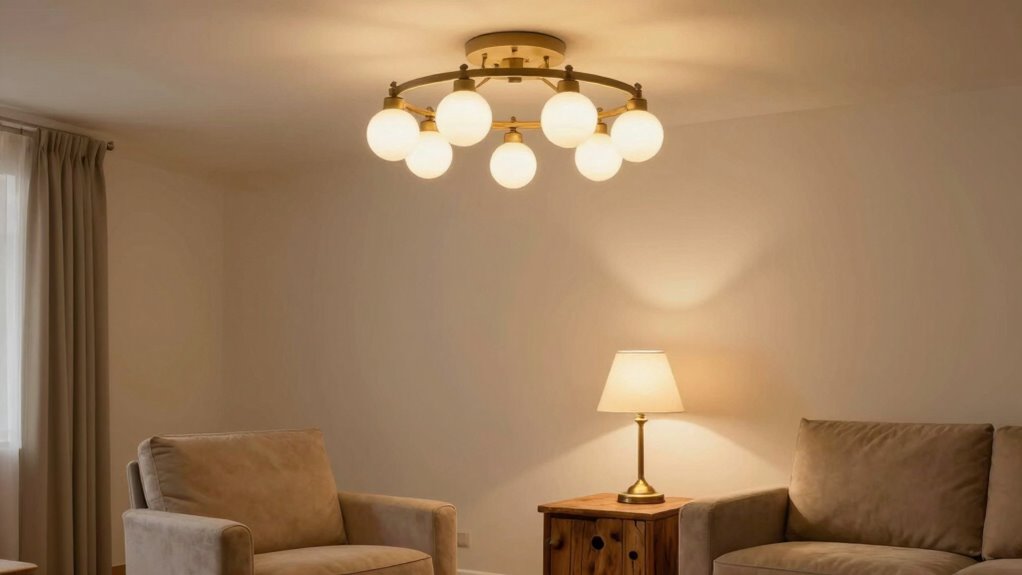
Selecting the right fixtures and bulbs is essential for casting a gentle, cozy glow in your space. Your fixture selection influences how light disperses, while bulb temperature affects warmth. To achieve a soothing atmosphere, consider these tips:
Choosing warm-toned bulbs and fixtures with diffusers creates a cozy, soothing glow in any space.
- Choose fixtures with diffusers or soft shades to soften light.
- Opt for bulbs with a warm color temperature, around 2700K to 3000K.
- Avoid overly bright or cool-toned bulbs that create a stark, tired look.
- Use dimmers to control brightness and maintain a relaxed ambiance.
Combining Ambient, Task, and Accent Lighting for Balance
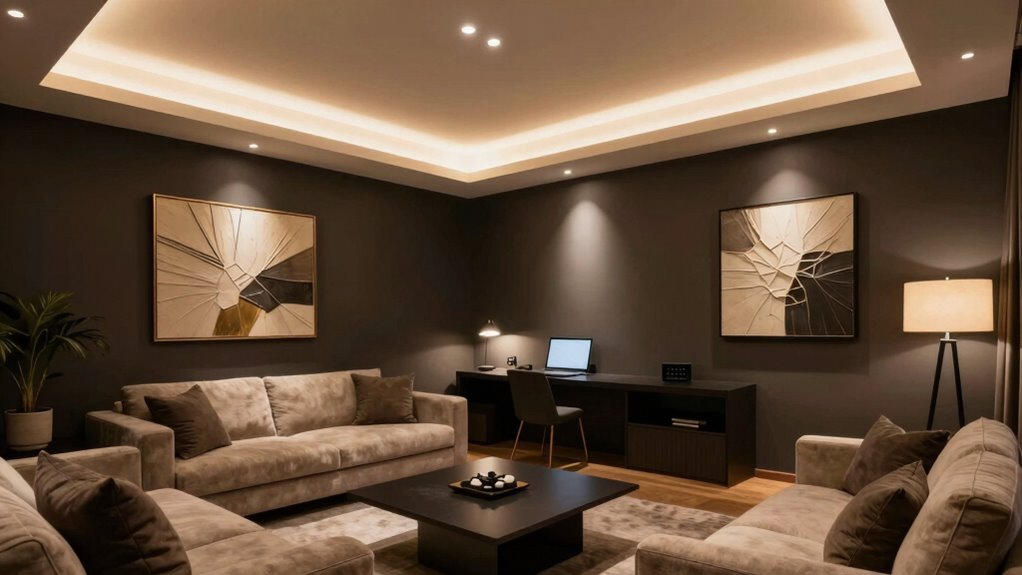
To create a balanced and inviting space, you need to layer ambient, task, and accent lighting effectively. Using dimmer switches allows you to adjust the mood and avoid overly harsh or tired-looking rooms. Highlighting architectural features draws attention and adds depth, making your lighting design both functional and stylish.
Layer Lighting Types Effectively
Achieving a well-balanced room lighting scheme requires carefully combining different types of lights to suit various needs. To do this effectively, consider these points:
- Place lamps strategically to highlight key areas without creating harsh shadows.
- Use a mix of warm and cool color temperatures to set the right mood for each zone.
- Layer ambient, task, and accent lighting to add depth and functionality.
- Adjust lamp placement to guarantee even light distribution, avoiding overly bright or dim spots.
Use Dimmer Switches
Using dimmer switches allows you to fine-tune the balance between ambient, task, and accent lighting. With lighting control, you can adjust brightness levels to create the perfect mood and prevent rooms from feeling flat or tired. Installing dimmer switches gives you the flexibility to brighten your space for activities like reading or relaxing, then dim it for unwinding or entertaining. This control helps avoid overly harsh or dull lighting, making your rooms look more dynamic and inviting. By seamlessly blending different lighting layers, dimmer switches ensure each element complements the others without overpowering. They’re an easy, effective way to elevate your lighting design, making your space feel thoughtfully curated and vibrant instead of tired or flat.
Highlight Architectural Features
Highlighting architectural features with layered lighting brings depth and character to your space. To do this effectively, combine ambient, task, and accent lighting for a balanced look. Use natural light during the day to highlight details and create a warm atmosphere. Incorporate decorative fixtures like wall sconces or pendant lights to emphasize focal points. Consider these tips:
- Position accent lights to highlight moldings or artwork.
- Use dimmable fixtures for adjustable ambiance.
- Integrate decorative fixtures that complement your style.
- Balance natural light with artificial lighting to avoid harsh shadows.
This layered approach ensures your architectural features stand out without overwhelming the space, giving your room a lively, inviting feel.
Tips for Modifying or Replacing Your Existing Lighting Setup

If your current lighting setup is making rooms feel dull or tired, upgrading or modifying it can instantly transform the space. Start by evaluating your existing fixtures and consider swapping outdated bulbs for energy-efficient LED options. Modern lighting technology offers better color rendering and allows for dimming or smart controls, giving you more flexibility. To optimize your setup, think about layering different types of lighting—ambient, task, and accent—to add depth and warmth.
| Tip | Action | Benefit |
|---|---|---|
| Upgrade bulbs | Switch to LED bulbs | Energy efficiency, longevity |
| Add dimmer switches | Install dimmers for existing fixtures | Control brightness, mood |
| Incorporate smart lighting | Use app-controlled lights | Convenience, customization |
| Layer lighting sources | Combine ceiling, table, and wall lights | Depth, visual interest |
| Adjust fixture placement | Relocate or add fixtures strategically | Even illumination, warmth |
Before and After: Transforming a Dull Room Into a Vibrant Space
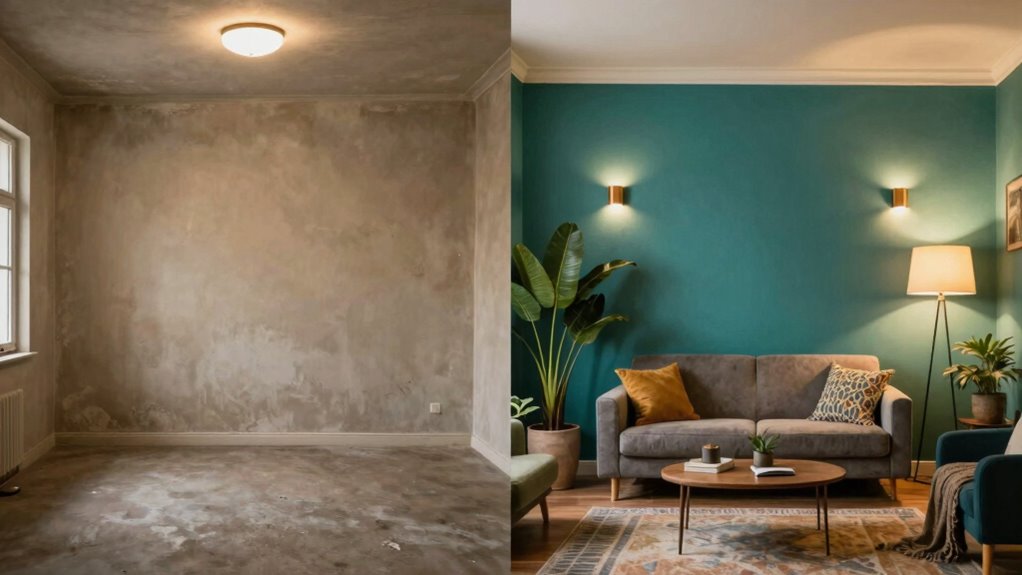
A well-planned lighting makeover can instantly turn a dull, uninspiring room into a vibrant, inviting space. To achieve this, focus on key changes:
- Use dimming techniques to adjust the light intensity, creating mood and depth.
- Select bulb colors that complement the room’s purpose—warm tones for coziness, cool for modernity.
- Incorporate layered lighting with ambient, task, and accent lights for versatility.
- Replace harsh, single-source fixtures with softer, well-placed lights to enhance the overall atmosphere.
Frequently Asked Questions
How Do I Identify the Ideal Lighting Temperature for a Cozy Atmosphere?
You can identify the ideal lighting temperature for a cozy atmosphere by focusing on color temperature and light warmth. Opt for bulbs with a warm color temperature around 2700K to 3000K, which emit a soft, inviting glow. Test different bulbs in your space, noticing how the warmth affects the mood. Choose the one that creates a comfortable, relaxing vibe, making your room feel welcoming and intimate.
What Are Some Affordable Ways to Upgrade My Current Lighting Fixtures?
Think of your room as a canvas, waiting for a splash of light. You can upgrade your fixtures affordably by adding LED strips under cabinets or behind furniture for a modern glow. Swapping out old lamp shades for fresh, stylish ones instantly refreshes your space without breaking the bank. These simple tweaks brighten your room’s vibe, giving it a new life with minimal expense and effort.
How Can I Incorporate Natural Light Effectively Into My Room Design?
You can incorporate natural light effectively by optimizing window placement to maximize sunlight during the day. Use sheer curtains or light-diffusing window treatments to soften harsh rays and create even light diffusion. Consider adding strategically placed mirrors to reflect natural light throughout the room, making it feel brighter and more inviting. Keep furniture away from windows to prevent blocking light, and choose light-colored walls to enhance the natural illumination.
Are Dimmer Switches Beneficial for Creating a Warm Ambiance?
Dimmer switches are like a magic wand for your lighting, offering incredible ambiance control. They benefit your space by allowing you to adjust brightness levels, transforming harsh light into a warm, cozy glow. With dimmers, you can set the perfect mood for relaxing evenings or lively gatherings. They help prevent your room from feeling tired, making your space versatile and inviting at any time of day or night.
What Are Common Mistakes to Avoid When Layering Different Types of Lighting?
When layering different types of lighting, you should avoid neglecting lighting zones and fixture hierarchy. Make certain each zone has appropriate lighting—ambient, task, and accent—and that fixtures are layered thoughtfully. Don’t overpower one layer or create shadows, which can make the room look unbalanced. Keep in mind that a well-planned fixture hierarchy guides the eye and enhances your space without clutter or confusion.
Conclusion
By softening your lighting, you turn a room from a harsh spotlight into a cozy embrace. When you layer ambient, task, and accent lights, you create a warm glow that invites relaxation and energy. Think of your space as a canvas—gentle lighting is the brushstroke that brings it to life, transforming dullness into vibrancy. Small changes can make a big difference, so don’t be afraid to shed some light on your true style.