
A room-by-room comfort audit helps you identify why your home feels off by checking lighting, temperature, airflow, and acoustics in each space. You’ll evaluate color schemes, furniture placement, and layout to improve circulation and cozy ambiance. Monitoring air quality, humidity, and drafts reveals hidden issues that impact comfort. Making targeted adjustments in key areas can make a big difference. Keep exploring to learn simple ways to create a more balanced and inviting home.
Key Takeaways
- Conduct a detailed room-by-room assessment of temperature, humidity, and air quality to identify comfort issues.
- Evaluate lighting, color schemes, and furniture placement to enhance mood, airflow, and space perception.
- Detect drafts, insulation gaps, and soundproofing needs through visual inspection and shadow analysis.
- Organize clutter and optimize layout to improve circulation, reduce stressors, and promote a balanced environment.
- Monitor environmental factors regularly to adjust HVAC, lighting, and ventilation for consistent home comfort.

16 in 1 Air Quality Monitor Indoor 7" Large Display 9 AQI+7 Alerts, CO2 Monitor Air Quality Tester for CO2, TVOC, PM2.5 PM1.0 PM10, HCHO Temperature Humidity AQI & Time Air Quality Meter for Home
【16-in-1 Air Quality Monitor Indoor】Experience the ultimate indoor air quality monitoring with our 16-in-1 Air Quality Monitor, offering…
As an affiliate, we earn on qualifying purchases.
As an affiliate, we earn on qualifying purchases.
Why Conduct a Room-by-Room Home Comfort Audit?

Conducting a room-by-room home comfort audit helps you identify specific issues that may be making certain areas uncomfortable or inefficient. By examining elements like color schemes, you can see if bold or dark hues absorb heat or make a space feel smaller, impacting comfort. Color impact on heat absorption can significantly influence how warm or cool a room feels. Furniture placement also plays a vital role; poorly arranged furniture can block airflow, restrict movement, or create cold spots. This process allows you to assess whether your room’s layout promotes good circulation and whether your color choices contribute to a warm, inviting atmosphere or an unbalanced environment. Understanding these details helps you make targeted adjustments, improving overall comfort and energy efficiency. A thorough audit ensures your home feels cozy and functions at its best in every room. Additionally, considering room zoning and airflow can further enhance comfort by optimizing how air circulates throughout your space. Incorporating thermal comfort factors into your assessment can also help identify temperature inconsistencies and improve overall coziness. Paying attention to insulation and sealing can further prevent drafts and maintain consistent temperatures across different areas of your home. Recognizing natural light sources can also help you adjust window treatments and layout for better warmth and brightness during the day.

Amazon Smart Thermostat – Save money and energy – Works with Alexa and Ring – C-wire required
Smart upgrade – Amazon Smart Thermostat is an easy way to switch from a traditional thermostat and help…
As an affiliate, we earn on qualifying purchases.
As an affiliate, we earn on qualifying purchases.
How to Prepare for Your Home Comfort Checkup (Tools and Mindset)
Before your home comfort checkup, gather the essential tools you’ll need to assess each room effectively. Keep a clear goal in mind to stay focused and organized throughout the process. Stay open to discovering new insights, and be ready to adjust your approach as you go. Incorporating simple home organization tips can make your assessment more efficient and effective. Additionally, understanding how smart home technology can influence your environment might reveal opportunities for improvement you hadn’t considered. Recognizing energy consumption patterns can further help identify areas where small changes could lead to significant comfort improvements. Exploring natural pool options may also inspire enhancements that blend comfort with sustainability, enriching your overall home environment. Paying attention to projector setup and calibration can also enhance your home entertainment experience and overall ambiance.
Gather Necessary Tools
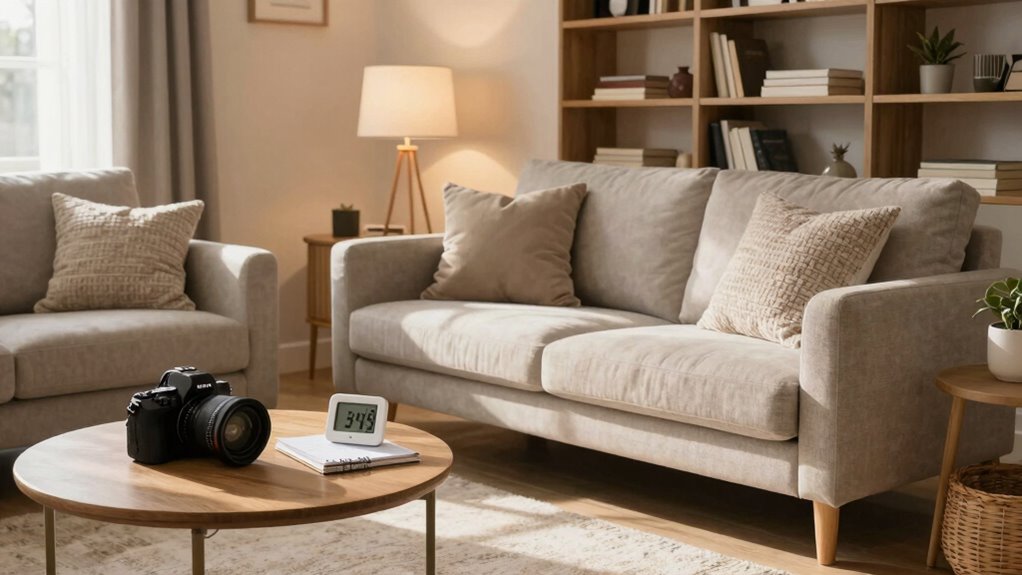
To guarantee your home comfort checkup goes smoothly, gather the essential tools you’ll need beforehand. Start with a thermometer to assess temperature consistency across rooms and a moisture meter to detect humidity issues. A flashlight helps you inspect hidden areas like vents and behind furniture. Keep a notebook or digital device handy for noting observations. Consider bringing decorative accents, like throw pillows or curtains, to evaluate whether color schemes influence the room’s ambiance and comfort. A small level ensures furniture and fixtures are properly aligned. Having these tools ready lets you efficiently identify problem areas and better understand how decor choices impact your home’s overall feel. Preparing in advance ensures your comfort audit is thorough and productive. Additionally, understanding indoor air quality factors can help you identify unseen issues that affect your home’s comfort. Being aware of air circulation and ventilation can reveal hidden sources of discomfort that are not immediately visible. Conducting a comprehensive assessment with the right tools can lead to more targeted improvements for your living space. Recognizing hidden issues related to moisture, air quality, and airflow allows you to address potential problems before they escalate.
Furthermore, using these tools can help you pinpoint problem areas that might otherwise go unnoticed, saving time and effort during your home evaluation.
Set Clear Intentions
Setting clear intentions for your home comfort checkup helps you stay focused and maximize your results. Decide what areas feel off or need improvement, whether it’s temperature, lighting, or overall ambiance. Think about how decorative accents and color schemes influence your comfort—perhaps calming hues or vibrant pops of color boost your mood. Clarify your goals: Are you aiming to create a cozy retreat, a functional workspace, or a more balanced environment? By setting these intentions, you’ll approach each room with purpose, making it easier to identify what works and what doesn’t. Incorporating wall art trends such as digital frames or interactive murals can also enhance your space’s atmosphere and reflect your mood. Understanding home improvement costs can help you plan feasible adjustments within your budget. Having a clear plan also helps you prioritize adjustments, whether it’s changing a few decorative accents or rethinking your color schemes. This focused mindset sets the stage for an effective and satisfying comfort checkup.
Maintain Open Mind
Approaching your home comfort checkup with an open mind allows you to honestly assess what’s working and what needs change, without preconceived notions clouding your judgment. Cultivating mindset openness helps you see issues from different angles, encouraging a perspective shift that reveals underlying problems you might overlook. Stay curious rather than defensive, and be willing to challenge assumptions about your home’s comfort. This attitude ensures you gather accurate insights and avoid quick fixes that don’t address root causes. Remember, a fresh perspective can uncover overlooked details, making your audit more effective. By maintaining an open mind, you create space for honest evaluation and meaningful improvements, ultimately making your home more comfortable and energy-efficient.

Focusound 52 Pack Acoustic Foam Panels 1" x 12" x 12" Sound Proof Foam Panles Soundproofing Noise Cancelling Wedge Panels for Home Office Recoding Studio with 300PCS Double-Side Adhesive
Soundproofing – Acoustic foam panels triangular grooves structure for better noise absorption, helps to reduce and absorb unwanted…
As an affiliate, we earn on qualifying purchases.
As an affiliate, we earn on qualifying purchases.
Assessing Lighting, Mood, and Ambience in Each Room
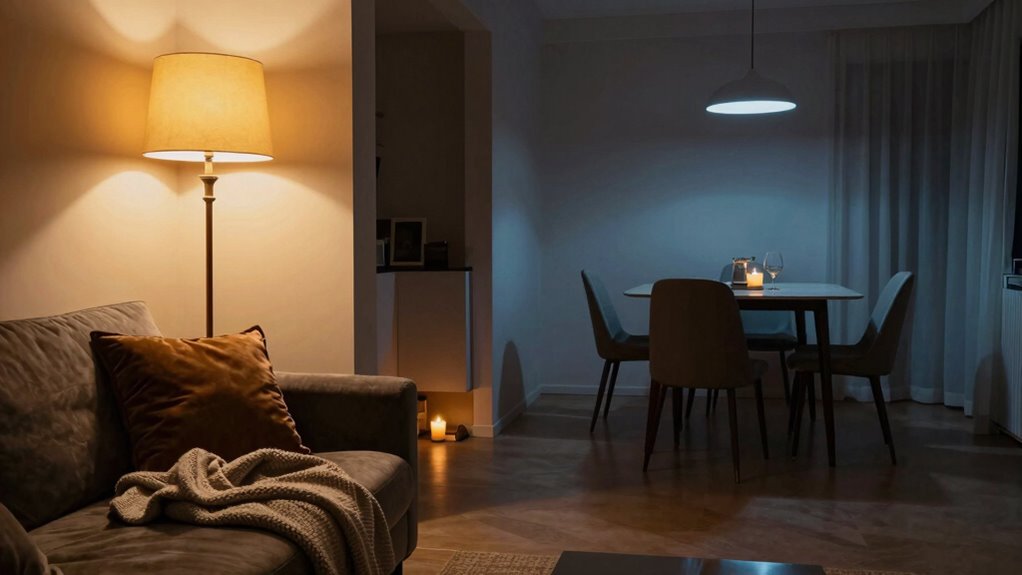
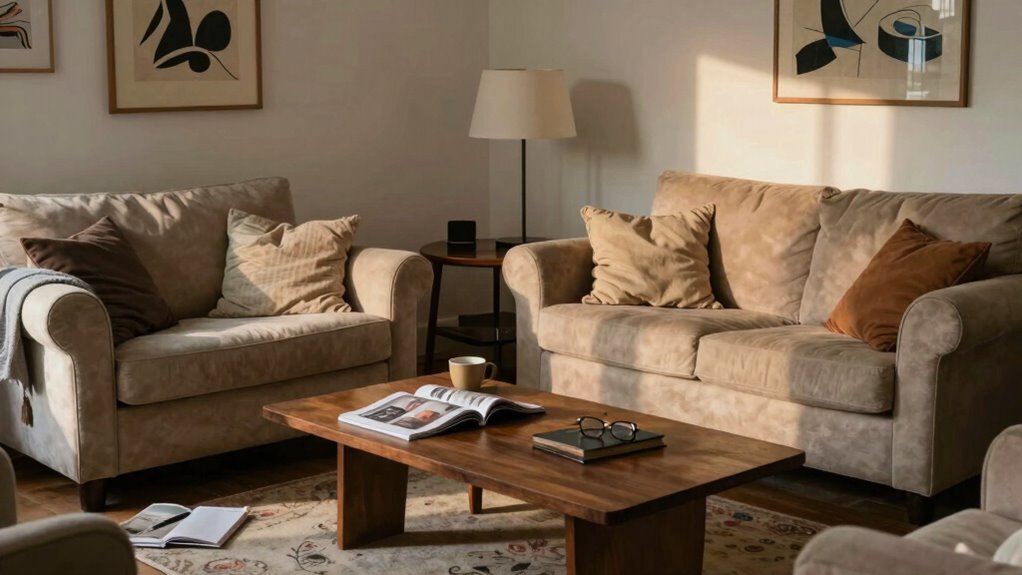
Evaluating the lighting, mood, and ambience in each room is essential to creating a comfortable and inviting space. Your lighting assessment helps identify if a room feels dull or harsh, affecting your mood and overall comfort. Consider how different lighting options can enhance the atmosphere, whether through warm bulbs for coziness or bright LEDs for productivity. To evoke emotion, reflect on the feelings each space should inspire:
| Room Type | Ideal Lighting | Mood Enhancement |
|---|---|---|
| Living Room | Soft, layered lighting | Warmth, relaxation |
| Bedroom | Dim, gentle lighting | Calm, intimacy |
| Kitchen | Bright, functional light | Energy, focus |
| Office | Clear, task lighting | Concentration, alertness |
| Bathroom | Bright, even light | Freshness, clarity |
This approach helps you tailor lighting to foster the right emotions in each space.

LED Floor Lamp for Living Room, Bright Reading Lamps for Office, Adjustable Colors Temperatures&Brightness, Dual Head Goose-Neck Standing Lamp, Remote and Button Control, Eye Caring Tall Lamp, Black
Super Bright Dual-Head Design & Eye Caring: Our LED floor lamp features an adjustable dual-head design that rotates…
As an affiliate, we earn on qualifying purchases.
As an affiliate, we earn on qualifying purchases.
Checking Temperature, Humidity, and Air Quality in Every Space
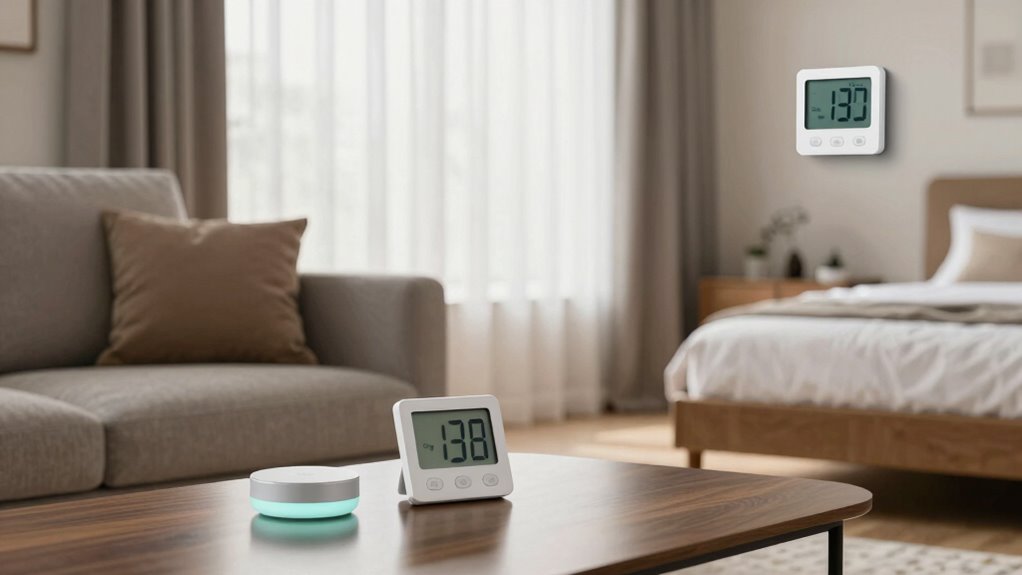
Ensuring each room maintains the right temperature, humidity, and air quality is essential for comfort and health. Use a reliable thermometer to check temperature levels and adjust your HVAC system or space heaters accordingly. Measure humidity with a hygrometer; aim for 40-60% to prevent mold and keep walls from cracking. Pay attention to air quality by testing for pollutants, dust, and odors—poor air quality can cause discomfort and health issues. Improve air quality with air purifiers or by increasing ventilation, especially in rooms prone to stuffiness. Regularly monitoring these factors helps you identify problem areas and make quick adjustments. Proper monitoring of these factors is crucial for optimizing home comfort and preventing issues related to air quality. Additionally, understanding indoor air quality fundamentals can help you choose the most effective solutions for your home. Maintaining ideal temperature, humidity, and air quality creates a healthier, more comfortable environment in every room. For example, using air quality testing kits can help you detect specific pollutants and address them effectively. Regularly inspecting and maintaining your ventilation systems ensures fresh air circulation and reduces indoor pollutants. Being aware of air purification techniques can further enhance indoor air quality and overall comfort.
Evaluating Layout and Flow to Make Your Home Feel Cozier
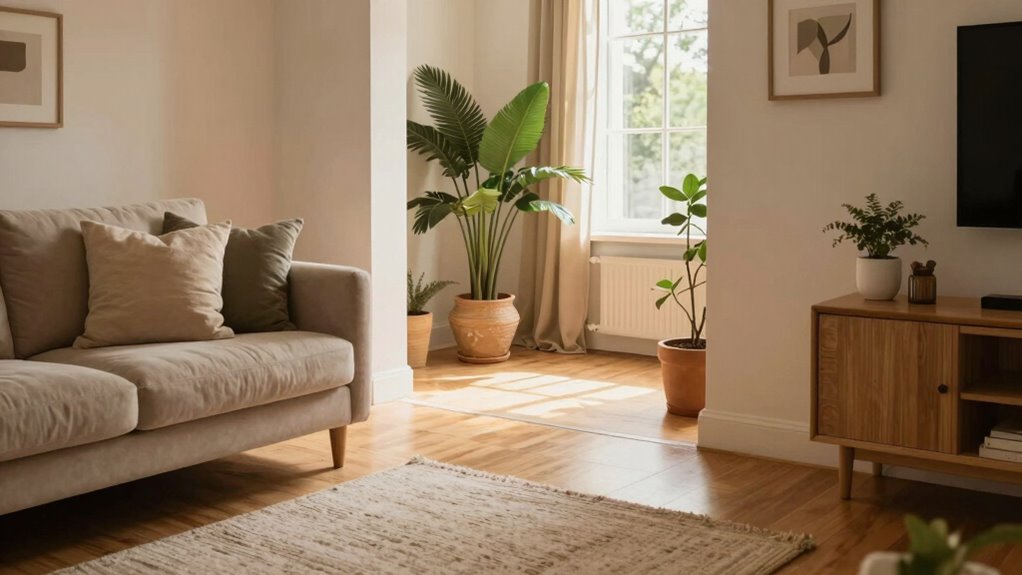
You can make your home feel more inviting by optimizing open spaces and ensuring they aren’t cluttered. Clear traffic flow and well-placed pathways help movement feel natural and effortless. Adjusting these elements creates a cozy atmosphere that invites relaxation and easy socializing. Additionally, integrating eco-friendly disposal practices for kitchen gear can contribute to a more sustainable and comfortable living environment.
Open Space Optimization
Have you ever walked into a room and immediately felt overwhelmed by clutter or awkward layout? Open space optimization can transform that feeling into calm. Start by evaluating your layout with these steps:
- Clear pathways to improve feng shui and ensure energy flows smoothly.
- Use color psychology to select calming hues that enhance the sense of openness.
- Remove or relocate furniture that blocks natural movement or light.
- Create designated zones to balance open space with cozy areas.
Traffic Flow and Pathways
Optimizing open space sets the stage for a cozy atmosphere, but smooth traffic flow and clear pathways are what truly make a home feel inviting. Start by evaluating your furniture placement—arrange pieces to create natural routes that avoid clutter and obstructions. Ensure pathways are wide enough for easy movement without feeling cramped. Incorporate decorative accents strategically along pathways to guide the eye and enhance flow, rather than block movement. Consider how people naturally move through each room and adjust furniture accordingly to maintain an open feel. Removing unnecessary furniture or rearranging pieces can make a significant difference. With thoughtful layout adjustments, your home will not only look better but also feel more welcoming and comfortable.
Finding Clutter and Storage Issues That Hurt Your Comfort
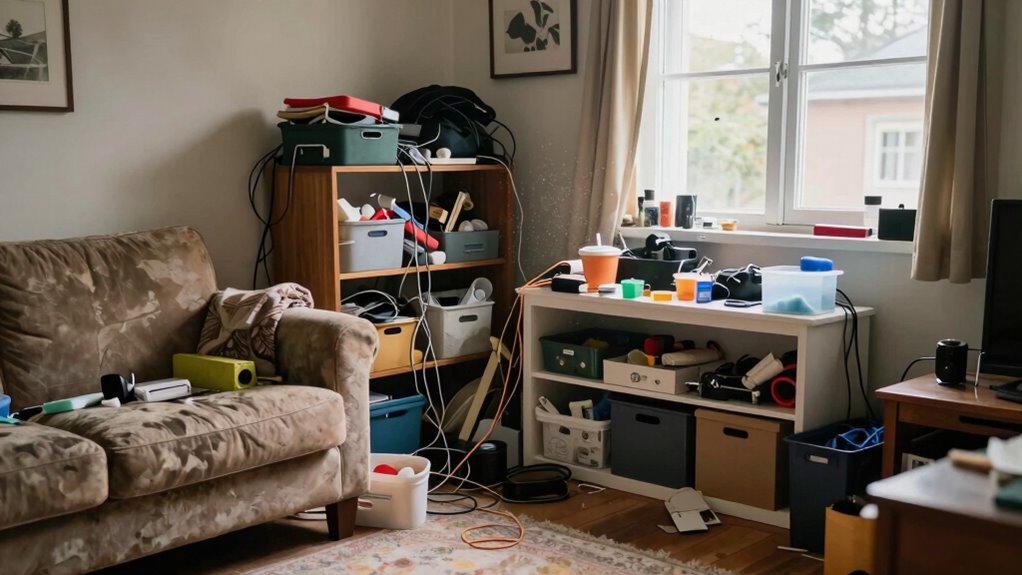
Clutter and poorly organized storage can substantially detract from your comfort by making spaces feel chaotic and overwhelming. To address this, consider these four steps:
A tidy, well-organized space enhances comfort and creates a calming, inviting home environment.
- Declutter surfaces by removing unnecessary decorative accents and keeping only meaningful items.
- Use storage solutions that suit your space, like baskets or cabinets, to hide clutter and maintain clean lines.
- Ensure storage areas support your color schemes, blending seamlessly with your décor for a cohesive look.
- Regularly revisit and reorganize to prevent accumulation and keep your home feeling calm.
A clutter-free environment enhances visual harmony and allows your chosen decorative accents to shine. When storage is efficient, your home feels more spacious, organized, and comfortable—creating a peaceful atmosphere you’ll enjoy every day.
Listening for Noise and Improving Room Acoustics

When your space feels chaotic due to clutter, noise often becomes more noticeable and disruptive. To address this, start by actively listening for problematic sounds—echoes, loud appliances, or external noise. Use soundproofing techniques like sealing gaps around windows and doors, adding heavy curtains, or installing acoustic panels to absorb sound. Implement noise reduction strategies such as placing rugs or soft furnishings to dampen echoes and minimize sound transmission. Pay attention to how different areas of the room respond to sound, and adjust accordingly. By listening carefully, you identify the specific sources of noise and take targeted steps to improve room acoustics. These simple adjustments can make your space more peaceful and comfortable, reducing stress and enhancing overall harmony.
Spotting Drafts, Shadows, and Other Hidden Home Problems
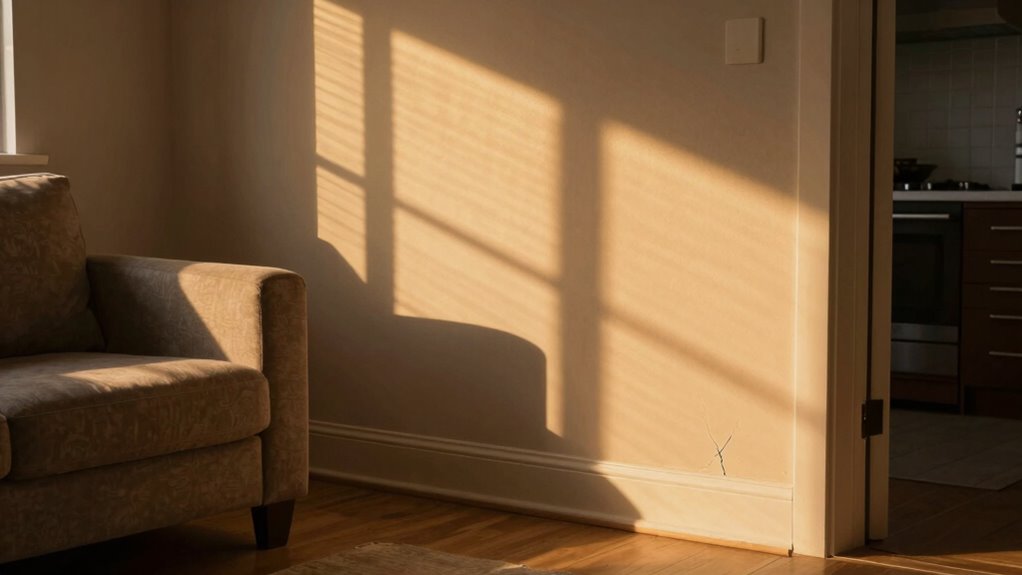
Hidden home problems like drafts and shadows often go unnoticed but can markedly affect your comfort and energy bills. To identify these issues, try a few simple steps.
- Use draft detection techniques—hold a lit candle or thermal camera near windows, doors, and outlets to spot air leaks.
- Conduct shadow analysis during different times of day to reveal areas where light doesn’t reach, indicating potential obstructions or insulation gaps.
- Check for cold spots on walls or floors, which often point to drafts or poor insulation.
- Look for persistent shadows that change with sunlight, revealing hidden cracks or gaps.
Spotting drafts and shadows helps you find hidden home problems that compromise comfort and efficiency. Addressing these issues can make a big difference in your overall home environment.
Which Fixes Should You Tackle First? Prioritizing for Impact and Ease
To make the most of your home improvement efforts, start by focusing on fixes that deliver the biggest impact with the least effort. Small updates like rearranging decorative accents or tweaking color schemes can instantly refresh a room’s vibe and boost comfort. Prioritize changes that address obvious issues first—such as adding soft lighting or cozy textiles—before tackling more complex projects. Enhancing a space’s visual appeal with new decorative accents can create a sense of harmony and warmth, making your home feel more inviting. Remember, simple adjustments often have outsized effects. By tackling these easier, impactful improvements early on, you’ll build momentum and create a more comfortable, cohesive environment without overwhelming yourself.
How to Maintain Your Home’s Comfort Over Time
Maintaining your home’s comfort requires consistent effort and mindful habits. To keep your space cozy and energy-efficient, consider these steps:
- Regularly update and rearrange decorative accents to enhance airflow and aesthetics.
- Schedule seasonal maintenance for HVAC systems, ensuring ideal energy efficiency.
- Seal drafts around windows and doors to prevent heat loss and improve comfort.
- Use smart thermostats to monitor and adjust temperature settings effortlessly.
Frequently Asked Questions
How Often Should I Perform a Home Comfort Audit?
You should perform a home comfort audit at least once a year to guarantee ideal HVAC maintenance and indoor air quality. Regular checks help identify issues like drafts, poor insulation, or air pollutants that make your home feel off. Seasonal audits are especially beneficial before extreme weather changes. Staying proactive keeps your home comfortable, energy-efficient, and healthy, preventing minor problems from becoming costly repairs.
Can Small Changes Significantly Improve Overall Home Comfort?
Imagine your home as a serene garden—small tweaks can make it flourish. Adjusting feng shui elements or adding ambient lighting creates a warm, inviting atmosphere that transforms your space. Even tiny changes, like repositioning furniture or softening harsh lights, can boost comfort dramatically. These subtle shifts enhance flow and ambiance, making your home feel more balanced, calm, and welcoming—proving that small adjustments truly have a big impact.
What Budget-Friendly Fixes Can Enhance My Home’s Coziness?
You can boost your home’s coziness with budget-friendly fixes like adding decorative accents such as plush throw pillows, cozy blankets, and warm lighting. Incorporate scent enhancement by using candles or diffusers with calming scents to create a welcoming atmosphere. These simple touches make your space feel more inviting and comfortable without breaking the bank, transforming your home into a cozy retreat you’ll love coming home to.
How Do I Identify Underlying Issues Causing Discomfort?
To identify underlying issues causing discomfort, start by evaluating your air quality—look for dust, mold, or stale air that can affect your well-being. Check if your lighting needs adjustments; improper lighting can create a sense of unease. Pay attention to drafts, temperature fluctuations, and noise levels. These signs help pinpoint problems, so you can take targeted actions like improving ventilation or updating lighting, making your home feel more comfortable.
Should I Consult Professionals for Complex Home Comfort Problems?
Yes, you should consider a professional assessment for complex home comfort issues. An expert consultation can identify underlying problems that might be hard to detect on your own, such as HVAC inefficiencies or insulation gaps. Professionals bring specialized tools and knowledge, ensuring accurate diagnosis and effective solutions. Trusting experts helps you avoid costly mistakes and restores your home’s comfort quickly and efficiently.
Conclusion
By taking this room-by-room approach, you might find that small tweaks transform your entire home’s comfort—sometimes when you least expect it. As you notice subtle improvements, like better lighting or quieter corners, you’ll realize that paying attention to detail truly makes a difference. In the end, your home becomes a cozy retreat, almost as if it’s been waiting for you all along—proof that a little effort can turn everyday spaces into perfect havens.