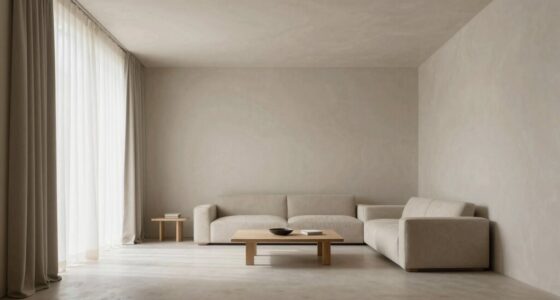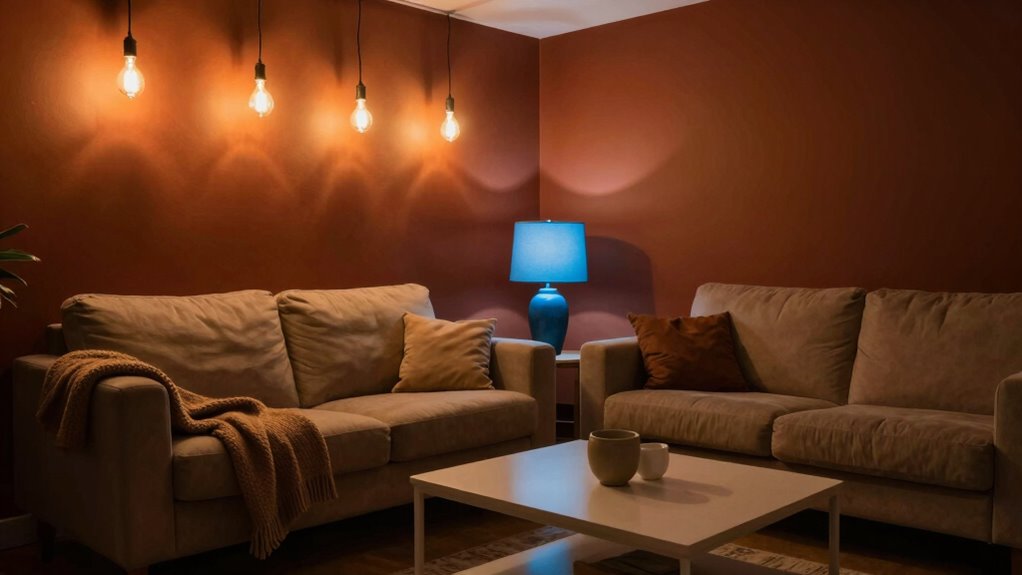

The secret to transforming your home’s atmosphere lies in adjusting its color temperature. Warmer tones (around 2700K) create cozy, inviting spaces perfect for relaxation, while cooler tones (above 4000K) energize and brighten your environment. By choosing the right light warmth for each room and mixing different layers of lighting, you can effortlessly change how your home feels. Keep exploring to discover easy ways to customize your lighting for every mood and occasion.
Key Takeaways
- Adjusting color temperature can instantly transform your home’s mood, making spaces feel warmer, cooler, or more energizing.
- Warm lighting (~2700K) creates a cozy, inviting atmosphere, perfect for relaxation and comfort.
- Cooler lighting (>4000K) enhances focus and energizes spaces, ideal for work areas and modern aesthetics.
- Layering different color temperatures with ambient, task, and accent lighting adds depth and ambiance.
- Smart lighting controls and adjustable fixtures allow seamless changes in color temperature to suit any mood or activity.

Feit Electric A19 LED Light Bulb, 60W Replacement, Dimmable, Selectable Color Temperatures (2700K-5000K), 800 Lumens, General Purpose Light Bulbs, 15,000-Hour Lifetime, OM60DM/5CCTCA/LED/ 10 Pack
CUSTOMIZABLE LIGHTING WITH ADJUSTABLE COLOR TEMPERATURE – Enjoy tailored lighting for every mood and setting with selectable color…
As an affiliate, we earn on qualifying purchases.
As an affiliate, we earn on qualifying purchases.
What Is Color Temperature and Why Does It Matter in Your Home
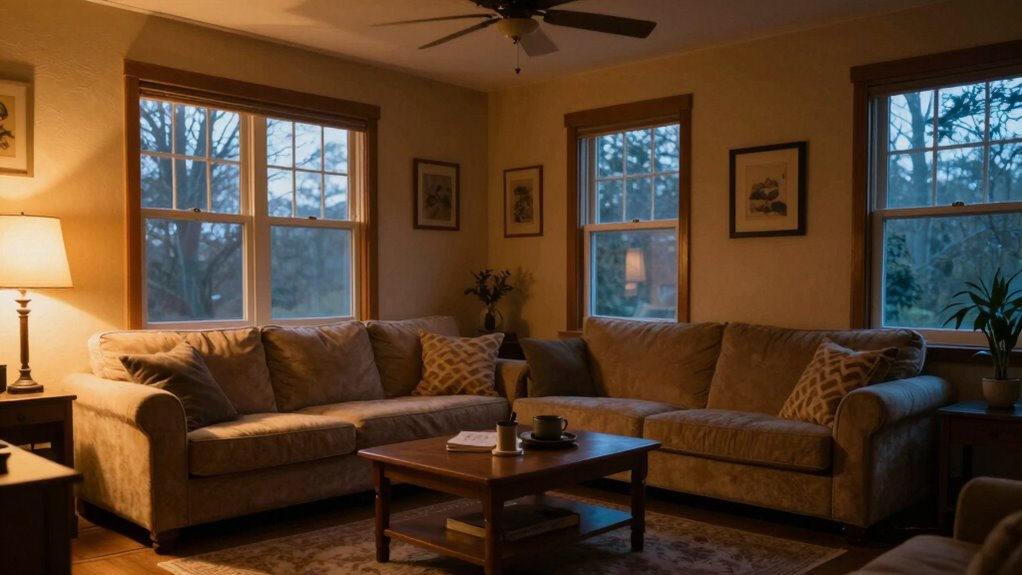
Have you ever noticed how different lighting colors can change the mood of a room? That’s where lighting design and color psychology come into play. Color temperature refers to the warmth or coolness of your light sources, measured in Kelvin. It influences how you perceive a space, affecting its ambiance and functionality. For example, warm tones (around 2700K) create cozy, inviting environments, perfect for living rooms and bedrooms. Cooler tones (above 4000K) feel brighter and more energetic, ideal for workspaces or kitchens. Understanding Color temperature helps you make better lighting choices that align with your desired mood and purpose. It’s a simple way to enhance your home’s atmosphere without changing furniture or decor. Additionally, incorporating inclusive casting in design ensures spaces are welcoming to everyone, reflecting the diversity celebrated in modern beauty and fashion trends. Recognizing the impact of lighting on mood can help you create a more harmonious environment that supports well-being. Exploring regional flavors can also inspire unique lighting styles that add cultural character and authenticity to your space. In short, color temperature shapes how your home feels and functions daily.

SYLVANIA Wifi LED Smart Light Bulb, 60W Equivalent Full Color and Tunable White A19, Dimmable, Compatible with Alexa and Google Home Only – 4 Pack (75674)
Voice control works with Alexa, Google Assistant, and Siri Shortcuts
As an affiliate, we earn on qualifying purchases.
As an affiliate, we earn on qualifying purchases.
How to Recognize the Color Temperature of Your Current Lights
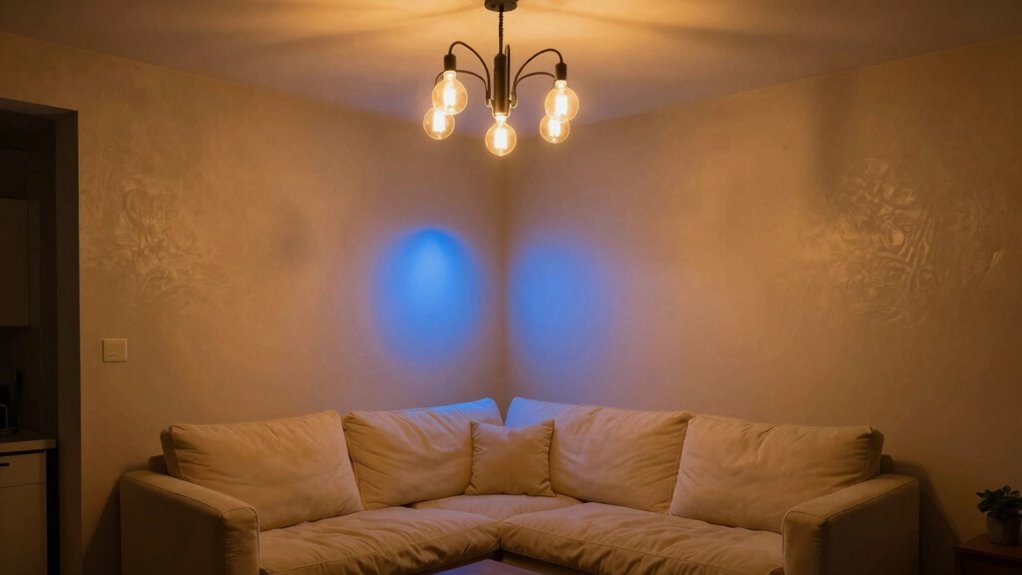
To determine the color temperature of your current lights, start by observing their hue and brightness. Warm tones, like soft yellow or amber, typically have a lower color temperature (around 2700K to 3000K), creating a cozy atmosphere. Cooler tones, such as bluish-white or crisp white, indicate higher color temperatures (around 4000K to 6500K), which are often used in task lighting or modern lighting design. Pay attention to how the light makes your space feel—warmer lights promote relaxation, while cooler ones energize the room. Recognizing these cues helps you assess if your current lighting aligns with your home’s vibe and energy efficiency goals. For instance, understanding light color temperature can guide you in selecting the right bulbs for different areas. Knowing the lighting effects associated with various color temperatures enables you to optimize both mood and energy use, enhancing your overall lighting design. Additionally, understanding the electric power generation of bike generators can inspire eco-friendly solutions for your home energy needs. Moreover, being aware of mammography guidelines and their implications can inform health decisions, especially concerning age-specific screening recommendations.

E ENERGETIC LIGHTING A19 LED Bulbs 60 watt Equivalent, Cool White 4000K, E26 Medium Base, Non-Dimmable LED Light Bulb, ETL Listed, 4-Pack
💡 Technical Features – 4 Pack, 8W 760LM A19 light bulbs 60 watt equivalent, E26 base, 4000K cool…
As an affiliate, we earn on qualifying purchases.
As an affiliate, we earn on qualifying purchases.
How Different Color Temperatures Affect Your Mood and Room Vibe
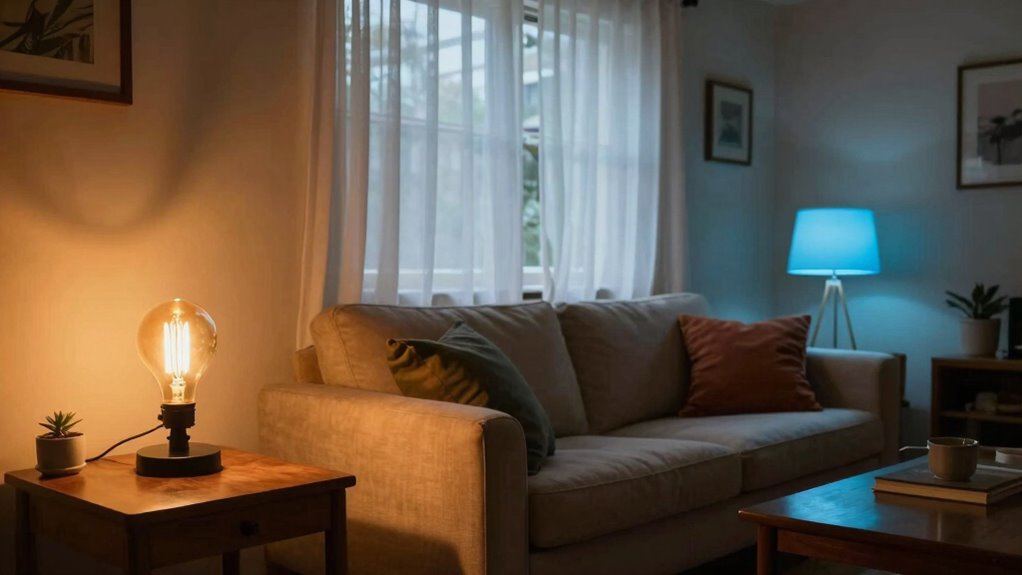
The color temperature of your lighting directly influences how your space feels and how you experience it. Warm light (around 2700K) creates a cozy, inviting vibe, perfect for relaxing or socializing. Cool light (around 5000K) energizes your environment, making it ideal for focus or work. Here’s how different temperatures impact your mood and room vibe:
- Warm tones promote comfort and intimacy, often linked to feelings of safety and calm—great for art therapy sessions or unwinding. Warm lighting can help trigger the body’s natural relaxation response and create a sense of serenity.
- Neutral tones balance energy and relaxation, fostering a versatile atmosphere.
- Cool tones boost alertness and clarity, enhancing productivity and conveying modern, clean aesthetics through color symbolism.
Understanding these effects helps you craft a space that aligns with your emotional needs and desired ambiance. Additionally, lighting color temperature plays a crucial role in how you perceive and utilize your space throughout the day.

FRIXCHUR Crystal Ceiling Light Square Chandelier Modern LED Flush Mount 2 Layers Ceiling Lamp Lighting Fixture for Dining Room Living Room Bedrooms Kitchen Hallway Foyer (Cool White)
Dining Room Ceiling Lights:Cool White(4500-6000K). Made of Polished Stainless steel and K9 Crystals with fine craftmanship, ensuring the…
As an affiliate, we earn on qualifying purchases.
As an affiliate, we earn on qualifying purchases.
How to Choose the Best Color Temperature for Each Room
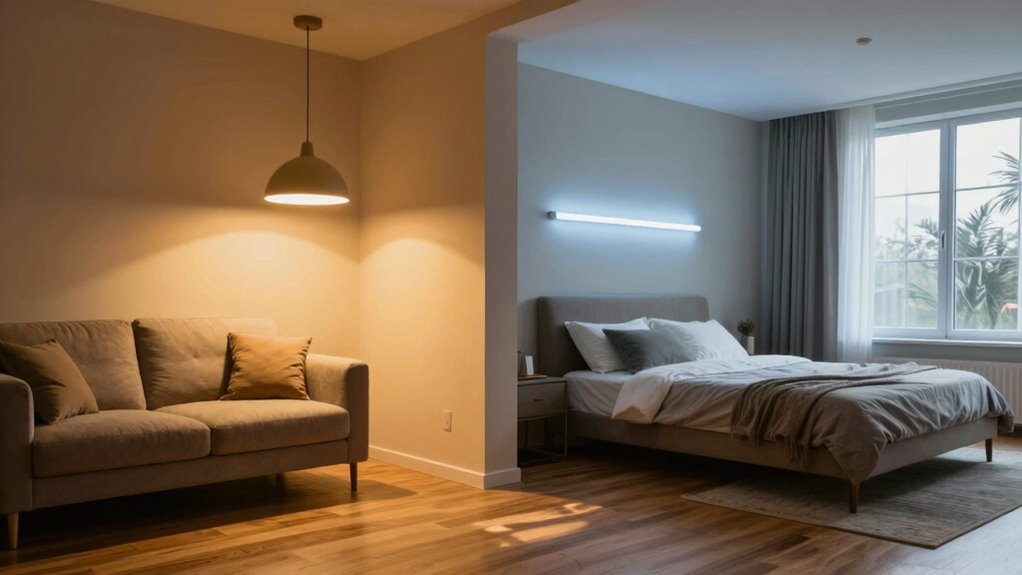
To choose the best color temperature for each room, consider its primary function and the mood you want to create. Warmer tones work well in relaxing spaces like bedrooms, while cooler tones are ideal for energizing areas like kitchens or home offices. Matching the lighting to each room’s purpose helps you achieve the perfect atmosphere effortlessly.
Room Function and Mood
Choosing the right color temperature for each room depends on how you’ll use the space and the mood you want to create. For spaces where you need focus and alertness, like a home office, opt for bright, cool artificial lighting around 5000K–6500K, mimicking natural light. In relaxing areas such as bedrooms or lounges, warmer tones like 2700K–3000K foster comfort and calm. Consider these tips:
- Use cooler temperatures in workspaces to boost productivity.
- Choose warmer tones in bedrooms for a cozy, restful atmosphere.
- Balance artificial lighting with natural light to avoid harsh contrasts and create harmony.
- Understanding how contrast ratio influences image quality can help you select appropriate lighting for different media environments.
- Paying attention to the color temperature of your lighting can significantly impact your overall well-being and mood throughout the day.
- Being aware of lighting quality and how it interacts with natural light can further enhance the ambiance and functionality of each space.
Understanding how artificial lighting interacts with natural light helps you choose the perfect color temperature, shaping each room’s mood effectively.
Optimal Color Temperatures
How do you determine the best color temperature for each room? Start by considering the room’s purpose and mood. For relaxing spaces like bedrooms, choose warm lighting between 2700K and 3000K, which creates a cozy atmosphere. For work areas or kitchens, opt for cooler temperatures around 3500K to 4100K, providing clearer visibility and focus. When selecting lighting fixtures, look for options that offer adjustable color temperatures to adapt to different activities. Prioritize energy-efficient LED fixtures, which deliver excellent illumination while consuming less power. Balancing comfort and efficiency helps you create inviting, functional spaces that feel just right. Properly chosen color temperatures enhance your home’s atmosphere and save energy over time. Additionally, understanding indoor air quality and incorporating air purification can further improve the overall comfort of your living space. For optimal indoor environment, consider how humidity levels interact with lighting choices to influence overall home comfort, and be aware of how portable oil radiators can impact indoor air when used improperly. Incorporating air circulation strategies can also help distribute heat and light more evenly.
Simple Ways to Adjust or Change Your Lights’ Color Temperature
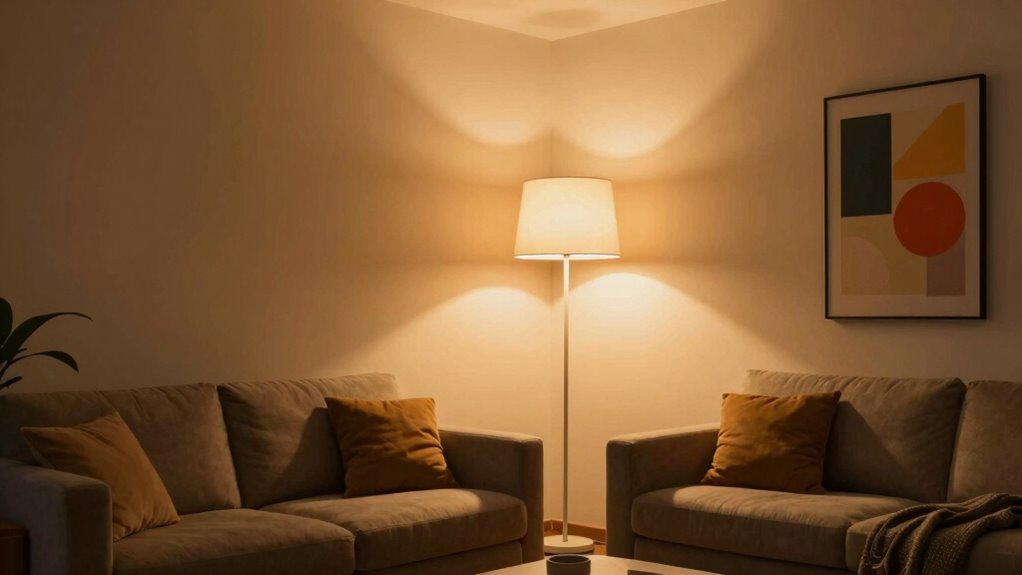
Adjusting your lights’ color temperature is simpler than you might think. You can enhance your lighting aesthetics and boost energy efficiency with just a few quick tweaks. Here are three easy ways to do it:
- Use smart bulbs with adjustable color settings, allowing seamless shifts from warm to cool tones.
- Install dimmer switches that also let you control color temperature, giving you flexibility for different moods.
- Opt for LED bulbs with variable color features, which are energy-efficient and customizable.
- Understanding lighting technology helps you select the best options for your home’s ambiance and efficiency.
Tips for Using Lighting to Make Your Home Feel Cozy and Inviting
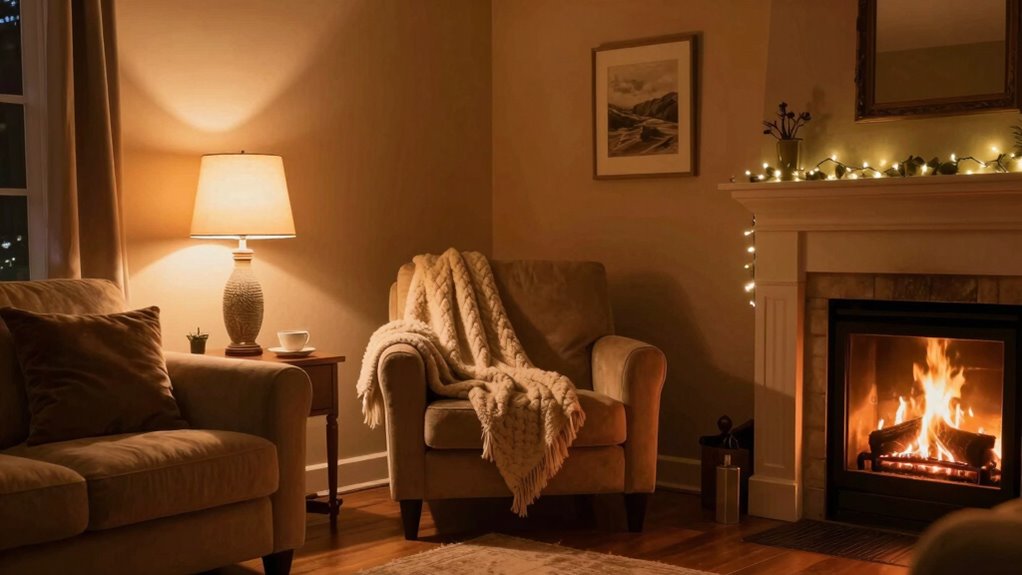
To create a cozy, inviting atmosphere, start by choosing warm light tones that soften your space. Layer your lighting with different sources to add depth and comfort, and consider installing dimmer controls to easily adjust brightness. These simple steps can transform your home into a welcoming retreat. Incorporating aromatherapy benefits through subtle scents can also enhance relaxation and overall ambiance. Additionally, selecting color temperature settings that emit a warm glow can significantly influence the mood and feel of your environment, especially when combined with lighting design principles that optimize the space’s atmosphere. Understanding how natural light interacts with artificial lighting can further enhance your home’s cozy appeal and promote wellness.
Choose Warm Light Tones
Choosing warm light tones instantly creates a cozy and inviting atmosphere in your home. To achieve this, focus on selecting lightbulb hues that emit a soft, amber glow. Here are three tips:
- Use ambient illumination with warm white bulbs (around 2700K) to create a gentle, welcoming light. Lighting temperature plays a crucial role in setting the mood and ambiance.
- Opt for fixtures that diffuse light evenly, avoiding harsh shadows or glare. Incorporating diffused lighting techniques helps to soften the overall illumination.
- Incorporate lamps and fixtures with warm-toned shades to enhance the cozy feel.
- Consider integrating natural lighting during daytime hours to complement your warm interior lighting and create a harmonious environment. Utilizing lighting control systems can help you adjust light levels throughout the day for optimal comfort.
These choices help your space feel more intimate and relaxing. Warm light tones complement your decor, making rooms appear softer and more inviting. By carefully selecting warm-colored bulbs and fixtures, you set a comforting mood that encourages relaxation and conversation.
Layer Lighting Strategically
Layering different types of lighting allows you to create a warm, inviting atmosphere that feels both cozy and functional. Use a mix of ambient, task, and accent lighting to achieve this effect. Ambient lighting provides general illumination, but it can also cast subtle ambient shadows that add depth and softness to the space. Incorporate task lights where you need focused brightness, like reading nooks or kitchen counters. Accent lighting highlights artwork or architectural features, enhancing the overall warmth. Light layering ensures your space doesn’t feel flat or sterile; instead, it creates visual interest and comfort. By carefully combining these lighting layers, you can control the mood and make your home feel truly welcoming and cozy at any time of day.
Use Dimmer Controls
Using dimmer controls gives you immediate flexibility to set the perfect mood in any room. With dimmers, you can adjust the light intensity to create a cozy, inviting atmosphere. Just verify your light bulb types are compatible—incandescent, dimmable LEDs, or halogens work best. Check fixture compatibility before installing dimmer switches to avoid flickering or damage. To maximize effect:
- Choose dimmable light bulbs suited to your fixture.
- Install dimmer switches compatible with your light bulb types.
- Experiment with different brightness levels to find the perfect ambiance.
This simple upgrade lets you control lighting levels effortlessly, making your space feel warm, welcoming, and adaptable to any occasion.
Common Mistakes to Avoid When Setting Up Your Home Lighting

Many people make the mistake of relying on a single light source for their entire room, which can create harsh shadows and uneven lighting. Instead, you should layer your lighting with different sources and adjust their placement for balanced illumination. Avoid neglecting lighting automation, which helps you easily control multiple lights and set schedules, saving energy and creating the right ambiance. Overusing bright, cool-toned bulbs can make spaces feel sterile, so consider mixing color temperatures to enhance comfort. Additionally, don’t forget to match your lighting to the room’s function; task, ambient, and accent lighting each serve different purposes. Proper planning prevents energy waste and ensures your lighting setup feels warm and inviting rather than harsh or inconsistent.
Exploring Smart Lighting Solutions for Easy Color Temperature Control
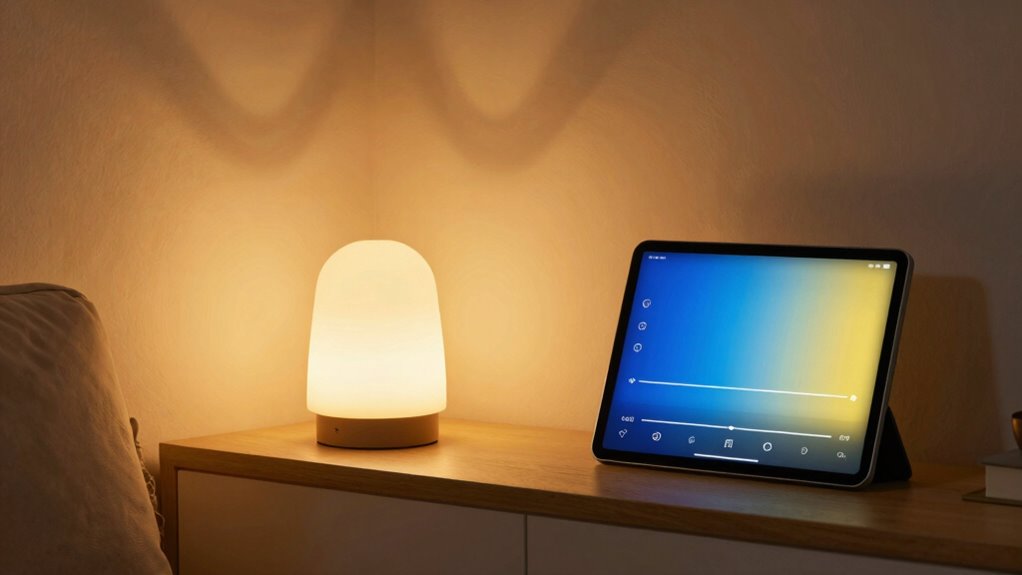
Smart lighting solutions have made it easier than ever to control your home’s color temperature with just a tap or voice command. With smart bulbs, you can customize your lighting to match your mood or activity instantly. Using voice control, you can effortlessly adjust your lighting without interrupting your day. Here are three reasons to contemplate smart lighting:
- Instant Adjustments: Change color temperature on demand for work, relaxation, or energizing mornings.
- Custom Presets: Save your favorite settings for different times or activities.
- Remote Control: Adjust lights from anywhere, ensuring your home’s ambiance is always just right.
These solutions simplify creating the perfect atmosphere, making your home more comfortable and adaptable.
Frequently Asked Questions
Can Changing Color Temperature Reduce Eye Strain?
Yes, changing color temperature can reduce eye strain. Warmer tones with lower color temperatures ease your eyes during prolonged use, especially in the evening. Cooler, higher temperatures might boost LED efficiency and help with alertness, but they can cause more eye fatigue over time. Adjusting your lighting to warmer settings creates a comfortable environment, reducing strain and enhancing your mood, making your space both functional and inviting.
How Does Natural Light Influence Perceived Color Temperature?
Natural light acts like a master painter, shaping your perception of color with daylight dynamics. It influences how you perceive color temperature, shifting from warm mornings to cooler afternoons. As sunlight changes throughout the day, your color perception evolves, making spaces feel cozy or vibrant. Embracing these natural variations helps you understand how daylight dynamics can dramatically impact your home’s ambiance, aligning lighting with your mood and activity.
Are There Health Benefits to Specific Color Temperatures?
Yes, certain color temperatures offer health benefits, especially through color therapy and mood regulation. Cooler, bluish light can boost alertness and improve focus, making it ideal for workspaces. Warmer, yellowish light fosters relaxation and better sleep. By adjusting your home’s lighting to match these benefits, you support your well-being, enhance mood, and promote better overall health. You can create a balanced environment that nurtures both energy and calmness.
How Often Should I Update My Home Lighting for Best Effect?
You should update your home lighting every 2 to 3 years for ideal effect. Studies show that LED bulbs last around 25,000 hours, but their brightness and color quality decline over time, impacting your mood and energy. Using lighting automation, you can program changes to match seasons or daily routines, ensuring consistent ambiance. Regular updates keep your environment vibrant and efficient, making your space feel fresh and tailored to your needs.
Can Color Temperature Impact Sleep Quality?
Yes, color temperature can impact your sleep quality. Cooler lighting (blue tones) in your lighting ambiance can suppress melatonin, making it harder to fall asleep, while warmer tones promote relaxation and mood enhancement. To improve sleep, switch to warmer lighting in the evening and avoid bright, blue-toned lights before bed. This simple change helps your body wind down naturally, supporting better rest and overall well-being.
Conclusion
Did you know that 80% of people feel more relaxed and comfortable in homes with warm lighting? By understanding and adjusting your color temperature, you can transform your space into a cozy haven or an energizing retreat. Don’t underestimate the power of small changes—switching your bulbs or exploring smart lighting can make a big difference. Take control of your home’s mood today and enjoy a brighter, more inviting atmosphere tailored just for you.