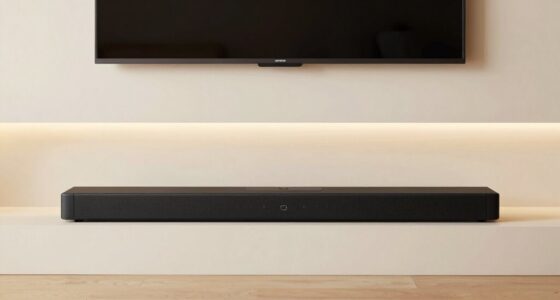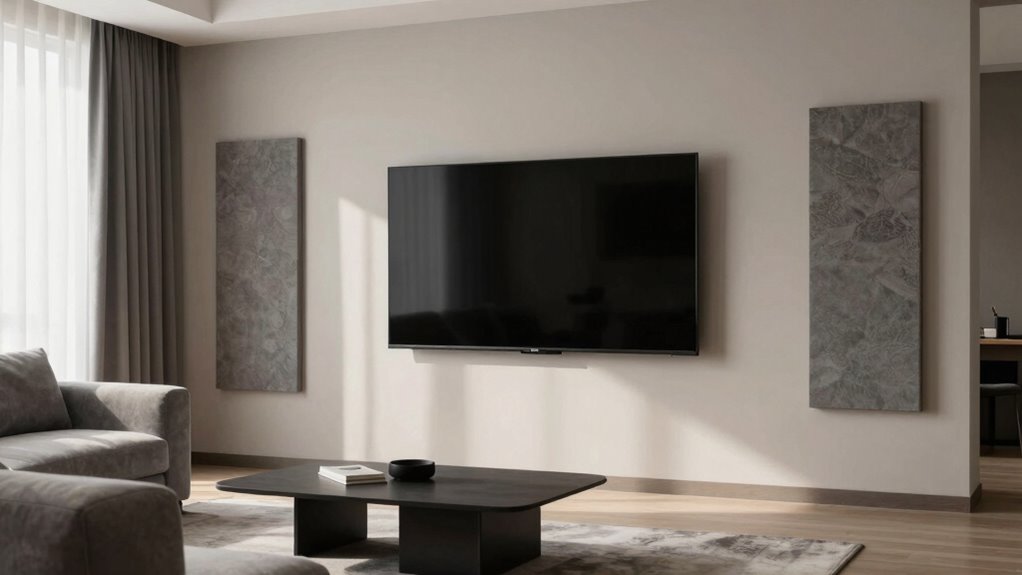

To fix room echo instantly and improve your TV sound, start by adding soft furnishings like rugs, curtains, or cushions to absorb sound waves. Rearrange furniture to break up sound reflections and avoid placing your TV near reflective surfaces or corners. Using affordable products like acoustic panels or thicker curtains can make a big difference. If you want to know more easy tips and natural solutions, keep exploring how to create a better listening environment.

Get the latest gadgets delivered free — and shop member deals
- Fast, free delivery on millions of items
- Access to Prime Big Deal Days deals on October 6–7
- Prime Video, Amazon Music and more included
Key Takeaways
- Add soft furnishings like rugs, curtains, or cushions to absorb sound reflections and reduce echo.
- Position acoustic panels or foam tiles on walls near the TV and seating area for immediate sound improvement.
- Rearrange furniture to prevent direct contact with walls and break up sound waves.
- Seal gaps around windows and doors to prevent sound leakage and minimize reflections.
- Adjust speaker placement, aiming them toward the seating area for clearer, more direct audio.
As an affiliate, we earn on qualifying purchases.
Why Does Room Echo Make Your TV Sound Off?
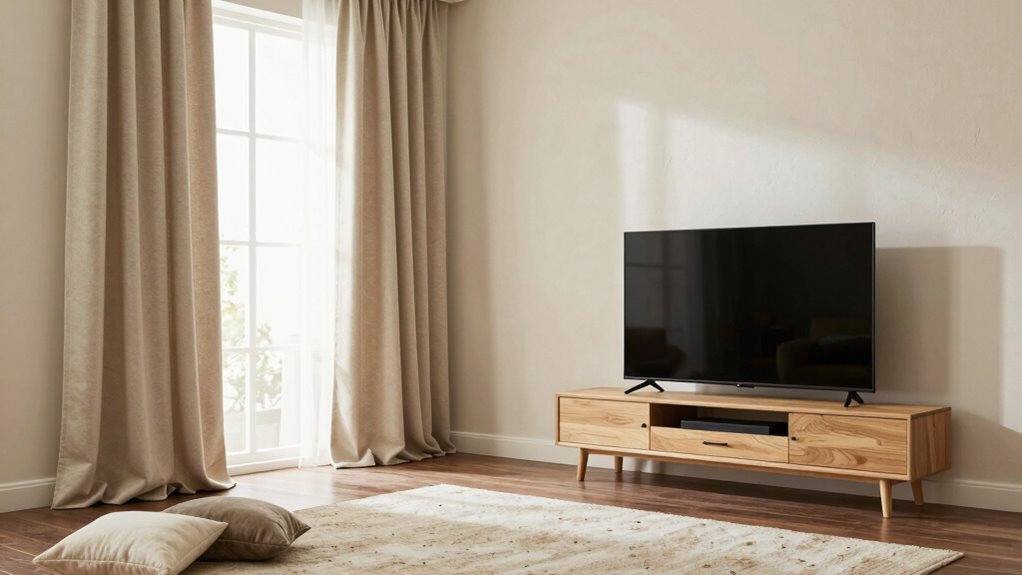
When sound waves bounce off hard surfaces in your room, they create echoes that can distort the audio from your TV. This phenomenon occurs because of sound wave interference, where reflected waves combine with direct sound, causing some frequencies to cancel out or amplify. Acoustic shadowing also plays a role, as objects or furniture block sound waves, creating areas with reduced sound quality. These interactions lead to muddled audio, making dialogue hard to understand and sound effects less clear. The echoes and interference distort the original sound, reducing clarity and immersion. Understanding that hard surfaces reflect sound and cause acoustic shadowing helps you realize why your TV’s audio feels off and why fixing room acoustics can improve your listening experience instantly.
As an affiliate, we earn on qualifying purchases.
How Can You Recognize Echo Problems in Your Living Room?
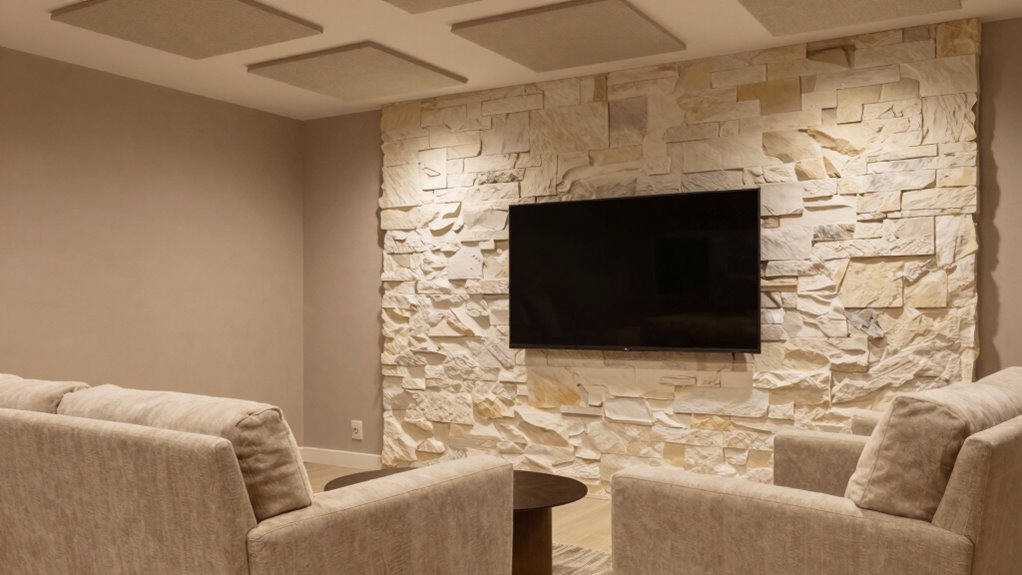
If you notice sounds echoing excessively or speech sounding unclear, your living room might have an echo problem. You’ll also hear distorted speech or a noticeable reverberation that makes conversations hard to understand. Recognizing these signs is the first step toward fixing your TV sound issues. Improving home soundproofing with simple solutions can significantly reduce echo and enhance audio clarity. Additionally, using sound-absorbing materials like rugs, curtains, or wall panels can help minimize reflections and improve overall acoustics. Incorporating elements from modern farmhouse decor trends, such as rustic wood accents and vintage furnishings, can also contribute to a warmer, more acoustically friendly environment. To further enhance your space, consider adding diffusive surfaces that scatter sound waves and prevent harsh echoes, creating a more balanced sound environment. Implementing acoustic panels strategically around the room can also make a noticeable difference in sound quality.
Excessive Reverberation Sounds
Excessive reverberation creates a persistent echo that can make speech sound muddled and difficult to understand. If you notice voices or sounds lingering longer than they should, it’s a sign of excessive reverberation. You might hear a hollow, bouncing effect when talking or listening to your TV, which disrupts clarity. To recognize these echo problems, pay attention to how sound behaves in your room—does it seem to bounce around excessively? To fix this, consider echo cancellation techniques like adding soundproof curtains, which absorb sound waves and reduce reflections. Also, strategically placing rugs, soft furniture, or wall panels can help dampen echoes. These simple steps improve sound quality and make your TV audio clearer, without the need for complex equipment. Understanding room acoustics can further help you identify and address echo issues effectively.
Distorted Speech Clarity
Distorted speech clarity often signals that echo issues are affecting your living room. When you notice voices sound muffled, hollow, or difficult to understand, it’s a sign that sound waves are bouncing excessively. To identify if echoes are causing this, listen carefully to dialogue during TV viewing—if words aren’t crisp or seem distant, echo may be the culprit. Adding soundproof curtains can absorb some sound waves, reducing distortion. Wall panels are also effective; they break up sound reflections and improve clarity. If speech sounds distorted or unnatural, these solutions can help. Recognizing the problem early allows you to implement simple fixes that restore natural, clear sound to your space, making your TV watching more enjoyable. Additionally, understanding sound reflection principles can help you better optimize your room layout for improved acoustics. Exploring room acoustics can provide further insights into effective sound management strategies for your living room.
Noticeable Sound Echoing
When echoes become noticeable in your living room, they can quickly impact your TV experience. You might notice sound bouncing off walls, creating a hollow or distant effect that makes dialogue harder to understand. Clapping your hands or speaking loudly can reveal these issues, as you’ll hear persistent reverberations or lingering reflections. To identify echo problems, pay attention to how sound feels in the space—if it’s overly bright or muffled, echoes are likely involved. Installing soundproofing curtains can absorb excess sound, while acoustic foam panels help break up reflective surfaces. These solutions reduce echo and improve clarity, making your TV sound more natural and immersive. Recognizing the signs of sound echoing is the first step toward creating a better listening environment. Incorporating protective styling benefits such as fabric decorating markers can also help in customizing your space to manage sound reflection, especially when combined with thoughtful outdoor transformation techniques like landscaping or adding seating areas to improve acoustics. Additionally, understanding Gold IRA Markets can be useful if you’re considering investing in precious metals to support your overall financial stability, which can indirectly contribute to a more comfortable and secure home environment. Being aware of home acoustic treatments can further enhance your space by providing targeted solutions to persistent echo issues.
thick blackout curtains for soundproofing
As an affiliate, we earn on qualifying purchases.
As an affiliate, we earn on qualifying purchases.
Simple DIY Tricks to Reduce Echo and Improve Sound
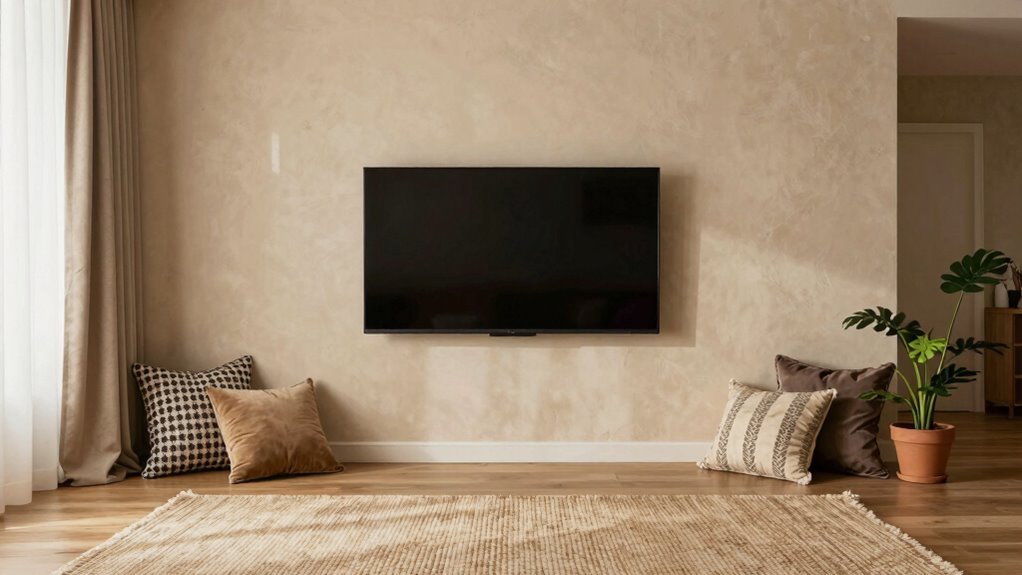
If your TV’s sound feels echoey or muddled, simple DIY tricks can make a noticeable difference. Adjusting your room shape and furniture placement can help absorb sound and reduce reflections. For instance, avoiding large open spaces or bare walls that bounce sound around is helpful. Instead, add soft furnishings like rugs, curtains, or cushions to absorb echoes. Rearranging furniture so it’s not aligned directly against walls also breaks up sound waves, improving clarity. Using sound-absorbing materials strategically around the room can significantly enhance acoustics. Additionally, incorporating room shape considerations can help minimize sound reflections, leading to clearer audio. Recognizing the importance of acoustic treatment can guide you in selecting the best solutions for your space. Being mindful of sound reflection points around the room can further improve sound quality. Understanding how room acoustics work can help you make more effective adjustments. Here’s a quick guide:
| Room Shape | Furniture Placement |
|---|---|
| Irregular or enclosed shapes | Spread furniture evenly; avoid long, empty walls |
| Open plan | Add rugs or fabric curtains to absorb sound |
TV sound echo reduction products
As an affiliate, we earn on qualifying purchases.
As an affiliate, we earn on qualifying purchases.
What Natural Materials Help Absorb Sound in Your Space?
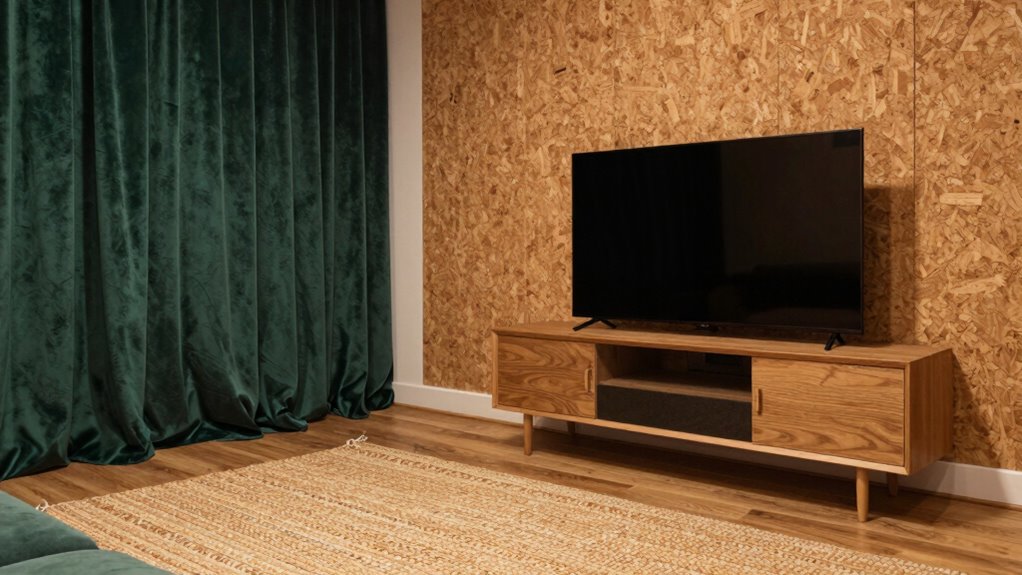
Natural materials like wool, cotton, and cork are excellent at absorbing sound and reducing echoes in your space. These natural fibers have porous structures that trap sound waves, enhancing sound absorption effectively. Wool, for example, is dense and soft, making it ideal for dampening room reverberations. Cotton fabrics, such as thick curtains or upholstery, also help absorb sound without sacrificing style. Cork panels are lightweight yet highly effective at sound absorption, especially on walls or ceilings. Incorporating these materials into your decor can make a noticeable difference in your room’s acoustics. Additionally, hormesis principles suggest that mild exposure to natural elements can improve your overall environmental resilience, including sound management. By choosing natural sound-absorbing materials, you create a more balanced listening environment and minimize unwanted echo, leading to clearer TV sound and a more comfortable space overall. Using natural fibers for soundproofing can also contribute to a healthier indoor environment by reducing noise pollution.
Where Should You Place Rugs, Curtains, and Furniture for Better Acoustics?

To improve your TV sound, focus on placing rugs in high-traffic areas to absorb reflections. Hang curtains properly to block sound from windows and control echoes. Arranging furniture thoughtfully can also help direct sound waves and reduce unwanted reverberations. Incorporating best audio practices such as strategic placement of soft furnishings can further enhance sound quality in your space. Additionally, understanding the importance of creative storytelling in designing your environment can create an ambiance that complements sound optimization efforts. Employing soundproofing materials can also make a significant difference in reducing external noise and improving overall acoustic clarity.
Strategically Place Rugs
Have you ever wondered how the placement of rugs can influence your room’s acoustics? To improve sound quality, position rugs where they can absorb sound waves, especially in areas with hard wall textures or high ceiling heights that reflect sound. Place larger rugs in the center of the room or under your seating area to reduce echo and dampen sound bouncing off walls. Avoid placing rugs directly against walls, which can cause uneven sound absorption. Instead, spread them out to create a balanced acoustic environment. If your ceiling is particularly high, adding rugs can help compensate for excessive reverberation. Strategically placing rugs helps soften sound reflections, creating a warmer, clearer TV sound experience without needing electronic adjustments.
Optimize Curtain Placement
Strategic placement of curtains, rugs, and furniture can considerably enhance your room’s acoustics by controlling sound reflections and absorbing excess noise. Curtain placement plays a crucial role; hanging window coverings closer to the window surface reduces echo and dampens sound bouncing off glass. Use thicker curtains or layered window coverings to increase sound absorption. Avoid hanging curtains too high or too far from the window frame, as this can lessen their effectiveness. Position curtains so they cover the entire window area and extend slightly beyond the frame for ideal sound control. Combining well-placed curtains with rugs and furniture creates a balanced environment that minimizes echo. Adjust curtain placement as needed—closer to sound sources or reflective surfaces—to achieve better TV sound quality instantly. Proper curtain placement can significantly improve your room’s acoustics and overall sound experience. Additionally, incorporating room acoustic treatments such as wall panels or diffusers can further optimize sound quality and reduce unwanted echoes.
Which Acoustic Treatments Are Best for Your Living Room?
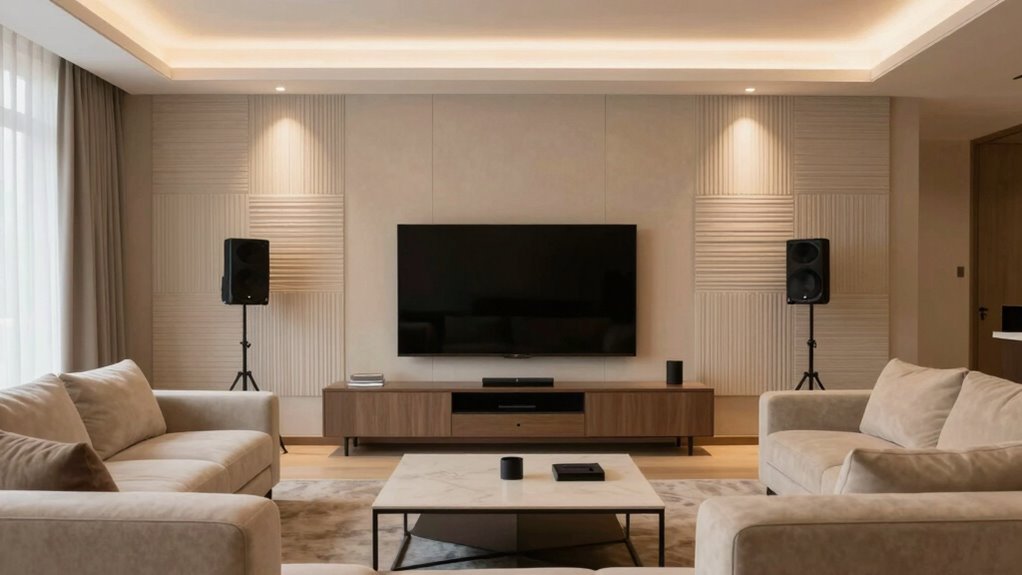
Wondering which acoustic treatments will improve your living room’s sound? The best options focus on sound absorption to reduce echo and improve clarity. Acoustic panels are a popular choice because they effectively dampen sound reflections without cluttering your space. Place them strategically on walls where sound bounces most, like behind your TV or near seating areas. These panels absorb excess sound waves, making dialogue clearer and music more natural. You can choose from fabric-covered panels, foam tiles, or decorative designs that blend with your decor. Avoid overloading your room with too many treatments; instead, target key reflection points. Properly selected acoustic panels will instantly upgrade your room’s sound quality, creating a more immersive TV and listening experience. Additionally, understanding soundproofing techniques can help further improve your audio environment.
What Affordable Products Can Instantly Improve Room Sound?
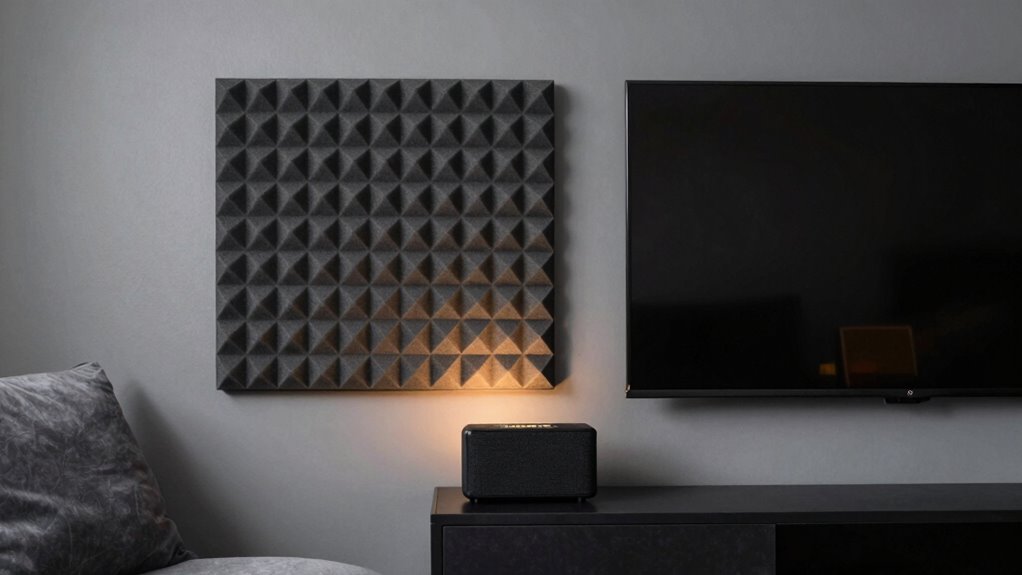
If you’re looking for affordable products that can instantly enhance your room’s sound, there are several effective options to contemplate. Soundproof curtains are a great choice; they absorb echoes and reduce sound reflection, making your TV audio clearer. Foam panels are another budget-friendly solution—simply place them on walls or around the room to dampen sound waves and minimize echo. Both options are easy to install and don’t require professional help. Soundproof curtains are especially convenient for blocking outside noise, while foam panels are effective at treating specific problem areas. These products can considerably improve your room’s acoustics without breaking the bank, giving you better TV sound quality instantly.
How to Do Easy Soundproofing Hacks Yourself

You can easily improve your room’s acoustics with simple DIY soundproofing hacks that don’t require professional tools or skills. Start by sealing gaps around your windows with weatherstripping or soundproofing windows kits to block outside noise. Installing ceiling acoustic tiles is another effective hack; they absorb sound waves and reduce echo. You can also hang thick curtains or add rugs to dampen sound reflections. For extra help, place bookshelves filled with books against walls to break up sound waves naturally. These quick fixes are affordable and straightforward, making your space more acoustically friendly without needing expert installation.
| Hack | Description |
|---|---|
| Soundproofing windows | Seal gaps or add window inserts for noise reduction |
| Ceiling acoustic tiles | Install tiles to absorb sound and reduce echo |
| Thick curtains | Hang heavy curtains to dampen sound reflections |
| Rugs and carpets | Place on floors to absorb sound and minimize echo |
| Bookshelves | Fill with books and position against walls for sound diffusion |
When Should You Hire a Professional for Acoustic Panel Installation?

While DIY soundproofing hacks can markedly improve your room’s acoustics, there are times when hiring a professional for acoustic panel installation becomes necessary. If your space requires precise placement for ideal sound absorption, a professional can ensure the panels are installed correctly. You might also consider hiring someone if you’re integrating soundproof curtains or acoustic foam panels into a complex setup, such as in a home theater or multi-purpose room. Professionals can help hide wiring, ensure panels are securely mounted, and achieve a seamless look. Additionally, if you’re unsure about the best materials or placement to reduce echoes effectively, expert installation guarantees a cleaner, more efficient result. This investment can make a significant difference in the quality of your TV sound.
Tips to Keep Your TV Sound Clear During Movie Nights
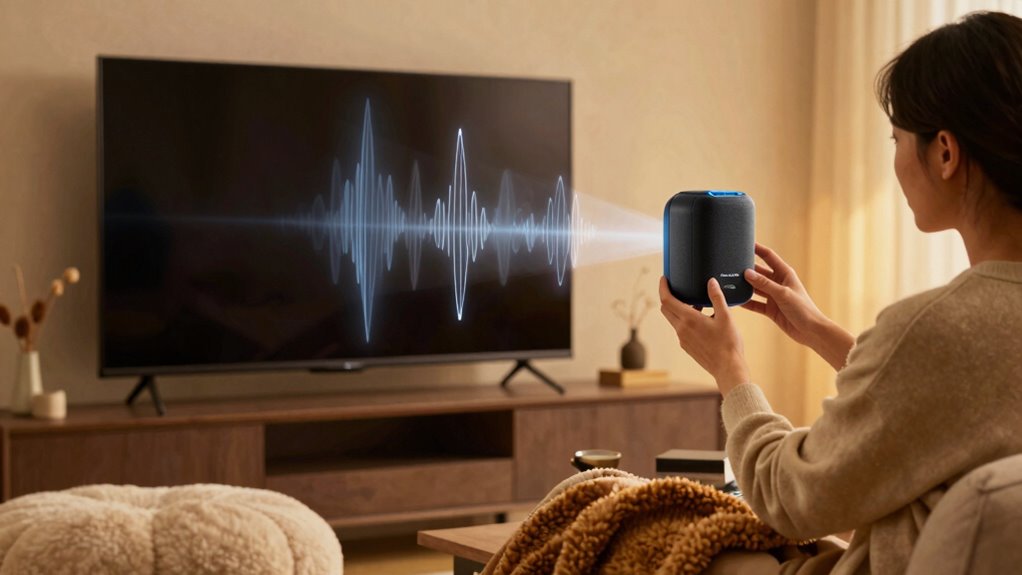
Clear TV sound during movie nights starts with optimizing your room’s acoustics and setup. Minimize background noise by turning off fans, appliances, or electronics that create unnecessary sounds. Adjust your seating so you’re closer to the TV, which helps reduce sound loss and improves clarity. Consider the room size—larger rooms may require higher volume or additional speakers to fill the space evenly. Use soft furnishings like rugs, curtains, and cushions to absorb excess sound reflections and prevent echo. Position your speakers or soundbar correctly, aiming them toward your seating area for better sound direction. Avoid placing the TV near reflective surfaces or in a corner, as this can worsen echo and muddle audio. These simple adjustments will help keep your TV sound clear and enjoyable for everyone.
Frequently Asked Questions
How Can I Tell if Echo Is Affecting My Tv’s Audio Quality?
You can tell if echo affects your TV’s audio quality by listening for sound reflection, which causes the audio to seem hollow or distant. If voices and sounds seem distorted or prolonged, echo might be the culprit. You may notice a lack of clarity or muffled dialogue. To confirm, move closer to your TV and observe if the audio improves. Addressing room acoustics can markedly reduce echo and improve overall sound quality.
Are There Specific Materials That Work Best for Sound Absorption?
Think of sound absorption as giving your room a cozy blanket. Soundproof curtains and acoustic foam panels top the list of effective materials, as they absorb excess sound waves and reduce echo. Soundproof curtains are ideal for covering windows and large openings, while acoustic foam panels fit perfectly on walls and ceilings. Combining these materials creates a harmonious environment, making your TV sound clearer and more immersive, just like a concert hall.
Can Furniture Placement Influence Room Echo and Sound Clarity?
Yes, furniture placement can considerably influence room echo and sound clarity. You should arrange your furniture to break up flat, reflective surfaces, creating a more balanced room layout. Positioning plush sofas, rugs, and curtains strategically helps absorb sound waves and reduces echo. Avoid lining up large furniture against walls; instead, scatter pieces throughout the space to enhance sound diffusion, making your TV audio clearer and more immersive.
What Budget-Friendly Ways Can I Improve Acoustics Without Professional Help?
Think of your room as a musical instrument needing tuning. You can craft DIY acoustic panels from inexpensive materials like foam, blankets, or thick curtains, acting as sound dampeners. Rearrange household items—bookshelves, rugs, and cushions—to absorb echoes. These simple modifications help control sound reflections, creating a clearer listening environment without breaking the bank. With a little effort, your space becomes a symphony of improved acoustics.
How Often Should I Update or Add Acoustic Treatments in My Living Space?
You should update or add acoustic treatments as needed, typically every 1-2 years, depending on your room’s usage and any new noise issues. Keep an eye on acoustic treatment frequency by noticing if your space starts echoing more or sound quality drops. DIY soundproofing projects can be a quick, cost-effective way to maintain ideal acoustics, so don’t hesitate to refresh your treatments whenever you notice the sound environment changing.
Conclusion
By making a few simple tweaks, you can transform your living room into a cozy space where your TV’s sound comes through crystal clear. Think of it as giving your space a gentle hug—reducing echoes and boosting audio comfort without much fuss. With just a little effort, you’ll enjoy your favorite shows and movies more, feeling right at home with sound that’s as warm and inviting as your favorite blanket.
Fall Picks
fall essentials
As an affiliate, we earn on qualifying purchases.