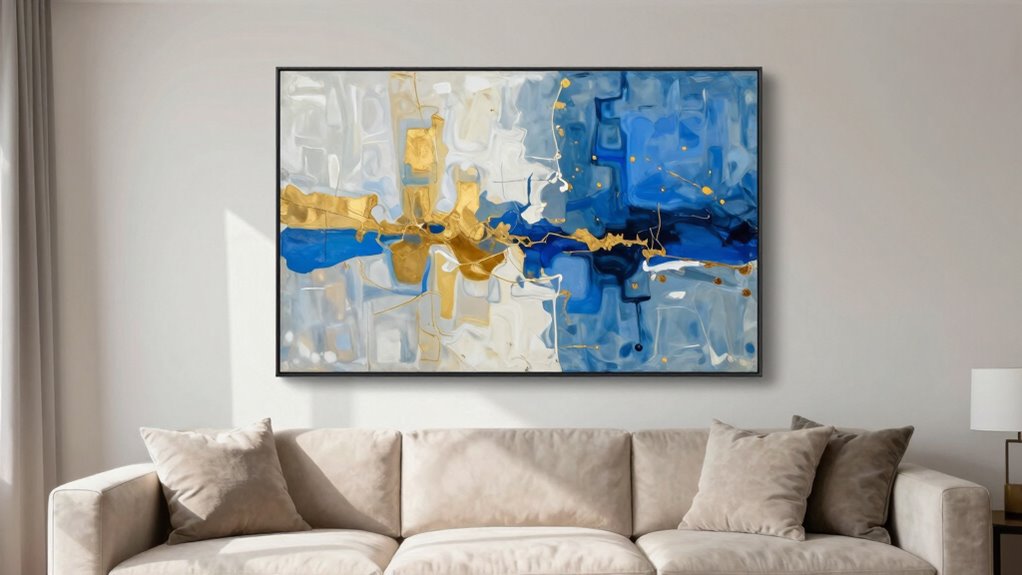

To choose the right wall art size without guesswork, start by measuring your wall carefully and marking where you want the art to hang at eye level. Stick to standard sizes like 16×20 or 24×36 inches, or use the two-thirds rule to match your furniture or wall space. Decide if a large piece or multiple smaller ones work best for your style. Keep these tips in mind to create balanced and harmonious wall decor—more helpful ideas await.
Key Takeaways
- Measure your wall and furniture to determine the appropriate art size, ensuring proper fit and proportion.
- Apply the two-thirds rule to select art that covers about two-thirds of the wall or furniture space.
- Use simple tools like a tape measure and level to mark accurate hanging spots at eye level.
- Decide between a large focal piece or multiple smaller pieces based on wall size and desired visual impact.
- Ensure cohesive size and placement for balance, avoiding artwork that is too small or overwhelming.
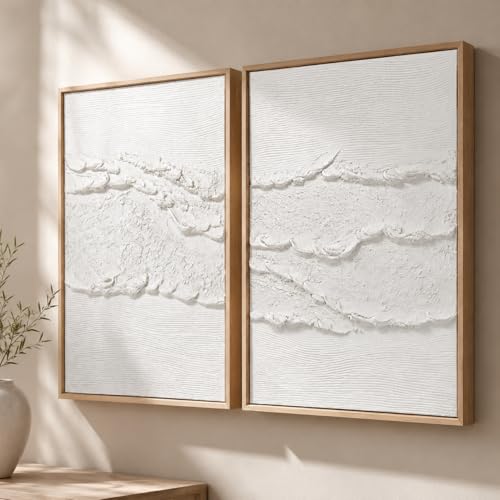
Artiluxy Neutral Abstract Wall Art Set of 2, Framed 3D Textured, 16×20 Inch
- Textured Design: Sculptural, high-end wall texture
- Neutral Aesthetic: Soft ivory tones for versatile decor
- Ideal Size: 12×16 inch panels for various spaces
As an affiliate, we earn on qualifying purchases.
As an affiliate, we earn on qualifying purchases.
What Are the Standard Wall Art Sizes and Why They Matter
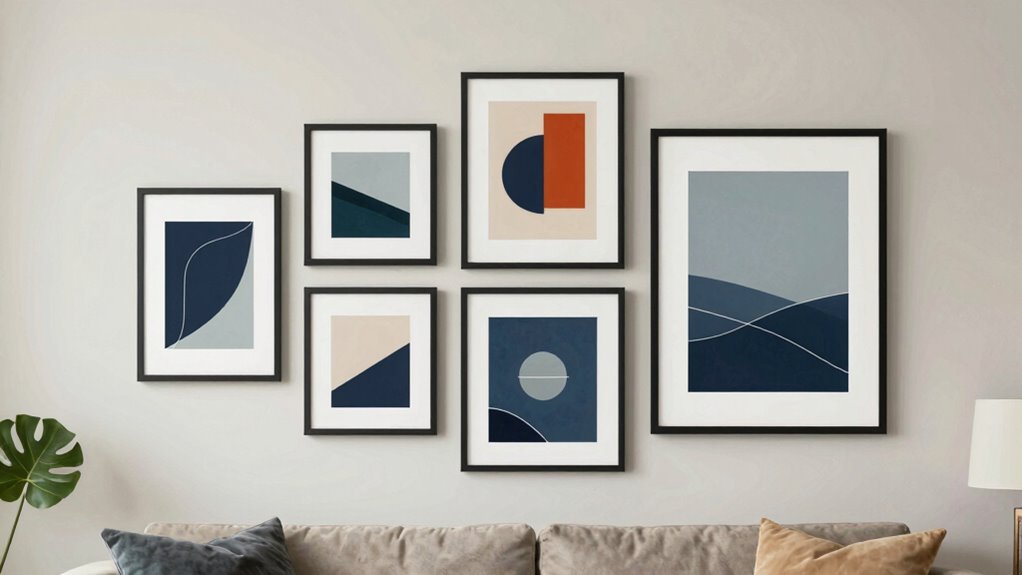
Understanding standard wall art sizes is essential because they help you choose pieces that fit your space perfectly. Knowing common sizes like 16×20 inches, 24×36 inches, or 30×40 inches guides your selection process. These sizes matter because they influence how your art interacts with your room’s proportions and decor. When choosing art, consider color coordination to ensure the piece complements your existing palette. Framing options also play a vital role; a larger print may require a bold frame to make an impact, while smaller pieces might look best with subtle borders. Familiarity with standard sizes helps you envision how each piece will look on your wall, making the process easier and more confident. Additionally, AI tools can assist in visualizing different sizes and arrangements, streamlining your decision-making process. Understanding standard sizes also helps prevent the common mistake of selecting artwork that is either too small or too overwhelming for your space. Being aware of wall surface types can further help you select suitable materials and finishes that enhance your artwork and protect your walls. Knowing the resale value of certain art pieces can also influence your buying choices, especially if you’re investing in high-quality works. Awareness of common framing options can also influence your final choice, ensuring your artwork is both protected and styled appropriately. Ultimately, selecting the right size enhances your space’s aesthetic harmony.

Vittanly 15 Pack Picture Frames Collage Wall Decor, Wall/Tabletop Display
- Versatile Frame Sizes: Includes multiple sizes for various displays
- Durable Construction: Made from scratch-resistant MDF and shatter-proof plexiglass
- Flexible Gallery Wall: Mix and match designs for dynamic arrangements
As an affiliate, we earn on qualifying purchases.
As an affiliate, we earn on qualifying purchases.
How to Measure Your Wall for Perfect Art Placement
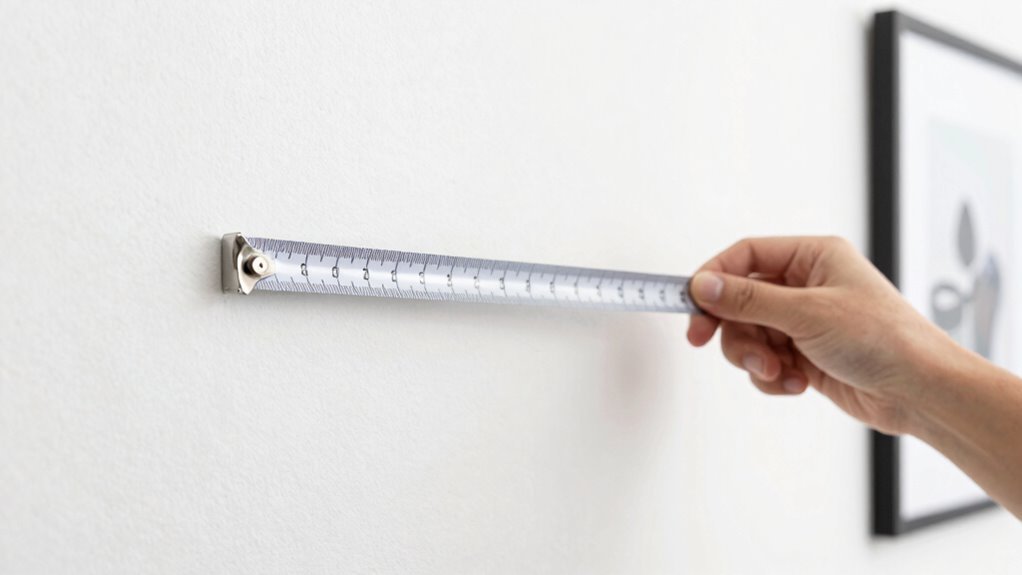
Measuring your wall accurately is the first step to guaranteeing your art fits perfectly and looks balanced. Start by removing any existing decor and use a tape measure to determine the wall’s width and height. Mark the spot where you want your art installation to hang, considering eye level for ideal viewing. Use a level to ensure your measurements are straight, especially if you’re hanging multiple pieces or arranging a gallery wall. Keep wall color coordination in mind; lighter walls may require different placement than darker ones to create visual harmony. Measure twice to avoid mistakes, and note the ideal placement height. Precise measurements help you select the right art size and position, making your wall art look intentional and polished. Incorporating aromatherapy benefits into your space can enhance the ambiance and overall aesthetic appeal. Understanding rhythm failure can also inspire your art choices, adding a layer of meaning to your decor. Additionally, considering projector specifications can ensure your art display complements your home theater setup effectively. To further refine your space, consider the impact of wall art size on the room’s balance and harmony. Taking into account lighting conditions will also help you choose artwork that complements your existing decor and enhances the room’s mood.
As an affiliate, we earn on qualifying purchases.
Applying the Two-Thirds Rule to Choose Your Wall Art Size
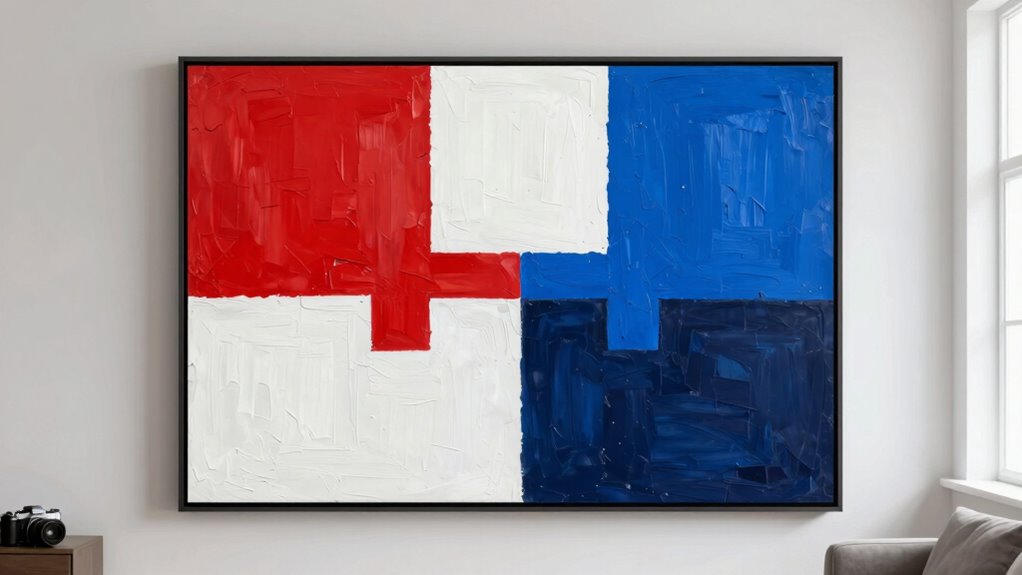
To create a balanced and visually appealing display, apply the two-thirds rule when choosing your wall art size. This rule suggests selecting artwork that covers about two-thirds of the furniture or wall space, ensuring proper frame proportions and avoiding overwhelming or underwhelming visuals. When considering frame proportions, opt for pieces that complement the wall and furniture without overpowering them. Color coordination also plays a key role; choose art that harmonizes with your existing decor, enhancing the overall aesthetic. The two-thirds rule helps you maintain a cohesive look, making your space feel intentional and well-designed. By focusing on these principles, you’ll confidently select wall art that fits perfectly and elevates your room’s style.

Go Hang It! Pro, All-in-One Picture Hanging Kit – Picture Leveling and Hanging Tool – Hang Sawtooth/Wire Hangers – Wall Hanging Kit and Level Tool – Hardware Case with 85-Piece Hanging Essentials
- Easy Picture Hanging: Effortless with precise nail placement
- Versatile for All Occasions: Ideal for weddings, housewarmings, and DIY
- Magnetic Key System: Securely hold and mark with magnetic keys
As an affiliate, we earn on qualifying purchases.
As an affiliate, we earn on qualifying purchases.
Should You Use Multiple Pieces or a Single Large Artwork?
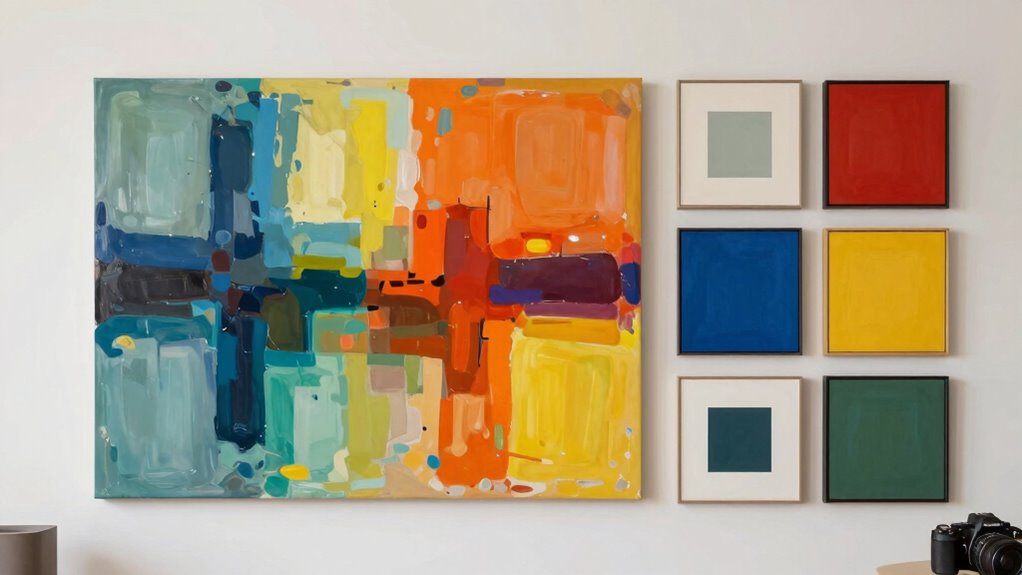
Deciding between using multiple pieces or a single large artwork depends on your space and the visual impact you want to create. A gallery grouping of smaller pieces can add texture and variety, making a wall feel lively and dynamic. It works well if you want to fill a large area without overwhelming it, and allows you to incorporate different styles or colors. Conversely, a single large artwork serves as a bold focal point, drawing immediate attention and creating a sense of unity. Consider the size of your wall and the statement you wish to make. If you aim for a clean, uncluttered look, a large piece might be best. For a more curated, eclectic vibe, multiple pieces can offer visual interest and depth. Additionally, understanding measurement accuracy can help you better plan your artwork arrangement to ensure perfect placement and proportion.
Top Tips for Achieving Visual Balance and Avoiding Size Mistakes
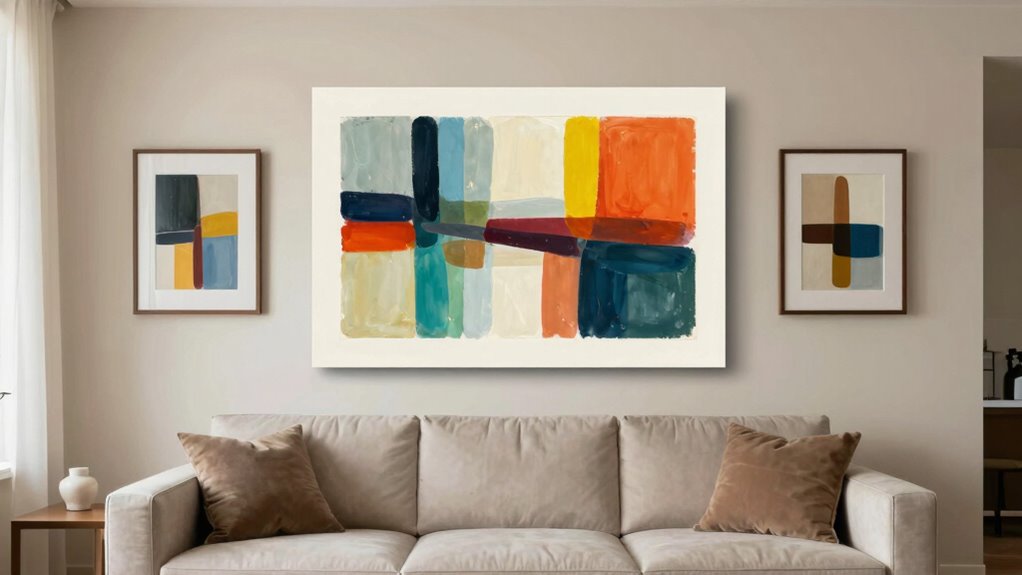
Achieving visual balance with wall art requires paying attention to size relationships and placement. Focus on frame proportion to ensure artwork complements the wall space without overpowering or getting lost. A well-chosen size creates harmony, especially when considering color harmony, so your art feels cohesive with the room’s palette. Avoid size mistakes by measuring your wall and selecting pieces that fit comfortably within the space, neither too small nor too large. Keep in mind that larger artwork can serve as a focal point, while smaller pieces work best in groups for balance. Proper placement—centered at eye level or aligned with furniture—enhances visual flow. These tips help you create a balanced, attractive display that feels intentional and polished.
Frequently Asked Questions
How Do I Determine the Best Art Size for a Small Space?
When selecting art for a small space, you should consider scale and balance carefully. Choose a piece that’s proportionate to the wall, avoiding overwhelming it. Opt for artwork that features color harmony with your room’s palette to create cohesion. Keep it simple if your space is tight, and balance the visual weight to prevent clutter. A well-chosen, harmonious piece enhances the room without making it feel crowded.
What Factors Influence Choosing Wall Art Size in a Large Room?
In a large room, you should consider proportion and balance to achieve visual harmony. Bigger wall art makes a bold statement, but it shouldn’t overwhelm the space. Think about the size of furniture and the room’s dimensions; aim for art that complements rather than dominates. You might even combine multiple pieces for a balanced look, ensuring your art enhances the room’s scale without losing harmony.
Can Wall Art Size Impact the Perceived Height of a Ceiling?
Yes, wall art size can impact the perceived height of a ceiling. Large, tall pieces create scale illusions that elongate the walls, making the ceiling seem higher. Conversely, smaller artwork might make the space feel more grounded. To achieve visual harmony, choose art that complements your room’s proportions, enhancing height without overwhelming the space. Properly scaled wall art transforms your room, emphasizing its spaciousness and elevating your decor.
How Do I Select Artwork Size for Uneven or Textured Walls?
When selecting artwork for uneven or textured walls, focus on texture considerations and uneven wall corrections. Opt for frames with flexible mounting options or use adhesive hooks that accommodate surface irregularities. Choose larger artwork to distract from imperfections, and consider matte finishes to reduce glare on textured surfaces. By adjusting your approach based on wall texture, you guarantee your art looks intentional and visually appealing, even on challenging surfaces.
What Role Does Furniture Style Play in Choosing Wall Art Dimensions?
Your furniture style guides your wall art dimensions by ensuring frame harmony and color coordination. For modern or minimalist pieces, opt for sleek, smaller artworks that complement clean lines. Traditional furniture calls for larger, detailed pieces to balance the space. Consider how the artwork’s frame complements your furniture’s style, creating visual harmony. Matching colors between furniture and art enhances cohesion, making your room feel thoughtfully curated and inviting.
Conclusion
Now that you know the basics, choosing the right wall art size becomes easier and less stressful. Remember to measure carefully, consider your space, and use the two-thirds rule for a harmonious look. Whether you opt for a single statement piece or a gallery wall, your decor should reflect your style and fit perfectly. Isn’t it time to stop guessing and start creating a stunning focal point that truly feels right?