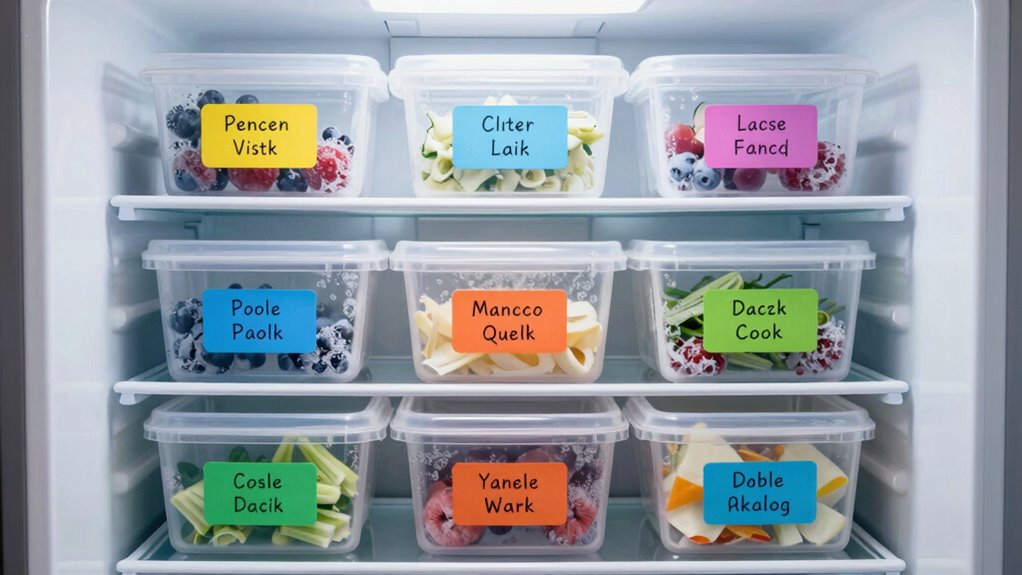

A freezer labeling system helps you quickly identify and organize frozen foods, preventing waste and spoilage. Use durable, waterproof labels with clear or bold fonts, and include essential details like item names, dates, and categories. Proper placement and consistent date markings make it easier to track storage times and avoid leftovers going bad. Address common issues like labels falling off or smudging to maintain order. Keep exploring to learn more about creating an effective, waste-reducing freezer labeling setup.
Key Takeaways
- Use waterproof, freezer-specific labels with clear, high-contrast fonts to ensure readability and durability in cold environments.
- Incorporate color coding and consistent placement to quickly identify contents and reduce retrieval errors.
- Include essential details like item name and date to track freshness and prevent expired food from being consumed.
- Regularly inspect and replace damaged or faded labels to maintain clarity and organization in the freezer.
- Implement a systematic labeling routine to streamline inventory management, minimize spoilage, and reduce food waste.

Removable Freezer Labels, Date Label 1×3 Inch Food Storage Stickers, Waterproof Oil Resistant Easy Clean Leaves no Residue 250 Total Per Roll
Each label sticker is about 1×3 inch,totally have 250pcs
As an affiliate, we earn on qualifying purchases.
As an affiliate, we earn on qualifying purchases.
What Is a Freezer Labeling System and Why It Matters
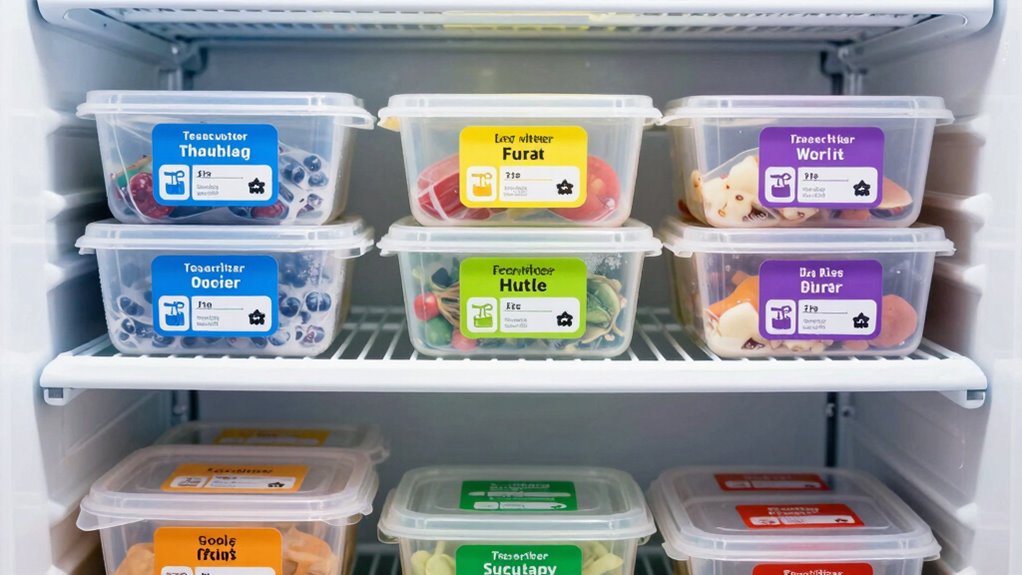
A freezer labeling system is a structured way to identify and organize items stored in your freezer. It helps you keep track of what’s inside, making storage organization straightforward and efficient. With clear labels, you can quickly find what you need without rummaging through piles of frozen food. This system also plays a crucial role in food safety by preventing spoilage and reducing the risk of consuming expired items. When you label your freezer contents properly, you ensure that food is used within safe timeframes, minimizing waste and protecting your health. Consistent labeling transforms chaos into order, saving you time and making meal prep easier. Additionally, a well-implemented labeling system can prevent cross-contamination by keeping raw and cooked items separate. Proper labeling can also help you monitor storage durations, ensuring foods are used while still safe to eat. Implementing a clear labeling system additionally facilitates inventory management, making it easier to plan meals and shopping lists. Overall, a good freezer labeling system is essential for maintaining a tidy, safe, and well-managed freezer. Proper labeling also supports food safety by helping prevent cross-contamination and ensuring proper storage durations.

500 Freezer Refrigerator Food Labels Reminder Water Oil Resistant in Roll with Perforation Line,Removable Adhesive
Smart Design: Specialized low viscosity adhesive, guarantee easy removal and leave no residue. Laminated with high density water…
As an affiliate, we earn on qualifying purchases.
As an affiliate, we earn on qualifying purchases.
How to Create Clear and Effective Freezer Labels
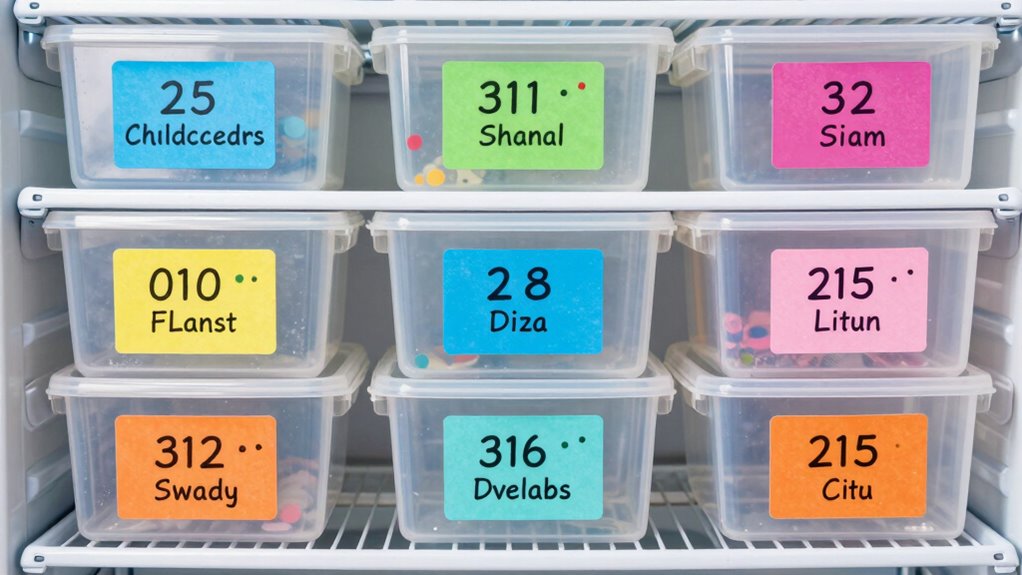
Creating clear and effective freezer labels starts with choosing the right materials and design. Use durable, moisture-resistant labels that won’t smudge or peel in cold temperatures. Incorporate color coding to quickly identify food categories, such as green for vegetables or red for meats. Decide between handwritten and printed labels; handwritten offers flexibility and a personal touch, while printed labels look more professional and are easier to read. Confirm your handwriting is legible if you opt for handwritten labels, and use clear, bold fonts for printed options. Keep labels simple, including essential details like item name, date, and portion size. Consistent use of color and clear fonts helps prevent confusion and makes locating items faster, reducing food waste and keeping your freezer organized.

STARLIBOO Removable Freezer Labels, 1×2 Inch Color Coding Removable Label for Food Containers, 360 Freezer Stickers Tape to Write on/Waterproof (8 Colors Morandi)
Removable Stickers: Easy Clean Leaves No Residue, Writable and Not Blurry, Freezer Tape to Write on/Waterproof Labels/Easily to…
As an affiliate, we earn on qualifying purchases.
As an affiliate, we earn on qualifying purchases.
Choosing the Best Materials for Durable Freezer Labels
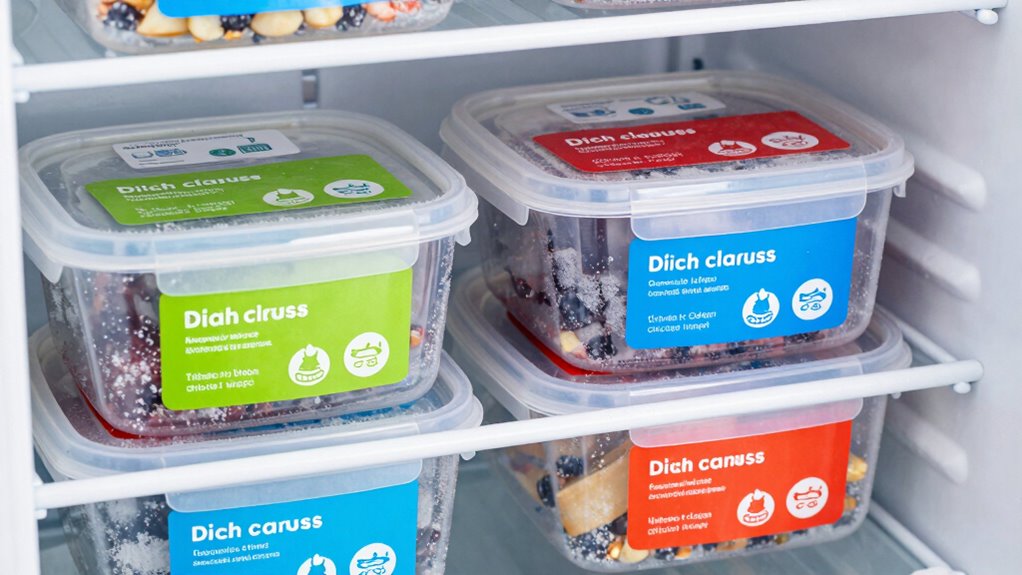
When choosing substances for freezer tags, you must have choices that withstand moisture and grease to remain intact in chilly settings. You should also factor in sticky power to make sure tags adhere and endure through numerous freezing and defrosting cycles. Additionally, selecting non-toxic, food-grade materials ensures safety for all stored objects. Incorporating supportive materials that are designed for durability can further ensure the longevity of your labels in demanding environments. Using weather-resistant coatings can provide an extra layer of protection against condensation and temperature fluctuations. Considering environmentally friendly options can also contribute to sustainable packaging practices. Furthermore, selecting materials with higher resistance to cold temperatures can help maintain label integrity over extended periods of freezing.
Waterproof and Oil-Resistant Materials
Choosing the right materials for freezer labels is essential because they need to withstand exposure to moisture, ice, and oil without deteriorating. Waterproof and oil-resistant materials, like laminated paper or plastic, keep your labels intact regardless of freezer conditions. This durability supports proper labeling etiquette by ensuring information stays clear and legible over time. When implementing a color coding system, these resilient materials prevent smudging or fading, making it easy to identify items at a glance. You avoid confusion and reduce food waste by maintaining clear, durable labels. Investing in quality, waterproof, and oil-resistant labels ensures your system remains reliable, even with frequent handling or spills. Additionally, selecting materials with chemical resistance can further protect your labels from freezer-related substances. This choice enhances organization and helps you stick to your food management plan efficiently. To maximize longevity, consider choosing labels with UV resistance, which can prevent fading over extended periods of storage. Incorporating material testing can help verify the labels’ performance under typical freezer conditions, ensuring long-term durability. Moreover, selecting labels with temperature tolerance can further ensure they maintain their integrity in extreme cold environments. An understanding of durability testing can also assist in selecting labels that truly stand up to harsh freezer conditions.
Adhesive Strength and Longevity
To guarantee your freezer labels stay put over time, selecting materials with strong adhesive qualities is essential. Adhesive durability ensures your labels remain attached despite low temperatures and frequent handling. Look for adhesives formulated specifically for cold environments, as standard adhesives can lose their stickiness in freezing conditions. cold-resistant adhesives are designed to maintain their bond in freezing temperatures, making them ideal for freezer labels. High-quality label adhesion prevents peeling or falling off, maintaining clear identification of your food items. Consider adhesives that are resistant to moisture and temperature fluctuations, which can weaken their bond. Proper surface preparation can also improve adhesive performance and longevity. Selecting labels with reliable adhesive strength not only improves longevity but also reduces the need for re-labeling, saving you time and effort. Additionally, choosing labels with temperature-resistant adhesives designed to withstand freezing temperatures is crucial for long-term durability. Understanding adhesive types can help you select the most suitable option for your freezer labeling needs. By prioritizing adhesive durability, you’ll ensure your labeling system remains effective throughout the freezer’s lifespan.
Non-Toxic and Food Safe Options
Selecting the right materials for your freezer labels involves more than just adhesion; safety is a top priority. You want labels that are non-toxic and food safe, preventing any chemical transfer to your food. Consider these options to guarantee safety and durability:
- Reusable labels made from food-grade silicone or waterproof polyester, which can be wiped clean and reused. These materials are resistant to moisture and temperature fluctuations common in freezer environments.
- Eco-friendly markers like water-based, non-toxic pens that won’t leach harmful chemicals. Using food-safe inks ensures that no contaminants come into contact with your food.
- Laminated or sealed labels that protect ink from moisture and prevent contamination.
- Always verify that your chosen materials are food safe and non-toxic to ensure they won’t introduce chemicals into your stored food.
- Additionally, selecting labels with temperature-resistant properties helps maintain their integrity over time despite the cold environment. Incorporating thermal stability considerations can further enhance label longevity in freezing conditions.
- For added peace of mind, look for labels that have undergone safety testing to confirm they meet food contact standards.
Removable Freezer Labels, Date Label 1×3 Inch Food Storage Stickers, Waterproof Oil Resistant Easy Clean Leaves no Residue 250 Total Per Roll
Each label sticker is about 1×3 inch,totally have 250pcs
As an affiliate, we earn on qualifying purchases.
As an affiliate, we earn on qualifying purchases.
Organizing Your Freezer With Labels: Tips and Strategies
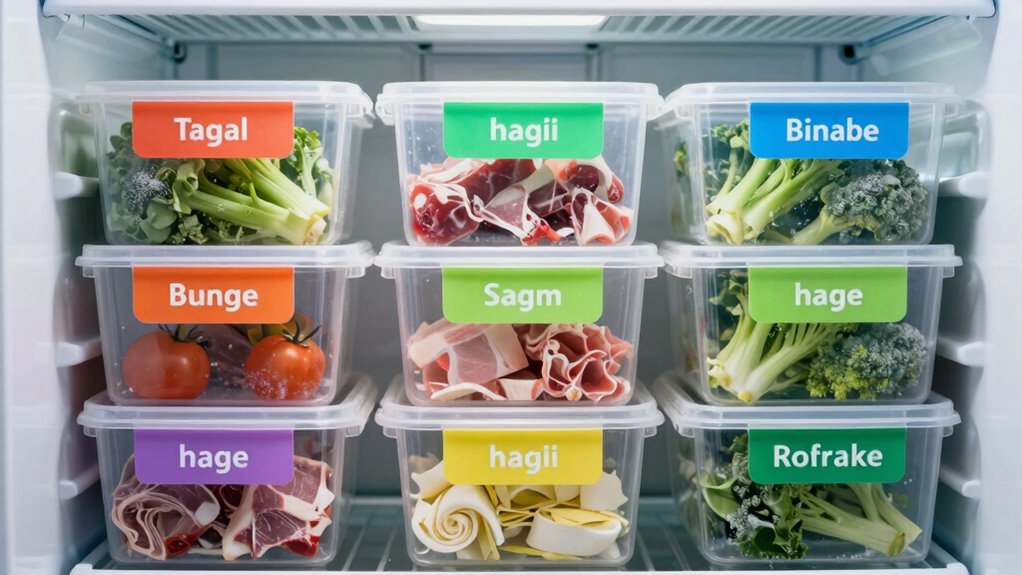
Using clear labels helps you quickly identify what’s inside your freezer. Consistent placement guarantees labels stay visible and organized, saving you time. Don’t forget to include date markings so you can track how long items have been stored. Implementing a labeling system ensures your freezer remains efficient and reduces the risk of food waste. Additionally, choosing labels with non-adhesive or waterproof properties can prevent smudging or peeling, maintaining clarity over time. Incorporating food safety guidelines into your labeling practice can further enhance food preservation and prevent spoilage.
Clear Label Types
Have you considered how clear label types can make your freezer organization more effective? Clear labels improve visibility and reduce confusion, making it easier to find what you need quickly. When choosing label design, opt for simple, bold fonts that stand out against your packaging. Incorporate color coding to categorize items—like blue for meats, green for vegetables, and red for leftovers—so you can identify contents at a glance. Imagine these labels:
- Bright, easy-to-read labels with bold text and contrasting backgrounds.
- Color-coded labels that instantly tell you what’s inside.
- Durable, waterproof labels designed to withstand freezer conditions.
Clear label types, combined with thoughtful label design and color coding, streamline your organization and help prevent food waste by keeping everything visible and accessible.
Consistent Label Placement
To keep your freezer organized and easy to navigate, placing labels consistently is essential. Consistent label placement enhances labeling aesthetics, making it easier to locate items quickly. Decide on a specific spot, like the front or top of each container, and adhere to it. This uniformity prevents clutter and confusion when browsing your freezer. Incorporate label color coding to categorize different food groups or expiration dates, which adds an extra layer of clarity. When labels are consistently placed, you save time and reduce the chance of food waste caused by forgotten or overlooked items. Remember, a neat and predictable labeling system helps you maintain your freezer’s organization and ensures that your food stays fresh longer.
Use of Date Markings
Adding clear date markings to your freezer labels is one of the most effective ways to stay organized and prevent food waste. Accurate date markings help you monitor storage times, ensuring food safety and reducing spoilage. Follow labeling standards by including the month and year for easy reference. Visual cues make a difference:
- Imagine a label with “Mar 2024” clearly visible, catching your eye immediately.
- Visualize a freezer bin with multiple labels, each showing different dates, simplifying rotation.
- Think of a quick glance at a label that confirms whether the food is within safe storage limits, avoiding risk.
Adding Expiration Dates and Food Categories to Your Labels
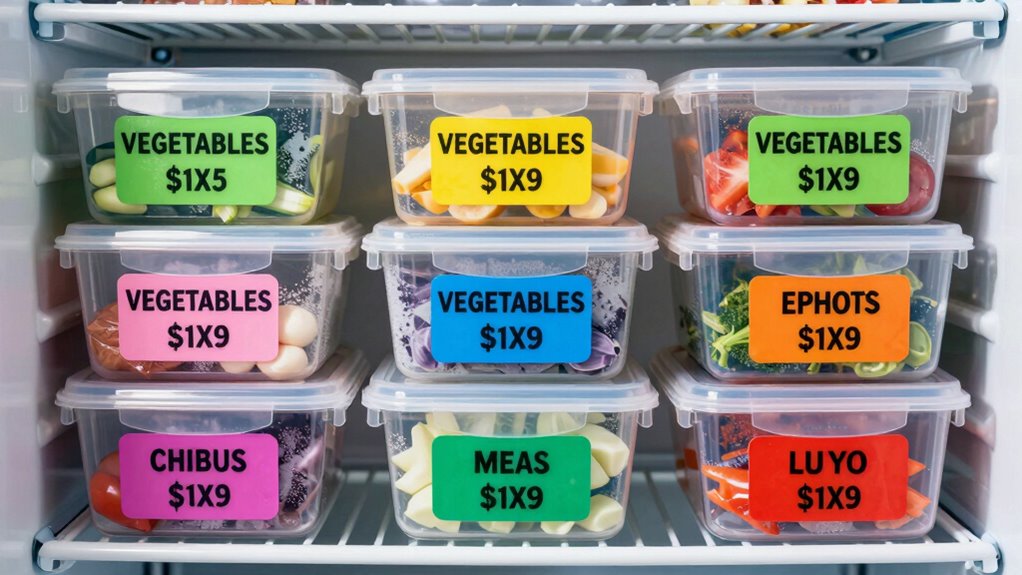
Including expiration dates and food categories on your freezer labels guarantees you can quickly identify how long items have been stored and what type of food they contain. This is especially helpful during meal prep, ensuring you use ingredients before they spoil. Using effective labeling techniques, write clear, legible expiration dates and categorize foods like vegetables, meats, or leftovers. This organization saves time and reduces waste by preventing you from guessing or forgetting about frozen items. When labeling, be consistent with symbols or abbreviations for categories, and place labels in visible spots on each package. Regularly updating labels during your routine ensures your freezer stays organized. With these simple steps, you’ll make meal prep smoother and keep track of food safety effortlessly.
Common Freezer Labeling Problems and How to Fix Them
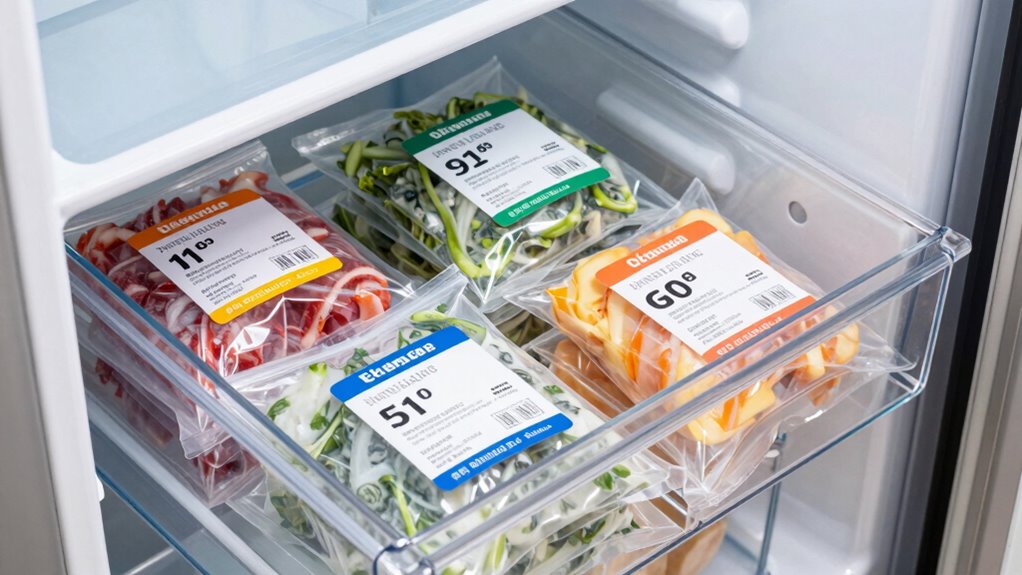
Even with well-labeled freezer items, you might encounter common problems that hinder organization and food safety. Poor labeling etiquette can lead to confusion, while inconsistent labels make freezer organization difficult. To fix these issues, consider these tips:
Even well-labeled freezer items can face issues like smudging, peeling, and inconsistency that hinder organization and safety.
- Blurry or smudged labels that become unreadable over time.
- Labels that fall off or peel, causing misidentification.
- Inconsistent labeling formats, making it hard to find what you need quickly.
To improve, use waterproof, durable labels designed for freezing. Stick to a uniform labeling etiquette by including date, contents, and category. Regularly check and replace labels to maintain clarity. This helps keep your freezer organized and reduces food waste.
Save Money and Reduce Waste With a Freezer Labeling System
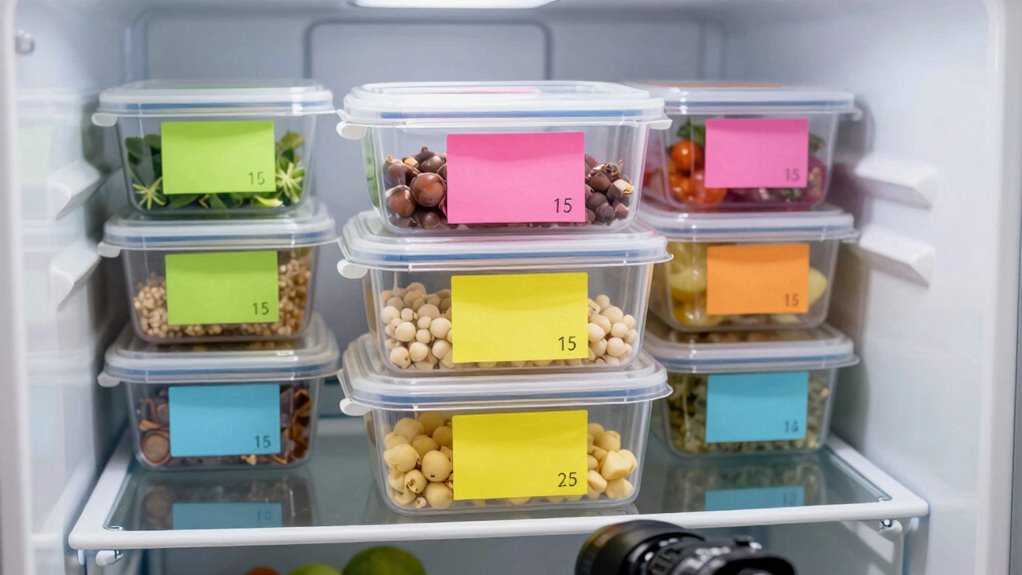
Implementing a well-organized freezer labeling system can save you money and cut down on food waste. Clear labels help you track expiration dates and ingredient freshness, promoting food safety and preventing spoilage. When designing your labels, prioritize readability with bold fonts and simple layouts to avoid confusion. Proper label design guarantees you quickly identify items, reducing the chances of throwing out edible food. By knowing exactly what’s in your freezer and when it was stored, you can plan meals better and avoid unnecessary purchases. This not only saves money but also minimizes waste. Consistent labeling practices make it easier to manage your freezer and uphold food safety standards, keeping your food fresh longer and your budget under control.
Frequently Asked Questions
Can a Freezer Labeling System Be Reused Multiple Times?
Yes, a freezer labeling system with reusable labels can be used multiple times. You should choose labels with high label durability, so they withstand freezing and thawing without peeling or smudging. Reusable labels make your system more eco-friendly and cost-effective. Just guarantee you clean them properly between uses to maintain their adhesive quality. This way, you can efficiently track your frozen foods without constantly replacing labels.
How Often Should Freezer Labels Be Replaced for Effectiveness?
Think of your labels as the guardians of your freezer’s order; their durability directly impacts freshness. You should replace them every 3 to 6 months, depending on usage and exposure to moisture. If labels start peeling or fading, they lose their effectiveness. Regular replacement keeps your system reliable, ensuring clear identification and reducing food waste. Stay vigilant, and your labels will continue to serve as your freezer’s trusted keepers.
Are There Eco-Friendly Options for Freezer Label Materials?
Yes, eco-friendly freezer label options exist. You can choose labels made from recycled paper, which reduces waste and supports sustainability. Look for labels with biodegradable adhesives that break down naturally, minimizing environmental impact. These options are durable enough for freezer conditions and help you stay eco-conscious while keeping your food organized. Switching to recycled paper labels with biodegradable adhesives is a simple, effective way to make your food storage more sustainable.
What Are the Best Practices for Labeling Irregularly Shaped Items?
Your freezer labeling game just got a major upgrade! For irregularly shaped items, you should use custom label shapes that perfectly fit every nook and cranny. Make sure your labels have strong adhesive considerations, so they stick through freezer burn and moisture. Avoid standard labels—go for flexible, durable options that contour to the shape. This way, your labels won’t fall off, keeping everything organized and waste-free, no matter how tricky the shape.
How Do I Prevent Labels From Peeling or Falling off Over Time?
To prevent labels from peeling or falling off over time, you should choose labels with strong label adhesive durability and select high-quality label materials suited for freezer conditions. Make sure you clean the surface thoroughly before applying and press firmly to guarantee good contact. Additionally, avoid placing labels on uneven or greasy surfaces, and consider using waterproof or freezer-safe labels to withstand temperature fluctuations and moisture.
Conclusion
A well-crafted freezer labeling system is your secret weapon against food chaos and waste. Think of it as a trusty compass guiding your groceries safely home, keeping everything organized and fresh. With clear labels in place, you’ll sail smoothly through meal prep and save money along the way. Embrace this simple habit, and watch your freezer transform into a well-tuned symphony—where every item has its rightful place and waste becomes a thing of the past.