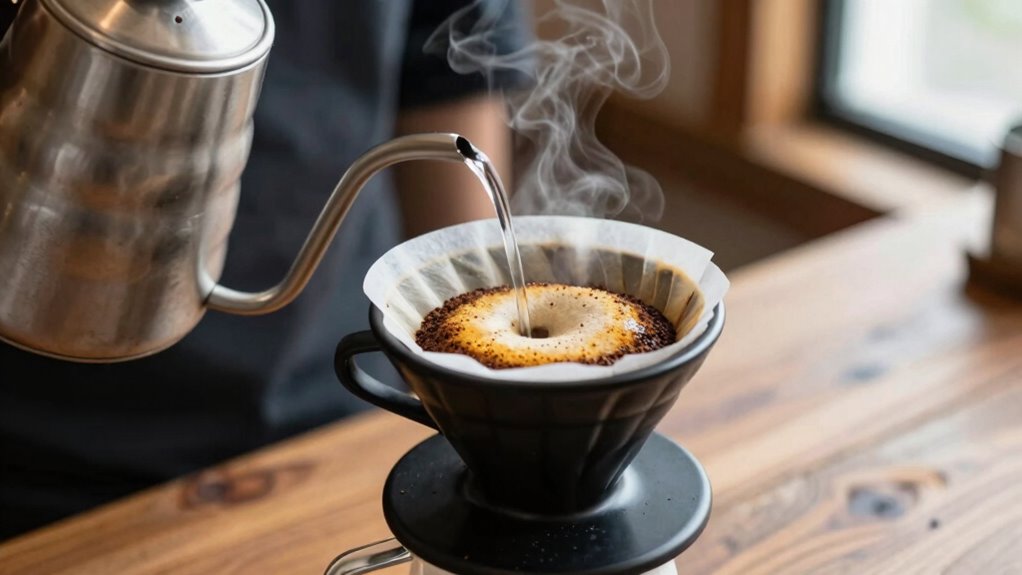

To dial in coffee quickly, focus on controlling extraction by adjusting grind size, dose, temperature, and brew time systematically. Start with recommended settings for your brewing method, and make small changes while keeping detailed notes on each adjustment. Use your taste tests to guide refinements, fixing issues early with simple tweaks. This way, you’ll avoid wasting time and resources, and develop consistent, great-flavored coffee faster—if you keep exploring these essential tips, you’ll become more confident in your process.
Listen free for 30 days with Audible
Thousands of audiobooks and originals — cancel anytime.
As an affiliate, we earn on qualifying purchases.
Key Takeaways
- Start with recommended parameters for your brewing method and make small, incremental adjustments.
- Keep detailed tasting notes and record each change to identify what works best.
- Focus on fixing fundamental issues like grind size, water temperature, and brew time first.
- Use consistent equipment, calibration, and water quality to minimize variability and waste.
- Prioritize troubleshooting basic extraction problems before exploring complex adjustments.
As an affiliate, we earn on qualifying purchases.
How Coffee Extraction Affects Flavor and How to Control It
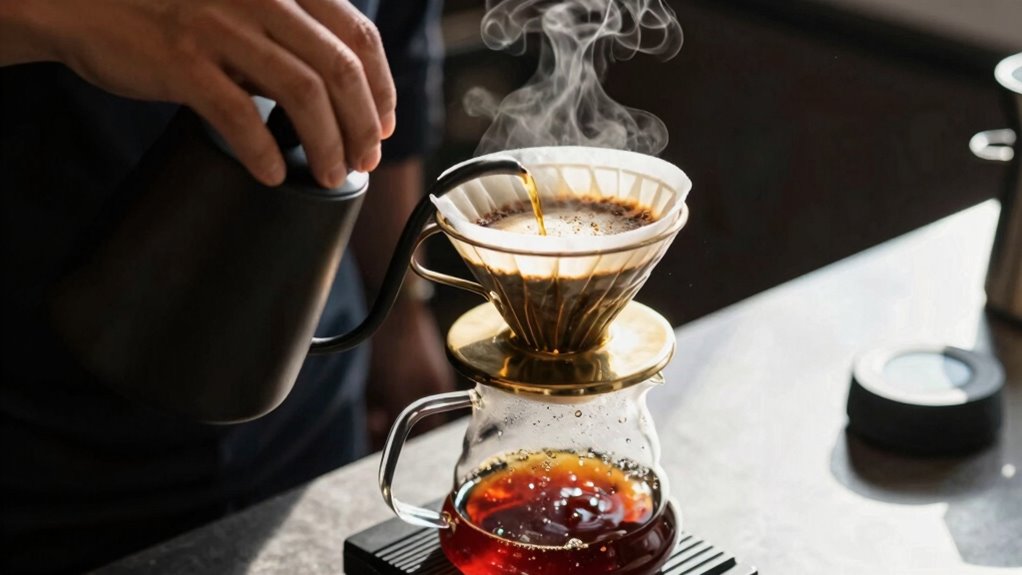
The way coffee extracts during brewing directly impacts its flavor, making it essential to understand and control this process. Coffee bean genetics influence how easily flavors are released; some beans are naturally more soluble, affecting extraction levels. Additionally, water mineral content plays a vital role—hard water with high mineral levels can hinder extraction, while balanced minerals enhance flavor clarity. When you pay attention to these factors, you can better manage extraction to achieve your desired taste. Over-extraction results in bitter, harsh flavors, while under-extraction leaves coffee flat and sour. By understanding your beans’ genetics and adjusting your water mineral content, you can fine-tune the extraction process. Proper extraction control is crucial for crafting a balanced, flavorful cup every time. Using precise measurement tools can help you monitor and optimize these factors consistently. Paying attention to the water quality also helps prevent uneven extraction and ensures a more consistent flavor profile. Incorporating brewing consistency techniques can further enhance your results over time.
As an affiliate, we earn on qualifying purchases.
Choosing the Right Coffee Grind Size and Dose for Your Brew Method
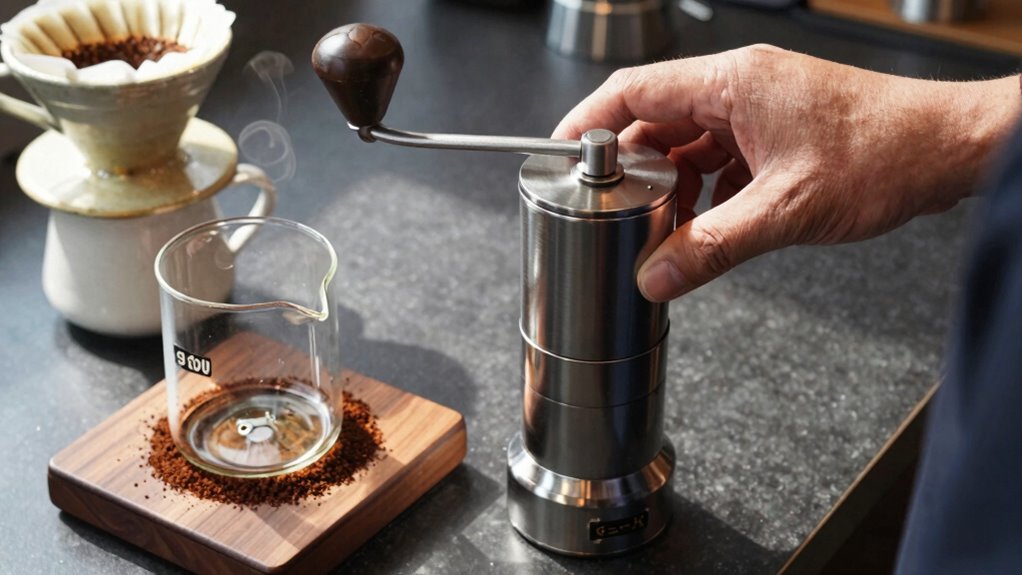
Choosing the right coffee grind size and dose is essential because they directly influence extraction and flavor. Consistent grind size guarantees uniform extraction, preventing over- or under-extraction. Precise dosing ensures the right coffee-to-water ratio, optimizing flavor. Use the table below to match your brew method with ideal grind sizes and doses:
| Brew Method | Grind Size | Dose (grams) | Notes |
|---|---|---|---|
| French Press | Coarse | 15-20 | Longer steep time, coarser grind needed |
| Drip Coffee Maker | Medium | 10-15 | Balanced extraction |
| Espresso | Fine | 7-9 | High pressure, precise dosing essential |
| AeroPress | Medium-fine | 7-10 | Adjust based on brew time |
| Pour-Over | Medium-coarse | 15-20 | Consistent grind improves clarity |
Prioritize grind consistency and dosing precision for the best results. Additionally, understanding how grind size impacts extraction can help you fine-tune your brewing process for optimal flavor. Recognizing the role of temperature in extraction can further refine your brew. Adjusting grind size according to your specific brew method allows for more control over flavor and strength. A thorough grasp of brew method-specific grind requirements can significantly enhance your coffee experience.
water temperature thermometer for coffee
As an affiliate, we earn on qualifying purchases.
As an affiliate, we earn on qualifying purchases.
How to Adjust Brew Time and Temperature for Better Coffee

Adjusting brew time and temperature can markedly enhance your coffee’s flavor and extraction quality. Consistent brew time helps achieve better brew consistency, ensuring each cup tastes similar. If your coffee is under-extracted, try increasing the brew time slightly or raising the temperature for better extraction. Conversely, if it’s over-extracted and bitter, reduce the brew time or lower the temperature. Maintaining temperature stability is vital, as fluctuations can lead to inconsistent results. Use a reliable thermometer to monitor your water temperature and keep it steady within the ideal range for your chosen method. Small adjustments can make a big difference, so experiment carefully. Proper temperature control is essential for achieving optimal extraction and flavor. By fine-tuning these variables, you’ll improve your coffee’s clarity, balance, and overall enjoyment with each brew. Additionally, understanding extraction principles can help you make more informed adjustments for consistent quality, and incorporating water quality considerations can also significantly impact the final taste of your coffee. Being aware of thermal stability in your brewing process can further ensure consistent results across multiple cups. Paying attention to brew consistency can help you develop a reliable routine that produces great coffee every time.
As an affiliate, we earn on qualifying purchases.
Using Tasting Notes and Record-Keeping to Quickly Improve Your Brew
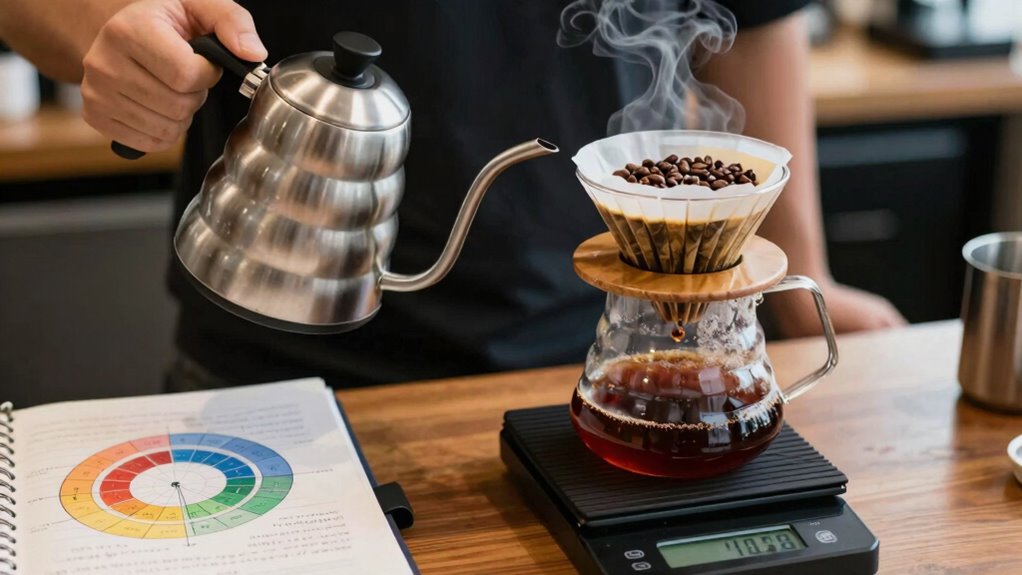
Keeping track of your brewing details and tasting notes allows you to identify patterns and make targeted improvements quickly. By recording variables like grind size, brew time, and temperature alongside sensory analysis, you gain insight into how each factor influences flavor profiles. Tasting notes help you pinpoint specific qualities—such as acidity, body, or sweetness—that need adjustment. Over time, this record-keeping reveals which tweaks lead to better balance and clarity in your coffee. Using detailed notes, you can compare different batches and refine your process efficiently, avoiding trial-and-error guesswork. This systematic approach accelerates your journey to consistent, delicious brews, helping you optimize every variable based on real feedback rather than assumptions. Practicing intentionality in your adjustments fosters a more mindful and resilient approach to refining your coffee. Additionally, understanding how to interpret your notes can help you make smarter adjustments that save time and resources. Recognizing the importance of process consistency further enhances the effectiveness of your record-keeping system. Incorporating an awareness of machine calibration ensures that your equipment remains reliable, leading to more predictable results. Moreover, leveraging data analysis techniques can uncover subtle trends in your brewing patterns, allowing for even more precise adjustments.
Common Coffee Brewing Problems and How to Fix Them
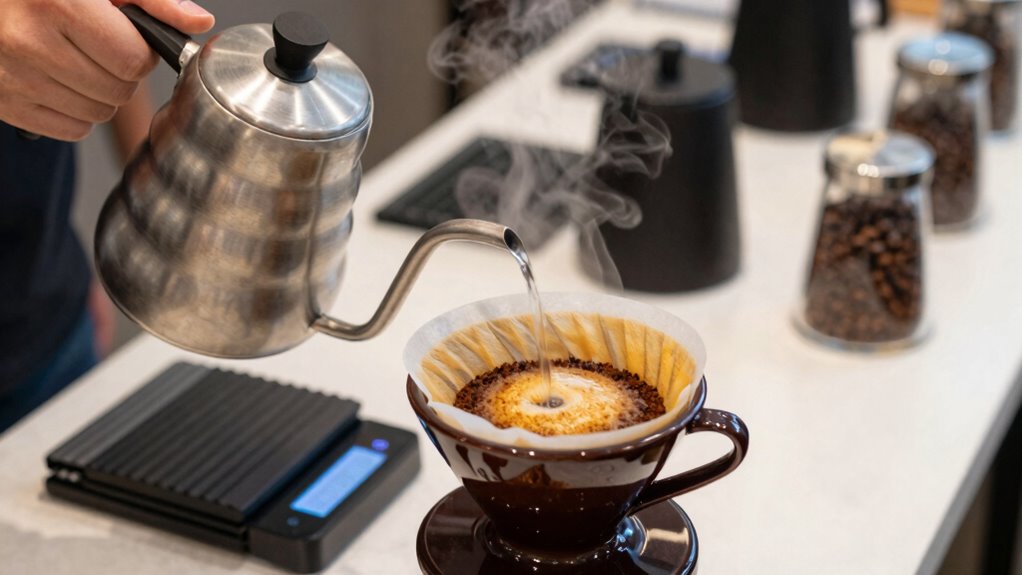
Many common coffee brewing problems stem from simple issues like incorrect grind size, inconsistent water temperature, or improper brew times. If your coffee tastes flat or weak, check your brewing equipment for proper calibration, ensuring your grinder produces a consistent grind. Inconsistent water temperature can lead to under- or over-extraction; aim for about 195-205°F. Also, pay attention to brew times—too short or long can ruin flavor. Proper coffee storage is essential; stale beans or moisture can affect extraction and taste. Keep your beans airtight and away from heat and light. Regularly cleaning your brewing equipment prevents buildup that causes off-flavors. Additionally, understanding safe household storage practices can help prevent mold and spoilage that impact coffee quality. Ensuring your equipment maintenance is up-to-date is crucial for consistent results. Being aware of water quality can also make a significant difference in your brewing outcomes. Recognizing the impact of grind size on extraction can save you time and improve flavor. Paying attention to brew timing and making small adjustments can significantly enhance your coffee experience. Identifying and fixing these basic issues can dramatically improve your coffee without wasting time or resources.
Frequently Asked Questions
How Can I Calibrate My Grinder for Consistent Extraction?
To calibrate your grinder for consistent extraction, start by adjusting the grind size to achieve a balanced brew. Use grinder calibration to fine-tune the settings, and then make dose adjustments to guarantee you’re using the right coffee quantity. Brew a shot, taste, and note any over- or under-extraction. Keep tweaking the grind and dose until you reach your desired flavor profile, assuring consistent results every time.
What Are the Signs of Over- or Under-Extraction?
If your coffee’s tasting like burnt rubber or sour lemons, you’re likely over- or under-extracting, causing flavor imbalance and brewing inconsistencies. Signs include overly bitter or flat taste, weak aroma, or astringency. Over-extraction pulls too many compounds, leaving bitterness, while under-extraction leaves your brew dull and sour. Keep an eye on these cues to fine-tune your grind and brewing time, ensuring a balanced, delicious cup every time.
How Does Water Quality Impact Brewing Results?
Water quality directly affects your brewing results. High mineral content can enhance extraction, adding flavor complexity, but too much can clog filters or cause over-extraction. Using proper brewing water techniques, like filtering tap water or using mineral additives, helps attain a balanced mineral profile. Make certain your water is clean, with the right mineral levels, so your coffee tastes consistent and well-extracted every time.
Can I Use Different Brewing Devices to Refine My Skills?
Yes, you can definitely use different brewing devices to refine your skills. Each device, like pour-over, Aeropress, or French press, offers unique brewing techniques that influence flavor profiles. Experimenting with various methods helps you understand how variables affect taste, allowing you to develop your palate and perfect your craft. Trying new equipment keeps the process engaging and pushes you closer to dialing in your perfect cup.
How Often Should I Clean My Coffee Equipment for Optimal Flavor?
You should clean your coffee equipment after every use to maintain ideal flavor and guarantee equipment maintenance. Regular cleaning prevents buildup of oils, residue, and mineral deposits that can affect taste. For your grinder, clean weekly to keep grounds fresh. Your brewer needs a thorough cleaning at least once a week, while descaling should be done monthly if you have hard water. Consistent cleaning keeps your coffee tasting its best.
Conclusion
Mastering your coffee takes practice, but now you’ve got the secret sauce to dial it in perfectly. With a little patience and attention to detail, you’ll transform your brew from good to mind-blowingly amazing—like revealing the universe’s best-kept secret in every cup. Keep experimenting, tasting, and recording your results. Before long, you’ll be crafting coffee so incredible, it’ll feel like each sip is a warm hug from the heavens.
Fall Picks
fall essentials
As an affiliate, we earn on qualifying purchases.