
TL;DR

Get the latest gadgets delivered free with Prime
- Fast, free delivery on millions of items
- Prime Video, Amazon Music and more included
- Member-only deals all year
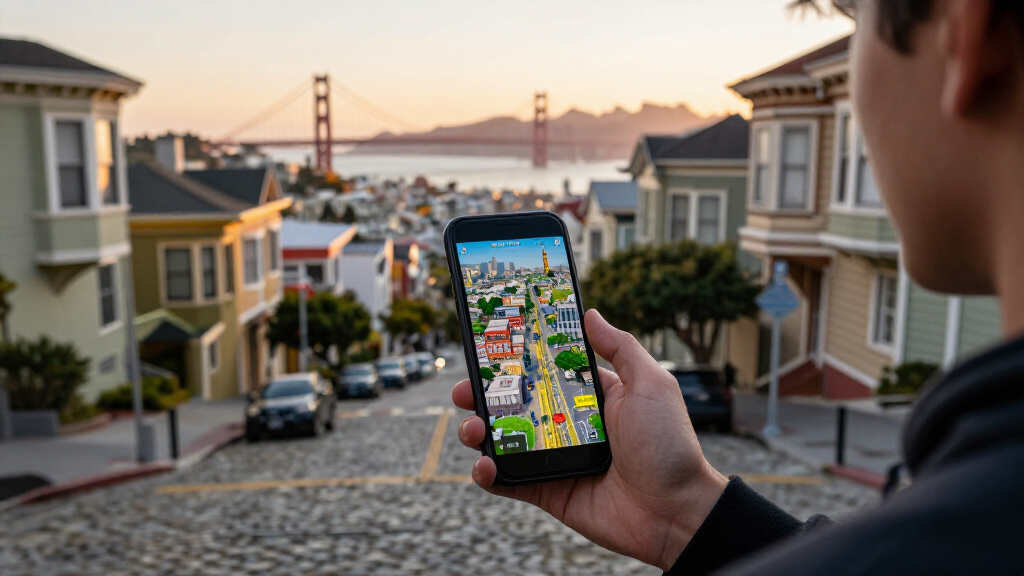
Developers have announced a project to recreate the entire city of San Francisco as a detailed video game environment. This development raises questions about virtual urban experiences and technological possibilities. The project is confirmed, but details on its scope and purpose are still emerging.
Developers have revealed plans to create a comprehensive digital recreation of the entire city of San Francisco as a video game environment. This initiative, confirmed by the project’s creators, aims to produce a highly detailed virtual version of the city that users can explore interactively. The project’s scope and purpose are still being clarified, but it marks a significant development in urban digital modeling and virtual reality applications.
The project was announced via a social media post by CDNG Dev, a known developer in digital environments, on March 20, 2024. According to the post, the team is working on a full-scale virtual model of San Francisco, capturing its streets, landmarks, and neighborhoods with high fidelity. The creators have not yet disclosed the timeline for completion or specific platforms where the virtual city will be accessible.
Sources close to the project indicate that the recreation involves advanced mapping technologies, including aerial scans, satellite imagery, and detailed 3D modeling. The aim appears to be creating a versatile platform that could serve various purposes, from gaming and entertainment to urban planning and virtual tourism. However, the project remains in the early development phase, and many details are still unconfirmed.
Officials from the San Francisco city government have not yet issued an official statement regarding the project, nor has there been confirmation of partnerships with local agencies or private firms. The developers emphasize that the project is still in experimental stages and that more information will be released in upcoming updates.
Implications for Urban Virtual Environments
This project signifies a potential shift in how cities can be experienced digitally, offering immersive, interactive environments that could transform tourism, urban planning, and gaming. A full virtual recreation of San Francisco could serve as a testing ground for new city planning tools, virtual tourism experiences, and even emergency response simulations. For residents and visitors, it could provide a new way to explore the city remotely, especially during times when physical travel is limited.
Moreover, this initiative highlights the growing capabilities of digital mapping and 3D modeling technologies, which are becoming increasingly sophisticated and accessible. It also raises questions about data privacy, digital ownership, and how such virtual representations might influence real-world perceptions and decisions about urban spaces.
virtual reality headset for urban exploration
As an affiliate, we earn on qualifying purchases.
As an affiliate, we earn on qualifying purchases.
Background on Digital City Reproductions
Recreating cities as virtual environments is not new; projects like Google Earth and various VR city tours have laid groundwork for digital urban modeling. However, a full-scale, interactive, and detailed recreation of an entire city like San Francisco represents a significant advancement. Past efforts have focused on smaller areas or less detailed models, but recent developments in AI, photogrammetry, and cloud computing have made large-scale, high-fidelity virtual cities increasingly feasible.
In recent years, tech companies and universities have experimented with digital twins for urban planning and disaster management, but a comprehensive virtual city accessible to the public remains rare. The announcement by CDNG Dev suggests that this project aims to push the boundaries of what’s possible in digital urban environments, potentially setting new standards for virtual cityscapes.
While there is no official timeline, industry experts see this as part of a broader trend toward immersive digital experiences, driven by advancements in virtual reality, augmented reality, and real-time rendering technologies.
“This project is about creating a living, breathing digital replica of San Francisco that users can explore and interact with in ways never before possible.”
— Alex Chen, CTO of CDNG Dev
As an affiliate, we earn on qualifying purchases.
Unconfirmed Details About Project Scope and Use
It is not yet clear how detailed the virtual city will be, what platforms it will support, or the intended primary use cases. The developers have not provided a timeline for completion, nor have they clarified whether the project will be open to the public or restricted to certain applications. Questions remain about data sources, privacy considerations, and potential commercial or educational partnerships.
Additionally, it is unclear whether the project aims to be a purely artistic recreation, a functional tool for urban planning, or a hybrid of both. The scope, scale, and accessibility of the virtual San Francisco are still in the planning stages, and more details are expected in future updates.
As an affiliate, we earn on qualifying purchases.
Next Steps for Virtual San Francisco Development
Developers plan to release more detailed updates in the coming months, including potential beta versions or demonstrations. They may also seek partnerships with local authorities, tech firms, and educational institutions to expand the project’s capabilities and reach. Public interest and feedback could influence the project’s development trajectory.
Industry experts will likely monitor the project’s progress to evaluate its potential impact on digital urban modeling and virtual reality applications. The next major milestone is anticipated to be an initial prototype or virtual walkthrough, which could occur within the next year.
As an affiliate, we earn on qualifying purchases.
Key Questions
Will the virtual San Francisco be accessible to the public?
It is not yet confirmed whether the virtual city will be publicly accessible or limited to specific platforms or partners. More details are expected as the project progresses.
What technologies are being used to create the virtual city?
The project reportedly involves aerial scans, satellite imagery, 3D modeling, and possibly AI-driven rendering techniques. Exact technical details have not been fully disclosed.
Could this virtual city be used for urban planning?
Yes, experts suggest that a detailed digital twin could serve as a valuable tool for urban planning, emergency response simulations, and infrastructure development.
When will the virtual San Francisco be available?
The developers have not announced a specific release date. The project remains in early development, with more updates expected in the coming months.
Are there privacy concerns with creating a digital city?
Potential privacy issues could arise depending on data sources and usage. The project team has not yet addressed these concerns publicly, but they are likely to be considered as development continues.
Source: hn
Columbus Day / Indigenous Peoples' Day Picks
long weekend sales
As an affiliate, we earn on qualifying purchases.