To set up a balcony garden that’s perfect for beginners, choose lightweight, durable containers with good drainage, and fill them with quality soil and easy-care plants like succulents, herbs, or flowering shrubs. Arrange taller plants on the north side to avoid shading sunlight and use reflective surfaces for more light. Keep tools handy, water regularly, and watch for pests. If you keep things simple and follow basic tips, your garden will thrive—learn more to make it even easier.
Key Takeaways
- Start with low-maintenance, resilient plants like succulents, herbs, or ferns that thrive with minimal care.
- Choose lightweight, well-draining containers with proper drainage to prevent overwatering and root issues.
- Use high-quality, enriched potting mix and maintain consistent watering without overdoing it.
- Arrange taller plants on the north side and reflect sunlight with mirrors or light-colored walls for brightness.
- Keep essential tools nearby, monitor pests, and avoid heavy loads to ensure safety and easy garden management.

Fasmov 7 Pack 17 Inches Flower Window Box Plastic Vegetable Planters with Trays Vegetables Growing Container Garden Flower Plant Pot with 7 Pcs Plant Labels for Balcony, Patio, Garden, Black
High Quality: Made of high quality plastic, which is durable, allows you to reuse the planter for several…
As an affiliate, we earn on qualifying purchases.
As an affiliate, we earn on qualifying purchases.
Why Beginners Can Easily Grow a Balcony Garden
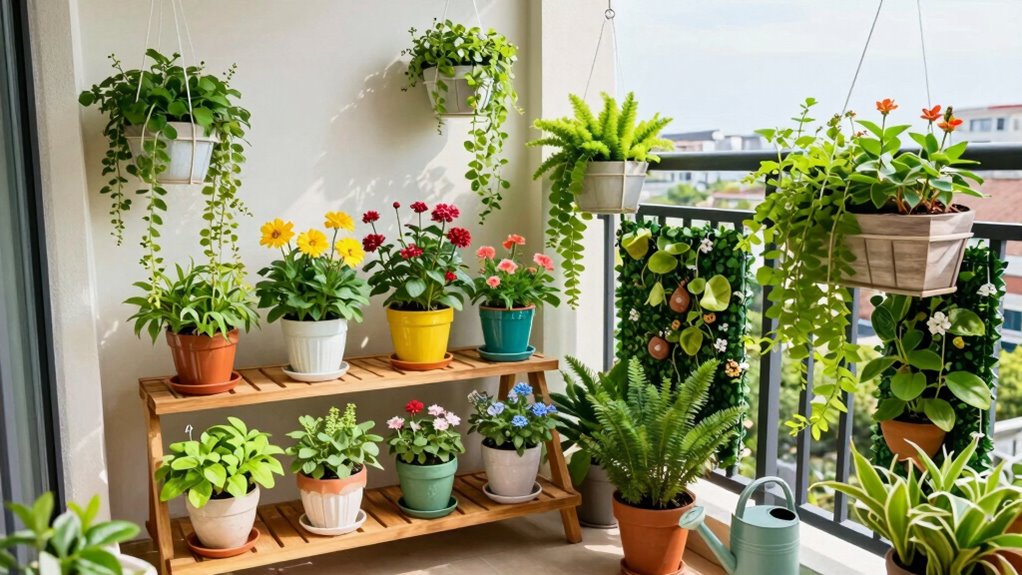
Starting a balcony garden is surprisingly simple for beginners because many plants thrive in small spaces and require minimal maintenance. You can easily create a thriving ecosystem by using companion planting, which involves pairing plants that support each other’s growth and naturally deter pests. For example, planting basil near tomatoes can improve flavor and repel insects. This method reduces the need for chemical pest control, making your garden safer and more sustainable. Additionally, many balcony-friendly plants are resilient and adaptable, forgiving occasional mistakes. With a bit of planning, you’ll find that maintaining your garden becomes manageable and even enjoyable. Proper water management and understanding your plants’ needs further increase your chances of success. Selecting plants that are easy to grow and suitable for your climate can significantly boost your confidence as a beginner. Choosing resilient plants helps ensure your garden’s longevity despite minor errors or environmental changes. Incorporating local climate considerations can further improve your chances of success. Overall, the combination of companion planting and choosing easy-to-grow plants ensures your balcony garden can flourish, even if you’re just starting out.

HOME GROWN Herb Garden Planter Indoor Kit – Unique Christmas Gift for Adults, Men, & Women – Grow 4 Heirloom Herb Seeds on Kitchen Window – Beginner DIY Craft & Hobby Gardening Gift for Plant Lovers
All-in-One Herb Starter Kit – Get everything you need to grow fresh herbs at home. This complete herb…
As an affiliate, we earn on qualifying purchases.
As an affiliate, we earn on qualifying purchases.
Choosing the Best Containers and Pots for Your Space
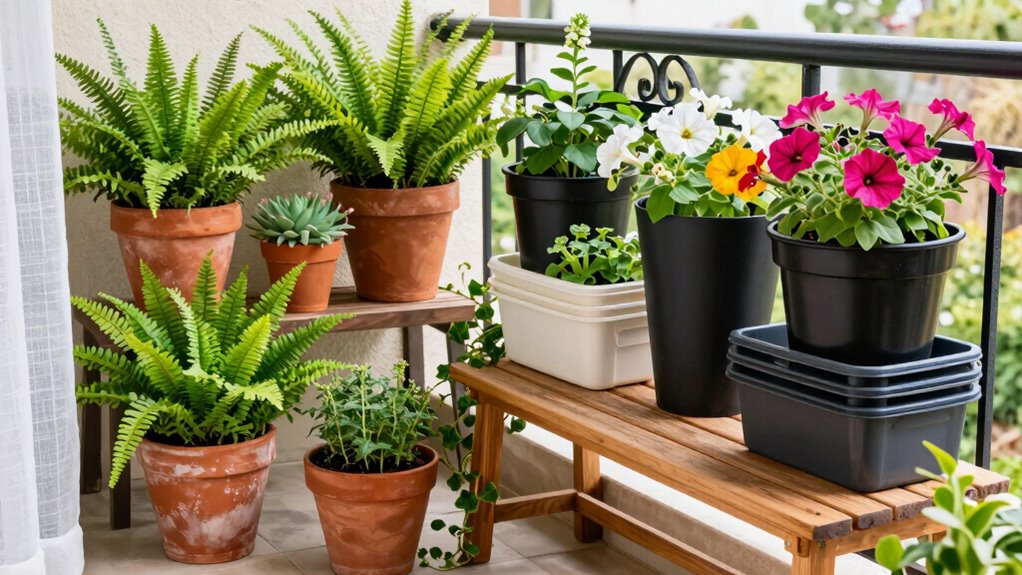
Choosing the right containers is key to a successful balcony garden, so consider materials that suit your climate and style. Make sure the pots are the right size and have proper drainage to keep plants healthy. Don’t forget to select a design that complements your space and personal taste for a cohesive look. Incorporating Free Floating techniques can help you maximize space and create a relaxed, natural atmosphere. Additionally, selecting containers made from eco-friendly materials can contribute to a more sustainable gardening experience. For added sustainability, look for containers that are recyclable or biodegradable, reducing your environmental footprint. Considering performance parts like high-quality pots can also enhance your garden’s overall health and longevity. Furthermore, choosing containers with insulating properties can help protect plant roots from temperature fluctuations.
Material Matters for Pots
The material of your pots plays an essential role in the health and longevity of your balcony garden. Different materials, like clay, plastic, or metal, affect moisture retention and temperature regulation, impacting plant growth. For example, clay pots are porous, helping soil breathe but may dry out quickly, while plastic retains moisture longer. Choose materials that suit your climate and watering habits. Also, consider how your pots interact with soil amendments to improve nutrient availability. Proper pest control begins with selecting pots less prone to pests, such as those with fewer crevices or made from pest-resistant materials. Additionally, understanding the vetted qualities of different container materials can help you select options that float on water and maintain stability in windy conditions. When choosing your containers, consider their durability and how they will withstand outdoor elements over time. For optimal plant health, it’s also important to consider material breathability and how it influences soil moisture and aeration. Selecting containers with good breathability can prevent root rot and promote healthy growth. Incorporating containers with insulation properties can also help regulate soil temperature, especially in fluctuating weather conditions. By choosing the right containers, you create a healthier environment for your plants, reducing stress and fostering growth. Material choice is foundational for a thriving balcony garden.
Size and Drainage Needs
Selecting the right size and drainage features for your containers is essential to creating a healthy environment for your plants. Proper-sized pots prevent root crowding and ensure plants get enough nutrients. Adequate drainage stops excess water from pooling, reducing the risk of root rot and pests. When choosing containers, consider these factors:
- Use larger pots for deep-rooted plants and smaller ones for herbs or flowers.
- Ensure containers have drainage holes to avoid waterlogging.
- Incorporate gravel or broken pottery at the bottom for better drainage.
- Regularly observe and adjust watering to prevent overwatering.
- Combine good drainage with pest control methods to avoid pest issues related to excess moisture.
- Remember that soil quality significantly impacts plant health and should be optimized along with container choices.
- Improving soil structure and fertility can further promote healthy plant growth and reduce maintenance needs.
- Incorporating proper drainage techniques helps maintain optimal soil moisture levels and promotes healthy root development.
- Using drainage amendments can enhance the soil’s ability to drain effectively and prevent water retention issues.
- Additionally, choosing appropriate soil mix tailored to your plant type can greatly improve drainage and overall plant health.
Style and Aesthetic Choices
Your balcony garden’s overall look depends heavily on the containers and pots you pick, so it’s worth considering how their style and color complement your space. Choose containers that match your plant color schemes and enhance decorative accents. Bright, vibrant pots work well for lively, energetic gardens, while neutral tones suit minimalist or modern styles. Mixing shapes and sizes adds visual interest, and coordinating colors can unify your space. Consider using decorative accents such as patterned pots, textured materials, or metallic finishes for a personalized touch. Here’s a quick guide:
| Style | Color Scheme | Decorative Accents |
|---|---|---|
| Modern | Monochrome or bold | Sleek, geometric |
| Rustic | Earthy tones | Wooden, distressed |
| Bohemian | Bright, eclectic | Patterned, colorful |
| Minimalist | Neutral hues | Simple, clean lines |
Additionally, selecting appropriate container materials can improve durability and aesthetic appeal over time. Using containers made from weather-resistant materials ensures longevity and reduces maintenance needs, especially in outdoor balcony environments. Incorporating sustainable fabric technology such as weather-resistant or eco-friendly materials can also contribute to eco-conscious gardening efforts. For added durability, consider weatherproofing methods to protect your containers from the elements.

10 Pack Hanging Reflective Bird Scare Discs Set, Large 30-Discs Double-Sided Mirror Bird Deterrent Spinner Reflectors for Outdoor Garden, Patio, Orchard, Balcony, Tree, and Crop Protection Decorations
10 PACK REFLECTIVE BIRD DETERRENT DISC STRANDS – This set includes 10 preassembled hanging disc strands, each with…
As an affiliate, we earn on qualifying purchases.
As an affiliate, we earn on qualifying purchases.
Selecting Easy-Care Plants That Thrive on Balconies
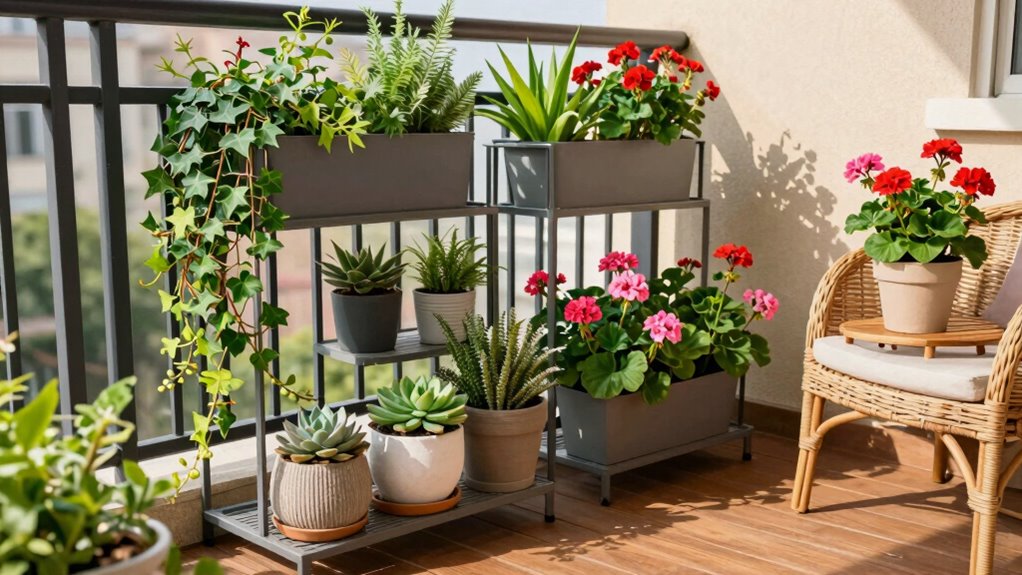
When choosing plants for your balcony, opting for easy-care varieties can make gardening more enjoyable and less stressful. These plants require minimal maintenance while still adding beauty to your space. Consider succulent varieties, which thrive in sunny spots and need infrequent watering. Flowering shrubs are another great choice for a splash of color with little fuss. They often adapt well to container life and bloom reliably. Other low-maintenance options include herbs like rosemary and thyme, which are useful and resilient. Additionally, selecting plants like ivy or ferns can add greenery without demanding constant attention. These easy-care plants help you create a lush balcony garden without overwhelming your schedule, making gardening accessible even for beginners.

Burpee, 9 Quarts | Premium Organic Potting Natural Soil Mix Food Ideal for Container Garden-Vegetable, Flower & Herb Use for Indoor Outdoor Plant
ALL-NATURAL MIX: Burpee Organic Premium Potting Mix is formulated with plant food & coconut coir to promote seed…
As an affiliate, we earn on qualifying purchases.
As an affiliate, we earn on qualifying purchases.
Must-Have Tools and Supplies for Balcony Gardening
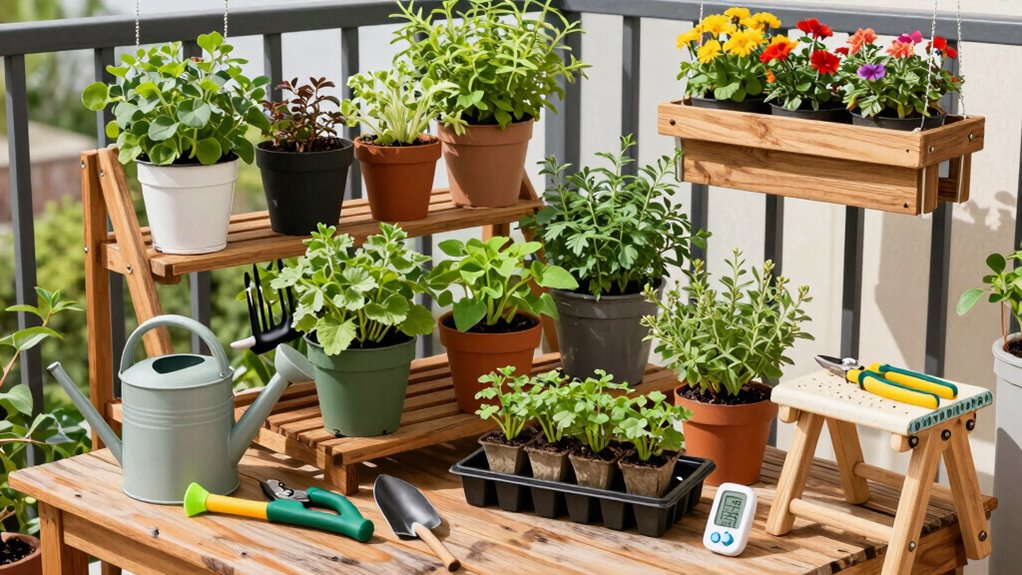
To keep your balcony garden thriving with minimal fuss, having the right tools and supplies on hand is key. Start with a variety of container options, such as pots, hanging baskets, or window boxes, suitable for your space and plants. You’ll also need essential gardening tools like trowels, pruning shears, and watering cans to tend to your plants easily. Don’t forget soil amendments like compost or slow-release fertilizers to enrich your soil and promote healthy growth. These amendments improve soil structure and provide nutrients your plants need. Keeping these supplies nearby makes planting, watering, and caring for your garden straightforward. With the right tools and supplies, you’ll set yourself up for a successful balcony garden, even if you’re just starting out.
How to Arrange Your Balcony for Sunlight and Privacy
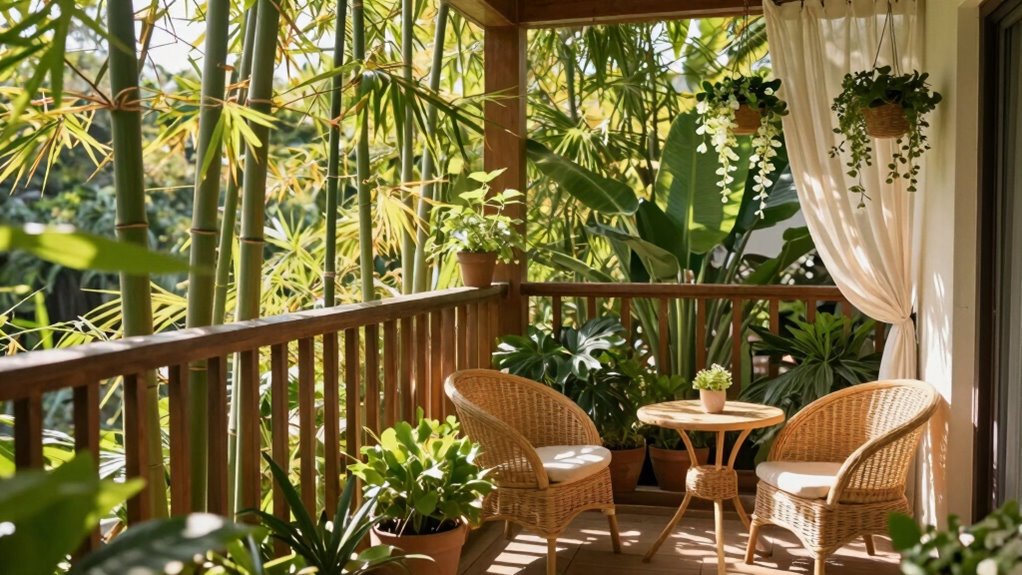
To make the most of your balcony, position your plants and furniture to maximize sunlight exposure throughout the day. Use natural barriers like tall plants, screens, or trellises to create privacy without blocking light. With thoughtful arrangement, you’ll enjoy a bright, private outdoor space you love.
Maximizing Sunlight Exposure
Ever wondered how to make the most of the sunlight on your balcony? Properly arranging your space helps plants thrive by maximizing sun exposure. Position taller plants or structures on the north side to prevent shading. Use reflective surfaces, like mirrors or light-colored walls, to bounce sunlight into shaded areas. Guarantee your soil quality supports healthy growth, which means well-draining soil rich in nutrients. Regular pest control keeps plants healthy and uninterrupted by insects that could hinder growth. Move containers to follow the sun’s path throughout the day, optimizing light absorption. By thoughtfully arranging your balcony, you’ll create an ideal environment for your garden to flourish with plenty of sunlight.
Creating Natural Privacy Barriers
Creating natural privacy barriers on your balcony begins with strategic plant placement that serves dual purposes: shielding your space from neighbors while still allowing sunlight to reach your plants. Tall, dense plants like bamboo, tall grasses, or climbing vines act as effective natural barriers, providing balcony privacy without blocking essential sunlight. Position these plants along the edges or railings to create a visual shield. You can also incorporate trellises or lattice panels covered with climbing plants to add height and privacy. This approach not only enhances your balcony privacy but also creates a lush, inviting atmosphere. By carefully arranging your greenery, you guarantee your balcony remains a cozy retreat, protected from prying eyes while maintaining ideal sunlight for your garden.
Planting Tips: Soil, Watering, and Basic Care

Getting your balcony garden thriving starts with understanding the basics of soil, watering, and plant care. Use high-quality potting mix enriched with composting basics to provide nutrients. Keep the soil consistently moist but not waterlogged—watering early in the day works best. Regularly check for pests and implement pest control methods like natural repellents or manual removal. Here are some essential tips:
Start with quality soil, consistent watering, and regular pest checks for a thriving balcony garden.
- Use well-draining soil to prevent root rot
- Water plants deeply, allowing excess to drain
- Mulch to retain moisture and regulate temperature
- Rotate plants to avoid soil depletion
- Keep an eye out for pests and treat early
Following these simple practices guarantees healthy growth and a vibrant balcony garden. Remember, attentive care makes all the difference in maintaining thriving plants.
Common Mistakes Beginners Make and How to Avoid Them

Many beginners make the mistake of overwatering their balcony plants, thinking more water will lead to faster growth. This can harm your plants and create drainage issues that affect balcony safety. To avoid this, check soil moisture before watering and guarantee containers have proper drainage. Another common error is neglecting pest prevention, which can quickly ruin your garden. Regularly inspect plants for pests and remove any visible issues early. Additionally, don’t overlook balcony safety; secure pots properly and avoid overcrowding to prevent accidents. Overloading your balcony or placing heavy containers improperly can be risky. By paying attention to watering habits, pest prevention, and safety measures, you’ll set a solid foundation for a thriving balcony garden that’s safe and enjoyable.
Seasonal Tips to Keep Your Balcony Garden Growing All Year
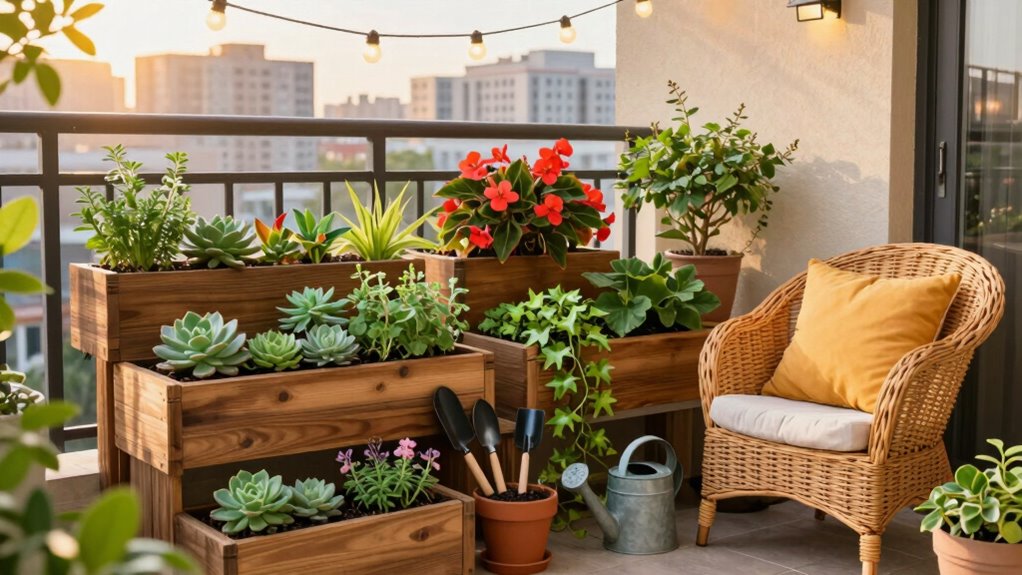
To keep your balcony garden thriving year-round, you need to adapt your care routines to changing seasons. During colder months, bring sensitive plants indoors or shield them with frost covers. Use composting tips to enrich soil naturally, especially in spring and summer, boosting plant health. Regularly inspect for pests and implement pest control strategies early to prevent infestations. In summer, water early mornings and mulch to retain moisture. In fall, prune dead growth and prepare plants for dormancy. In winter, reduce watering and protect containers from freezing. Keep your garden active and healthy by adjusting your practices with the seasons, ensuring continuous growth and vibrancy. Staying attentive to seasonal needs will make your balcony garden a year-round oasis.
Creative Ideas to Personalize and Beautify Your Garden
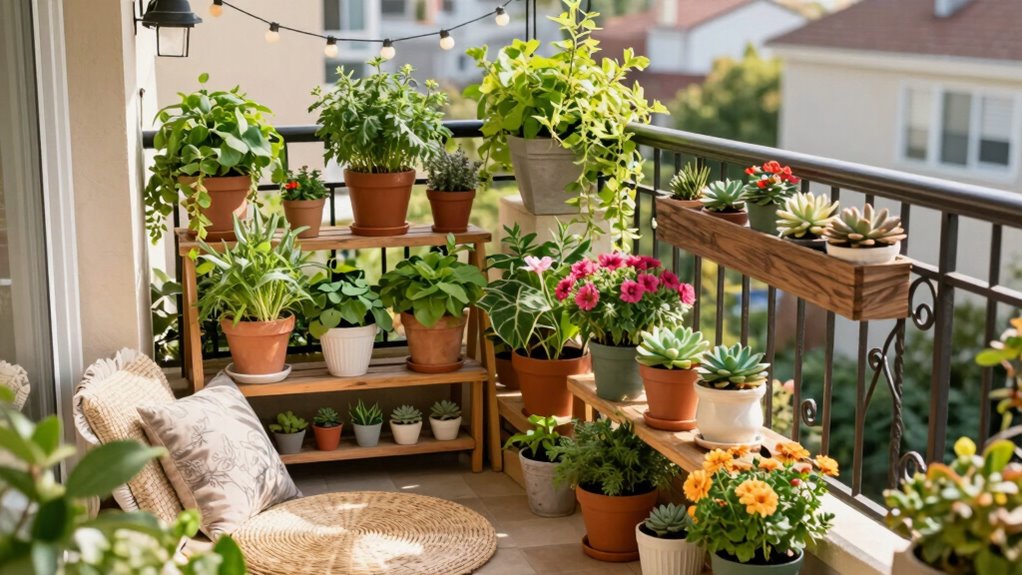
Transforming your balcony garden into a personal oasis involves more than just planting; it’s about infusing your space with your unique style. Incorporate garden art like colorful sculptures, fairy lights, or decorative pots to add personality. Use plant labels creatively—customized or whimsical labels help identify your plants while adding charm. Consider hanging ornaments or wall-mounted accents that reflect your interests. Personal touches, such as DIY plant holders or repurposed containers, make your garden feel truly yours. Mix textures and colors to create visual interest. Remember, the goal is to make the space inviting and reflective of your personality. By thoughtfully adding garden art and creative plant labels, you turn a simple balcony into a fascinating, personalized retreat.
Next Steps: Resources and Growing Your Balcony Garden

Building on your personalized garden ideas, it’s time to explore the resources that can help you grow successfully. To keep your balcony thriving, familiarize yourself with composting techniques to enrich your soil naturally. Learn pest control strategies to protect your plants without harmful chemicals. These resources provide practical tips and guidance to enhance your gardening skills. You can find helpful books, online forums, and local gardening groups to connect with experienced gardeners. Additionally, consider apps that track plant care schedules or provide pest identification. Access to reputable websites and tutorials can also bolster your confidence. By leveraging these resources, you’ll develop a stronger understanding of sustainable gardening practices and ensure your balcony garden flourishes.
Frequently Asked Questions
How Much Time Is Required for Daily Maintenance of a Balcony Garden?
You’ll need about 10-15 minutes daily for your balcony garden. Keep a consistent watering schedule to prevent over- or under-watering, and check plants regularly. Use simple pruning techniques to keep plants healthy and encourage growth. Spend time inspecting for pests or disease, and remove dead leaves. By dedicating this brief period, you’ll maintain a thriving garden without feeling overwhelmed, even as a beginner.
Can I Grow Vegetables and Flowers Together on My Balcony?
Yes, you can grow vegetables and flowers together on your balcony. Use companion planting to pair plants that benefit each other, like tomatoes with marigolds. Incorporate vertical gardening to maximize space and create a colorful, thriving environment. By combining these techniques, you’ll promote healthy growth, attract pollinators, and enjoy a beautiful, productive balcony garden with minimal effort. It’s a smart way to make the most of your small space.
What Are Cost-Effective Options for Starting a Balcony Garden?
Think of your balcony as your own little Eden. To keep costs down, try DIY composting to create rich soil and use repurposed containers like old buckets or jars. These options are budget-friendly and eco-conscious, making gardening more accessible. With a bit of creativity, you can transform everyday items into planters, saving money while nurturing your plants. Your green oasis is just a few resourceful steps away!
How Do I Prevent Pests From Damaging My Balcony Plants?
To prevent pests from damaging your balcony plants, start with pest prevention by regularly inspecting your plants and removing any affected leaves. Use natural repellents like neem oil or garlic spray to keep pests away without chemicals. Encourage beneficial insects, such as ladybugs, to help control pest populations naturally. Keep your plants healthy and well-maintained, as strong plants are less attractive to pests. Consistent care is key to pest prevention.
Is It Possible to Grow a Balcony Garden in a Shaded Area?
Yes, you can grow a balcony garden in shaded areas. Focus on shade-tolerant plants like ferns, hostas, or impatiens, which thrive without direct sunlight. Choose containers that retain moisture and guarantee proper drainage. You might also consider vertical gardening or hanging planters to maximize space and light. With the right shade-tolerance plants and thoughtful container selection, your balcony garden can flourish even in low-light conditions.
Conclusion
With a little patience and a bit of effort, your balcony garden can become as vibrant and inviting as a blooming paradise. Even if you’re just starting out, remember that every small step you take nurtures your confidence and passion. Think of your balcony as a blank canvas—each plant and arrangement adds color and life. Keep learning, experimenting, and enjoying the process, and soon your outdoor space will flourish just like a garden full of hope and beauty.