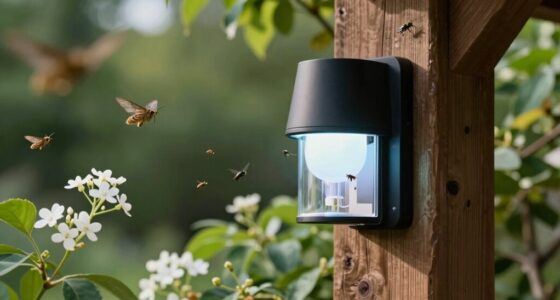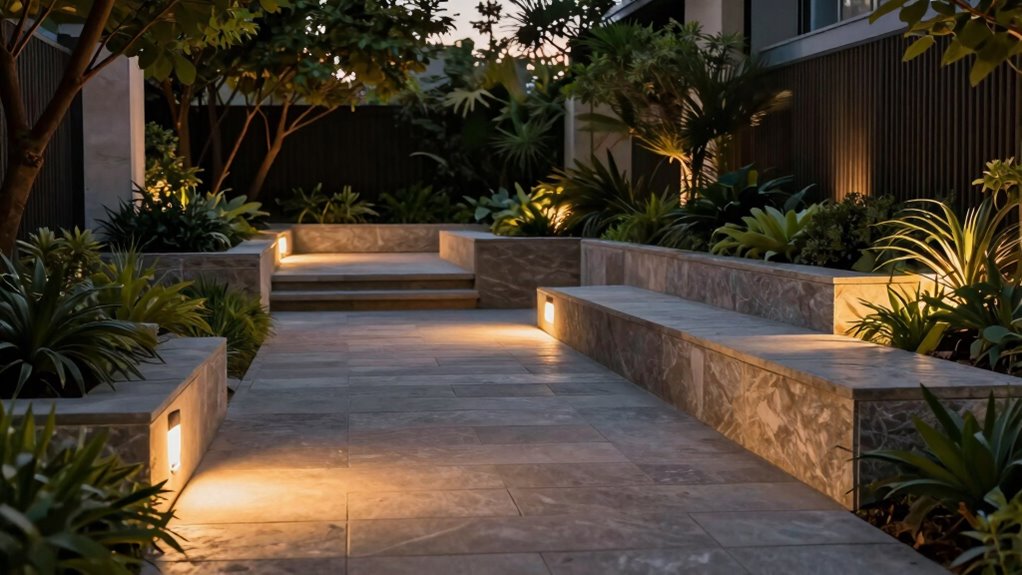

To create outdoor lighting that doesn’t blind everyone, focus on using downward-focused fixtures, shields, and diffusers to control glare. Choose warm, soft lights at appropriate heights and angles, and avoid overly bright or harsh bulbs. Incorporate motion sensors, timers, and layered illumination to enhance safety while minimizing spillover. With thoughtful placement and gear, you can highlight your landscape beautifully without disturbing neighbors—explore ways to make your outdoor lighting both effective and neighbor-friendly.

Get the latest gadgets delivered free — and shop member deals
- Fast, free delivery on millions of items
- Access to Prime Big Deal Days deals on October 6–7
- Prime Video, Amazon Music and more included
Key Takeaways
- Use downward-facing fixtures with shields or diffusers to prevent glare and light trespass into neighbors’ properties.
- Incorporate warm-colored bulbs (2700K-3000K) for soft, inviting illumination that minimizes discomfort.
- Implement motion sensors and timers to limit unnecessary lighting, reducing glare and conserving energy.
- Focus light directly on landscape features and pathways, avoiding direct beams into eyes or windows.
- Regularly adjust and maintain outdoor lighting to ensure balanced brightness and prevent blinding glare.
outdoor downward-focused light fixtures
As an affiliate, we earn on qualifying purchases.
As an affiliate, we earn on qualifying purchases.
Why Thoughtful Outdoor Lighting Matters for Your Home
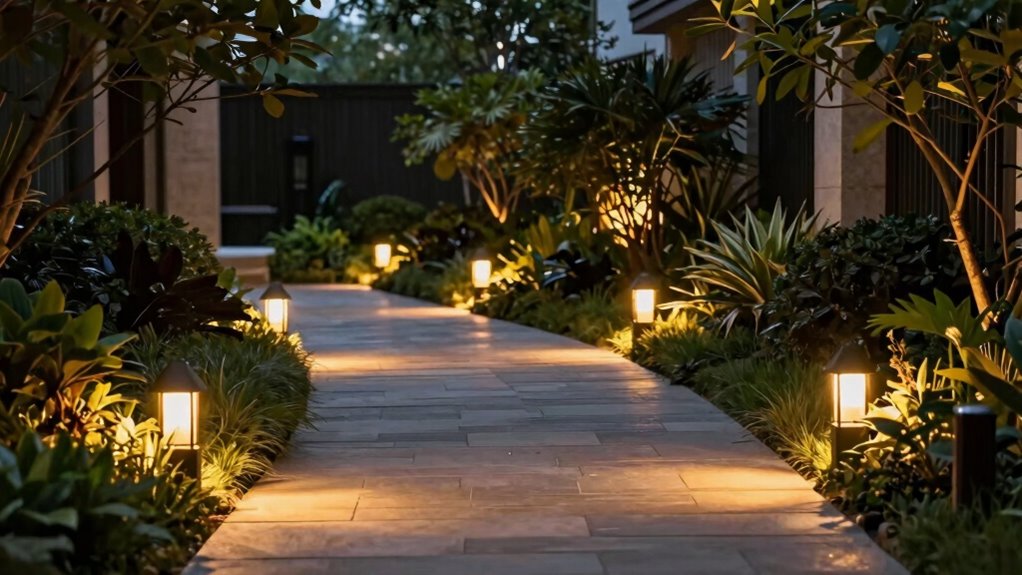
Outdoor lighting isn’t just about illuminating your property; it plays a crucial role in enhancing security, safety, and curb appeal. When you plan your outdoor lighting thoughtfully, you improve your landscape aesthetics, highlighting features like trees, pathways, and architectural details. This careful planning also helps prevent glare issues, which can blind neighbors or passersby. Additionally, choosing energy-efficient fixtures ensures you save money on electricity while reducing your environmental impact. Well-designed lighting balances brightness and shadows, preventing glare that could blind neighbors or passersby. It also helps guide visitors safely around your yard at night. By focusing on these aspects, your outdoor lighting becomes both functional and visually appealing, adding value and charm to your home without sacrificing comfort or efficiency. Considering lighting design principles can further optimize the effectiveness of your outdoor illumination. Incorporating smart lighting technology can also allow for easier control and customization of your outdoor lighting setup. Properly positioning fixtures and using appropriate shielding can further enhance light distribution and minimize unwanted light spill. Paying attention to light pollution reduction ensures your lighting enhances your home environment without disturbing neighbors or local wildlife.
outdoor landscape lighting shields
As an affiliate, we earn on qualifying purchases.
As an affiliate, we earn on qualifying purchases.
What Is Light Pollution and How Does It Affect Your Neighbors?
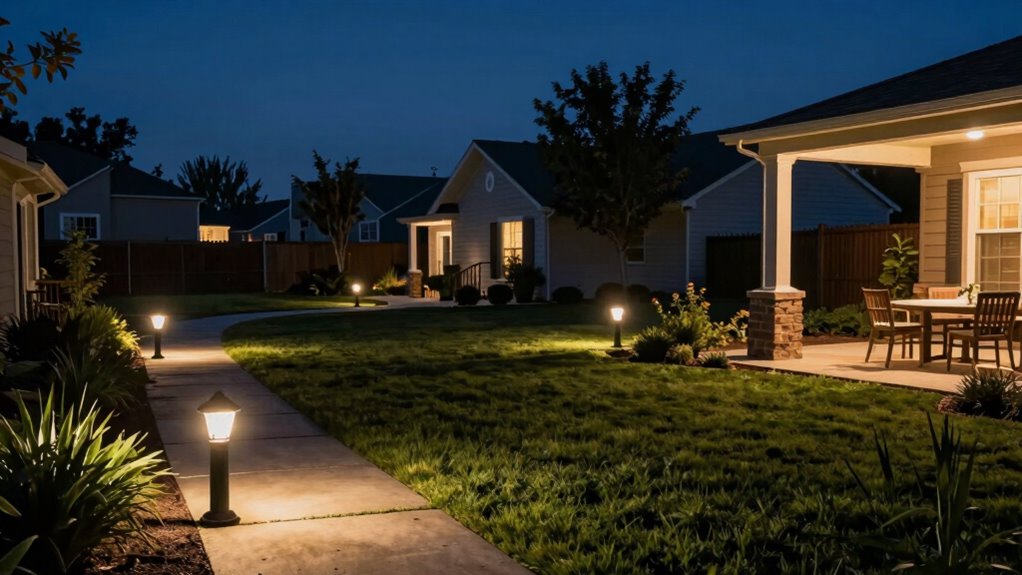
Have you ever noticed a bright, intrusive glow from nearby outdoor lights that disrupts your view of the night sky? That’s light pollution, which affects your neighbors by causing light trespass—when unwanted light spills into their property—and skyglow, the diffuse brightness over urban areas. This excessive illumination can interfere with sleep, disturb wildlife, and diminish the natural beauty of the night. Understanding these issues helps you create a responsible outdoor lighting plan:
Bright outdoor lights can cause light trespass and skyglow, disrupting sleep and wildlife—use downward lighting and timers to help.
- Minimize light trespass by directing fixtures downward.
- Use warm-colored lights to reduce skyglow.
- Install timers or motion sensors to control unnecessary lighting.
- Incorporate essential DIY tools and safety tips to ensure proper installation and maintenance.
- Consider eco-friendly lighting options that support sustainable backyard design.
- Properly designed outdoor lighting can also enhance property aesthetics and increase safety at night.
- Selecting electric power options that are energy-efficient can further reduce unnecessary light emissions and environmental impact.
- Additionally, choosing appropriate fixture height can help prevent glare and light spillage into neighbors’ properties.
Addressing light pollution not only preserves the night sky but also maintains good neighborly relations and reduces energy waste.
warm LED outdoor bulbs 2700K 3000K
As an affiliate, we earn on qualifying purchases.
As an affiliate, we earn on qualifying purchases.
How to Choose Outdoor Fixtures That Minimize Glare
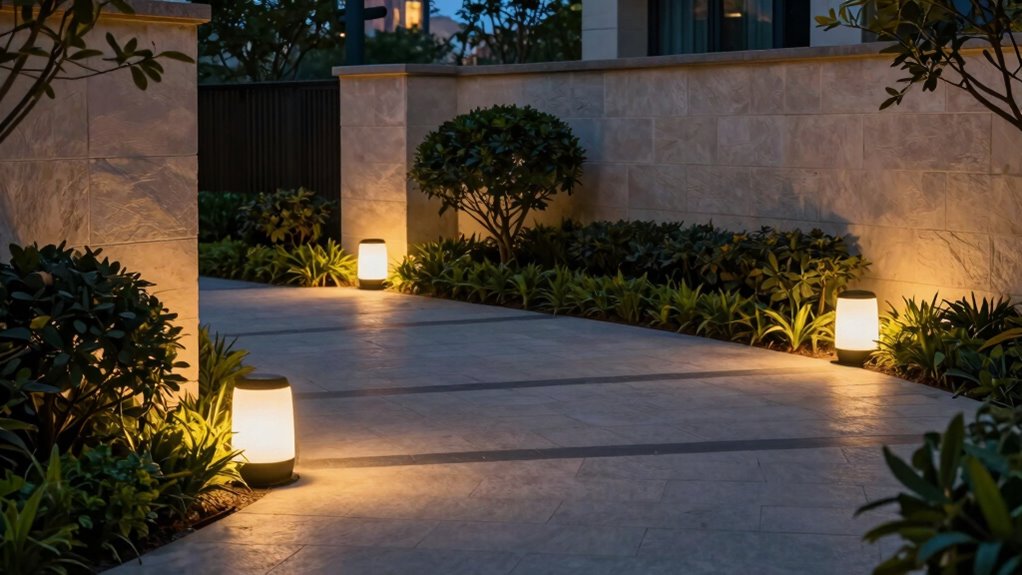
Choosing the right fixtures is essential to reducing glare and creating a comfortable outdoor environment. Proper fixture placement plays a key role in glare reduction, so position lights where they won’t shine directly into eyes or neighboring windows. Keep fixtures low and aimed downward to focus illumination on pathways, patios, or landscaping rather than broad areas. Avoid placing lights too close to walkways or sitting areas where glare can cause discomfort. Select fixtures designed with shields or diffusers to minimize harsh brightness. Additionally, consider using softer, warmer bulbs to reduce visual discomfort. When selecting outdoor lighting, understanding watt-hours and capacity can help ensure your system provides sufficient illumination without overloading circuits. Proper lighting design considers both safety and aesthetics, ensuring your outdoor space is inviting yet functional. Thoughtful fixture placement combined with glare-conscious design ensures your outdoor lighting enhances safety and ambiance without blinding you or your neighbors. Incorporating lighting controls such as dimmers or timers can further optimize light levels and minimize unnecessary glare, helping to prevent lighting overload, and ensure a comfortable environment. Moreover, using well-designed fixtures can also contribute to energy efficiency, reducing overall power consumption and cost.
As an affiliate, we earn on qualifying purchases.
How to Use Directional and Shielded Lights for Better Control
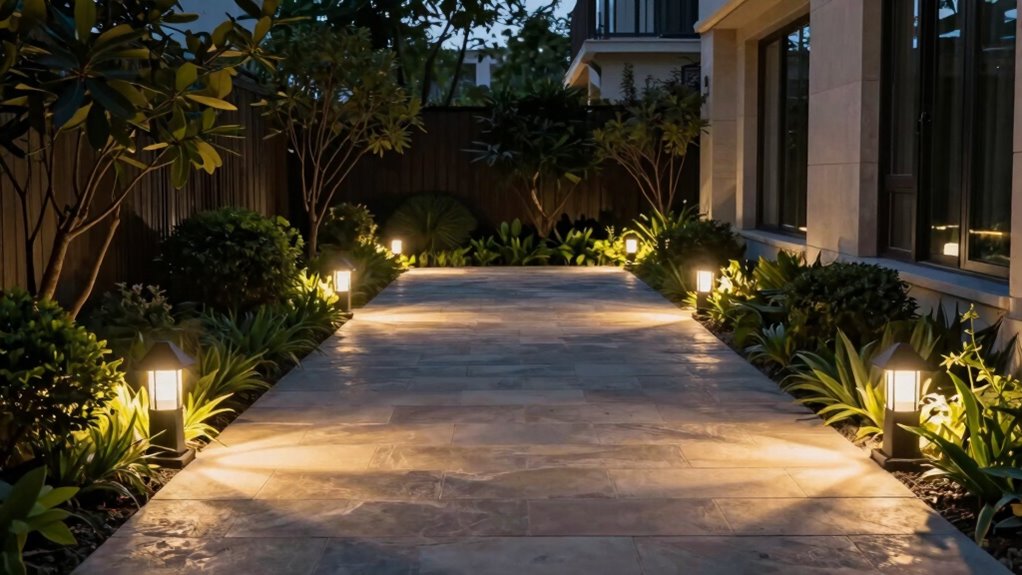
Using directional and shielded lights gives you greater control over your outdoor illumination. Proper fixture placement ensures light is focused where you want it, reducing glare and preventing light trespass. These fixtures direct light downward or sideways, minimizing unwanted spillover. To optimize effectiveness, consider the following:
- Position fixtures close to the area you want illuminated to enhance glare reduction.
- Use shields or baffles to block light from reaching eyes or neighboring properties.
- Aim fixtures precisely to avoid illuminating unintended surfaces or creating dark spots.
- Additionally, understanding light pollution helps in designing a lighting plan that minimizes environmental impact.
How to Incorporate Warm, Soft Light for a Cozy Atmosphere
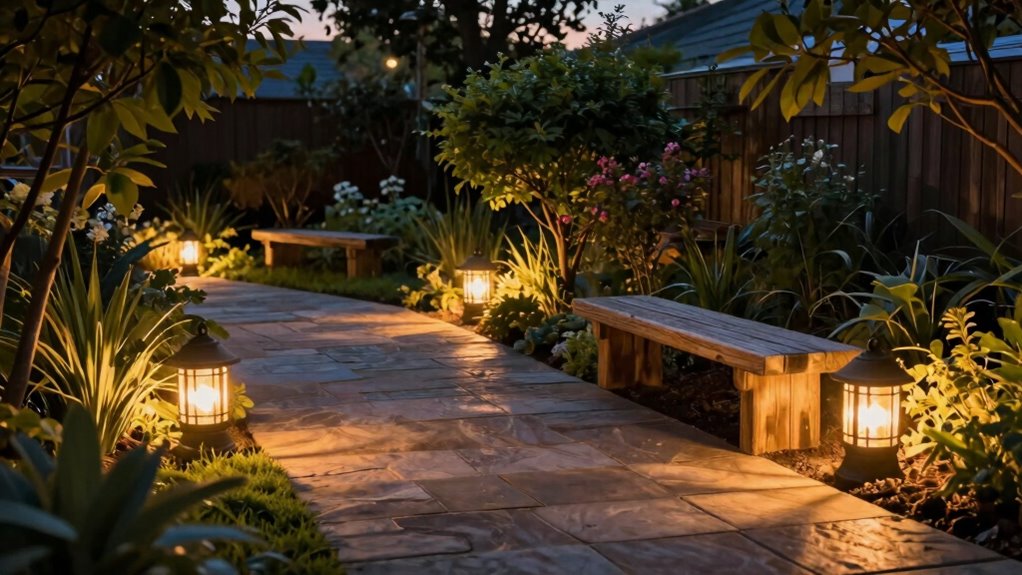
Creating a cozy outdoor space starts with selecting the right lighting to evoke warmth and softness. To enhance your landscape aesthetic, choose bulbs with warm color temperatures, such as 2700K or 3000K. These bulbs emit a gentle, amber glow that makes your outdoor area inviting and relaxing. Soft lighting minimizes harsh shadows and glare, creating a welcoming atmosphere. Incorporate string lights, lanterns, or wall-mounted fixtures with warm-colored bulbs to add layers of gentle illumination. Pay attention to the placement to highlight key features while maintaining an overall sense of comfort. By choosing the right bulb color and focusing on warm, diffuse light, you craft an outdoor retreat that feels both inviting and visually appealing. Understanding lighting concepts can help you make informed choices for a truly cozy outdoor ambiance. Additionally, considering the layering of light allows for a more dynamic and balanced outdoor lighting design that enhances the overall mood. Employing lighting best practices ensures your outdoor space remains both functional and aesthetically pleasing. Using sustainable lighting options can further reduce your environmental impact while maintaining a warm, inviting glow. Incorporating energetic alignment into your lighting choices can also create a more harmonious outdoor space that supports your well-being.
How to Plan Your Outdoor Lighting Layout: Zones, Pathways, and Focal Points
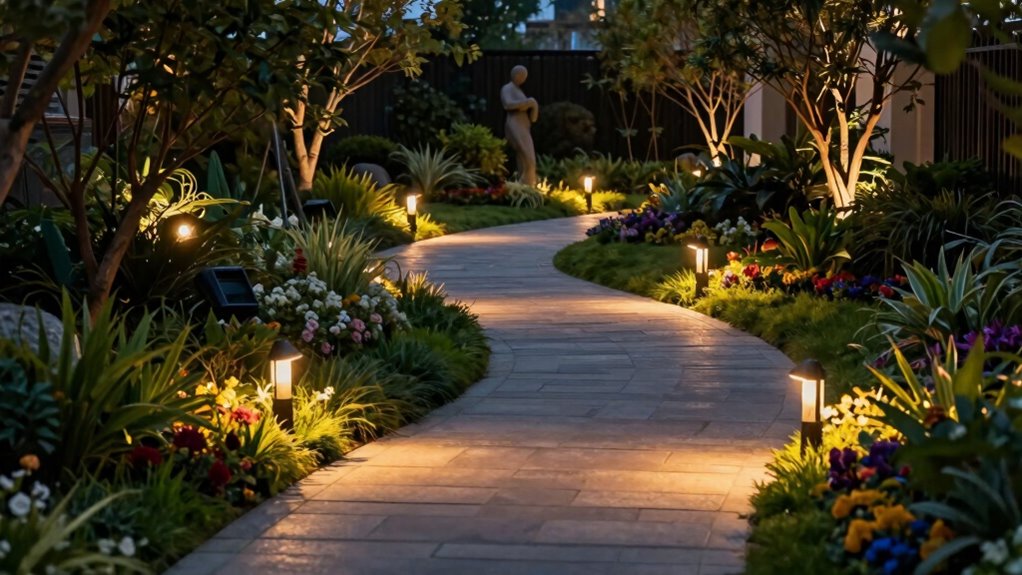
A well-planned outdoor lighting layout begins with dividing your space into functional zones, pathways, and focal points. This structure helps you create balance and directs attention where needed. Use different lantern styles to define zones—sleek modern designs for patios, vintage for garden beds. Consider bulb colors that complement your overall aesthetic, such as warm amber for cozy corners or cool white for pathways. When planning pathways, install low-voltage lights to illuminate walkways without glare. Focal points like statues or trees should have targeted lighting to highlight their features. Keep these tips in mind:
- Select lantern styles that match your outdoor theme
- Use varied bulb colors for mood and contrast
- Position lights strategically to avoid blinding neighbors
Additionally, exploring lighting fixtures and regional flavors can enhance your outdoor ambiance. Incorporating effective home soundproofing techniques nearby can also help create a quieter, more relaxing outdoor environment, especially in noisy neighborhoods. This approach keeps your outdoor space inviting and functional, and understanding contrast ratio can help you choose lighting that enhances visual clarity and depth in your landscape design.
How to Use Motion Sensors and Timers to Keep Lighting Neighbor-Friendly
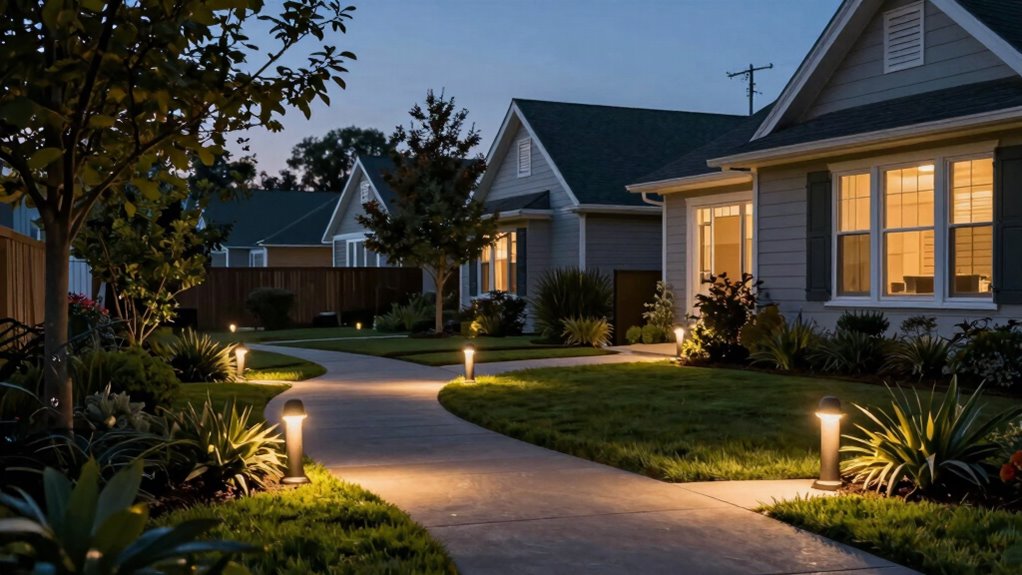
To keep your outdoor lighting neighbor-friendly, start by placing motion sensors where they won’t cause unnecessary light spill. Set your timers to turn lights on just long enough to serve their purpose without over-illumination. Finally, adjust light levels so they’re bright enough for safety but not so intense that they disturb nearby properties. Incorporating smart lighting protocols can further optimize your outdoor illumination for energy efficiency and minimal light pollution.
Optimal Sensor Placement
Have you ever wondered how to position motion sensors and timers so your outdoor lighting stays neighbor-friendly? Proper sensor placement is key to avoiding unnecessary illumination. Focus on fixture positioning to direct light precisely where needed, minimizing spillover. When installing sensors, consider:
- Placing them at a height that detects movement without catching the neighbor’s yard
- Targeting entry points or pathways while avoiding pointing sensors toward neighbors
- Ensuring sensors are angled downward to reduce light trespass and glare
This strategic setup prevents your lights from shining into neighboring properties and maintains a subtle, effective lighting scheme. Thoughtful sensor placement and fixture positioning balance security and courtesy, creating an inviting, well-lit outdoor space without disturbing your neighbors’ peace.
Effective Timer Settings
Using the right timer settings is essential for keeping outdoor lighting both effective and neighbor-friendly. Proper timing schedules prevent lights from staying on too long, reducing light pollution and energy waste. Set timers to turn lights off after a designated period once motion is no longer detected. Automation systems make this process simple, allowing you to customize schedules based on your routine and neighborhood activity patterns. For example, dim or turn off lights during late-night hours when minimal activity occurs. Adjust timers seasonally if needed, to account for changes in sunset and sunrise times. Consistently reviewing and fine-tuning your timing schedules ensures your outdoor lighting remains unobtrusive while providing safety and security. This balance helps maintain a friendly, well-lit environment for everyone nearby.
Light Level Adjustments
Adjusting light levels with motion sensors and timers helps keep outdoor lighting neighbor-friendly while maintaining security. Proper brightness control guarantees your lights aren’t overly harsh or dim, reducing disturbances. To optimize light level adjustments, focus on:
- Setting sensors to trigger only when motion is detected within specific zones
- Using timers to limit illumination duration during late hours
- Choosing fixtures with dimming features for seamless brightness control
These strategies help prevent light spillage and glare, fostering a considerate environment for neighbors. By fine-tuning motion sensor sensitivity and timer durations, you ensure your outdoor lighting remains effective without being intrusive. Remember, thoughtful light level adjustments balance safety needs with community comfort, creating an inviting and neighbor-friendly outdoor space.
Tips for Maintaining Your Outdoor Lighting and Keeping It Considerate
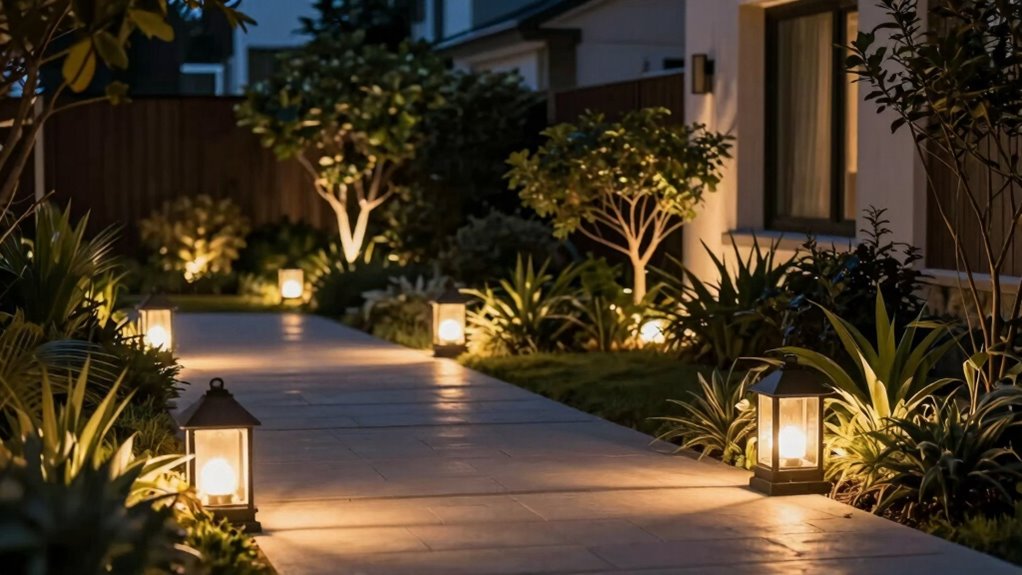
To keep your outdoor lighting effective and considerate, regularly adjust the light levels so they’re not too bright or too dim. Using shielding techniques, like shields or fixtures, helps direct light where it’s needed without causing glare or spillover. These simple steps make sure your lighting enhances your space while respecting neighbors’ comfort.
Regularly Adjust Light Levels
Regularly adjusting your outdoor light levels guarantees your lighting remains effective and considerate. Over time, seasonal changes or landscape growth can affect illumination, so periodic tweaks are essential. Consider integrating solar-powered lights for eco-friendly energy management and easier adjustments. Pay attention to color temperature; warmer tones create cozy atmospheres, while cooler ones enhance visibility. To fine-tune your lighting, keep these tips in mind:
- Use dimmers or smart controls for precise brightness levels
- Adjust fixtures based on plant growth or landscape changes
- Incorporate solar integration to maintain energy efficiency and flexibility
Use Shielding Techniques
Using shielding techniques is essential for preventing unwanted light spill and ensuring your outdoor lighting remains considerate of neighbors and wildlife. Shielding directs light downward, reducing glare and light trespass, which enhances your landscape aesthetics by highlighting desired features without overwhelming the surroundings. Proper fixtures with shrouds or louvered hoods help you control where the light goes, making your lighting more energy efficient by minimizing waste. By focusing illumination where it’s needed, you avoid unnecessarily brightening the night sky or neighboring properties. Shielding also protects nocturnal animals from disruptive lights. Implementing these techniques allows you to create a well-lit, inviting outdoor space that balances safety and aesthetics while keeping your energy consumption low and respecting the environment.
Next Steps: Adjusting Your Lighting Seasonally and for Special Events
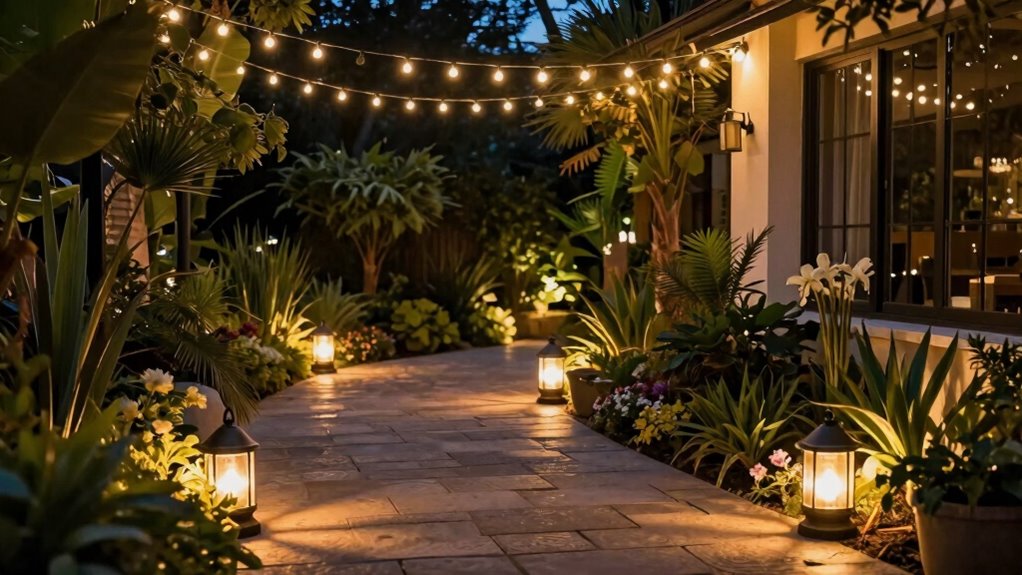
Adjusting your outdoor lighting throughout the year guarantees your landscape stays inviting and functional no matter the season or occasion. To optimize your setup, consider seasonal lighting adjustments that enhance winter charm or summer ambiance. For special events, focus on tailored event illumination that highlights focal points and creates mood.
To refine your lighting plan, you might:
- Rotate fixtures to highlight seasonal features or foliage
- Use dimmers or timers for flexible control during holidays or gatherings
- Incorporate color-changing lights for themed celebrations or festive moods
These tweaks ensure your outdoor space remains welcoming and safe year-round, while also making special occasions memorable with personalized lighting. Regular adjustments keep your landscape vibrant, functional, and perfectly suited to any event or season.
Frequently Asked Questions
How Can I Measure the Brightness of Outdoor Lights Effectively?
To measure outdoor light brightness effectively, use a light meter to assess lux measurement, which indicates light intensity. Hold the device at the desired height and direction, then read the lux value to determine brightness levels. This helps you confirm lighting is sufficient without causing glare or blindness. Regularly measuring light intensity allows you to adjust fixtures, creating a safe, well-lit outdoor environment that avoids overwhelming glare.
What Are the Best Colors for Outdoor Lighting to Reduce Glare?
To reduce glare, choose outdoor lighting with warmer color temperatures, around 2700K to 3000K, which emit softer, more inviting light. These colors help minimize harsh reflections and eye strain, making your space safer and more comfortable. Focus on glare reduction by selecting fixtures with shields or diffusers, and avoid overly bright, cool-toned lights. This approach creates a well-lit area without blinding or discomforting anyone nearby.
How Do I Select Fixtures That Are Both Functional and Unobtrusive?
You pick fixtures that blend in like chameleons at a costume party—discreet yet effective. Prioritize smart fixture placement to avoid blinding neighbors or yourself, and choose sleek, unobtrusive styles that complement your landscape. Think low-profile designs and subtle finishes. Remember, the goal isn’t to turn night into day but to illuminate just enough—so your outdoor space stays functional, stylish, and unobtrusive, with no need for a flashlight or sunglasses.
Can Outdoor Lighting Be Automated to Adapt to Seasonal Changes?
Yes, outdoor lighting can be automated with smart automation systems that include seasonal adjustment features. You can program your lights to change brightness, color temperature, or on/off times based on the season, ensuring ideal illumination without excess glare. These systems use sensors or schedules, making it easy to maintain a consistent ambiance year-round. With smart automation, you enjoy energy savings and enhanced outdoor safety, all while keeping lighting unobtrusive and functional.
What Are Common Mistakes to Avoid When Designing Outdoor Lighting?
When designing outdoor lighting, avoid poor lighting placement that causes glare or shadows, which can blind or distract. Make certain your lights are energy-efficient by choosing LED options and installing timers or sensors to prevent waste. Don’t overlook the importance of layering lights for both function and ambiance. Finally, plan for dark sky compliance to reduce light pollution, creating a safer, more inviting outdoor space without sacrificing visibility.
Conclusion
By thoughtfully tuning your outdoor lighting, you become a gentle lighthouse in your neighborhood’s nightscape, guiding without blinding. Your warm, well-placed glow creates a welcoming glow that dances softly around your home, avoiding harsh glares and light pollution. With mindful adjustments, your outdoor space becomes a cozy sanctuary that invites neighbors to enjoy the evening’s serenity, like stars quietly watching over a peaceful night—illuminating beauty without overpowering the darkness.
Fall Picks
fall essentials
As an affiliate, we earn on qualifying purchases.