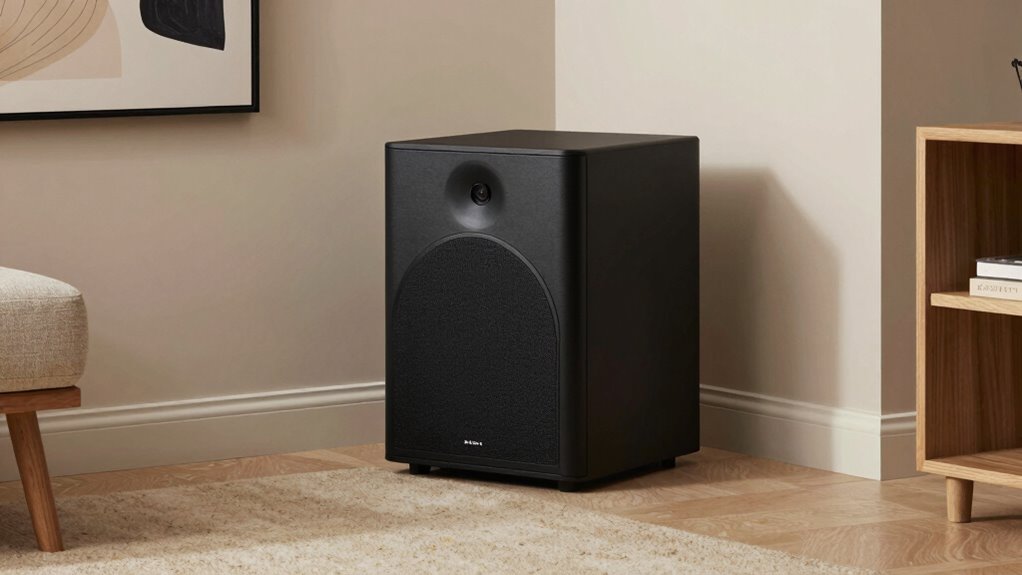

Placing your subwoofer in a corner might seem like a quick way to boost bass, but it often leads to uneven, boomy, and muddy sound because walls amplify certain frequencies and create standing waves. Moving it away from corners and experimenting with different spots helps achieve clearer, more balanced bass. To discover the best placement and avoid common mistakes, keep exploring these tips for richer, deeper sound.

Get the latest gadgets delivered free — and shop member deals
- Fast, free delivery on millions of items
- Access to Prime Big Deal Days deals on October 6–7
- Prime Video, Amazon Music and more included
Key Takeaways
- Corners amplify certain frequencies, causing uneven, boomy bass and muddiness, which can distort sound quality.
- Placing a subwoofer away from corners reduces exaggerated bass and provides a more balanced, natural sound.
- Corner placement often leads to reflections and standing waves, creating nulls and peaks that impair clarity.
- Proper subwoofer positioning involves experimenting with placement, avoiding corners, and incorporating acoustic treatments for optimal sound.
- Calibration and room tuning are essential to correct placement issues and achieve tight, accurate bass response.
As an affiliate, we earn on qualifying purchases.
Why Corner Placement Usually Doesn’t Give You Deep Bass
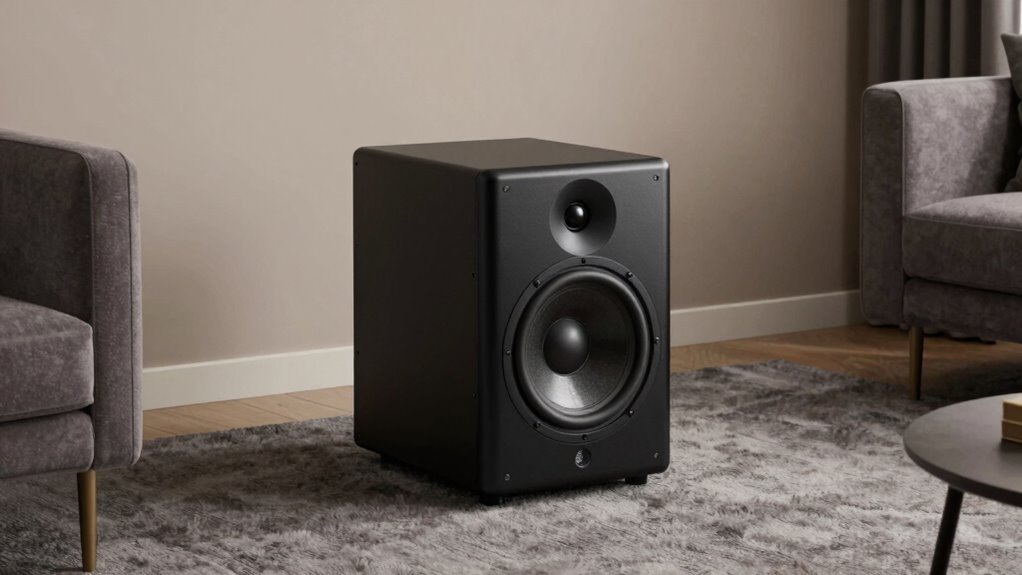
While placing a subwoofer in the corner might seem like a good way to boost bass, it often doesn’t deliver the deep, clear sound you’re aiming for. Corners tend to amplify certain frequencies, causing uneven sound and muddiness instead of clean, deep bass. Instead of relying on subwoofer wall mounting or just placing it in a corner, experiment with different positions to find the best spot. Subwoofer ceiling placement can also help by dispersing sound more evenly throughout the room. Keep in mind that corners can create peaks and nulls, affecting sound quality. Moving your subwoofer away from corners or trying different mounting options can lead to richer, more accurate bass response that enhances your overall listening experience. Additionally, understanding room acoustics can help you optimize placement for the best sound, ensuring that your subwoofer interacts harmoniously with your environment for optimal sound quality. For example, using acoustic treatments like bass traps can further improve sound clarity. Proper subwoofer placement can also reduce standing waves, which are responsible for certain bass cancelations or boosts that distort the sound. Recognizing how speaker placement influences sound dispersion can also help you achieve more balanced audio.
As an affiliate, we earn on qualifying purchases.
How Walls and Room Shape Affect Subwoofer Sound
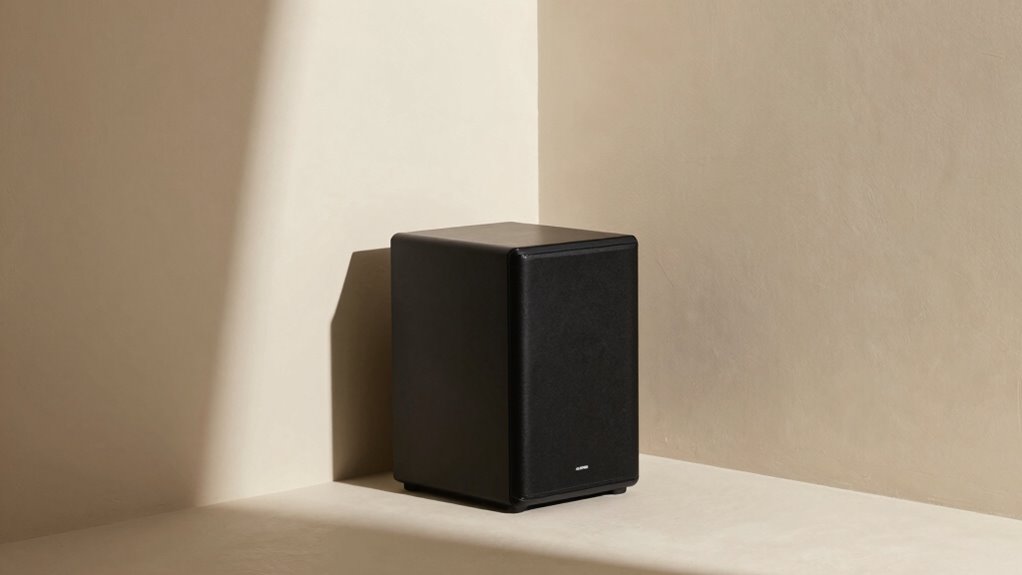
The shape and layout of your room have a significant impact on how your subwoofer produces sound. Wall reflections can cause sound waves to bounce, creating peaks and dips that affect bass clarity. Room symmetry influences how evenly sound distributes, reducing uneven bass response. To optimize your subwoofer’s performance, consider these factors:
Room shape and symmetry greatly influence subwoofer sound clarity and evenness.
- Wall Reflections: Minimize reflective surfaces or use diffusers to reduce unwanted echoes. Proper acoustic treatment can further help manage these reflections, leading to clearer sound reproduction.
- Room Symmetry: Aim for a balanced room layout to promote even sound distribution and prevent bass nulls.
- Room Shape: Irregular shapes break up standing waves, preventing bass nulls. Understanding room modes is essential for identifying specific problem frequencies caused by room dimensions.
- Placement: Avoid positioning your sub too close to walls or in corners where reflections can overwhelm the sound.
- Acoustic Treatments: Incorporate sound-absorbing materials like foam panels or bass traps to further control wall reflections and improve overall sound quality. Additionally, understanding room acoustics can help you create an optimal listening environment that enhances bass performance. Being aware of room shape can also aid in designing a space that naturally mitigates problematic standing waves.
As an affiliate, we earn on qualifying purchases.
Better Placement Tips for Richer, Balanced Bass
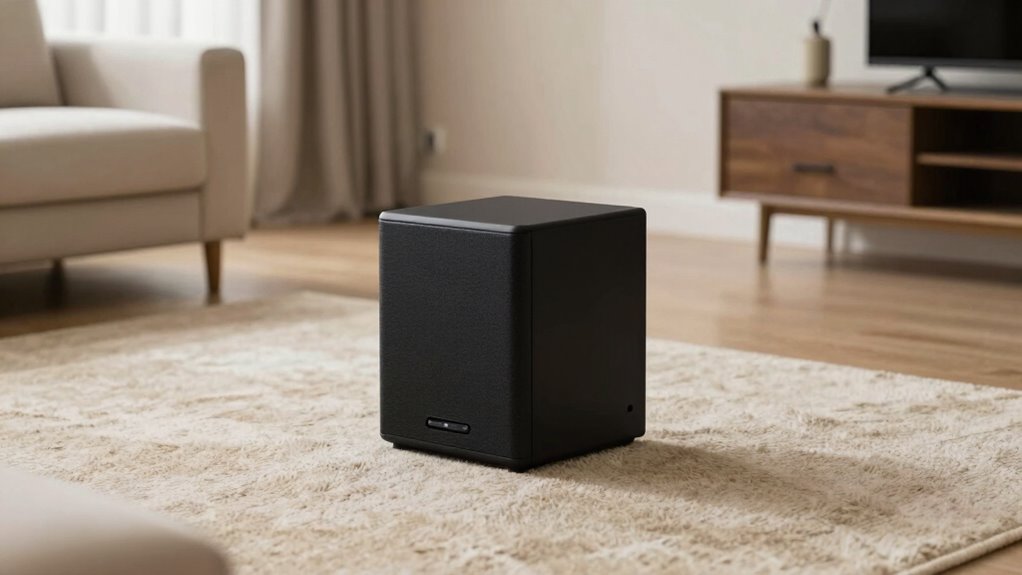
To achieve richer, balanced bass, you need to carefully consider your subwoofer’s placement within the room. Proper subwoofer isolation is key, so avoid placing it directly on the floor or against shared walls, which can cause unwanted vibrations and muddiness. Instead, elevate it slightly or use isolation pads to reduce vibrations and improve sound clarity. Moving the subwoofer slightly away from corners can also help optimize its frequency response, preventing exaggerated bass and ensuring even coverage. Experiment with different positions to find where the bass sounds fullest and most natural. Remember, the goal is to create a smooth, even bass response without boominess or dead spots, so take your time adjusting placement for the best sound quality. Additionally, understanding the room’s acoustics and room symmetry can greatly influence the optimal placement for balanced bass. Incorporating room acoustics considerations can further enhance sound quality and bass performance. Being aware of room acoustics can help you identify the ideal spot for your subwoofer, leading to a more immersive listening experience. Moreover, consistent adjustments based on listening tests can help fine-tune the placement for optimal sound.
As an affiliate, we earn on qualifying purchases.
How to Test and Fine-Tune Your Subwoofer Position
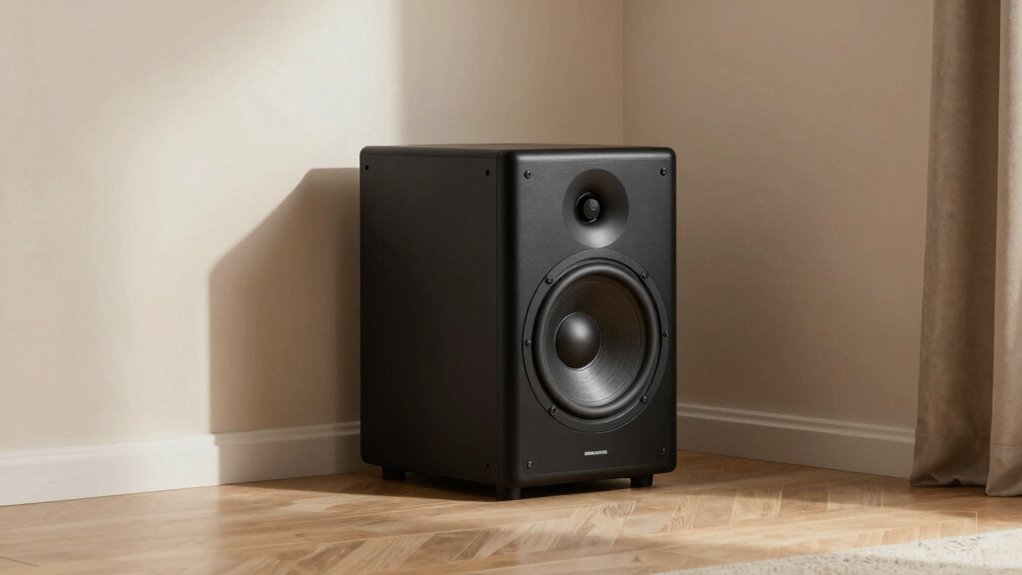
Testing and fine-tuning your subwoofer position is essential to achieve the best sound. Start with subwoofer calibration by adjusting volume and phase for clarity. Then, move your sub around the room to find the spot that produces the most balanced bass. Here are key steps:
Optimize your sound by calibrating your subwoofer and experimenting with its placement in the room.
- Use test tones or bass tracks to identify uneven frequencies.
- Experiment with different locations, avoiding corners if possible.
- Incorporate acoustic treatment, like bass traps, to reduce unwanted resonances.
- Make small adjustments, then listen critically to evaluate improvements.
- Remember to consider eco-friendly disposal options when replacing or upgrading your gear to minimize environmental impact.
- Additionally, understanding room acoustics can help you optimize placement further and achieve richer bass response. Paying attention to subwoofer placement can significantly impact sound quality and prevent unwanted vibrations or muddiness. To enhance your setup, researching sound reflection can help you identify areas that may cause resonance issues and guide better positioning. It’s also helpful to understand speaker coupling techniques to improve overall sound integration within your space.
Common Mistakes That Hurt Your Bass Performance
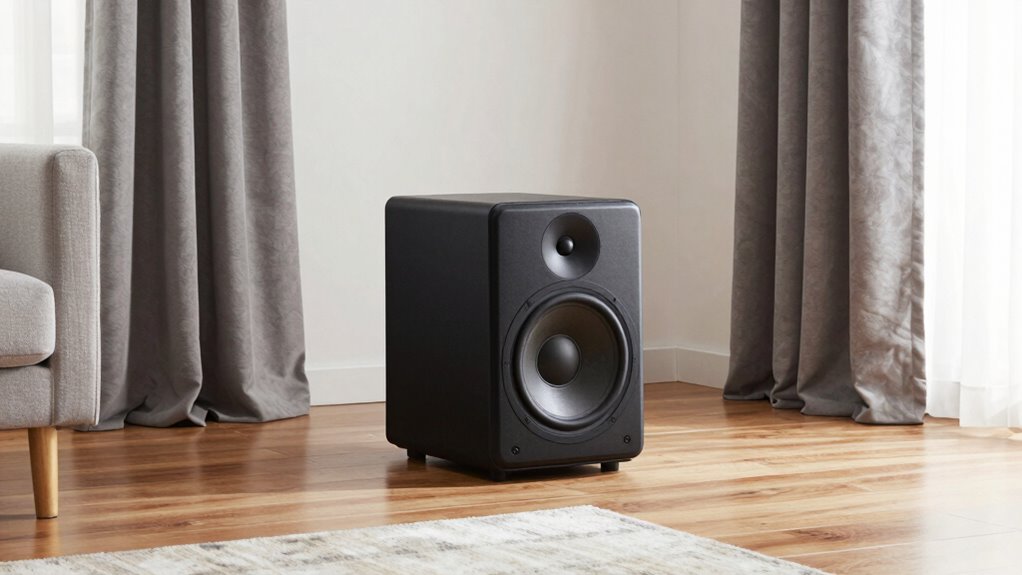
One of the biggest mistakes you can make is neglecting proper placement, which can lead to boomy or uneven bass. Poor subwoofer calibration prevents you from achieving a balanced sound, making your bass muddy or overpowering. Additionally, ignoring acoustic treatments in your room can cause reflections and standing waves that distort bass response. Proper placement also involves understanding room acoustics and how they affect sound behavior, which is crucial for optimal performance. Avoid placing your sub too close to walls or corners unless carefully calibrated, as this often results in exaggerated low frequencies. Instead, use proper calibration tools and consider acoustic treatments like bass traps to smooth out the sound. Incorporating vetted accessories such as quality subwoofers and speaker stands can also enhance overall performance. Understanding sound reflection and how it impacts bass clarity can further improve your setup. Paying attention to frequency response and tuning your system accordingly ensures a more accurate bass experience. Skipping these steps hampers your ability to enjoy tight, accurate bass, undermining your overall listening experience. Correct placement, calibration, and acoustic treatments are essential to prevent common mistakes from ruining your bass performance.
Frequently Asked Questions
Can Multiple Subwoofers Improve Overall Sound Quality?
Using multiple subwoofers can improve your overall sound quality by reducing bass nulls and creating a more even distribution. To get the best results, you should focus on proper subwoofer phase adjustment and calibration. When you fine-tune the phase, you ensure the subwoofers work together seamlessly. Calibration helps balance the bass levels, making your listening experience richer and more precise without relying solely on placement.
How Does Furniture Placement Impact Subwoofer Performance?
Furniture placement can dramatically sabotage your subwoofer’s performance, turning your room into an acoustic battlefield. Large sofas, bookshelves, or clutter create furniture interference, blocking sound waves and causing chaotic acoustic reflections. This chaos dulls bass clarity, making your sound muddy and uneven. To get the best bass, keep furniture away from your subwoofer and experiment with placement, ensuring nothing interferes with the smooth, deep vibrations you crave.
Are Wireless Subwoofers Easier to Position Effectively?
Yes, wireless subwoofers are easier to position effectively because of their wireless convenience, giving you more placement flexibility. You don’t have to worry about running cables, so you can experiment with different spots to find the best sound. This flexibility helps you optimize your room’s acoustics without the hassle of wires, making it simpler to achieve balanced, powerful bass.
What Tools or Apps Can Help Measure Optimal Subwoofer Placement?
You can use measurement tools like a sound level meter or smartphone apps to find the best subwoofer placement. Placement apps help by providing real-time feedback on sound waves and room acoustics, making it easier to optimize your setup. These tools analyze bass response and help you identify where to position your subwoofer for the deepest, most balanced sound. Grab a measurement app and experiment for the perfect audio experience.
How Does Room Treatment Influence Subwoofer Sound Accuracy?
Room treatment can transform your sound experience more dramatically than a Hollywood blockbuster. It directly influences subwoofer sound accuracy by improving room acoustics, reducing echoes, and minimizing unwanted resonances. Proper treatment guarantees your sound calibration is precise, allowing your subwoofer to deliver deep, clear bass without distortion. By controlling reflections and absorbing excess vibrations, room treatment helps you enjoy a balanced, true-to-life audio that feels like the artist is in the room with you.
Conclusion
Think of your subwoofer like a musical instrument—you need to find its sweet spot to get the best sound. I once placed mine in the corner, expecting booming bass, but it just sounded muddy. After experimenting, I discovered a better spot that brought clarity and depth. Remember, even the best equipment needs the right placement. With patience and testing, you’ll uncover rich, balanced bass—like tuning a fine instrument to produce perfect harmony.
Fall Picks
fall essentials
As an affiliate, we earn on qualifying purchases.