
Overwatering is the biggest mistake that kills most plants because it drowns roots, leading to root rot and weakens the plant’s ability to absorb nutrients. Many people assume plants need frequent, generous watering, but this actually harms their health. To avoid this, you need to check soil moisture regularly and water only when the top inch feels dry. Keep your plant’s roots happy, and you’ll discover how to prevent overwatering from causing damage.
Key Takeaways
- Overwatering, leading to waterlogged soil and poor oxygen flow, is the most common cause of plant death.
- Ignoring soil moisture and watering schedule can cause plants to drown roots and develop root rot.
- Using containers without proper drainage prevents excess water from escaping, increasing overwatering risk.
- Frequent, indiscriminate watering without checking soil dryness often results in overhydration.
- Believing that more water always benefits plants contributes to overwatering and eventual plant decline.
How Can You Recognize When Your Plant Is Overwatered?
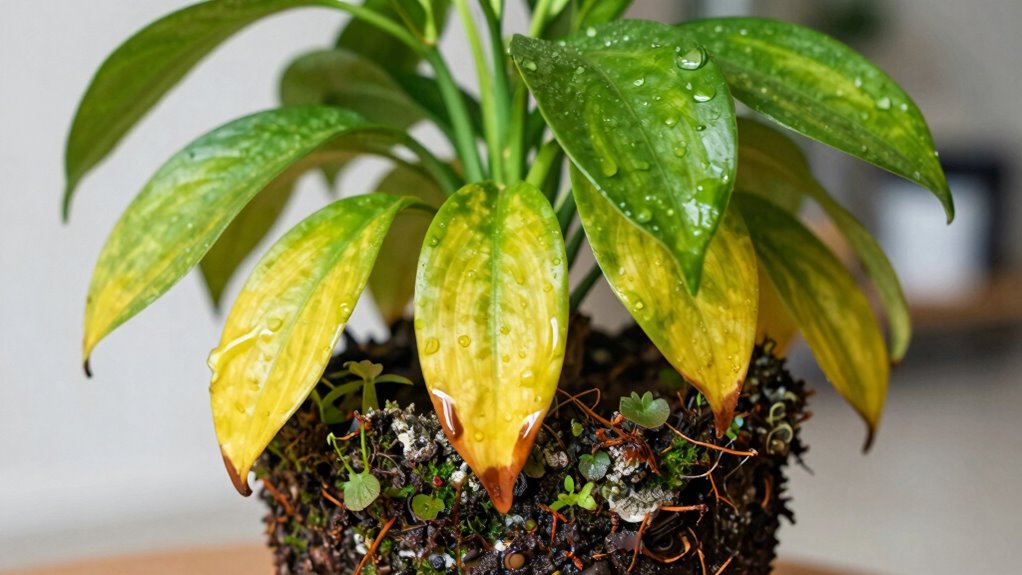
If you notice your plant’s leaves turning yellow or wilting despite regular watering, it might be a sign of overwatering. One key indicator is soil compaction, which occurs when the soil becomes too dense, preventing proper drainage and oxygen flow to roots. This can lead to root rot and cause leaf yellowing, even if you think you’re watering enough. Check the soil; if it feels heavy and waterlogged, it’s a clear sign you’re overdoing it. Additionally, overwatered plants often display drooping or yellowing leaves that can appear soft or limp. Ensuring your soil has proper drainage and aeration can help prevent these issues. Incorporating well-draining soil and watering only when the top inch feels dry can promote healthier roots. Regularly inspecting your soil’s moisture levels and understanding the watering needs of your plant are crucial steps to avoid overwatering. Recognizing the signs of overwatering early can save your plant from damage. Proper watering habits, combined with soil moisture management, are essential to keep your plant healthy. By paying attention to these symptoms, you’ll recognize overwatering early and prevent further damage. Proper watering habits and well-draining soil are essential to keep your plant healthy.
What Are the Main Causes of Overwatering, and How Can You Prevent Them?
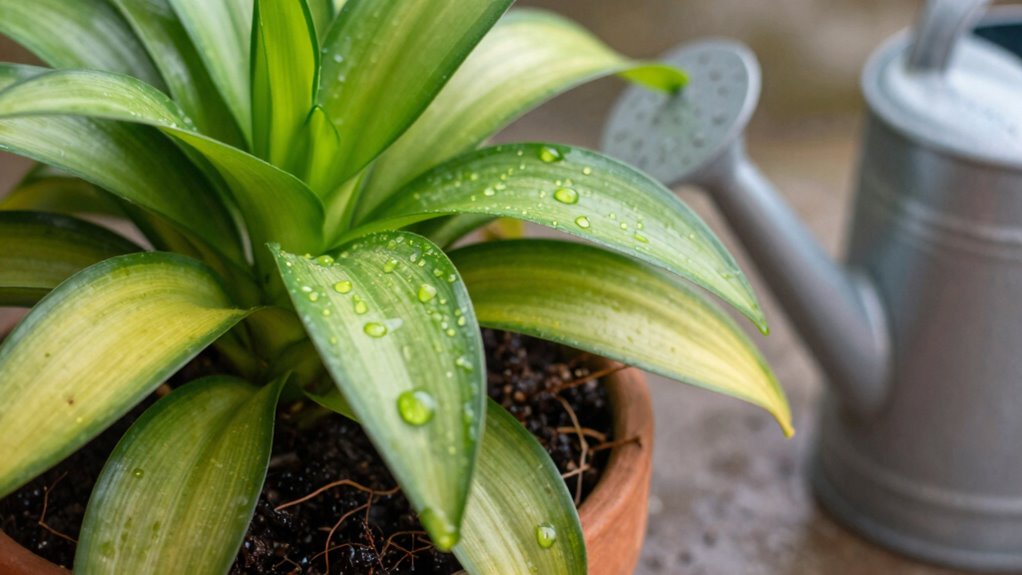
Overwatering often occurs because gardeners or plant owners tend to water on a fixed schedule or assume that more water is better, regardless of the plant’s actual needs. This mistake can lead to serious issues like root rot and disease. To make sure overwatering is prevented, pay attention to soil drainage—choose containers with proper drainage holes and use well-draining soil. Follow these tips:
Overwatering causes root rot; monitor soil moisture and ensure proper drainage to prevent damage.
- Adjust your watering schedule based on the plant’s specific needs and season.
- Check soil moisture before watering—only water when the top inch feels dry.
- Avoid constant watering; let soil dry out slightly between sessions.
- Monitor soil drainage to ensure excess water escapes quickly, preventing waterlogged roots.
- Recognize the importance of soil aeration in maintaining healthy root systems and preventing overwatering issues. Incorporating soil aeration techniques helps promote oxygen flow and reduces the risk of waterlogging, which is crucial for healthy plant growth. Additionally, understanding how soil composition affects water retention can further help in preventing overwatering. Being aware of plant water requirements also ensures that you provide the right amount of moisture for each species. Furthermore, adjusting your watering practices based on seasonal changes can significantly improve plant health and prevent overwatering.
Why Is Overwatering the Biggest Threat to Your Plants’ Health?
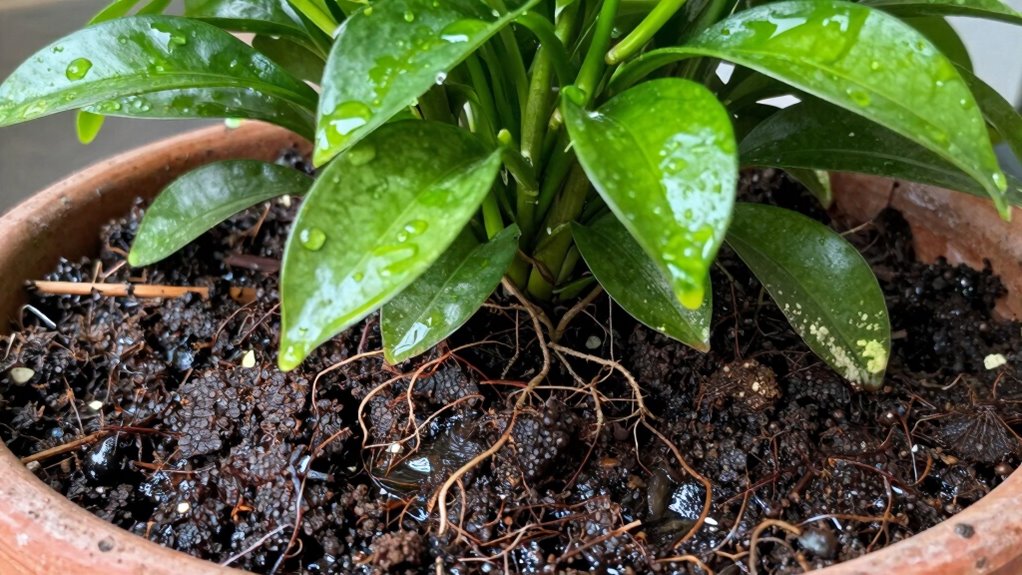
Excess water in the soil can do more harm than you might realize, posing the biggest threat to your plants’ health. Overwatering can drown roots, depriving them of oxygen and leading to root rot. This weakens the plant’s ability to absorb nutrients, making it vulnerable to disease. Maintaining a proper watering schedule helps prevent these issues, but it’s equally important to contemplate soil drainage. Poor drainage traps excess water around roots, increasing the risk of damage. Even if you water regularly, if your soil doesn’t drain well, you’re still overwatering your plants. Recognizing the importance of balancing watering frequency with soil drainage is key to healthy growth. Avoid the temptation to water on a strict schedule without checking soil moisture; your plants will thank you.
What Are Practical Tips for Watering Your Plants the Right Way?
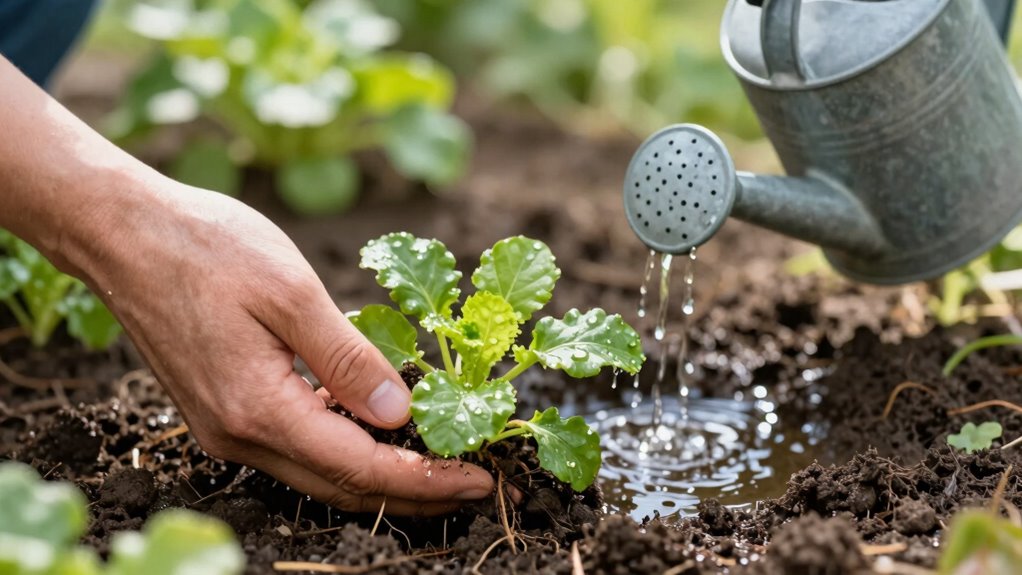
To water your plants effectively, it’s important to pay attention to their specific needs and environmental conditions. Ensuring proper soil moisture is key—too dry or too wet can harm roots. Follow a consistent watering schedule to prevent fluctuations that stress plants. Here are practical tips:
- Check soil moisture daily by feeling the top inch—water only when it feels dry.
- Water deeply, encouraging roots to grow downward and access moisture better.
- Use containers with drainage to prevent water from pooling and causing root rot.
- Adjust your watering schedule based on weather; plants need less water on cooler, cloudy days.
- Proper watering techniques also involve understanding soil moisture levels to ensure the moisture level aligns with the plant’s visual health. Being aware of plant hydration can help you recognize signs of over- or under-watering early.
- Regularly monitor soil drainage to prevent excess water buildup that can lead to root problems. Additionally, being mindful of soil aeration helps maintain healthy roots and prevents compaction that can hinder water absorption.
What Are Common Myths About Watering Plants That Lead to Overwatering?
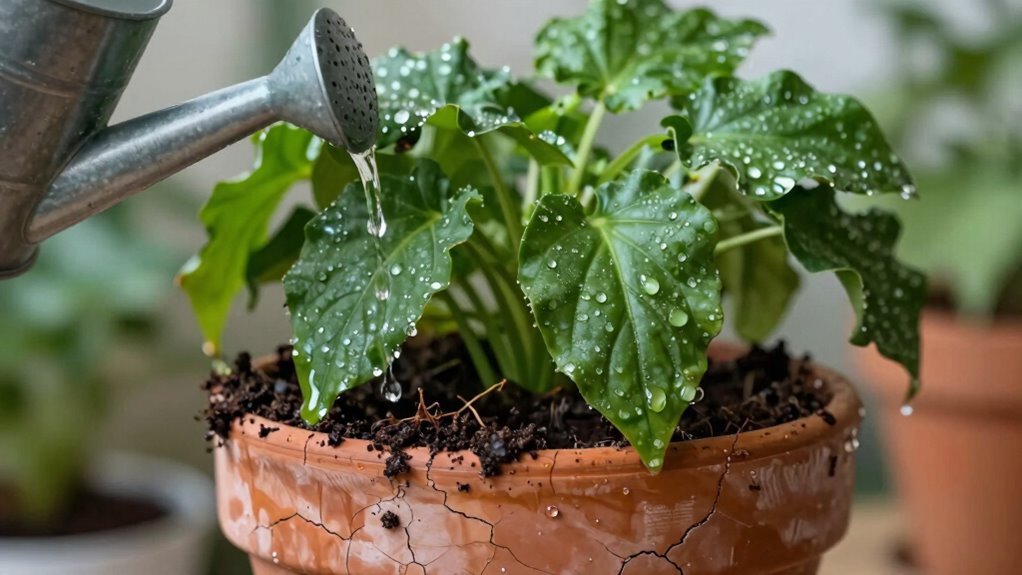
Many people believe that watering their plants frequently or generously will keep them healthy, but this is a common myth that often leads to overwatering. These watering misconceptions cause many to overdo it, assuming more water is always better. In reality, consistent overwatering can drown roots and promote disease. Your watering habits should focus on understanding each plant’s specific needs rather than following blanket rules like “water daily.” Overwatering doesn’t mean better growth; it often results in root rot and weak plants. Recognizing these myths helps you develop better watering practices. Instead of frequent, heavy watering, aim for deep, infrequent sessions that allow the soil to dry out slightly between watering. This approach promotes healthier roots and prevents the damage caused by overwatering. Additionally, understanding the watering needs of different plants can help prevent common mistakes and ensure healthier growth. Being aware of soil drainage and how it influences moisture retention can further improve your watering strategy, reducing the risk of overhydration. Knowing how soil composition affects water retention is also crucial for customizing your watering schedule to your specific plants, and considering weather conditions can help adapt your watering routine to seasonal changes. Moreover, paying attention to plant indicators such as wilting or yellowing leaves can guide you to water more effectively.
Frequently Asked Questions
How Does Soil Type Influence Watering Needs?
Soil type directly influences your watering needs because of its composition and drainage capacity. Sandy soils drain quickly, so you’ll need to water more often to prevent dryness. Clay soils hold moisture longer, so less frequent watering is best to avoid overwatering. Loamy soils strike a balance, requiring moderate watering. Understanding your soil’s drainage and composition helps you water efficiently, keeping your plants healthy and avoiding common watering mistakes.
Can Indoor Humidity Affect Plant Watering Frequency?
Did you know that indoor humidity levels can impact your watering schedule? When humidity is high, plants need less frequent watering because the moisture in the air reduces evaporation from the soil. Conversely, low humidity means you should water more often to prevent dehydration. Adjust your watering schedule accordingly, observing your plants closely, and you’ll keep them healthy and thriving regardless of indoor humidity fluctuations.
Are There Specific Signs of Root Rot Caused by Overwatering?
Yes, overwatering detection is key to catching root rot symptoms early. Look for signs like yellowing leaves, a foul smell, and mushy, dark roots. If you notice these, it’s a clear sign of root rot caused by overwatering. You should act quickly—remove affected roots, reduce watering, and improve drainage—to save your plant. Recognizing these symptoms early helps prevent the problem from spreading and killing your plant.
How Do Different Plant Species Vary in Water Requirements?
Different plant species vary greatly in water requirements, so you should adjust your watering frequency accordingly. Drought-tolerant plants need less frequent watering and can survive longer without moisture, while others require consistent watering to thrive. Observe your plants for signs of over- or underwatering, and tailor your care based on their specific needs. Understanding their natural habitat helps you provide the right amount of water and prevent stress or damage.
What Tools Can Help Ensure Proper Watering Practices?
Imagine your plants crying out for water—don’t let that happen! Use tools like watering schedules to keep track and moisture meters to measure soil moisture precisely. These tools prevent overwatering or underwatering, saving your plants from catastrophe. With a consistent watering schedule and moisture meters, you become a plant superhero, ensuring each plant gets just the right amount of water every time, keeping them healthy and thriving.
Conclusion
To keep your plants thriving, remember that overwatering is a wolf in sheep’s clothing. Watch for signs like yellow leaves or soggy soil, and stick to a watering routine that suits each plant’s needs. Don’t let myths lead you astray—sometimes less is more. When in doubt, it’s better to hold back than drown your greenery. With a little attentiveness, you’ll avoid watering mistakes and help your plants flourish like a well-oiled machine.