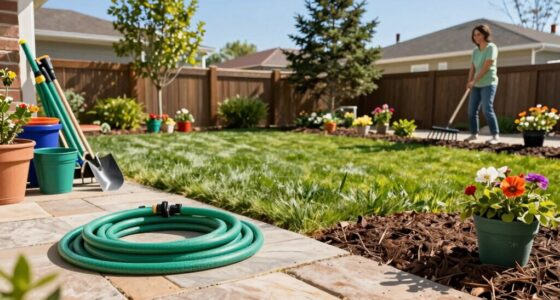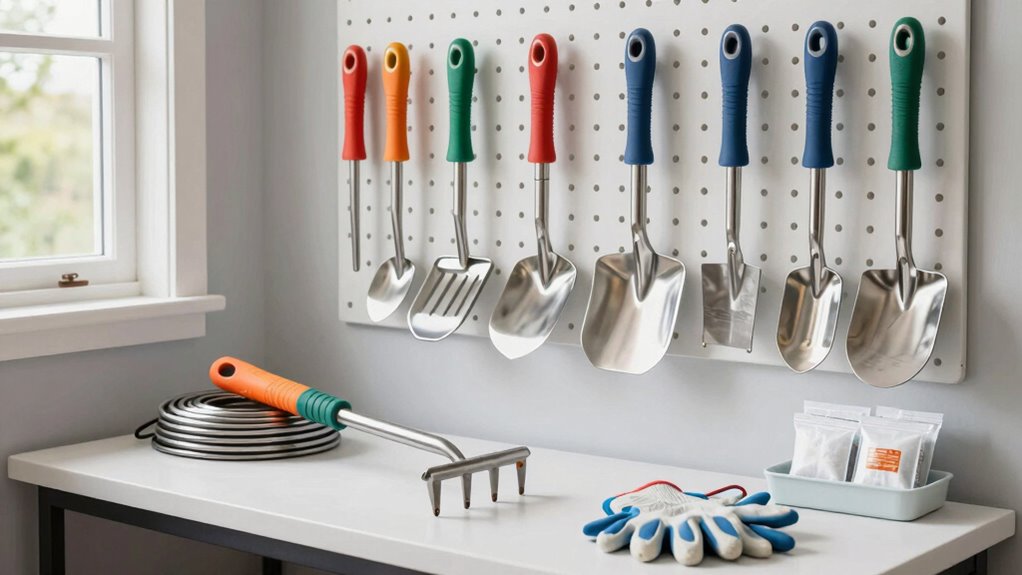

To prevent your garden tools from rusting, clean and dry them thoroughly after each use, removing dirt and moisture. Store them in a dry, well-ventilated spot like a shed or cabinet, preferably hanging or in labeled bins to guarantee good airflow. Applying a light coat of oil or rust inhibitor adds extra protection. Organizing and inspecting your tools regularly helps catch rust early. Keep going to discover all the tips for long-lasting, rust-free garden tools.

Get the latest gadgets delivered free — and shop member deals
- Fast, free delivery on millions of items
- Access to Prime Big Deal Days deals on October 6–7
- Prime Video, Amazon Music and more included
Key Takeaways
- Store tools in a dry, well-ventilated area to reduce moisture exposure and prevent rust formation.
- Clean and thoroughly dry tools before storage, then apply a protective oil or rust inhibitor.
- Use wall hooks, pegboards, or racks to keep tools off the ground and promote air circulation.
- Organize tools to avoid moisture buildup and facilitate inspection and maintenance.
- Incorporate silica gel packs or moisture absorbers in storage containers to control humidity levels.
As an affiliate, we earn on qualifying purchases.
Why Rust Damages Garden Tools and Why Storage Matters
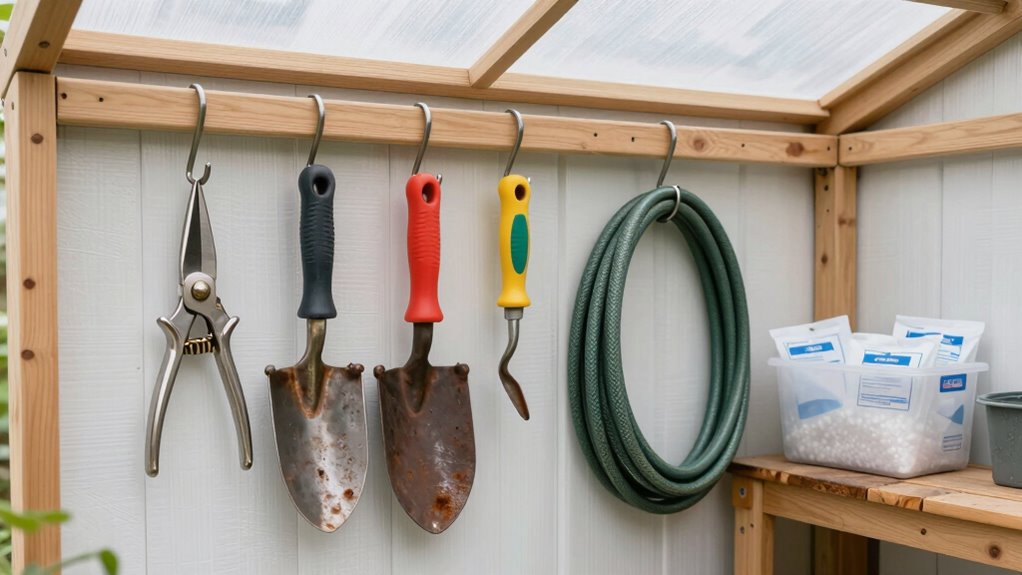
Rust is a common threat to garden tools because it weakens the metal, making tools less effective and more prone to breakage. Metal corrosion occurs when moisture interacts with the metal surface, forming rust that deteriorates its strength. Proper storage helps prevent this by regulating moisture levels, which is essential for preserving your tools. When moisture isn’t managed, rust quickly develops, leading to pitting and structural damage. Rust not only shortens the lifespan of your tools but also hampers their performance. By storing tools in a dry, low-humidity environment, you reduce the risk of metal corrosion. Using protective coatings can further create a barrier against moisture and help keep rust at bay. Additionally, adequate ventilation in your storage area helps circulate air and reduces humidity that contributes to rust formation. Implementing moisture control techniques is also crucial for maintaining your tools in optimal condition. Effective storage practices protect your investment, ensure tools stay sharp and functional, and save you money over time. Remember, controlling moisture is key to keeping rust at bay. Incorporating desiccants or dehumidifiers can significantly enhance moisture control in your storage space, providing an extra layer of protection for your tools. Additionally, using electric tools that are properly maintained can also help minimize rust formation.
As an affiliate, we earn on qualifying purchases.
How to Clean and Dry Your Garden Tools Before Storing
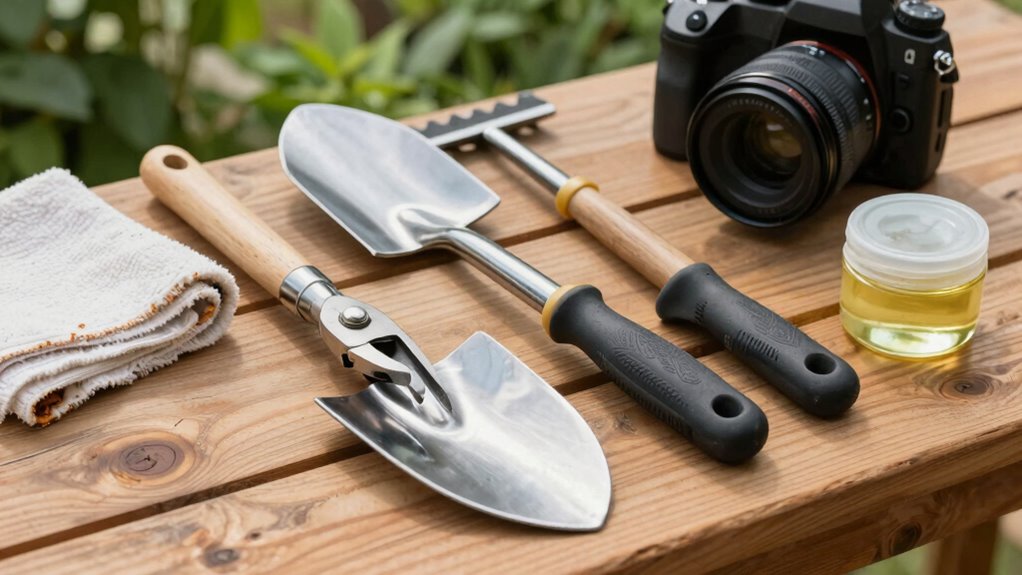
To keep your garden tools in top shape, you need to clean them properly before storing. Use the right washing techniques to remove dirt and sap, then dry them thoroughly to prevent rust. Ensuring complete drying is essential for long-lasting tools. Additionally, storing tools in a dry environment can help reduce exposure to moisture and minimize the risk of corrosion indoor air quality. Applying a light coat of oil after cleaning can further protect metal surfaces from moisture and rust formation protective coatings.
Proper Washing Techniques
Before storing your garden tools, it is vital to clean and dry them thoroughly. Proper washing techniques help remove dirt, sap, and debris that can cause rust. Use cleaning tips like scrubbing with a wire brush or a mixture of water and mild soap to loosen stubborn grime. Avoid harsh chemicals that might damage metal surfaces. Washing frequency depends on how often you use your tools; after each use, give them a quick clean to prevent buildup. For tools exposed to moisture or soil, wash them more frequently. Be sure to rinse off all soap or cleaning solution completely. Once cleaned, dry your tools thoroughly to prevent rust formation. Proper washing and drying set the foundation for long-lasting, rust-free garden tools. Additionally, applying a protective coating or light oil after drying can provide an extra layer of rust prevention. Using proper storage practices like keeping tools in a dry, sheltered location will further extend their lifespan. Incorporating air circulation in your storage area can also help reduce moisture buildup and inhibit rust development. Remember that understanding the science of corrosion can help you choose the best protective measures for your tools.
Complete Drying Methods
After thoroughly washing your tools, it’s important to dry them completely to prevent corrosion. Use effective drying techniques like wiping with a clean cloth, air drying, or using a towel to remove excess moisture. For stubborn areas, a hairdryer on a low heat setting works well to eliminate hidden moisture. Proper moisture control is key to avoiding rust, so guarantee all nooks and crannies are dry. Store your tools in a dry, well-ventilated space to maintain dryness. Avoid leaving water on blades or handles, as even small amounts of moisture can cause rust over time. Taking these steps ensures your garden tools stay in good condition, ready for future use, and protected from corrosion caused by lingering moisture.
moisture absorber for garden tools
As an affiliate, we earn on qualifying purchases.
As an affiliate, we earn on qualifying purchases.
Picking the Best Spot to Store Your Garden Tools

Choosing the right spot to store your garden tools is essential for keeping them organized and in good condition. A garden shed is ideal because it offers a dedicated space that’s protected from the elements, helping prevent rust and damage. If you don’t have a shed, an outdoor cabinet works well too, especially if it’s weather-resistant. Place your tools in a dry, well-ventilated area to avoid moisture buildup that can lead to rust. Good ventilation is crucial to reduce humidity and prolong the life of your tools. Proper tool storage helps prevent corrosion and extends the lifespan of your equipment. Additionally, selecting a location with adequate lighting makes it easier to find and organize your tools efficiently. Ensuring your storage area is free from excess moisture and clutter also helps maintain your tools in optimal condition. Incorporating weatherproofing techniques can further protect your tools from unexpected weather changes. By selecting a dedicated, dry spot, you’ll extend the life of your tools and make garden maintenance more efficient.
As an affiliate, we earn on qualifying purchases.
Protect Your Tools With Coatings and Rust Inhibitors

Protect your garden tools by applying a protective coating to prevent rust and damage. Using rust inhibitors can add an extra layer of defense, especially for metal parts. These simple steps help keep your tools in top shape year after year. For enhanced protection, consider selecting proper performance parts designed specifically for durability and long-lasting performance. Additionally, storing tools in a dry, covered area can significantly reduce exposure to moisture and humidity that cause rust. Incorporating corrosion-resistant coatings can further extend the lifespan of your tools by providing ongoing protection against environmental elements. Applying metal protectants can also penetrate and form a barrier to moisture, adding another level of defense. Employing environmentally resistant materials in your storage solutions can also help prevent rusting by reducing environmental exposure.
Applying Protective Coatings
Have you ever noticed how quickly garden tools can rust if left unprotected? Applying protective coatings can help prevent this. Start with a clean, dry surface, then use paint protection to create a barrier against moisture. A good sealant application ensures water won’t seep into tiny crevices, reducing corrosion risk. Be sure to cover all metal parts thoroughly, including joints and edges. Use a brush or spray to achieve an even coat, and allow it to dry completely before storing your tools. This simple step considerably extends their lifespan and keeps them in working condition. Regularly inspect and reapply coatings as needed, especially after cleaning or exposure to moisture. Protective coatings are a cost-effective way to guard your tools from rust and damage over time. Incorporating sound healing science principles, such as using specific frequencies, may also help in reducing metal fatigue and prolonging tool life.
Using Rust Inhibitors
To effectively shield your garden tools from rust, incorporating rust inhibitors into your maintenance routine is essential. One simple method is oil application, which creates a protective barrier that repels moisture and prevents rust formation. Regularly coating your tools with a thin layer of mineral oil or specialized rust inhibitors helps maintain their condition. Focus on tools with exposed metal parts, especially after use or cleaning. Rust prevention isn’t a one-time task; it requires consistent application to keep moisture at bay. Proper storage conditions further enhance rust resistance, making it crucial to store tools in a dry, well-ventilated space after applying rust inhibitors to maximize their effectiveness. Understanding rust formation can help you choose the best protective measures for your tools. Additionally, choosing high-quality materials like Suprem fabric for tool storage containers or covers can provide extra durability and protection against environmental elements. Applying rust inhibitors correctly ensures you get the maximum benefit from these protective coatings. By taking these steps, you’ll prolong the lifespan of your garden tools and keep them in top shape for years to come.
Arranging Your Garden Tools to Stay Dry and Rust-Free

Ensuring your garden tools stay dry and rust-free starts with how you arrange them. Effective tool organization prevents moisture buildup and makes it easier to access what you need quickly. Use wall hooks, pegboards, or tool racks to keep tools off the ground and separated. Store longer tools vertically, and group similar items together to optimize space. Consider using storage bins or labeled containers for smaller tools, keeping them protected from humidity. Keep frequently used tools within reach, and store seasonal or less-used items separately. Proper storage optimization minimizes clutter and reduces the chance of accidental damage or moisture exposure. By arranging your tools thoughtfully, you help maintain their condition and extend their lifespan, ensuring they’re ready when you need them without risking rust.
Regular Maintenance and Inspection Tips for Garden Tools

Regular maintenance and inspection are essential to keep your garden tools in top condition and ready for use. Regularly check for rust, damage, or wear, and address issues promptly. Tool sharpening is vital to ensure blades and pruners cut efficiently and safely; dull tools can damage plants and require more effort. When handles become loose, cracked, or splintered, handle replacement is necessary to maintain safety and comfort. Tighten loose handles and replace damaged ones to prevent accidents during use. Inspect the metal parts for rust or corrosion, and clean or apply protective coatings as needed. Maintaining sharp blades and sturdy handles extends your tools’ lifespan, keeps them safe, and guarantees they perform at their best during every gardening session.
How to Store Different Types of Garden Tools Properly
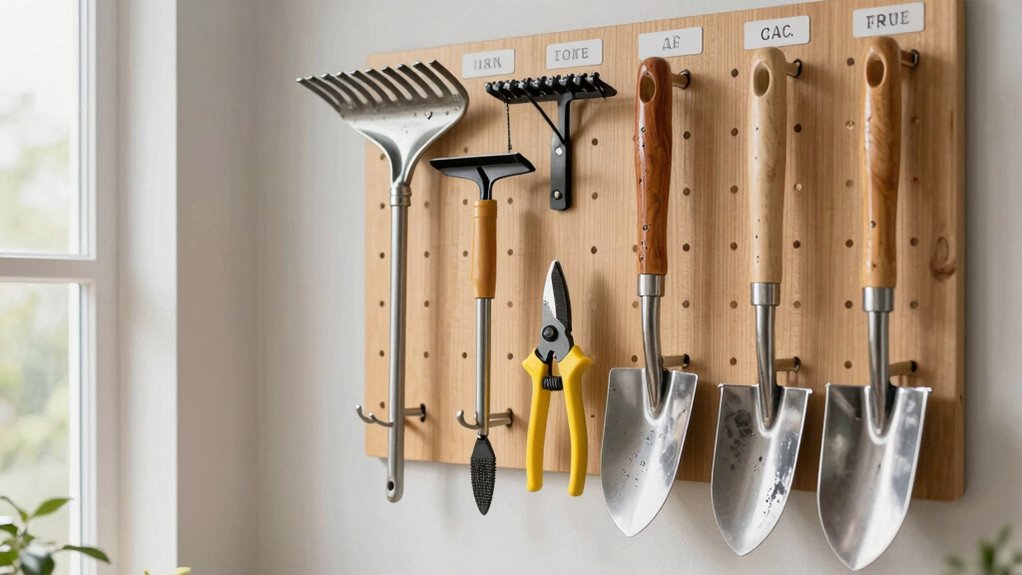
Properly storing your garden tools helps prevent damage and keeps them ready for use when you need them. Different tool materials require specific storage methods to avoid rust and deterioration. For example:
- Metal tools: Hang them on hooks or store in ventilated racks to prevent moisture buildup.
- Wooden handles: Keep in a dry, shaded area to prevent cracking and warping.
- Plastic tools: Store in labeled plastic bins or containers with lids to keep dust and moisture out.
- Specialized storage containers: Use wall-mounted organizers or tool sheds designed for different tool types, ensuring easy access and proper separation. Selecting the right storage container type based on tool material helps prolong their lifespan and prevents rust, so always match the tool to its ideal storage environment.
Long-Term Storage Tips to Keep Your Tools Rust-Free
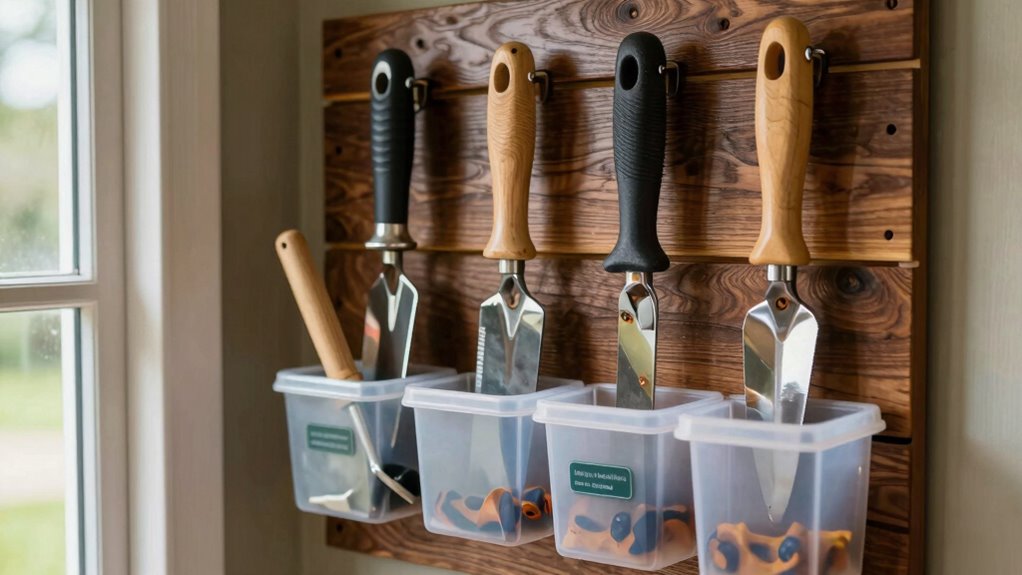
To keep your garden tools rust-free during long-term storage, it is vital to take proactive steps that protect their metal surfaces from moisture and corrosion. Proper storage organization ensures tools stay dry and accessible, reducing the risk of rust formation. Consider hanging tools in a dry, covered area or storing them in airtight containers with silica gel packs to absorb moisture. Regularly inspect and clean tools before storage, removing dirt and moisture that can accelerate rust. Applying a light coat of oil or rust inhibitor enhances tool durability by creating a protective barrier against humidity. Keeping tools organized not only prolongs their lifespan but also makes them easier to find and use when needed, ultimately maintaining their effectiveness and preventing rust from developing over time.
Essential Tools and Storage Solutions to Prevent Rust
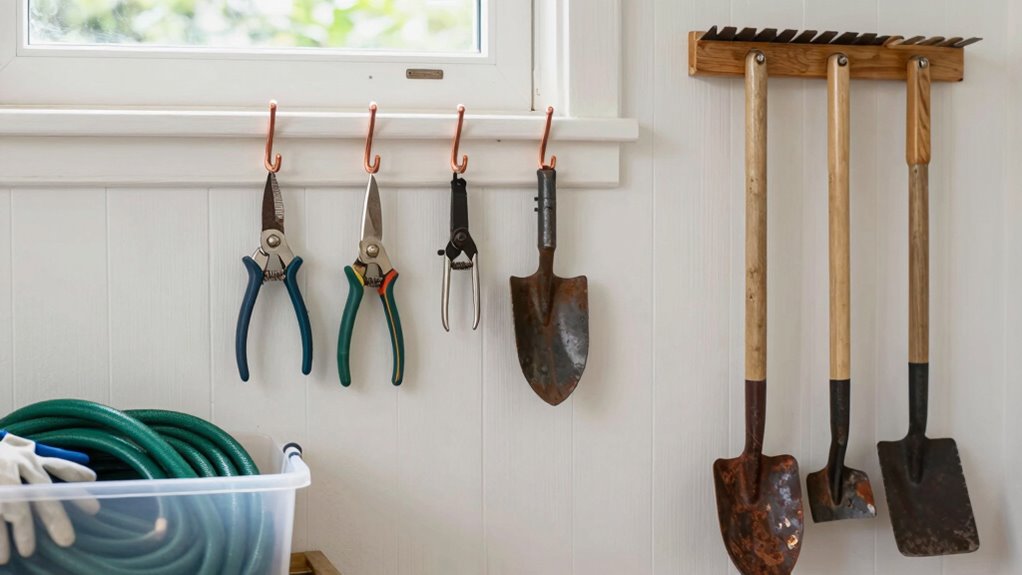
Choosing the right tools and storage solutions is essential for preventing rust and extending the lifespan of your garden tools. Proper garden tool maintenance and rust prevention techniques start with selecting durable, high-quality tools designed to resist corrosion. To maximize protection, consider these solutions:
Choosing durable tools and proper storage prevents rust and prolongs garden tool life.
- Use rust-resistant coatings or paint on metal surfaces.
- Store tools in a dry, ventilated area to avoid moisture buildup.
- Hang tools on wall-mounted racks to prevent contact with damp surfaces.
- Keep blades and moving parts lubricated with oil to minimize rust formation.
Implementing these strategies helps reduce rust, making your garden tools last longer and work more effectively. Consistently applying these essential tools and storage solutions ensures your gardening arsenal remains in top condition, ready for the next project.
Frequently Asked Questions
Can Humidity Levels Affect Rust Formation on Garden Tools?
Yes, humidity levels substantially affect rust formation on your garden tools. High humidity increases moisture, which accelerates rust, while proper humidity control helps prevent it. To protect your tools, guarantee moisture prevention by storing them in a dry, well-ventilated area. Using silica gel packs or dehumidifiers can also help maintain ideal humidity levels, reducing the risk of rust and keeping your tools in good condition longer.
Are There Eco-Friendly Rust Inhibitors Suitable for Garden Tools?
Like a knight shielding his sword, you can protect your tools with eco-friendly coatings and biodegradable rust preventatives. These eco-conscious options form a protective barrier without harming the environment, keeping your garden tools in pristine condition. Look for natural oils or plant-based waxes that are safe and effective. By choosing eco-friendly rust inhibitors, you guarantee your gardening arsenal stays rust-free while caring for the planet.
How Often Should I Inspect My Stored Garden Tools for Rust?
You should inspect your stored garden tools at least once a month to guarantee they stay rust-free. Regular tool maintenance helps catch early signs of rust, allowing you to apply rust prevention techniques like oiling or cleaning. Staying proactive keeps your tools in top shape, prevents corrosion, and extends their lifespan. Consistent inspections are key to avoiding costly replacements and maintaining effective, rust-free tools for your gardening needs.
Can Certain Types of Storage Containers Promote Rust?
You notice your metal racks and plastic bins, and realize that certain containers can foster rust. Metal racks, especially if uncoated, may accelerate rusting due to exposure to moisture. Plastic bins, however, offer a dry environment that helps prevent corrosion. When storing garden tools, choose plastic bins for added protection, and keep metal racks dry or coated to reduce rust risk. Proper storage ensures your tools stay in top shape.
What Are the Best Practices for Storing Power Garden Tools?
To store power garden tools properly, you should keep them clean and dry after each use to prevent rust. Perform regular tool maintenance, like sharpening blades and oiling moving parts, before storage. Use storage organization solutions such as wall hooks or dedicated cabinets to keep tools off the ground and well-ventilated. This approach helps prolong your tools’ lifespan and keeps your storage area tidy and efficient.
Conclusion
By following these simple steps, you’ll turn your garden shed into a fortress against rust, making your tools last for decades. Regular cleaning, proper storage, and protection are your secret weapons to keep rust at bay. Don’t let rust take over like an unstoppable army—stay vigilant, maintain your tools, and enjoy a thriving garden with tools that stay sharp and shiny through every season. Your garden deserves tools that are as resilient as you are!
Fall Picks
fall essentials
As an affiliate, we earn on qualifying purchases.