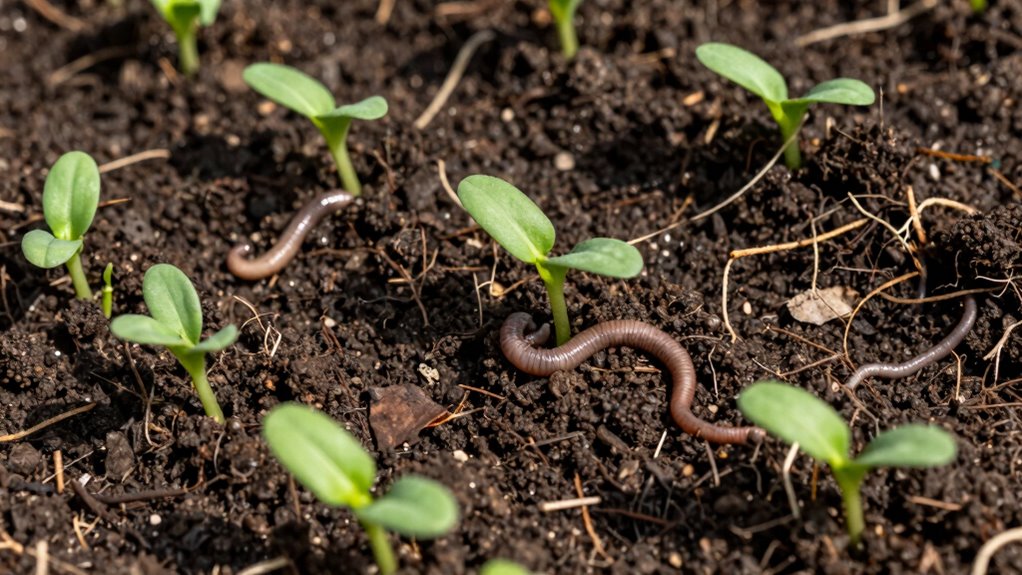

To improve your soil naturally and simply, focus on adding organic matter with compost and mulch, which boost nutrients and enhance soil structure. Use cover crops like clover or rye to fix nitrogen and protect against erosion. Incorporate kitchen scraps and compostables regularly to feed beneficial microbes. Practice no-till methods to preserve soil health. Rotate your crops and test your soil to track progress. Keep these sustainable habits in mind, and you’ll discover more tips along the way.

Get the latest gadgets delivered free — and shop member deals
- Fast, free delivery on millions of items
- Access to Prime Big Deal Days deals on October 6–7
- Prime Video, Amazon Music and more included
Key Takeaways
- Add compost and mulch regularly to boost organic matter and improve soil structure naturally.
- Use cover crops like clover or rye to fix nitrogen and increase soil fertility without chemicals.
- Practice crop rotation to prevent nutrient depletion and promote diverse microbial activity.
- Minimize tillage to preserve soil structure, moisture, and beneficial microbes.
- Test soil pH and microbial health periodically to guide natural enhancements and maintain long-term fertility.
As an affiliate, we earn on qualifying purchases.
Why Healthy Soil Is the Key to a Thriving Garden
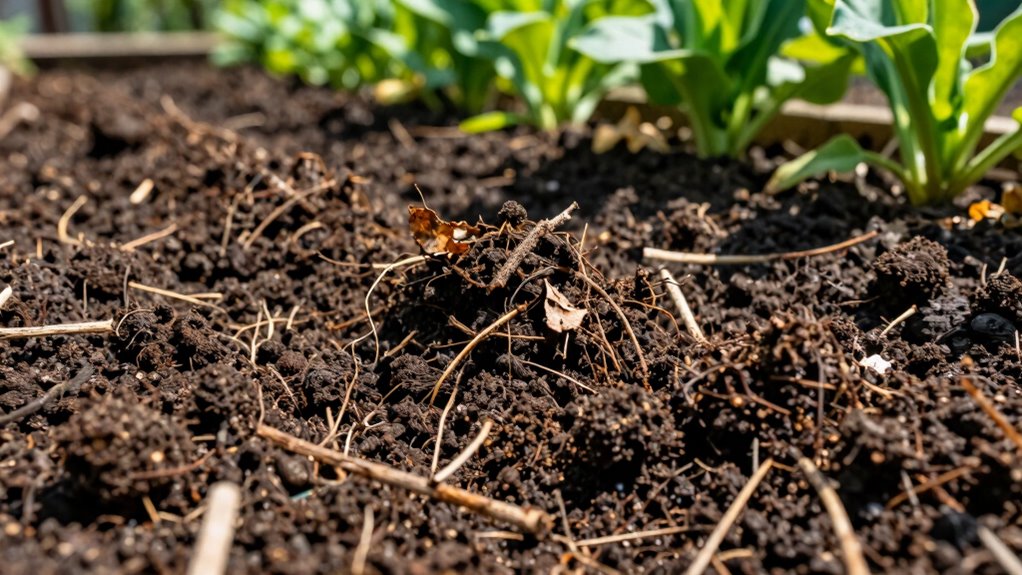
Healthy soil forms the foundation for a thriving garden because it provides essential nutrients, proper drainage, and a balanced environment for plant roots to grow. A diverse soil microbiome plays a crucial role, helping break down organic matter and release nutrients your plants need. When the soil’s pH balance is just right, nutrients become more accessible, promoting healthy growth. If the pH is too high or too low, plants can struggle to absorb indispensable nutrients, leading to poor development. Maintaining a healthy soil microbiome involves supporting beneficial microbes, which naturally improve soil health. Additionally, understanding the Northeast – These Fifty States climate can help you select the best practices for soil management in your region. By focusing on fostering this microbial diversity and monitoring pH levels, you create an environment where plants can flourish without relying on chemical additives. Regular Soil testing can also provide valuable insights into nutrient deficiencies and pH imbalances, guiding your soil improvement efforts. Incorporating composting techniques can further enhance soil vitality by adding organic matter and beneficial microorganisms. Building soil resilience through proper management ensures your garden remains productive despite environmental stresses. Emphasizing soil health helps ensure long-term productivity and resilience of your garden. Healthy soil is truly the key to a vibrant, productive garden.
As an affiliate, we earn on qualifying purchases.
Build Organic Matter With Compost and Mulch
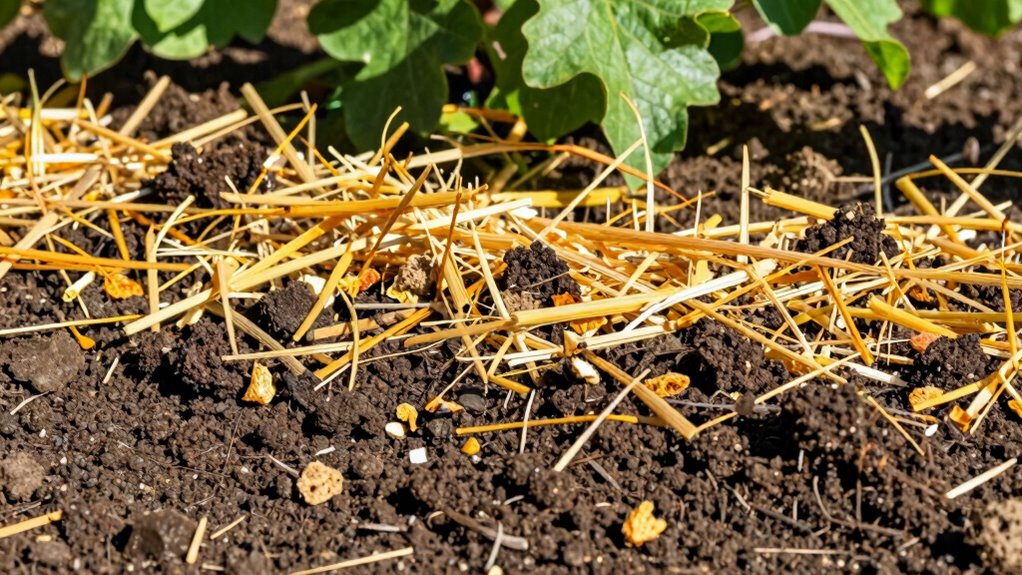
Building organic matter is essential for improving soil health, and using compost and mulch is one of the most effective ways to do this. Compost benefits your soil by adding crucial nutrients, improving structure, and increasing moisture retention. It also encourages beneficial microbial activity, which naturally enhances soil fertility. When selecting mulch, consider various mulch types such as straw, wood chips, or shredded leaves, each offering unique benefits. Mulch helps conserve moisture, suppress weeds, and gradually decomposes to enrich the soil over time. Applying compost on top of the soil and covering it with mulch creates a nutrient-rich environment that promotes healthy plant growth. Regularly adding compost and mulch is a simple, natural strategy to build organic matter and boost your garden’s overall soil health. Soil biology plays a vital role in breaking down organic materials and maintaining soil vitality, supporting healthy plant growth through natural processes. Additionally, promoting microbial activity enhances nutrient cycling and boosts overall soil fertility. Engaging in practices that support soil health can lead to more resilient and productive gardens, especially when considering how electric bikes exemplify sustainable energy solutions that can also be applied to eco-friendly gardening tools.
As an affiliate, we earn on qualifying purchases.
Use Cover Crops to Naturally Enrich Your Soil
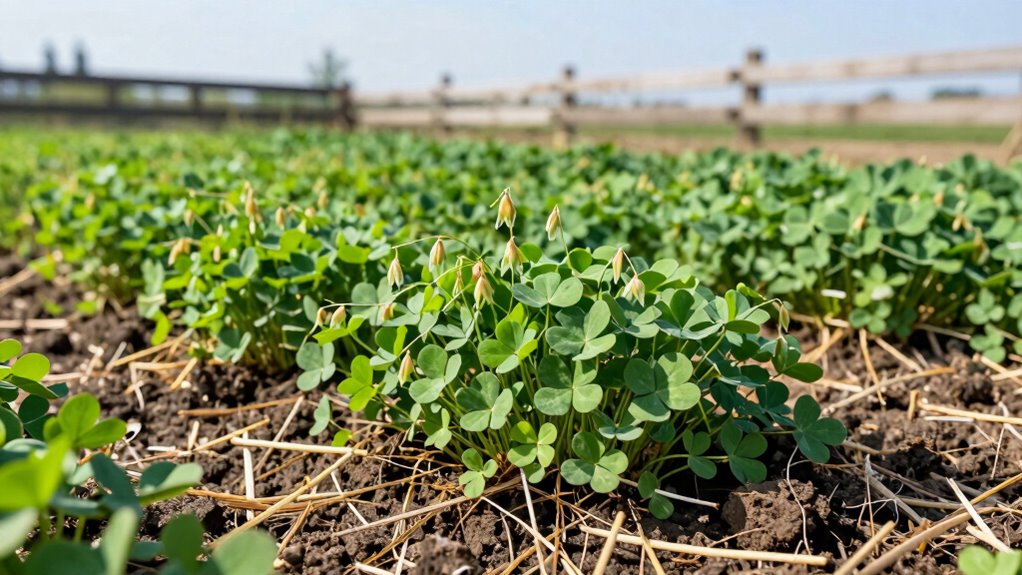
Using cover crops is a natural and effective way to enrich your soil without relying on additives. They boost soil health by fixing nitrogen, reducing erosion, and improving soil structure. The cover crop benefits include increased organic matter, weed suppression, and moisture retention, all contributing to natural soil enrichment. When selecting cover crops, consider clover for nitrogen fixation or vetch for quick cover. Planting these between main crops or during off-season periods enhances soil quality sustainably. Incorporating cover crops also supports soil biodiversity, which is essential for maintaining a healthy and resilient garden ecosystem. Here’s a simple visual to imagine your options:
| Cover Crop | Main Benefit |
|---|---|
| Clover | Fixes nitrogen, improves fertility |
| Vetch | Rapid cover, weed suppression |
| Rye | Erosion control, organic matter boost |
| Buckwheat | Suppresses weeds, attracts beneficial insects |
| Hairy vetch | Adds organic matter, fixes nitrogen |
Using cover crops is a straightforward way to promote natural soil enrichment and foster a thriving garden. Understanding soil health is key to successful gardening.
soil test kit for pH and nutrients
As an affiliate, we earn on qualifying purchases.
As an affiliate, we earn on qualifying purchases.
Add Kitchen Scraps and Compostables to Boost Fertility
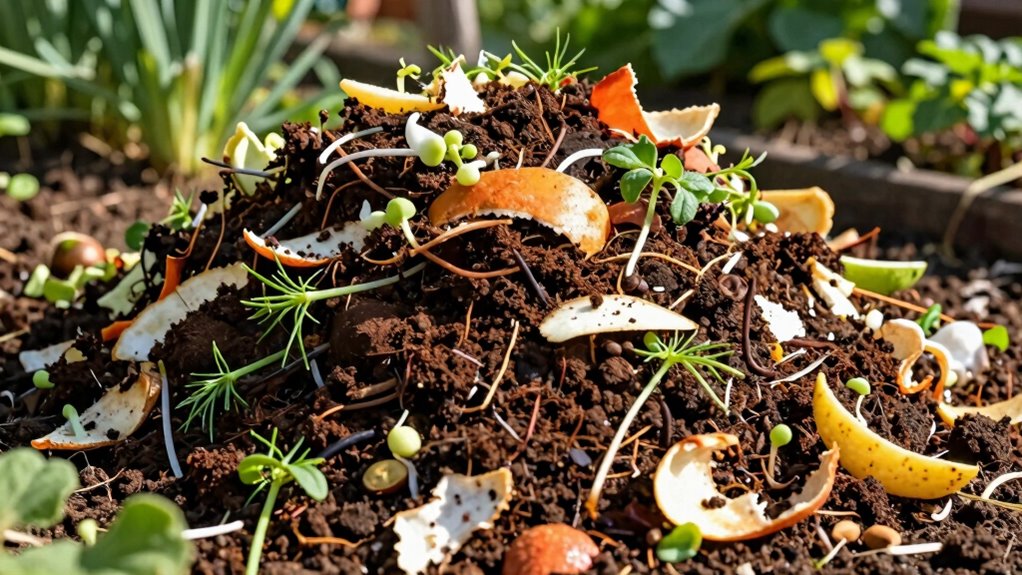
Adding kitchen scraps and compostables is a simple way to naturally boost your soil’s fertility. As you compost these materials, you’re recycling nutrients and improving soil structure. Properly balancing your compost guarantees your plants get the nutrients they need without additives. Utilizing composting techniques can further enhance the nutrient content and overall health of your soil. Incorporating soil health principles can help maintain nutrient cycles and promote sustainable gardening practices. Emphasizing organic matter in your compost can lead to healthier, more resilient plants. Additionally, understanding the role of soil microbiology can significantly improve the effectiveness of your composting efforts and soil vitality. Implementing soil testing methods can help you monitor and adjust your composting process for optimal results.
Composting Kitchen Waste
Incorporating kitchen scraps into your compost pile is a simple way to enhance soil fertility naturally. When you compost kitchen waste, you promote organic matter buildup, which enriches your soil over time. Add vegetable peels, coffee grounds, eggshells, and fruit scraps to boost nutrient levels. Proper layering ensures efficient composting and prevents odors. Use the table below to balance your compost ingredients:
| Green Materials | Brown Materials |
|---|---|
| Fruit and vegetable scraps | Dry leaves |
| Coffee grounds | Cardboard |
| Eggshells | Paper scraps |
| Grass clippings | Sawdust |
| Tea bags | Straw |
This method accelerates decomposition, making your soil healthier without fancy additives. Composting kitchen waste is an eco-friendly way to recycle and improve your garden naturally.
Balancing Nutrients Naturally
To naturally boost your soil’s fertility, focus on balancing nutrients through kitchen scraps and compostables. Adding vegetable peels, coffee grounds, and eggshells enriches the soil with essential minerals, promoting healthier plants and stronger plant health overall. This balanced nutrient profile makes plants more resilient against pests, reducing the need for chemical pest control methods. Composting kitchen waste creates a steady supply of organic matter that improves soil structure and nutrient availability. Over time, this fosters a thriving soil ecosystem, encouraging beneficial microbes that naturally suppress pests. Incorporating best Daisy varieties for gardens can also enhance your garden’s resilience by attracting pollinators and improving plant growth. Additionally, understanding the importance of soil microbiome health can help you further nurture your garden’s natural defenses and vitality. Introducing effective composting techniques can maximize nutrient recycling and soil benefits, ensuring your garden remains vibrant and productive. Employing diverse compostables supports soil biodiversity, which is crucial for a healthy and balanced soil environment.
Practice No-Till Gardening to Protect Soil Structure
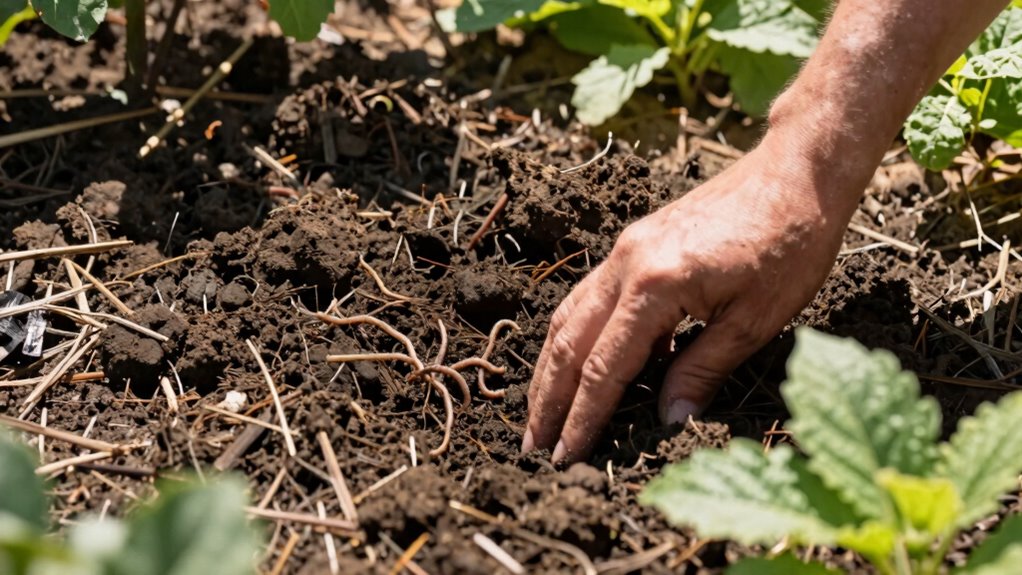
Practicing no-till gardening helps protect your soil’s structure, keeping it healthy and stable. It also reduces weed growth and conserves moisture, making your garden easier to manage. By minimizing disturbance, you support the long-term importance of your soil. Incorporating cabling solutions can further enhance garden infrastructure and protect your planting areas. Additionally, understanding the art and culture intersections can inspire innovative approaches to sustainable gardening practices. Implementing soil health practices can further promote the development of rich, fertile soil over time. Exploring nutritional benefits of healthy soil can deepen your appreciation for its vital role in supporting plant growth and overall garden vitality.
Preserves Soil Structure
Because it minimizes soil disturbance, no-till gardening helps preserve the natural soil structure. When you avoid tilling, you maintain the soil’s integrity, allowing it to stay aerated and healthy. Good soil aeration ensures roots and microbial activity thrive, promoting nutrient cycling and organic matter breakdown. Tilling can break up soil aggregates, disrupting the habitat for beneficial microbes and reducing pore spaces needed for air and water movement. By practicing no-till methods, you protect these essential features, leading to stronger, more resilient soil. This natural preservation supports better water retention, reduces erosion, and fosters a stable environment for plants. Ultimately, no-till gardening helps sustain the soil’s structure, making your garden more productive and environmentally friendly over time. Soil health is a fundamental aspect of sustainable agriculture and gardening practices.
Reduces Weed Growth
Since no-till gardening minimizes soil disturbance, it naturally helps reduce weed growth. By maintaining the soil’s structure, you prevent weed seeds from being exposed to sunlight, which suppresses their germination. This weed suppression method keeps unwanted plants at bay without relying on chemical herbicides. Healthy soil supports beneficial microorganisms that outcompete weeds and strengthen crop roots. When you avoid tilling, you also preserve soil health, fostering a resilient environment that’s less hospitable to weeds trying to establish. Over time, your garden becomes less cluttered with invasive plants, making maintenance easier. No-till gardening creates a balanced system where weed growth is naturally limited, allowing your desirable plants to thrive without the need for constant weeding or chemical intervention.
Enhances Moisture Retention
Maintaining the soil’s structure through no-till gardening helps it retain moisture more effectively. By avoiding disturbance, you preserve the soil’s natural pores, which are essential for water retention. When you till, you break up these pores, making the soil less capable of holding onto moisture. No-till practices protect the organic matter and beneficial microbes that improve soil moisture levels. As a result, your soil stays moist longer, reducing the need for frequent watering. This approach creates a healthier environment for plant roots and encourages consistent water availability. Over time, no-till gardening enhances water retention, ensuring your soil remains resilient during dry periods. By keeping the soil intact, you help it better manage moisture, supporting strong, healthy plant growth with less effort.
Safely Incorporate Manure and Natural Amendments
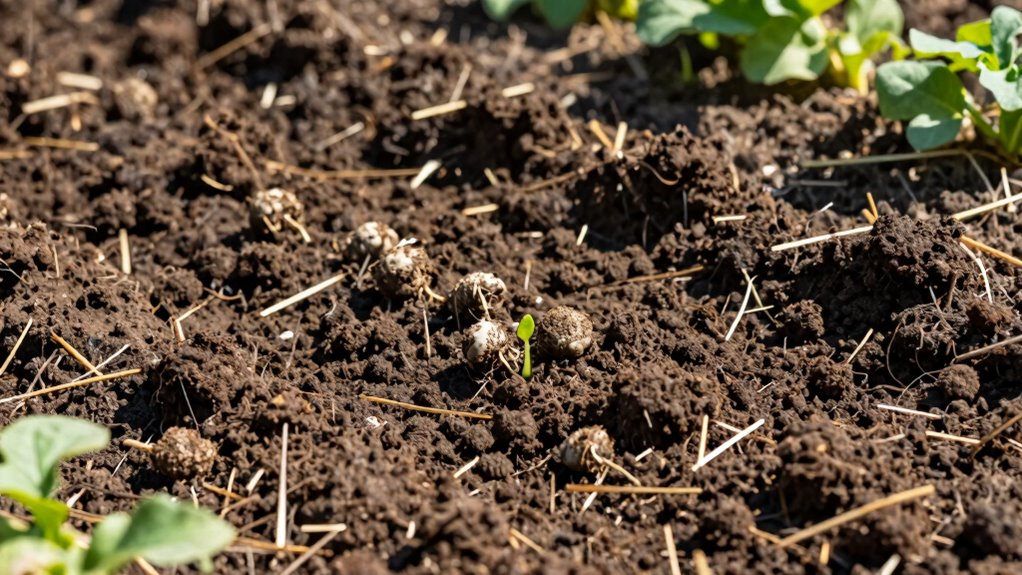
To safely incorporate manure and natural amendments into your soil, it’s important to follow proper handling and application practices. Begin by composting fresh manure using effective composting techniques to reduce pathogens and odors. This process not only stabilizes nutrients but also makes organic amendments safer and more beneficial for your soil. When applying, spread manure evenly and mix it into the topsoil to prevent runoff and nutrient loss. Always wait at least a few months before planting to allow decomposition and minimize plant damage. Using composted manure and other organic amendments improves soil fertility naturally.
- Visualize a lush garden thriving as you incorporate composted manure seamlessly into your beds
- Picture rich, dark soil teeming with beneficial microorganisms from organic amendments
- Imagine healthy plants growing strong, nourished by well-handled manure and natural supplements
Rotate Crops to Keep Your Soil Healthy
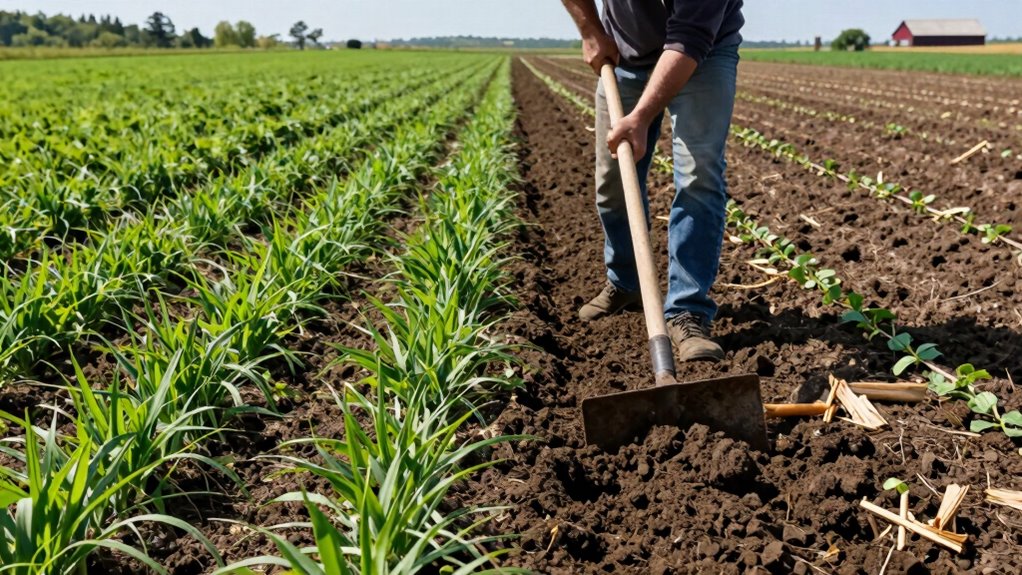
Rotating crops helps maintain soil fertility and reduces pest problems without chemicals. To get the most benefits, follow best rotation practices like alternating legumes with grasses. Choosing the right crops to rotate keeps your soil healthy and productive year after year.
Benefits of Crop Rotation
Have you ever wondered how farmers keep their soil fertile without relying on chemical additives? Crop rotation offers numerous benefits that help maintain soil health naturally. By changing crops each season, you prevent nutrient depletion and disrupt pest cycles. Cover crop benefits come into play, as certain plants fix nitrogen in the soil, boosting fertility for future crops. Crop rotation strategies also reduce soil erosion, keeping your land productive year after year. Imagine planting legumes one season and grains the next—this variety revitalizes the soil naturally.
- Improves soil structure and aeration
- Reduces pest and disease buildup
- Enhances nutrient cycling naturally
Best Rotation Practices
Implementing the right crop rotation practices is key to maintaining healthy soil over time. By rotating different crops, you encourage a diverse soil microbe community, which boosts nutrient cycling. Different plants have unique root structures and nutrient needs, helping prevent soil depletion and reducing pest buildup. For example, legumes fix nitrogen, enriching the soil naturally, while leafy greens draw nutrients differently than root vegetables. This variation supports soil microbe activity, which is essential for breaking down organic matter and releasing nutrients. Consistent rotation also minimizes disease risks and weeds, keeping your soil balanced and fertile. Overall, strategic crop rotation preserves soil structure, improves fertility, and promotes a resilient ecosystem that needs fewer external inputs.
Crops to Rotate
Choosing the right crops to rotate is essential for maintaining healthy soil. When you vary your plantings, you support diverse soil microbes that improve nutrient cycling and organic matter. Rotate legumes like beans or peas to fix nitrogen naturally, enriching your soil without synthetic fertilizers. Follow these with root crops such as carrots or beets to break up compacted soil and promote aeration. Incorporate cover crops like clover or rye, which add organic amendments directly to the soil, boosting microbial activity. This cycle prevents nutrient depletion, reduces pests, and enhances soil structure. By planting different crops in succession, you create a resilient, nutrient-rich environment that sustains your garden without relying on fancy additives. Your soil stays healthy, productive, and better equipped to support future crops.
Test Your Soil to See How Your Improvements Are Doing
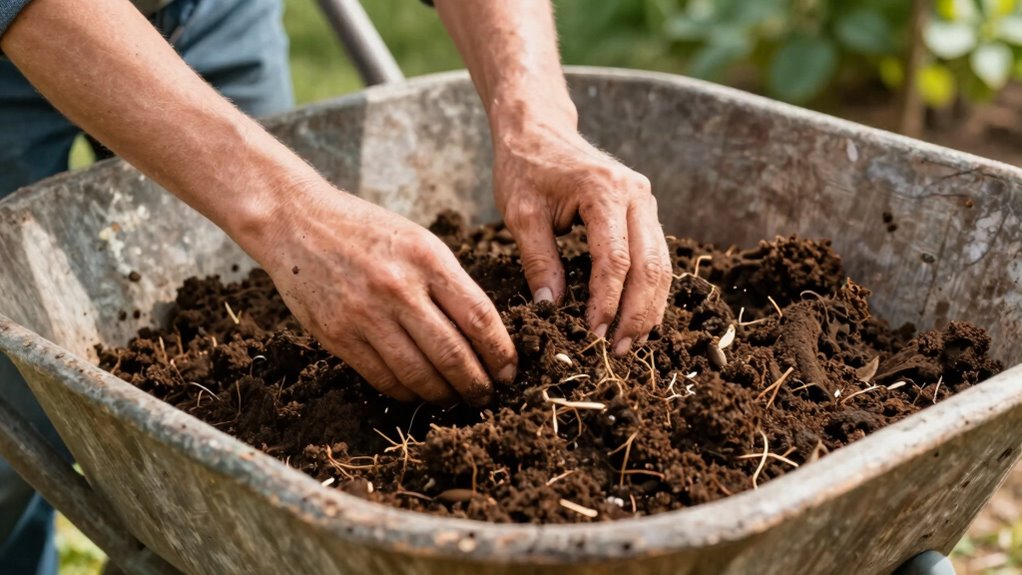
To determine if your soil improvements are effective, testing is essential. Conduct soil testing to understand its current condition and identify nutrient deficiencies. A proper nutrient analysis reveals which minerals and elements are lacking or excessive, guiding your next steps. You can use home testing kits or send samples to a lab for detailed results. Regular testing helps track changes over time, ensuring your natural methods are working. Focus on key nutrients like nitrogen, phosphorus, and potassium, along with pH levels. This information enables you to make informed decisions about planting and soil management. Remember, knowing your soil’s status is the first step toward sustainable improvement without relying on chemical additives. Testing keeps you aligned with your goal of healthy, fertile soil.
Skip Chemicals and Rely on Natural Soil-Building Methods
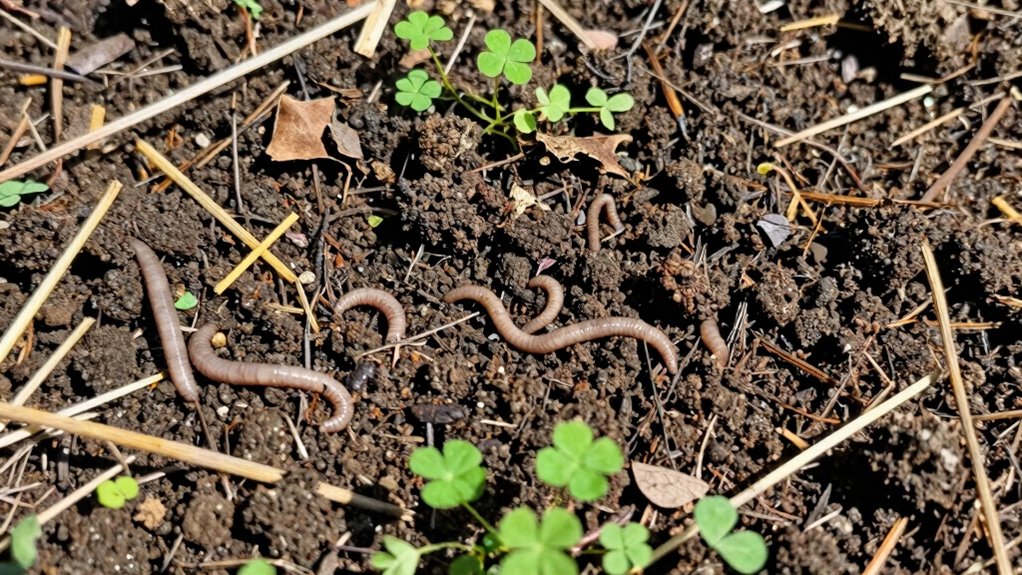
After testing your soil and understanding its nutrient levels, you can focus on building its health naturally without resorting to chemical additives. Relying on organic amendments helps improve soil structure and fertility over time. Instead of chemicals, incorporate compost, manure, or cover crops to enrich the soil naturally. This approach promotes microbial activity, enhances drainage, and boosts nutrient availability. Visualize your soil becoming more vibrant and alive, ready to support healthy plant growth. You can:
- Use compost or organic matter to boost nutrient content
- Plant cover crops like clover or vetch to fix nitrogen naturally
- Apply organic amendments based on soil testing results for targeted improvements
Stay Consistent to Maintain Long-Term Soil Fertility

Maintaining long-term soil fertility requires consistent effort and mindful practices over time. Regular soil testing is essential to identify nutrient levels and detect deficiencies or imbalances early. Use these results to guide your application of organic amendments, such as compost or manure, ensuring your soil remains rich and balanced. Staying consistent means incorporating organic amendments routinely, rather than sporadically, to build healthy soil structure and microbial activity. Avoid neglecting soil health; even small, regular adjustments can prevent long-term decline. Keep track of your efforts and results, and adapt your practices as needed. This steady approach promotes sustained fertility, reduces dependency on external inputs, and creates a thriving environment for plants over the years.
Frequently Asked Questions
How Often Should I Test My Soil for Nutrients?
You should test your soil for nutrients at least once every 1 to 2 years, especially if you’re planting new crops or noticing poor growth. Regular soil testing and nutrient analysis help you identify deficiencies or imbalances. If you’re actively managing a garden or farm, testing more frequently—perhaps annually—ensures you catch issues early and make informed decisions for soil health and ideal plant growth.
Can I Improve Soil Without Any Gardening Experience?
Absolutely, you can turn your soil into a thriving garden even if you’re new to gardening. Think of your soil as a blank canvas, waiting for the touch of organic composting and natural amendments. Just sprinkle compost, add some mulch, and watch your land come alive. With patience and care, your garden will flourish, proving that experience isn’t a barrier—just a journey, one nourishing step at a time.
What Are the Signs of Poor Soil Health?
You can tell your soil is poor if plants struggle to grow, leaves turn yellow, or roots appear stunted. Check soil pH; if it’s too acidic or alkaline, plants won’t thrive. Low organic matter also indicates poor health, leading to poor moisture retention and nutrient deficiencies. Healthy soil should have balanced pH and ample organic matter, supporting vigorous plant growth and strong root systems.
How Long Does It Take to See Soil Improvements?
You’ll start noticing soil improvements within a few months after testing your soil and adding organic amendments like compost or manure. Regularly testing your soil helps track progress and adjust amendments as needed. While some changes, like better structure and nutrient levels, happen quickly, it may take 6 to 12 months for your soil to fully recover and support healthy plant growth. Patience and consistent care make a big difference.
Are There Any Plants Best Suited for Poor Soil Conditions?
Yes, you can choose native plants and drought-tolerant species that thrive in poor soil conditions. Plants like coneflowers, black-eyed Susan, yarrow, and sedum are excellent options. These plants adapt well to less-than-ideal soil, requiring minimal fertilization and watering. By selecting these hardy species, you’ll create a resilient garden that flourishes despite soil limitations, saving you time and effort while embracing sustainable gardening practices.
Conclusion
By focusing on simple, natural methods like composting, crop rotation, and cover crops, you can markedly improve your soil without fancy additives. Did you know that healthy soil can increase crop yields by up to 50%? Staying consistent with these practices not only boosts your garden’s productivity but also supports a sustainable environment. Remember, nurturing your soil is the key to a thriving garden that lasts for years to come.
Fall Picks
fall essentials
As an affiliate, we earn on qualifying purchases.