
TL;DR
This article explains how to accurately plan and photograph the upcoming Blue Moon’s full moonrise. It emphasizes the importance of precise timing and location to avoid missing this rare event.
Experts recommend precise planning to catch the upcoming Blue Moon’s full moonrise, which will occur in the early hours of May 31, requiring viewers to synchronize their observation with specific timing and location details.
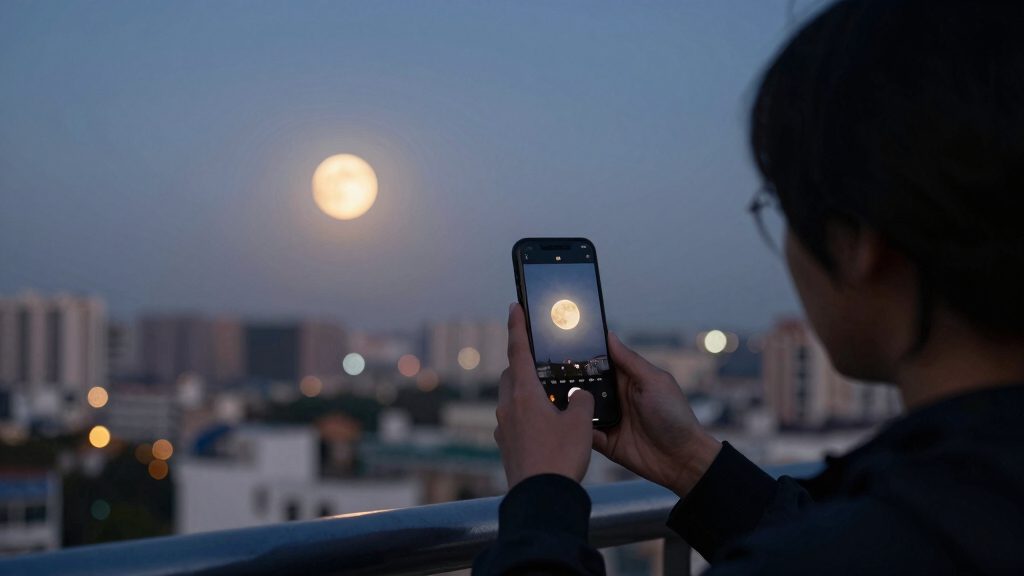
The full Blue Moon will reach full illumination at 4:45 a.m. EDT on May 31. However, the actual moonrise will occur earlier, around 20 minutes after sunset, when the moon appears low on the horizon during dusk. To see the moon at its most striking orange hue, observers should plan to be at an elevated, unobstructed east-facing location, ideally near water bodies like bays or rivers. Precise timing is crucial; using tools like PhotoPills or The Photographer’s Ephemeris can help determine the exact moonrise point from any location. Photographers should arrive early and be prepared for a brief window when the moon pops into view, often within 5-15 minutes after the calculated moonrise time, and then quickly brightens as it ascends, making rapid adjustments essential for capturing the moment.
Why It Matters
Understanding how to accurately observe and photograph the Blue Moon’s full moonrise enhances both amateur and professional astronomy and photography experiences. Correct planning ensures viewers do not miss this rare celestial event, which attracts public interest and offers unique photographic opportunities. Proper timing and location can significantly impact the quality of images and the overall experience, making this knowledge valuable for enthusiasts and casual observers alike.
full moon photography camera lens
As an affiliate, we earn on qualifying purchases.
As an affiliate, we earn on qualifying purchases.
Background
The Blue Moon, occurring on May 31, is a rare event that happens approximately once every 2.7 years. The full moon will reach peak illumination at 4:45 a.m. EDT, but the moonrise will happen earlier, during dusk, depending on geographic location. Accurate prediction tools have become essential for observers to synchronize their viewing. Historically, moonrise times vary based on latitude and season, making precise planning crucial. This event follows recent advances in astronomical software and mobile apps that help users determine exact moon positions and timings from any location.
“To catch the full moonrise, you need to plan ahead using precise tools and arrive early at an unobstructed east-facing vantage point.”
— Jamie Carter, astronomy writer
“Timing is everything. The moon can pop into view suddenly, so being in the right spot at the right time is key to capturing its full glory.”
— Photographer John Doe
As an affiliate, we earn on qualifying purchases.
What Remains Unclear
It is not yet confirmed whether weather conditions will allow clear viewing in all locations; cloud cover and atmospheric conditions could obscure the moonrise. Exact moonrise times may vary slightly depending on the observer’s precise location and local topography.
astronomy app for moonrise timing
As an affiliate, we earn on qualifying purchases.
As an affiliate, we earn on qualifying purchases.
What’s Next
Observers should use astronomy apps to identify their ideal viewing spot and plan to arrive at least 30 minutes before the expected moonrise time. Monitoring weather forecasts will be crucial in the days leading up to the event. After the event, discussions and sharing of photographs are expected to increase on social media platforms.
unobstructed viewing location for moonrise
As an affiliate, we earn on qualifying purchases.
As an affiliate, we earn on qualifying purchases.
Key Questions
Why is it called a Blue Moon if the moon isn’t actually blue?
The term ‘Blue Moon’ refers to the second full moon occurring within a single calendar month, which is a rare occurrence happening roughly once every 2.7 years. It does not imply the moon appears blue in color.
What is the best equipment for photographing a full moonrise?
Using a camera with manual controls, a telephoto lens, a sturdy tripod, and a remote shutter release or timer can help capture sharp images. Planning the timing and location is more critical than high-end equipment for this event.
Can I see the full moonrise without any special tools?
Yes, but it requires careful timing based on local sunset and moonrise times. Using astronomy apps or online calculators can improve your chances of seeing the moon at its most dramatic phase during moonrise.
Will the moon really appear orange during moonrise?
Yes, when the moon is low on the horizon, atmospheric scattering causes it to appear orange or reddish, similar to a sunset. This effect is most prominent during moonrise or sunset.
Source: Google Trends