
TL;DR
A developer has created a Wi-Fi-enabled Matter-compatible smart light bulb using a Raspberry Pi Pico 2 W and Rust. The project showcases Rust’s suitability for IoT devices and the Pico 2 W’s versatility. Details on functionality and deployment are emerging.
A developer has released a project demonstrating a Wi-Fi-enabled, Matter-compatible smart light bulb built on the Raspberry Pi Pico 2 W using Rust programming language and the Embassy async framework. This marks one of the first known implementations of such functionality on this hardware, highlighting its potential for IoT applications.

Get the latest gadgets delivered free with Prime
- Fast, free delivery on millions of items
- Prime Video, Amazon Music and more included
- Member-only deals all year
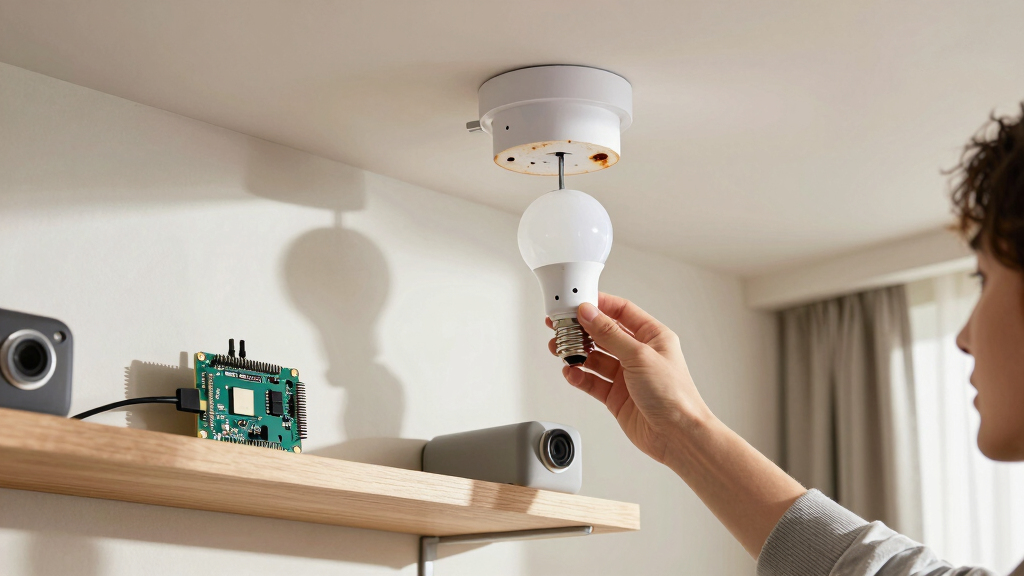
The project involves a custom firmware that enables the Pico 2 W to function as a smart light bulb controllable via popular smart home platforms like Apple Home, Google Home, and Home Assistant. The firmware leverages the rs-matter stack for Matter protocol support, with BLE used for device provisioning and Wi-Fi for network connectivity. The developer configured the Pico 2 W to toggle an external LED based on smart home commands, effectively creating a Wi-Fi-connected lighting device.
The implementation is built using Rust, specifically employing the Embassy async framework, which is designed for embedded systems. The project is hosted on GitHub, with example code and instructions for setup and deployment. The hardware setup involves connecting the Pico 2 W to an external LED and configuring Wi-Fi credentials and Matter provisioning parameters. The developer emphasizes that this is an early-stage prototype, with ongoing work to improve stability and expand features.
Why It Matters
This development is significant because it demonstrates the feasibility of using the Raspberry Pi Pico 2 W—a low-cost, dual-core microcontroller—for building full-featured, Wi-Fi-connected smart home devices with Rust. Rust’s safety and concurrency features make it attractive for IoT development, and this project showcases its practical application in real-world hardware.
Moreover, integrating Matter protocol support on such a small device could accelerate adoption of standardized smart home devices, reducing fragmentation and improving security. The project also highlights the Pico 2 W’s versatility beyond simple sensor or control projects, positioning it as a candidate for commercial or hobbyist smart home products.
Products Worth Considering

Sonos Era 100 Wireless Smart Speaker with Alexa, Black

Bose TV Speaker Compact Soundbar with Bluetooth and HDMI-ARC, Black

Bose QuietComfort Ultra Headphones Gen 1, Lunar Blue
As an affiliate, we earn on qualifying purchases.
Background
The Raspberry Pi Pico 2 W, released in 2023, features a dual-core Arm Cortex-M33 and RISC-V cores, along with onboard Wi-Fi. Prior to this project, most IoT implementations on the Pico 2 W used C or MicroPython, with limited support for advanced protocols like Matter. Rust has been gaining traction in embedded development, but practical examples of its use on the Pico 2 W for Wi-Fi and smart home applications have been scarce.
This project builds on recent efforts to bring Matter support to low-cost microcontrollers, aiming to standardize device communication in smart homes. The developer’s release aligns with broader industry trends toward open, secure, and interoperable IoT devices.
“This project demonstrates that the Pico 2 W can serve as a reliable, Wi-Fi-connected smart device using Rust and the Embassy framework, paving the way for more affordable IoT solutions.”
— Developer (via GitHub)
What Remains Unclear
It is not yet clear how stable or scalable this implementation is for commercial deployment. The project remains in early stages, and further testing is needed to confirm long-term reliability, security, and compatibility with various smart home platforms.
What’s Next
The developer plans to refine the firmware, improve stability, and add more features such as dimming, color control, and integration with additional smart home ecosystems. Community feedback and contributions are expected to shape future development. Additionally, testing on different hardware configurations and security assessments are anticipated as next steps.
Key Questions
Can this Pico 2 W Wi-Fi light bulb be used commercially?
Currently, the project is in early development and intended as a proof of concept. Commercial use would require further testing, security hardening, and certification.
What protocols does the device support?
The prototype supports the Matter protocol for smart home interoperability, with Wi-Fi for network connectivity and BLE for provisioning.
Is Rust necessary to run this firmware?
Yes, the current implementation is built in Rust using the Embassy async framework, which offers safety and concurrency benefits for embedded development.
How can I try this project myself?
The project is hosted on GitHub with instructions for setup and deployment. Users need a Raspberry Pi Pico 2 W, appropriate peripherals, and familiarity with embedded development in Rust.
Source: Hacker News