
TL;DR

Get the latest gadgets delivered free with Prime
- Fast, free delivery on millions of items
- Prime Video, Amazon Music and more included
- Member-only deals all year
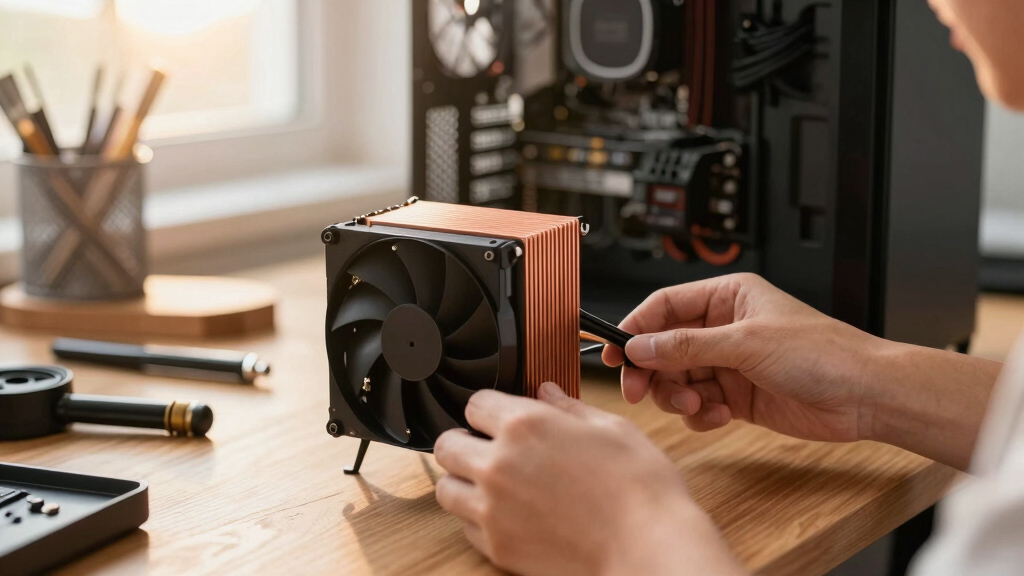
Thorsten Meyer AI has published its 2026 guide to quiet CPU coolers for sustained AI and compute workloads. The report favors large air coolers for most 24/7 rigs, while recommending 360mm liquid cooling for the hottest all-core CPUs.
Thorsten Meyer AI has named its preferred quiet CPU coolers for sustained AI and compute workloads in 2026, arguing that coolers built for gaming bursts may not provide enough quiet thermal headroom during hours-long inference, training, data loading and CPU-offloaded work.
The guide’s top overall air pick is the Noctua NH-D15 G2, described by the site as the quietest top-tier air option for buyers who want strong sustained cooling with no pump and little maintenance. The value pick is the Thermalright Peerless Assassin 120 SE, which the site says can deliver roughly 90% to 95% of flagship performance at about one-third of the price.
For silence-focused builds, the guide selects the be quiet! Dark Rock Pro 5, citing near-inaudible operation at around 23.3 dBA, depending on fan curve and workload. For high-TDP processors under long all-core loads, it recommends the Arctic Liquid Freezer III Pro 360 as the liquid-cooling choice, while the Noctua NH-P1 is listed for managed fanless systems where zero fan noise is the goal.
The report frames the buying decision around sustained thermal capacity rather than short peak cooling. It says AI workstation processors can remain near full load for long periods during prompt processing and supporting compute tasks, which makes steady heat dissipation at low fan speed more relevant than short-duration temperature spikes.
Why It Matters
The recommendations matter for workstation buyers because noise and heat can become long-running operating costs in AI systems. A cooler that is acceptable during gaming may keep a CPU within limits but still force fans to run loudly during extended compute sessions.
The guide also affects how buyers weigh air and liquid cooling. Thorsten Meyer AI’s position is that large air coolers remain the better fit for most mainstream to high-end 24/7 workstations because they avoid pump failure risk and need less maintenance. Liquid cooling is presented as the stronger option only when a top-tier CPU, dense case layout or sustained all-core workload needs more thermal headroom.
As an affiliate, we earn on qualifying purchases.
Background
The cooler report is presented as a companion to the site’s broader AI workstation heat and noise guidance. It identifies CPU cooling as the second lever after reducing GPU heat through undervolting and power limits.
The site says the relevant change from gaming to AI work is load shape. Gaming workloads often spike and recover, while inference and related compute tasks can keep the processor active for hours. That favors larger heatsinks, 140mm fans and cooling systems that can hold steady temperatures without aggressive fan ramping.
“The CPU cooler that’s “good enough” for gaming is often not good enough for an AI workstation.”
— Thorsten Meyer AI
“A cooler has to survive the marathon, not the sprint.”
— Thorsten Meyer AI
“A cooler is how you handle the heat that’s left.”
— Thorsten Meyer AI
Thermalright Peerless Assassin 120 SE air cooler
As an affiliate, we earn on qualifying purchases.
As an affiliate, we earn on qualifying purchases.
What Remains Unclear
The guide’s figures are not fixed guarantees. Noise readings, temperatures and value comparisons depend on case airflow, CPU power limits, motherboard behavior, fan curves, ambient room temperature and test method. The site also warns that prices and availability change often, and buyers still need to confirm socket and memory-clearance compatibility before purchasing.
be quiet! Dark Rock Pro 5 CPU cooler
As an affiliate, we earn on qualifying purchases.
As an affiliate, we earn on qualifying purchases.
What’s Next
Readers comparing coolers should match the pick to their workload and case layout, then check current pricing, socket support, RAM clearance and case height or radiator clearance before buying. The next practical milestone is not a new benchmark alone, but whether 2026 workstation builds continue shifting toward larger air coolers for quiet 24/7 use and 360mm AIOs for the highest sustained CPU loads.
Arctic Liquid Freezer III Pro 360 liquid cooler
As an affiliate, we earn on qualifying purchases.
As an affiliate, we earn on qualifying purchases.
Key Questions
What is the top quiet air cooler named in the guide?
The guide names the Noctua NH-D15 G2 as its best overall air cooler for quiet sustained AI workstation loads.
What is the best value pick?
Thorsten Meyer AI selects the Thermalright Peerless Assassin 120 SE, saying it delivers roughly 90% to 95% of flagship performance for about one-third of the price.
When should buyers choose liquid cooling?
The guide recommends liquid cooling for top-tier CPUs under sustained all-core load, cases where a large air tower will not fit, or builds that need maximum sustained thermal headroom.
Is fanless cooling recommended for AI workstations?
The Noctua NH-P1 is listed for truly silent builds, but only for managed loads. Buyers should not assume fanless cooling is suitable for every high-power AI workstation.
What remains uncertain before purchase?
Actual noise, temperatures, price and fit can vary by case, CPU, fan curve, airflow and retailer. Buyers need to verify compatibility and current pricing before ordering.
Source: Thorsten Meyer AI
Halloween Picks
halloween
As an affiliate, we earn on qualifying purchases.