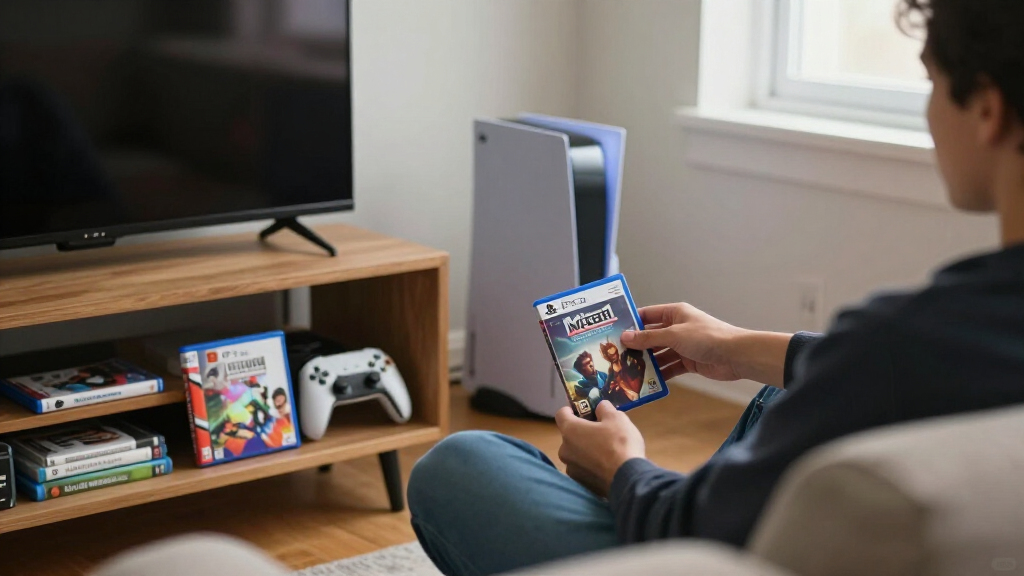

TL;DR

Get the latest gadgets delivered free with Prime
- Fast, free delivery on millions of items
- Prime Video, Amazon Music and more included
- Member-only deals all year
An IGN opinion report argues that PlayStation’s reported plan to end physical disc production in January 2028 makes physical ownership more important to players. The piece points to digital licensing, delistings and the decline in physical sales, while the timing and scope of the reported production change remain unverified in the supplied material.
An IGN opinion report argues that a reported plan for PlayStation to end physical disc production in January 2028 would make players’ ability to own, lend and preserve games more important. The report links that possible shift to the limits of digital licenses, which can leave access dependent on publishers and storefronts, but the supplied material does not include a direct Sony announcement confirming the plan.
The report’s central point is that buying a digital game does not necessarily give a player the same control as owning a disc. It describes digital purchases as licenses to access content through services such as the PlayStation Store or Steam. Under that arrangement, a game may become unavailable if it is delisted or if the supporting service or publisher changes its policies. The report does not claim that every digital game can be remotely removed, and individual access conditions vary.
Physical copies, the report argues, preserve options that digital access can limit: players can lend or resell discs, keep them after a storefront delists a game, and in some cases retain versions associated with original licensed music. It cites Grand Theft Auto IV, Alan Wake and Tony Hawk’s Pro Skater 1 + 2 as examples where physical releases may retain music that can be affected by expiring rights. Whether a disc remains playable also depends on the game’s design, updates and online requirements.
The report says physical game spending has fallen from just under $6 billion in May 2016 to barely more than $1.5 billion in May of the year it calls “this year.” It also says PlayStation digital purchases rose from 27 of every 100 games in 2016 to 78 of every 100 in the current comparison. Those figures are presented without a fully specified source or methodology in the supplied excerpt; the report says physical spending recorded 3% growth in that May, the first year-on-year increase since 2009.
What Players Could Lose Without Discs
If physical discs become less available, players could have fewer ways to share games directly or keep a playable copy outside a digital storefront. This matters beyond collecting: borrowing can let people try games without buying them, while physical copies can preserve access to titles that have been removed from sale. The report’s argument is that these forms of control are part of what a purchase should mean, not just sentimental extras.
That does not mean a physical disc guarantees permanent access. Some games require online servers, updates or account verification, and a disc may not include all later content. But a largely digital market gives storefront and publisher decisions more influence over whether customers can download or play a title. The practical consequence for readers is to check a game’s offline requirements and licensing terms, rather than assuming either format guarantees indefinite access.
Products Worth Considering

Kindle Paperwhite Signature Edition 32GB (2024) – Auto-adjusting front light, wireless charging, weeks of battery life – Metallic Black

Apple Watch Ultra 2 GPS + Cellular, 49mm Natural Titanium Case with Natural Titanium Milanese Loop, Large

Samsung Galaxy Tab A11+ 11-Inch Tablet, 6GB RAM, 128GB Storage, Expandable, Gray
As an affiliate, we earn on qualifying purchases.
Why PlayStation Is Going Digital
The IGN report says PlayStation has framed the shift toward digital purchases as a response to consumer buying trends. Its figures suggest digital purchases now make up a larger share of PlayStation game sales than they did in 2016. That change offers a business reason to prioritize digital distribution, though it does not by itself establish why Sony would stop producing discs or confirm the reported 2028 date.
The piece also points to reported estimates that PS6 manufacturing costs could approach $1,000 and cites PlayStation chief Hideaki Nishino as saying it is “not realistic” for Sony to absorb rising component costs. The supplied material does not identify the source of the cost estimate or provide more of Nishino’s remarks, so the connection between those costs and a digital-only console remains a possibility raised in the report, not a confirmed product plan. It places PlayStation’s direction alongside Nintendo’s Switch 2 game-key cards and Xbox’s emphasis on Game Pass as signs of a wider industry move toward digital distribution.
““not realistic””
— IGN report, quoting PlayStation chief Hideaki Nishino
What Sony Has Yet to Confirm
The supplied source does not include a Sony statement confirming that disc production will end in January 2028, nor does it clarify whether the report refers to all PlayStation games, particular markets or specific hardware. The date and scope should be treated as reported rather than independently confirmed here. It is also unclear whether Sony would continue offering a disc-drive option, even if production of game discs changed.
The market figures and reported PS6 cost estimate lack detailed sourcing and methodology in the provided excerpt. The article also does not establish how many delisted games remain playable from discs, or how future online services and game updates might affect them. Those limits make it difficult to quantify how much access players could lose under a more digital model.
Watch for Sony’s Format Plans
The next clear development would be an official Sony statement on disc production, including which products and regions would be affected and whether the reported January 2028 date is accurate. Details about future PlayStation hardware, including whether a disc drive will remain available, would help show what the change could mean for buyers.
Until that information is available, players should distinguish the report’s interpretation from confirmed policy. Further reporting on Sony’s sales data, the source of the hardware-cost estimates and the offline functionality of affected games could clarify the scale of the shift. For now, the article’s case for physical ownership rests on the control and sharing that discs can offer, set against an industry where digital access is increasingly common.
Key Questions
Has Sony confirmed it will stop producing physical PlayStation game discs in January 2028?
Not in the supplied material. The date appears in the IGN report, but no direct Sony confirmation is included, so its scope and status are unclear.
Do players own digital games they buy?
Digital purchases often grant a license to access a game, subject to the storefront’s and publisher’s terms. Conditions differ by platform and title, so “digital ownership” does not always mean the same control as owning a disc.
Can a physical disc guarantee a game will always work?
No. Some games rely on servers, online checks, updates or account access. A disc can preserve an installation or original version in some cases, but it does not guarantee every feature will remain available indefinitely.
Why does the report say physical games matter?
It argues that discs give players more ability to lend, keep and sometimes resell games, and may preserve access to titles no longer sold digitally. It also frames physical ownership as a way to retain more control over a purchase.
Source: fediverse