
TL;DR

Get the latest gadgets delivered free — and shop member deals
- Fast, free delivery on millions of items
- Access to Prime Big Deal Days deals on October 6–7
- Prime Video, Amazon Music and more included
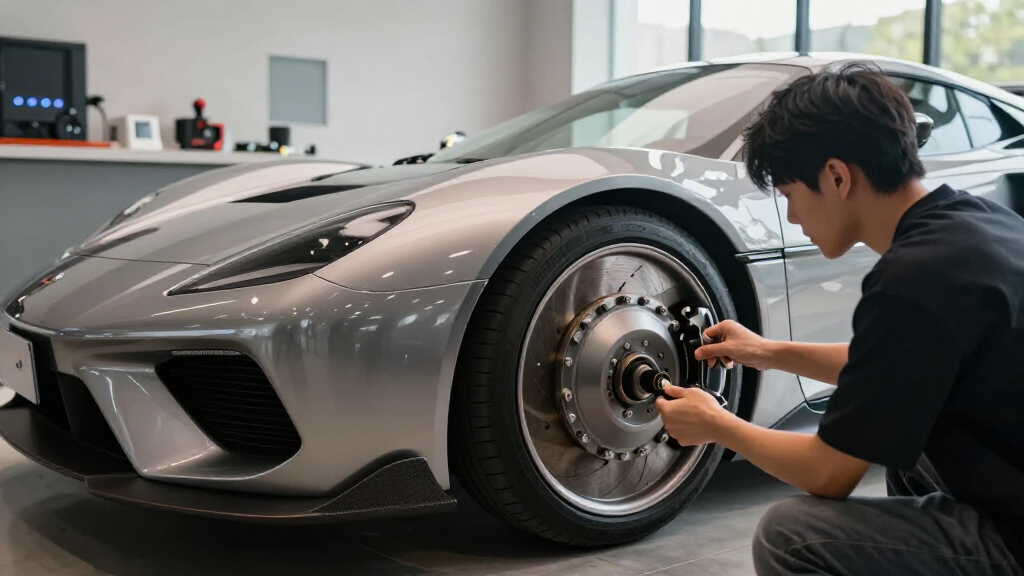
Czinger has unveiled the 21C Spyder with newly designed brake assemblies that have an organic appearance. This marks a departure from traditional brake design, emphasizing both form and function. The development is confirmed and highlights Czinger’s focus on innovation in high-performance vehicles.
Czinger has revealed a new version of its 21C Spyder featuring organic-looking brake assemblies, marking a notable design shift for the high-performance hypercar. This development was confirmed directly by Czinger during the vehicle’s unveiling, highlighting a focus on innovative aesthetics combined with advanced braking technology. The new brake design aims to blend visual appeal with functional performance, setting a precedent in hypercar manufacturing.
The 2024 Czinger 21C Spyder showcases brake assemblies with an organic-inspired design, characterized by flowing, natural forms that resemble biological structures. Czinger officials confirmed that these brake assemblies are not only aesthetic but also engineered for optimized heat dissipation and performance, although specific technical details remain undisclosed. The design was developed in-house and integrated into the Spyder variant, which features a convertible body style alongside the coupe model.
According to Czinger, the brake assemblies are made using advanced manufacturing techniques, including 3D printing, to achieve complex geometries that traditional manufacturing cannot easily produce. The company emphasizes that these brakes are engineered to handle the high stresses of track driving, aligning with Czinger’s reputation for combining cutting-edge technology with distinctive design. The organic aesthetic is intended to evoke natural forms, making the brakes visually stand out while maintaining high functionality.
The debut of these brake assemblies on the 21C Spyder signifies Czinger’s broader approach to integrating innovative design elements into high-performance vehicles, aiming to appeal to both enthusiasts and collectors seeking exclusivity and advanced technology.
Impact of Organic Brake Design on Hypercar Innovation
The introduction of organic-looking brake assemblies on the Czinger 21C Spyder represents a notable shift towards integrating aesthetic innovation with high-performance engineering. This development could influence future hypercar designs, encouraging manufacturers to explore more expressive and biologically inspired forms that do not compromise functionality. It also highlights Czinger’s commitment to pushing the boundaries of both form and performance in the hypercar segment, potentially setting new industry standards.
high performance brake assemblies for sports cars
As an affiliate, we earn on qualifying purchases.
As an affiliate, we earn on qualifying purchases.
Czinger’s Design Philosophy and Previous Innovations
Czinger has established itself as a leader in combining advanced technology with distinctive design since its inception. The company’s 21C model, launched in recent years, has been recognized for its innovative use of lightweight materials, hybrid powertrain, and aerodynamic efficiency. The new brake assemblies build on Czinger’s history of integrating cutting-edge manufacturing techniques, such as 3D printing, into its vehicles. This latest development aligns with the brand’s broader goal of creating visually striking yet high-functioning hypercars, often blending organic forms into their design language.
Previous Czinger models have showcased a focus on performance, technology, and unique aesthetics. The 21C Spyder’s unveiling with these new brake assemblies demonstrates the company’s ongoing commitment to innovation and differentiation within the hypercar market, which is increasingly competitive and driven by technological advancement.
“The new brake assemblies feature an organic-inspired design that not only enhances the vehicle’s aesthetics but also improves cooling efficiency and performance.”
— Czinger spokesperson
As an affiliate, we earn on qualifying purchases.
Technical Performance and Long-Term Durability Still Unclear
While the design and manufacturing approach are confirmed, specific performance metrics, durability, and cooling efficiency of the organic-inspired brake assemblies have not yet been disclosed. It remains unclear how these brakes compare to traditional designs in real-world driving conditions, particularly under high-stress scenarios like track use.
3D printed brake components for hypercars
As an affiliate, we earn on qualifying purchases.
As an affiliate, we earn on qualifying purchases.
Upcoming Testing and Production Details Expected Soon
Further testing results of the brake assemblies are anticipated, with Czinger likely to release detailed technical data in the coming months. The company may also showcase the 21C Spyder at upcoming automotive events, providing opportunities to evaluate the brakes’ performance and aesthetic appeal in person. Additionally, other models may adopt similar design elements if proven successful.
As an affiliate, we earn on qualifying purchases.
Key Questions
Are the organic-looking brake assemblies available on all Czinger 21C models?
Currently, the brake assemblies are confirmed on the 21C Spyder variant. It is not yet clear if they will be adopted across all Czinger models or limited to specific versions.
What materials are used in these new brake assemblies?
Details about the materials have not been officially disclosed, but Czinger emphasizes the use of advanced manufacturing techniques like 3D printing to achieve complex geometries, likely involving lightweight, high-strength materials.
Do these brake assemblies improve performance compared to traditional designs?
While Czinger claims that the design enhances cooling and performance, specific comparative data or test results have not yet been released.
Will the organic design influence future brake developments in the automotive industry?
This remains to be seen. The design’s innovative approach could inspire other manufacturers to explore more expressive and functional forms, but widespread adoption is uncertain at this stage.
Source: rss
Fall Picks
fall essentials
As an affiliate, we earn on qualifying purchases.